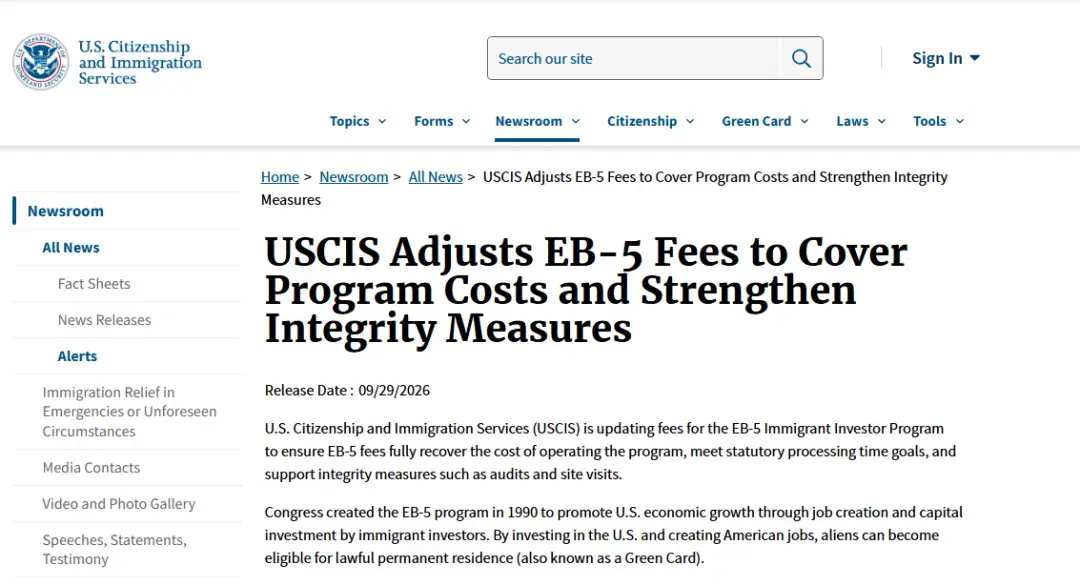
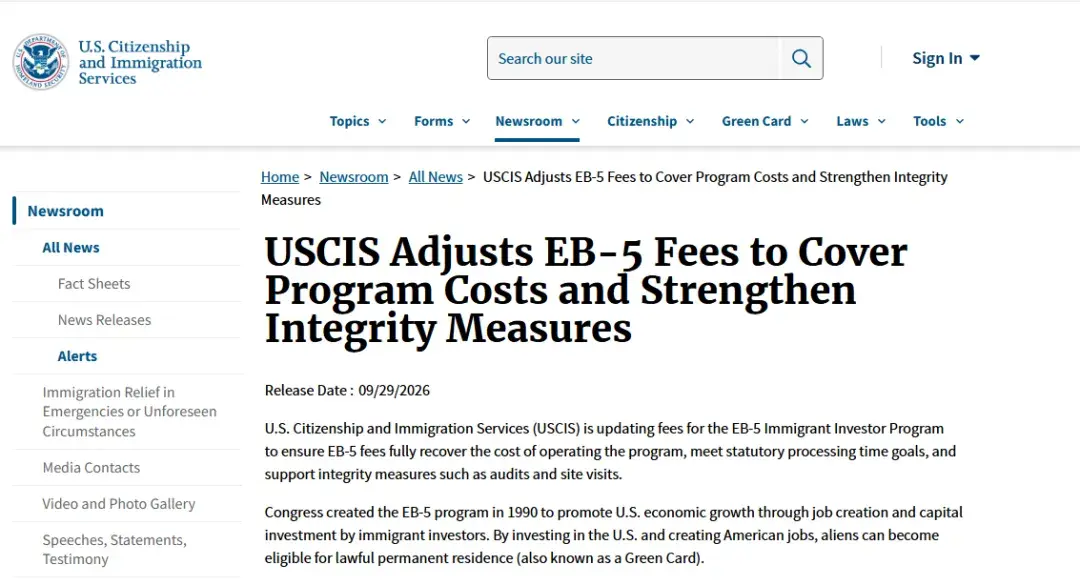
On September 29, 2026, U.S. Citizenship and Immigration Services (USCIS) issued an announcement officially confirming the fee increase for EB-5 immigrant investor applications. The new fee structure will take effect on November 30, 2026.
According to WorldWay Immigration, this adjustment primarily implements the requirements of the EB-5 Reform and Integrity Act of 2022. It aims to achieve full cost recovery for project operations, meet statutory processing timeframes, and ensure risk control measures such as audits and site visits.

01
What Are the Changes to EB-5 Fees This Time?
This adjustment affects multiple EB-5 fees, including I-526, I-526E, and I-829.
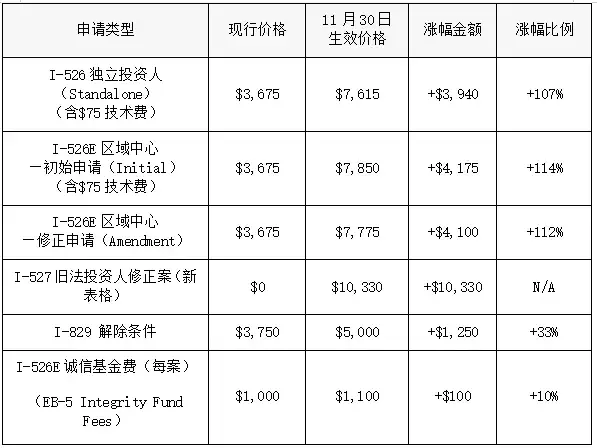
Specifically for EB-5 investors, the key focus areas are the initial I-526E petition fee and the I-829 petition for removal of conditions fee.
The I-526E filing fee will increase from $3,675 to $7,850, an increase of $4,175 (approx. 114%). In addition, a $1,100 EB-5 Integrity Fund fee is required. Thus, when regional center investors submit an initial I-526E, the combined total for both fees will be $8,950.
The I-829 petition to remove conditions will also increase from $3,750 to $5,000, an increase of $1,250 per application (approx. 33%). Investors who are about to enter the removal of conditions stage should also pay close attention to this fee adjustment date on November 30.
02
Beyond Fee Increases, EB-5 Oversight Is Also Strengthening
The EB-5 Immigrant Investor Program was established by the U.S. Congress in 1990 to promote the U.S. economy and create jobs through foreign investment. Eligible investors and their family members can apply for U.S. permanent resident status under this program.
Following the passage of the EB-5 Reform and Integrity Act of 2022 (RIA), the regulatory framework for EB-5 was further strengthened. The Act not only requires USCIS to conduct a dedicated fee study for the EB-5 program and establish fee rates based on actual operational and administrative costs, but also increases oversight requirements for Regional Centers and related projects.
These include: Regional Center audits, project site visits, fund use verification, project compliance reviews, as well as anti-fraud and anti-misuse measures.
Overall, EB-5 is entering a phase of stricter oversight and higher compliance standards.
03
On January 1, 2027, Investment Amounts Will Also See an Adjustment
Two concepts need to be specifically distinguished here.
What increases on November 30, 2026, are the EB-5 application fees.
In contrast, January 1, 2027, involves the next statutory inflation adjustment for the minimum EB-5 investment amount.
Pursuant to the automatic inflation adjustment mechanism under the EB-5 Reform and Integrity Act (RIA), effective January 1, 2027, the minimum investment threshold for EB-5 Targeted Employment Areas (TEA) will be raised; based on current CPI data calculations, the current $800,000 threshold is expected to increase to at least $900,000, subject to the final amount officially published by USCIS in the Federal Register.
04
What Should Investors Focus On Next?
First, plan the submission schedule in advance.
If you have already entered the document preparation phase, you can reasonably arrange your submission according to your own progress. Applications completed and filed before the new rule takes effect on November 30 will still be subject to current fee standards; filings submitted on or after November 30 will be charged under the new fee schedule. Therefore, applicants close to filing should incorporate fee changes into their budget and timeline in advance.
Second, attach greater importance to compliance during project selection.
Against the backdrop of heightened oversight, investors should pay closer attention to project capital structure, job creation, construction timeline, Regional Center background, and fund deployment.
Third, clearly distinguish between the two “increases”.
The November 30 adjustment pertains to USCIS application fees; the January 1, 2027 milestone pertains to the minimum EB-5 investment amount. These two represent completely different cost concepts and should not be confused.
Fourth, prepare documentation in advance.
EB-5 applications typically involve proof of source of funds, bank statements, asset sale or gift documents, tax records, and project-related documentation. Preparation often requires a considerable amount of time.
For families who already have concrete EB-5 plans, preparations should be made early based on financial arrangements, immigration status, and application timelines.
05
With Two Key Dates Overlapping, the Current Application Window Demands Attention
On the surface, this new EB-5 fee rule appears to be an increase in application fees, but it actually reflects that EB-5 is entering a phase of stricter supervision, higher compliance requirements, and rising overall costs.
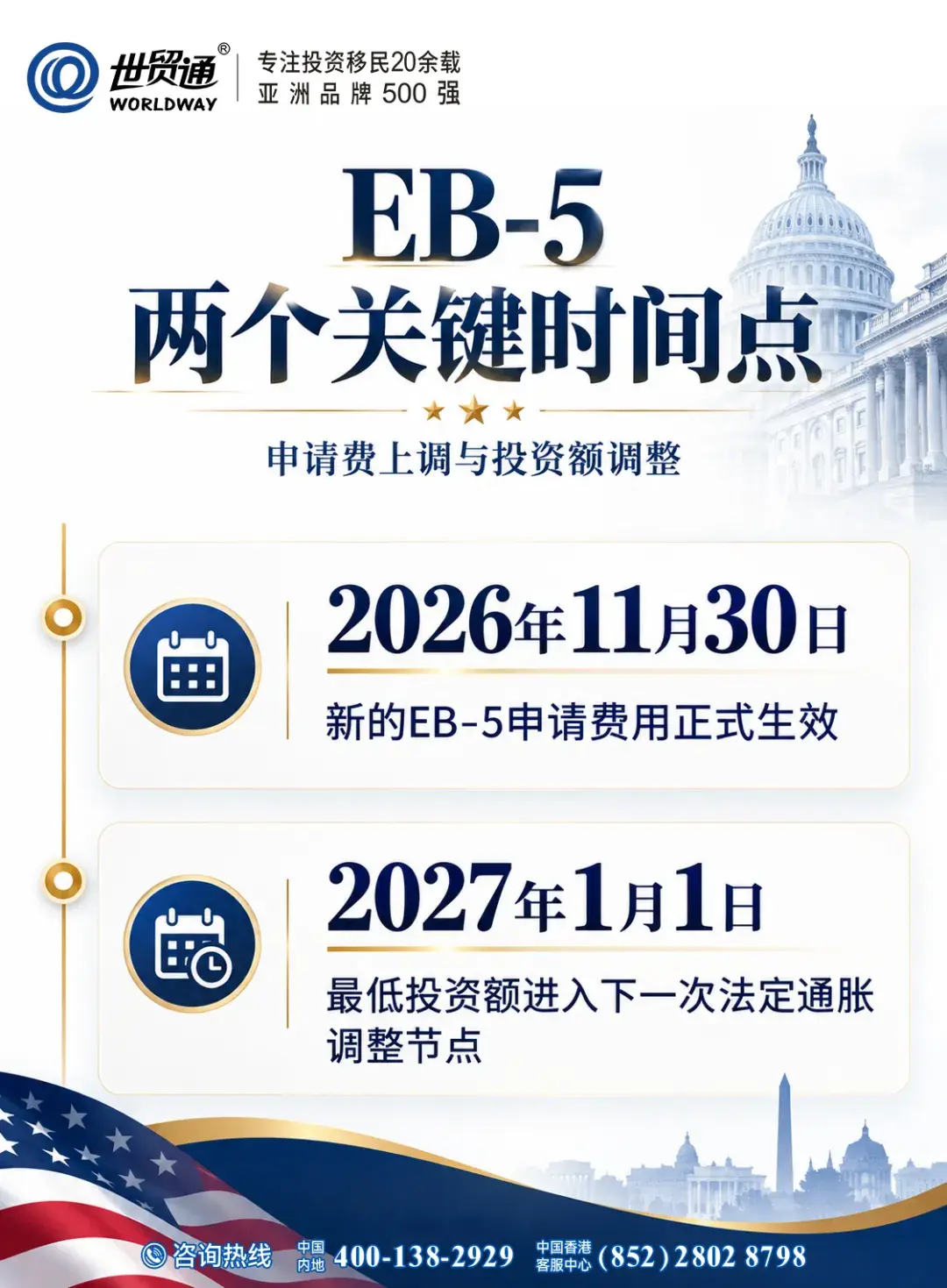
For families considering EB-5, two key dates are worth paying close attention to going forward:
• November 30, 2026: The new EB-5 application fees officially take effect;
• January 1, 2027: The minimum investment amount reaches its next statutory inflation adjustment date.
Furthermore, according to the latest Visa Bulletin, the EB-5 set-aside categories still face no visa backlog. Eligible applicants who maintain lawful status within the United States can concurrently file their immigrant investor petition and adjustment of status application, while simultaneously applying for an employment authorization document (EAD) and travel permit (Advance Parole).
For families that already have an EB-5 plan, now is a critical stage to lay the groundwork in advance. It is recommended to complete status evaluations, financial preparations, and project screening as soon as possible, aiming to schedule your application pace well before these two major adjustments take effect.
Recognized as one of Asia's Top 500 Brands with over two decades of dedicated focus on immigration, WorldWay Group originated in Hong Kong in 1998 and has been deeply rooted in Hong Kong for over 20 years, maintaining professional entities in both Hong Kong and Mainland China. Over the years, WorldWay has continuously monitored U.S. immigration policies and EB-5 project developments, providing tailored immigration solutions and services aligned with each family's status, finances, and long-term planning.