In recent years, the U.S. EB-5 Investment Immigration Program has consistently been one of the status planning pathways favored by high-net-worth families. As the dividends of the Reform and Integrity Act continue to be released, the strategic value of this opportunity window has become even more prominent.
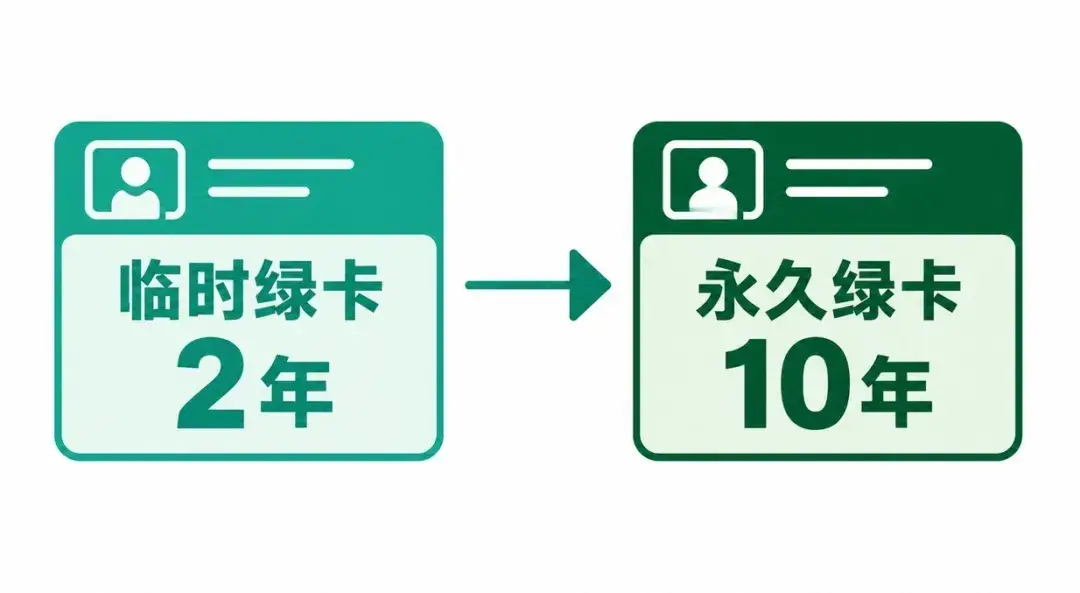
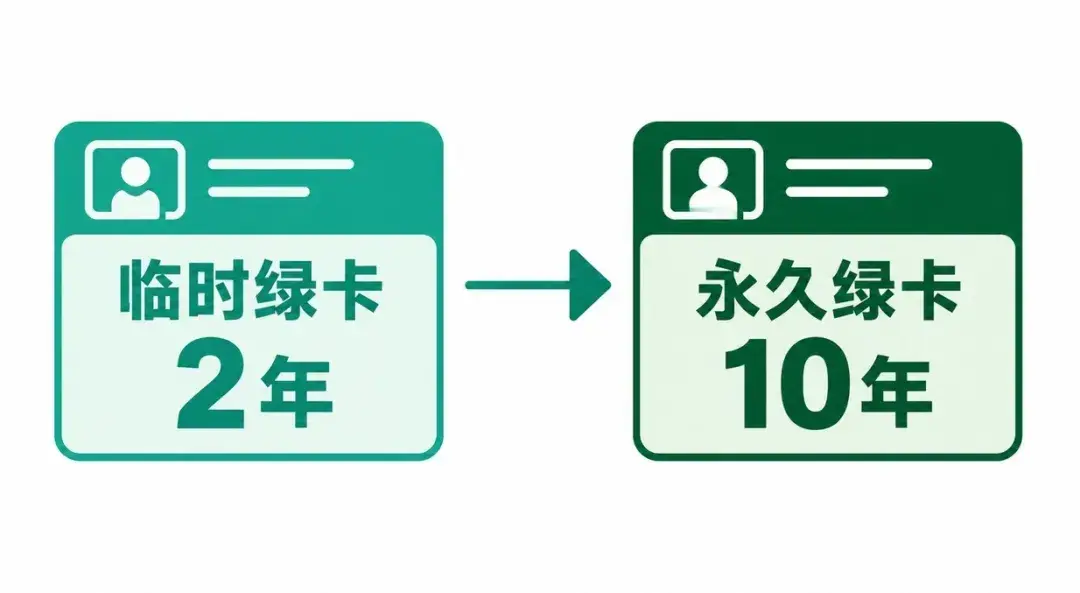
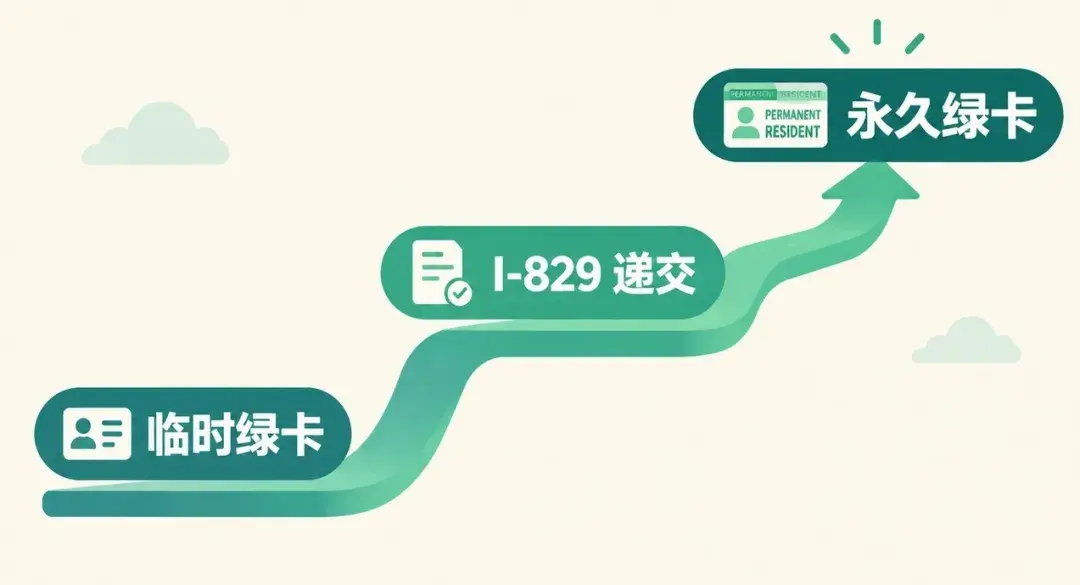
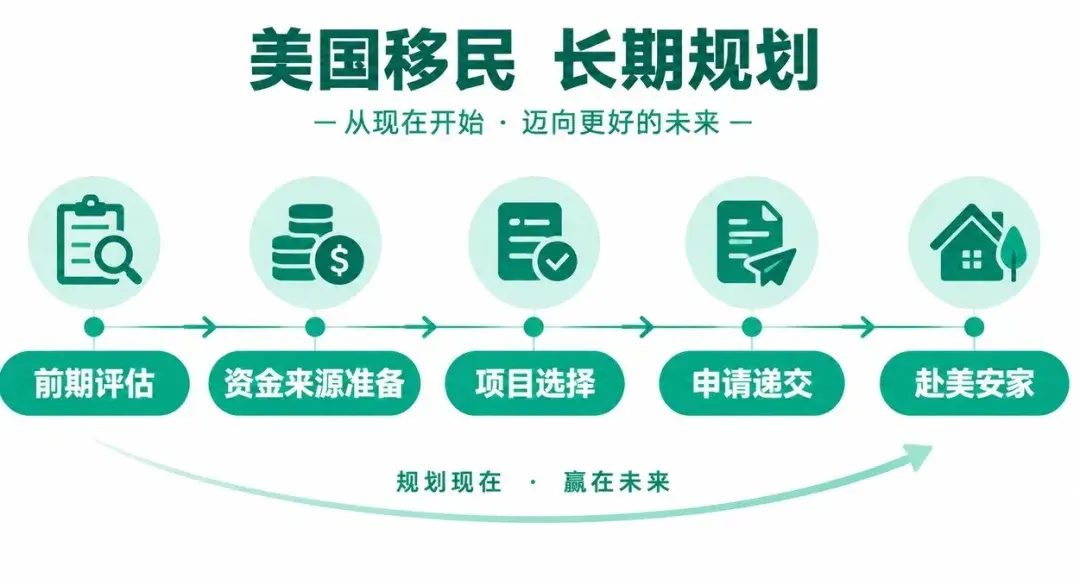
In recent years, the U.S. EB-5 Investment Immigration Program has consistently been one of the status planning pathways favored by high-net-worth families. As the dividends of the Reform and Integrity Act continue to be released, the strategic value of this opportunity window has become even more prominent.As is widely known, when obtaining U.S. status through EB-5 investment immigration, applicants usually first acquire a 2-year valid “conditional Green Card”, commonly referred to as a temporary Green Card; later, they need to apply to remove the conditions according to regulations to convert to a 10-year permanent Green Card.So, what are the differences between a temporary Green Card and a permanent Green Card? What should you pay attention to after obtaining a temporary Green Card? How can you smoothly transition to a permanent Green Card? These are all essential questions that EB-5 applicants must understand in advance. Let us take a look together with WorldWay Group.The temporary Green Card is a crucial stage in the EB-5 processA temporary Green Card is also called Conditional Permanent Resident Status. Once investors and their family members obtain a temporary Green Card, they are already U.S. permanent residents, entitled to live, study, work, and reside in the United States, and their children can receive education as local residents.The main difference between a temporary Green Card and a permanent Green Card lies not in daily rights and benefits, but in validity periods and subsequent adjudication requirements.· The validity period of a temporary Green Card is 2 years, and applicants must submit an application as required prior to expiration to remove the conditions on their status;· A permanent Green Card usually has a validity period of 10 years and can be renewed upon expiration.Simply put, the temporary Green Card indicates that the applicant has entered the U.S. permanent residency system, but still needs to complete the final review step within the designated timeframe to officially obtain an unconditional permanent Green Card.From temporary to permanent: I-829 is the key stepFor EB-5 investors, the core step in transitioning from a temporary Green Card to a permanent Green Card is filing the I-829 petition to remove conditions. Generally, EB-5 investors must focus on satisfying the following requirements:First, the investment capital has been deployed as required and maintained in an invested state throughout the specified period;Second, the investment project has created at least 10 qualifying full-time jobs;Third, the principal applicant and accompanying family members have complied with U.S. laws without any major issues affecting their status.Three matters requiring special attention after obtaining a temporary Green Card1Keep the I-829 filing timeframe in mindThe temporary Green Card is valid for only 2 years. Investors must submit the I-829 petition to remove conditions within the 90-day period prior to the expiration of the Green Card. This timing is critical. Failing to submit within the prescribed window may jeopardize the continuity of status.It is worth noting that after filing the I-829, if the case remains under adjudication, the applicant's conditional Green Card status can typically be extended. However, the prerequisite is that the application must be submitted on time and cannot wait until after the Green Card has expired.2Maintain status compliance and avoid long absences abroadAfter obtaining a temporary Green Card, the applicant is already a U.S. permanent resident and must demonstrate an intent to reside permanently in the United States.If a temporary Green Card holder stays outside the U.S. for too long during a single trip, it may draw scrutiny from customs officials upon re-entry. In particular, absences exceeding one year may lead authorities to question whether U.S. permanent resident status has been abandoned.3Attach importance to tax filingAfter acquiring a temporary Green Card, applicants also need to pay close attention to their tax status.Generally, Green Card holders are considered U.S. tax residents and must file returns in accordance with U.S. tax laws. There is no fundamental difference in tax obligations between a temporary Green Card and a permanent Green Card.EB-5 is not a one-time application, but a long-term planThe advantage of EB-5 investment immigration lies in its relatively clear application criteria, with no rigid requirements regarding age, education, language proficiency, or business background. A single applicant can bring their spouse and unmarried children under 21 to obtain status together. However, for applicant families, EB-5 is a long-term plan that spans preliminary assessment, source-of-funds preparation, project selection, application submission, obtaining a temporary Green Card, I-829 condition removal, and post-arrival settlement in the U.S. Every single step directly impacts the final outcome of the family's status planning.This also means that when choosing an EB-5 service agency, professional experience and long-term service capability are especially crucial. A mature service provider must not only assist applicants with initial filings, but also provide continuous, professional, and systematic support throughout project vetting, application pacing, documentation preparation, status adjustment, and practical needs after arrival in the United States.Over the years, WorldWay has maintained deep expertise in the field of U.S. EB-5 investment immigration, assisting numerous families in completing the full journey from status planning to settling in the U.S. To further connect with client needs after arrival, WorldWay Group has also initiated and fully funded the America New Immigrants Alliance, providing new immigrant families with landing settlement, relocation guidance, education consulting, tax assistance, U.S. real estate, wealth management, legal aid, and other support services, ensuring EB-5 planning seamlessly extends into long-term living arrangements after arriving in the United States.Seize the EB-5 window to take full control of your planningCurrently, the new EB-5 policy provides a clearer pathway for U.S. status planning. In particular, the current visa set-aside category projects still enjoy the advantage of no visa backlog, eligible in-country applicants can file via “concurrent filing”, and the current minimum investment threshold of $800,000 provides families with requirements a more predictable planning space.For families seeking U.S. status, rather than passively waiting for policy changes, it is better to evaluate in advance and plan early to gain greater control and choice within the optimal timeframe.
Great news! To help investors seize the golden planning period before potential adjustments to the EB-5 investment threshold, WorldWay is launching a limited-time promotional offer: from now until December 31, 2026, clients applying for the U.S. EB-5 immigration program can enjoy exclusive WorldWay special offers. For details, please contact your dedicated WorldWay consultant or customer service representative.
Investment involves risks, the above information is for reference only
How Is the Age of Accompanying Children Calculated for U.S. Immigrant Investor Visas?
A
Under the Child Status Protection Act (CSPA), the immigration age is calculated by subtracting the number of days the I-526/I-526E petition was pending from the child's actual age at the time a visa becomes available. The child must remain unmarried and seek to acquire status by filing Form I-485 or DS-260 within one year of visa availability. Simply submitting an application does not automatically freeze the age.
What Is the Minimum Investment Amount for U.S. EB-5?
A
The minimum investment amount for the U.S. EB-5 Targeted Employment Area (TEA) is $800,000, and $1.05 million for non-TEA. According to the relevant arrangements under the EB-5 Reform and Integrity Act of 2022, the minimum TEA investment amount is expected to be adjusted upward to the range of $900,000—$950,000 starting January 1, 2027 (Source: USCIS proposed adjustment criteria, subject to announcement by 2026).
It is necessary to distinguish between the "investment amount" and the "total cost": the aforementioned amounts represent the principal investment itself; in addition, there are government filing fees, professional service fees, etc. The invested funds must remain "at risk" throughout the entire process, with no promised return, and no guarantee of principal preservation or profits. When selecting a Regional Center project, the public filing status such as the project sponsor's Form I-956F should also be verified.
Compliance Notice: The investment amount is subject to the latest official USCIS policy and individual assessment.
Who is Eligible to Apply for the U.S. NIW National Interest Waiver?
A
NIW falls under the U.S. National Interest Waiver category, intended for individuals with advanced degrees or exceptional professional abilities who demonstrate the potential to contribute to the national interest of the United States.
Assessment Note: Applicability depends on the applicant's background and supporting evidentiary materials, subject to formal consultant evaluation.
Who is eligible for the EB-1A Alien of Extraordinary Ability immigration?
A
EB-1A is a U.S. Alien of Extraordinary Ability category intended for individuals with extraordinary ability in the fields of science, arts, education, business, or athletics.
Assessment Note: Determining whether one meets the criteria for "Extraordinary Ability" depends on the evidence presented against the ten USCIS criteria and is subject to professional evaluation.
What are the basic requirements for applying for the U.S. EB-5 Immigrant Investor Program?
A
EB-5 is an immigrant investor program that requires meeting the corresponding investment amount (a minimum of US$800,000 for TEA and US$1.05 million for non-TEA, as of 2026, source: USCIS).
Applicants must prove the lawful source of investment funds and create the required jobs (in accordance with USCIS regulations).
Factual note: Complete application requirements are subject to official USCIS regulations and consultant evaluations.