The U.S. Department of State Visa Office has officially released the Immigrant Visa Bulletin for the first month of the new Fiscal Year 2027 (October 2026).
Among them: Chart B for the unreserved EB-5 (Legacy Act) advanced significantly by 4 years to March 1, 2021; the three set-aside visa categories under the new EB-5 law remain current without retrogression. In addition, USCIS has confirmed that Chart B is open for filing in October! Let us take a look together with WorldWay Group.

Chart A: Final Action Dates For Employment-Based Preference Cases (Note: Proceeding to the U.S. Consulate interview process)
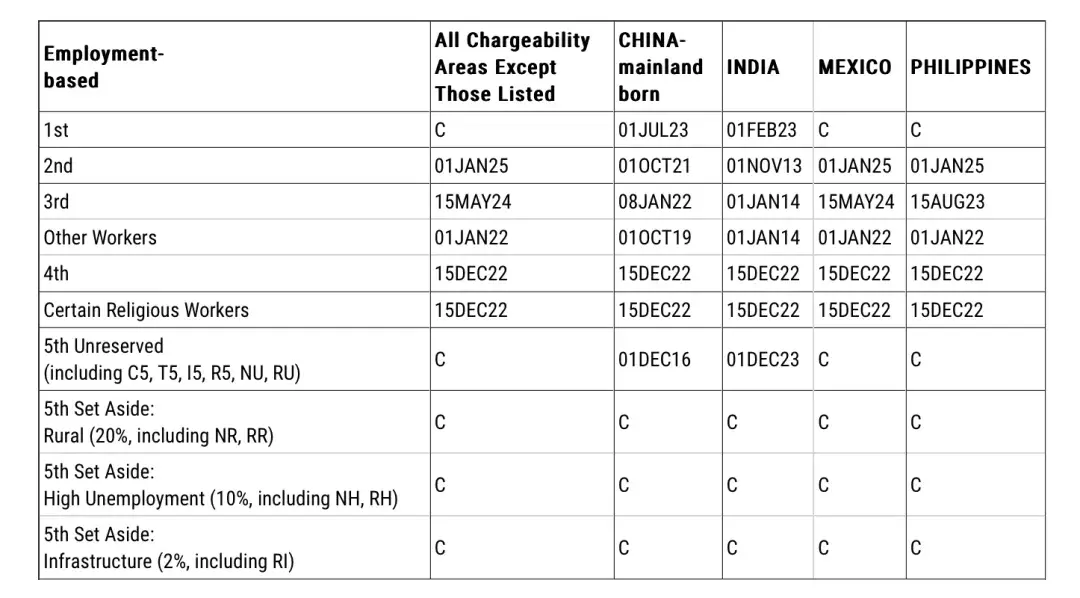
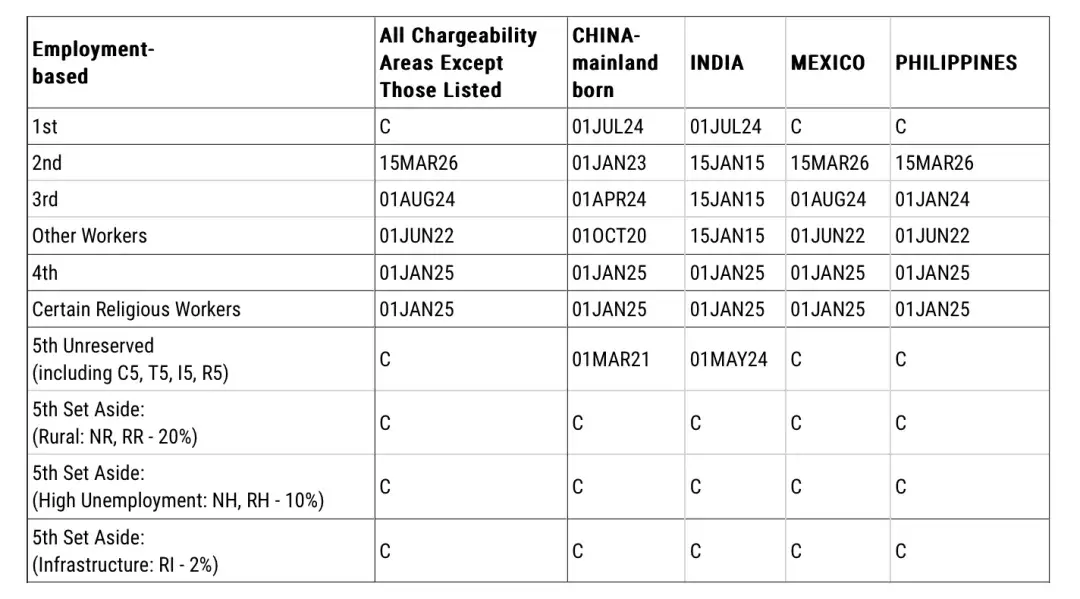
Chart B: Dates For Filing Of Employment-Based Visa Applications (Note: Residing legally in the U.S. and meeting relevant conditions to submit Form I-485 Adjustment of Status application to USCIS)
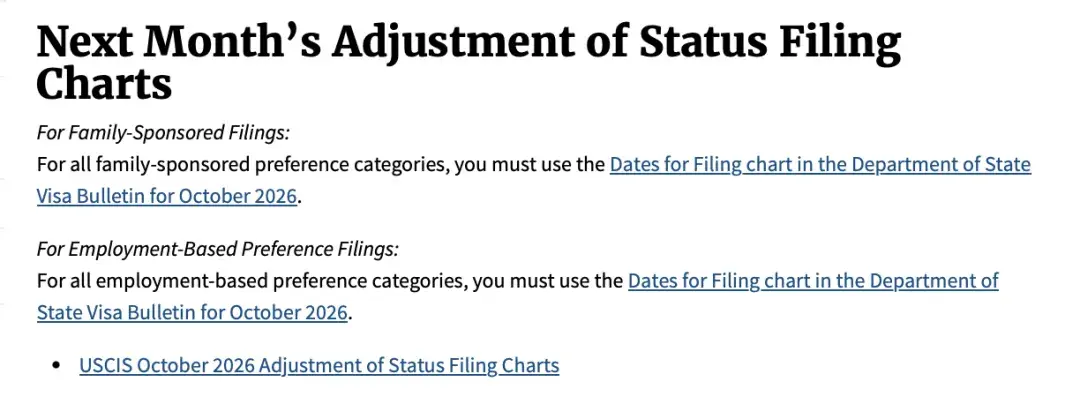
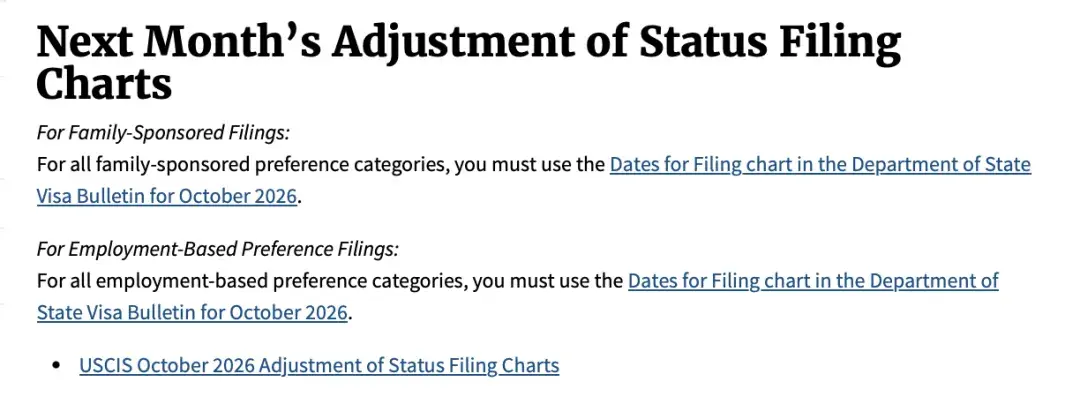
In addition, USCIS has officially announced that Chart B is open for October 2026.
Legacy EB-5: Chart B Advances Significantly by 4 Years
Chart A: Unchanged, remaining at December 1, 2016
Chart B: Advanced significantly by 4 years compared to last month, leaping from March 1, 2017 to March 1, 2021
What the Advancement of Chart B Means for Applicants
Chart B represents the "Dates for Filing", which determines whether an application for I-485 Adjustment of Status can be submitted within the U.S. This month, USCIS confirmed that Employment-Based Chart B is open, allowing eligible applicants in the U.S. to submit Form I-485. Chart A represents the Final Action Dates, and final approval still requires meeting the visa allocation conditions of Chart A.
According to the latest bulletin, the cut-off date for applicants born in Mainland China is December 1, 2016.
• Applicants with a priority date before December 1, 2016 and an approved I-526 who have already submitted DS-260 or I-485 should await their interview notice or I-485 adjudication result.
• Applicants with a priority date before March 1, 2021 and an approved I-526 who meet the qualifications in the U.S. should complete their I-485 submission as early as possible.
The casework and customer service teams across all offices of WorldWay Group will continue, as always, to initiate client screenings, liaise with relevant law firms, and assist eligible applicants with filing Form I-485, submitting documentation, and providing interview coaching.
At the same time, the significant advancement of Chart B sends a positive signal. Coming at the start of Fiscal Year 2027, the immigrant visa quotas for the new fiscal year enter a new allocation cycle. At this juncture, Chart B advancing 4 years in a single leap allows more applicants with later priority dates to fall within the filing range, serving as a positive signal worth noting for legacy EB-5 applicants who have been waiting long-term.
In the longer term, legacy EB-5 applications primarily consist of historical backlog cases. As inventory cases are processed and cleared, and if the annual visa quotas are fully utilized, the queueing pressure caused by the historical backlog is expected to gradually ease.
New EB-5 Law: Three Set-Aside Visa Categories Remain Current
According to the newly released visa bulletin, both Chart A and Chart B for the three set-aside visa categories—Rural, High Unemployment, and Infrastructure projects—continue to remain “Current”, meaning there is no retrogression.
This means that for eligible new EB-5 investors, they can still enjoy the retrogression-free advantage offered by the set-aside visa categories.
In particular, for applicants currently physically present in the U.S. who meet the conditions for adjustment of status, concurrent filing remains available at this stage—allowing the simultaneous submission of the Form I-526E immigrant petition and Form I-485 adjustment of status application.
Based on past cases handled by WorldWay, many clients obtained their work and travel authorization (combo card) through "concurrent filing" in about 3 months, enjoying benefits in the U.S. in advance and achieving freedom in living, working, and studying. Many clients even successfully received I-526E approvals in just 5 to 8 months!
It is worth reminding that as the number of applicants continues to grow, set-aside visa quotas may face pressure, and the threat of retrogression is quietly looming. Once retrogression occurs, the current fast-track advantage of "concurrent filing" will no longer exist. Interested investors are advised to act promptly.
Countdown to the 2027 Investment Threshold Adjustment Begins
In addition to retrogression changes, another critical timeline node that EB-5 investors should pay close attention to is —— January 1, 2027.
Pursuant to the automatic inflation adjustment mechanism under the EB-5 Reform and Integrity Act (RIA), the minimum investment threshold for EB-5 Targeted Employment Areas (TEA) will undergo an upward adjustment; based on current CPI estimates, the existing $800,000 threshold is expected to increase to at least $900,000, with the final amount subject to official publication in the Federal Register by USCIS.

Retrogression, Price Increases, and Policy Changes: Three Factors Converging
Overall, EB-5 is currently in a relatively unique policy phase.
On one hand, the three set-aside visa categories remain free of retrogression;
On the other hand, eligible applicants in the U.S. can still enter the status adjustment process early through "concurrent filing";
At the same time, future retrogression pressures, investment amount adjustments, and policy changes are gradually approaching.
Therefore, for families with clear plans for U.S. immigration, rather than waiting until retrogression occurs or investment amounts are officially increased, it is better to complete qualification assessments, source-of-funds documentation, and project selection early to prepare as soon as possible under the current policy framework.
Planning ahead, submitting early, and locking in a priority date also helps secure greater flexibility and initiative to handle future policy changes.
As a Top 500 Asian Brand with over 20 years of dedication to immigration services, WorldWay Group started in Hong Kong in 1998 and maintains professional operating companies in both Hong Kong and Mainland China. Leveraging years of industry experience and a professional team, WorldWay continues to cultivate the U.S. immigration sector, offering clients robust and professional immigration planning support.
Currently, WorldWay is highlighting the I-956F approved “Deer Valley • Snow Ridge Residences” EB-5 rural project, as well as the “Marriott • Royal Lake Bay Resort” EB-5 project launched in partnership with Peachtree Group for the fifth time, offering diverse project choices for different families.