In 2026, EB-5 investment immigration remains one of the mainstream routes for immigrating to the United States, with a minimum investment amount of $800,000 (which will increase to $900,000–$950,000 starting January 1, 2027). Reserved visa categories for rural areas and high-unemployment areas currently enjoy no visa wait times (no retrogression). This article directly breaks down key policy points, application requirements, cost structures, and project screening methodologies, while comparing routes such as EB-1A, NIW, and H-1B to help families from different backgrounds make matching decisions.
2026 U.S. Investment Immigration Policy Analysis: EB-5 Investment Amounts, Visa Waiting Periods, and Reserved Visa Categories
The EB-5 Reform and Integrity Act of 2022 adjusted the investment amount to $800,000 for Targeted Employment Areas (TEAs) and $1.05 million for non-TEAs, setting an automatic adjustment to $900,000–$950,000 starting January 1, 2027. The year 2026 is still within the $800,000 window, but the consumption rate of quotas for reserved visa categories is currently the variable that warrants the closest attention.
EB-5 reserves 32% of its annual visa quota for three types of projects: 20% for rural areas, 10% for high-unemployment areas, and 2% for infrastructure projects. In 2026, these reserved categories remain either current or with short waiting periods; however, the volume of applications in the rural category has grown significantly, making it advisable to lock in a priority date as early as possible.
Regarding visa wait times, applicants born in Mainland China still face prolonged backlogs in non-reserved categories, whereas reserved categories currently enjoy no backlog or shorter waiting periods. Specific visa availability is subject to the monthly Visa Bulletin issued by the U.S. Department of State; in 2026, signs of visa wait times have begun to appear in the rural category, while the high-unemployment category remains relatively open.
U.S. Investment Immigration Application Requirements and Procedures: Complete Timeline from I-526E to Conditional Green Card
EB-5 application requirements are relatively clear-cut: at least 18 years of age, an investment of $800,000 in a compliant project, a lawful source of funds, no major criminal record, and good health. Applicants may include their spouse and unmarried children under the age of 21 in the application.

The processing procedure is divided into several key milestones:
- Project Subscription and Capital Preparation: Select a compliant regional center project, complete the remittance of investment funds, and prepare documentation proving the lawful source of funds, taking approximately 1–3 months.
- Filing Form I-526E: Submit the immigrant investor petition to USCIS. Currently, I-526E approvals for certain projects take approximately 8 months (Source: USCIS policy caliber, as of 2026).
- Adjustment of Status or Consular Processing: Applicants residing within the U.S. may concurrently file Form I-485 for adjustment of status; applicants abroad undergo interview processing through the U.S. Consulate General in Guangzhou.
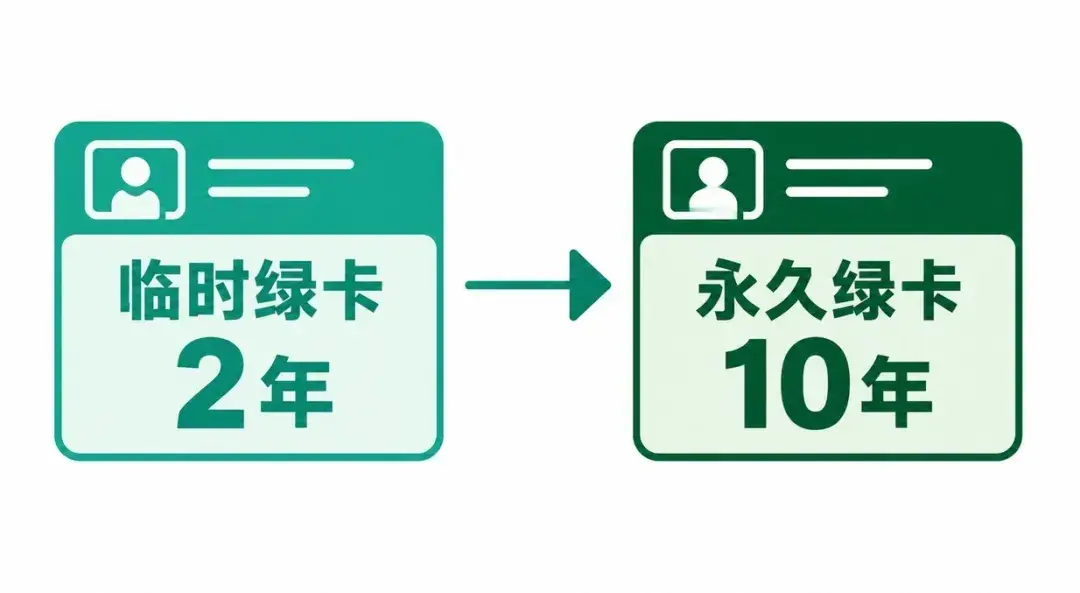
- Obtaining the Conditional Green Card: The conditional green card is valid for 2 years. File Form I-829 within the 90-day window prior to its expiration to remove conditions.
- Approval of Form I-829: Obtain a permanent green card, with the invested capital returned following project repayment.
The overall timeline varies significantly depending on visa wait times and individual circumstances. For reserved visa categories, the timeline from filing to obtaining a conditional green card is currently about 2–3 years, whereas non-reserved categories require longer.
Breakdown of U.S. Investment Immigration Costs: Hidden Costs Beyond the $800,000 Investment and Source of Funds Requirements
The $800,000 constitutes the principal investment capital, not the total cost. During actual processing, funds should also be budgeted for the following expenses:
| Expense Item | Amount (Approx.) | Description |
|---|---|---|
| Investment Capital | $800,000 | Increases to $900,000–$950,000 starting in 2027 |
| Regional Center Administrative Fee | Varies | Varies significantly across different projects |
| Legal Fees | $15,000–$25,000 | Includes I-526E, I-485, and document preparation |
| USCIS Filing Fees | Approx. $11,000 | Includes I-526E, I-485, etc. |
| Source of Funds Documentation Costs | Varies | Auditing, appraisal, notarization, etc. |
| Travel and Incidentals | Varies | Interviews, landing, etc. |
Regarding source of funds requirements, applicants must prove that the $800,000 originates from lawful sources, including salary income, business operating earnings, real estate sales, investment returns, gifts, or inheritance. Tax records, bank statements, and corporate audit reports are common supporting documents; planning 6–12 months in advance is recommended.

How to Select an EB-5 Project? Deconstructing WorldWay Immigration's Six-Dimensional "Featured Projects" Assessment Methodology
Project selection directly determines capital safety and green card outcomes. WorldWay Immigration utilizes a six-dimensional assessment methodology termed "Featured Projects" for screening EB-5 projects, evaluating them item by item:
- Developer Background: Track record of past projects, repayment history, and financial strength.
- Project Planning: Business logic, market demand, and exit strategy.
- Capital Structure: Proportion of EB-5 funding, bank loan terms, and first-lien mortgage collateral arrangements.
- Construction Progress: Construction permits, construction schedule, and completion guarantees.
- Job Creation: Whether the job creation model satisfies USCIS requirements and provides a sufficient job cushion.
- Market Outlook: Regional economic environment, leasing or sales projections.
Among these, a first-lien mortgage collateral arrangement serves as a crucial safeguard for capital safety, meaning that EB-5 funds take priority over other subordinated debt in repayment order. Applicants are advised to request and review capital structure documents and collateral mortgage agreements when selecting a project.
Comparison of U.S. Investment Immigration with EB-1A, NIW, and H-1B: How Families with Different Backgrounds Can Match the Right Path
EB-5 is not the only pathway for U.S. status planning; optimal routes differ distinctly for families of various backgrounds:

| Pathway | Target Profile | Core Requirements | Timeline Characteristics |
|---|---|---|---|
| EB-5 Immigrant Investor | Those with strong financial capability seeking expedited green cards for the entire family | Invest $800,000 with a lawful source of funds | No wait times for reserved categories; I-526E takes approx. 8 months |
| EB-1A Extraordinary Ability | Top industry talents, scholars, artists, senior executives | Satisfy at least 3 out of 10 criteria | Relatively short backlog; no investment required |
| NIW National Interest Waiver | Professionals with advanced degrees, scientific researchers | Demonstrate that the work is in the national interest of the United States | No employer sponsorship required; moderate backlog |
| H-1B Specialty Occupation Visa | Professionals sponsored by U.S. employers | Employer sponsorship; lottery-based | Temporary visa requiring eventual transition to a green card |
Simple assessment: Families with financial resources who prioritize high certainty should consider EB-5 first; those with outstanding professional achievements may evaluate EB-1A; scientific research or advanced degree professionals may consider NIW; and international students in the U.S. can use H-1B as a transition, though the lottery carries significant uncertainty. WorldWay Immigration recommends that families match paths comprehensively across the threefold objectives of education, asset allocation, and career, rather than pursuing a single path in isolation.
After Receiving the Green Card: Settlement Support Provided by the U.S. New Immigrants Alliance and Boston Customer Service Center
Green card approval is only the beginning; post-landing matters such as settling in, taxation, children's schooling, and bank account opening likewise require professional support. WorldWay Group initiated and established the U.S. New Immigrants Alliance and the WorldWay U.S. Customer Service Center (Boston) to continue providing landing support following status approval, encompassing airport pickups, home rentals, school district consultations, and tax planning referrals.
WorldWay Immigration began in Hong Kong, China in 1998. As of 2026, it has been deeply rooted in the industry for 28 years, maintaining branches in Beijing, Shanghai, Shenzhen, Qingdao, Hong Kong, China, and Macao, China, with overseas customer service centers spanning the United States, Canada, Portugal, and Turkey. Its corporate credentials are verifiable: the business license scope includes "exit-entry agency services for private purposes," the status is registered as normally operating on the National Enterprise Credit Information Publicity System, it is a member unit of the Guangdong Exit-Entry Immigration Association, and it has completed the official filing for exit-entry agency institutions for private purposes.
Beyond the United States: What Other Status Planning Alternatives Exist? A Comparison of Paths in Argentina, Turkey, Portugal, Malta, Cyprus, and Hong Kong, China
Because EB-5 wait times and financial thresholds may not suit every family, the following alternative routes can serve as references for comprehensive portfolio planning:
| Program | Core Features | Investment Threshold | Target Profile |
|---|---|---|---|
| Argentina Immigration | Major G20 nation status, visa-free access to approx. 170 countries/regions, dual citizenship permitted, no physical residency requirement | From $350,000 | Those seeking expedited major nation status and global mobility |
| Turkey Immigration | Citizenship by real estate acquisition, direct one-step process, no residency requirement, visa-free access to 170 countries/regions | $400,000 property purchase | Those pursuing simultaneous asset allocation and status acquisition |
| Portugal Immigration | EU member state, free movement across 29 Schengen countries, three generations included in one application | Subject to the latest official policy | Those prioritizing EU education and living environment |
| Malta Immigration | "Four-in-one" nation, MPRP approved before investing, British-style education for children | Subject to the latest official policy | Those planning for English-medium education and Joint Entrance Examination for Overseas Chinese Students status |
| Cyprus Immigration | €300,000 real estate purchase for permanent residency for the whole family; Schengen accession projected for 2027 | €300,000 | Those seeking a cost-effective EU permanent residency alternative |
| Hong Kong New Capital Investment Entrant Scheme | No points test, no quota, no educational requirement, freedom to work and establish businesses post-approval | Subject to the latest official policy | Those managing both Mainland and Hong Kong business activities |
WorldWay Immigration reminds you: Status planning should serve long-term family goals. The United States is suitable for families seeking major nation education and development opportunities, European and Commonwealth passports cater to mobility and asset allocation needs, and Hong Kong is ideal for families whose business and daily lives center on Asia. We recommend initiating a preliminary matching via the Free AI Immigration Assessment before conducting a one-on-one consultation with an advisor.
Frequently Asked Questions
Next Steps: To learn more about the latest 2026 U.S. investment immigration policies, project listings, and cost breakdowns, please visit the WorldWay Immigration U.S. Investment Immigration Topic Page, call our service hotline at 400-138-2929, or utilize the Free AI Immigration Assessment for preliminary pathway recommendations. Concrete strategies are subject to one-on-one evaluations with our advisors.