





Tags
U.S. Immigration

EB-5 breaks the F-1 dilemma: Secure your status first, study in the U.S. with greater confidence
EB-5 breaks the F-1 dilemma Secure your status first, study in the U.S. with greater confidence
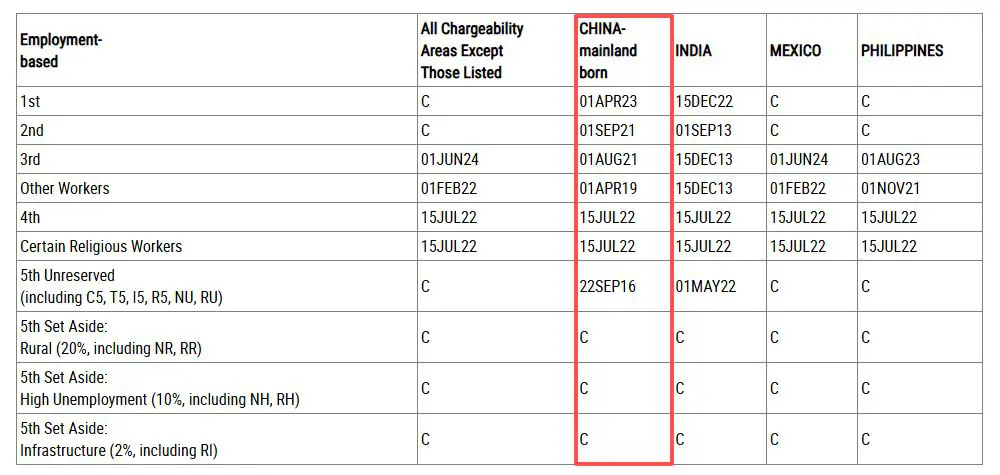
EB-5: Two Different Realities! Old Policy Stagnant, New Policy Visa-Backlog-Free
The U.S. Department of State's Visa Office has officially released the Visa Bulletin for June 2026 (the 9th month of the 2026 fiscal year). The new results show that there is no change in the EB-5 visa backlog under the old act, and EB-5 reserved visas under the new act remain current with no backlog. Table A: Final Action Dates For Employment-Based Preference Cases (Note: For those entering the U.S. Consulate interview process) Table B: Dates For Filing Of Employment-Based Visa Applications (Note: For those legally residing in the U.S. who meet the relevant conditions to file an AOS adjustment of status application with USCIS) It has not yet been announced whether Table B for employment-based immigration will be open for June 2026; this remains to be determined. WorldWay will continue to monitor the situation.

Without Legal Status, How Far Can Your Child Go in the U.S. Workplace?
In recent years, layoffs at U.S. companies have become far from uncommon. While the technology sector was once the primary focus of attention, industries such as media, entertainment, and film have also long undergone multiple rounds of restructuring. The difference is that these changes are no longer cyclical; they are now recurring and persistent across multiple sectors. Recently, Disney has initiated another round of layoffs, expected to affect approximately 1,000 employees. This marks the first large-scale organizational adjustment since February of this year. According to internal memos, the scope of these layoffs remains broad, impacting multiple departments.
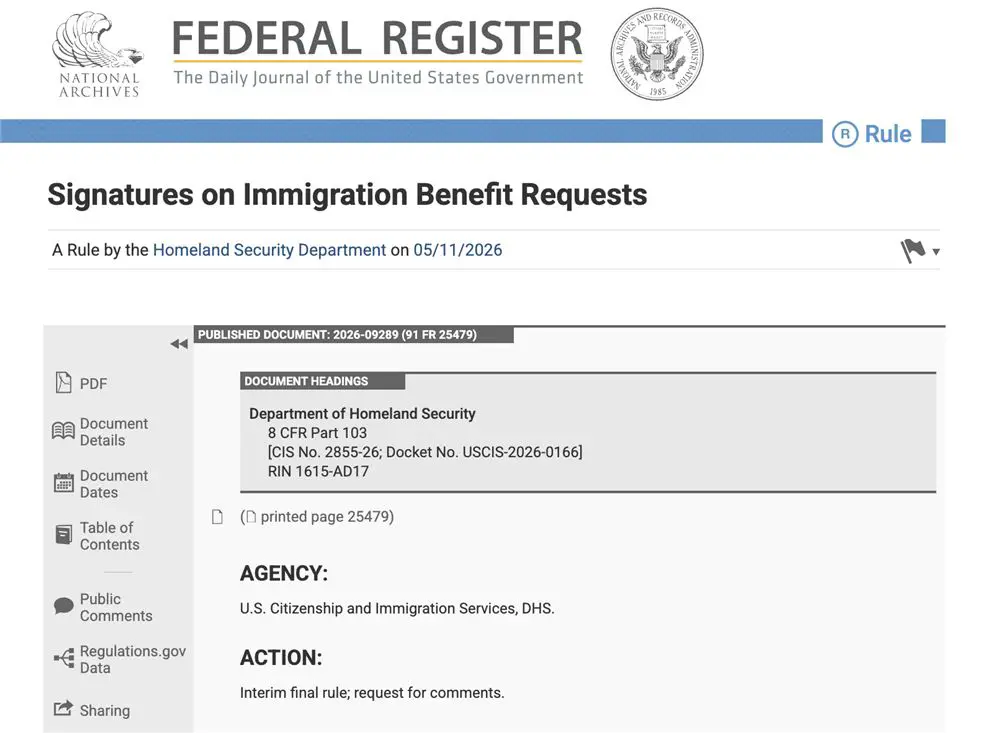
Quick Look! Two Major Changes in U.S. Immigration Applications
Recently, there have been two noteworthy changes in U.S. immigration. One concerns signatures on application forms, and the other concerns reporting addresses after moving within the United States. For applicants, these seemingly minor details can pose real risks if not handled properly. New Rule on Invalid Signatures: From "Correctable" to "Direct Denial" On May 11, 2026, the Department of Homeland Security (DHS) published an interim final rule in the Federal Register regarding signature requirements for immigration benefit applications. The rule clarifies that if U.S. Citizenship and Immigration Services (USCIS) discovers an invalid signature in the application materials after the case has been accepted, the adjudicating officer may, depending on the circumstances, choose to reject the application or issue a direct denial after completing the adjudication.
2026 U.S. Study Abroad Family Special Session H-1B Landscape Changes and Green Card Pathways Seminar
2026 U.S. Study Abroad Family Special Session H-1B Landscape Changes and Green Card Pathways Seminar

Stop waiting blindly for H-1B, break through with an EB-5 Green Card
Stop waiting blindly for H-1B, break through with an EB-5 Green Card
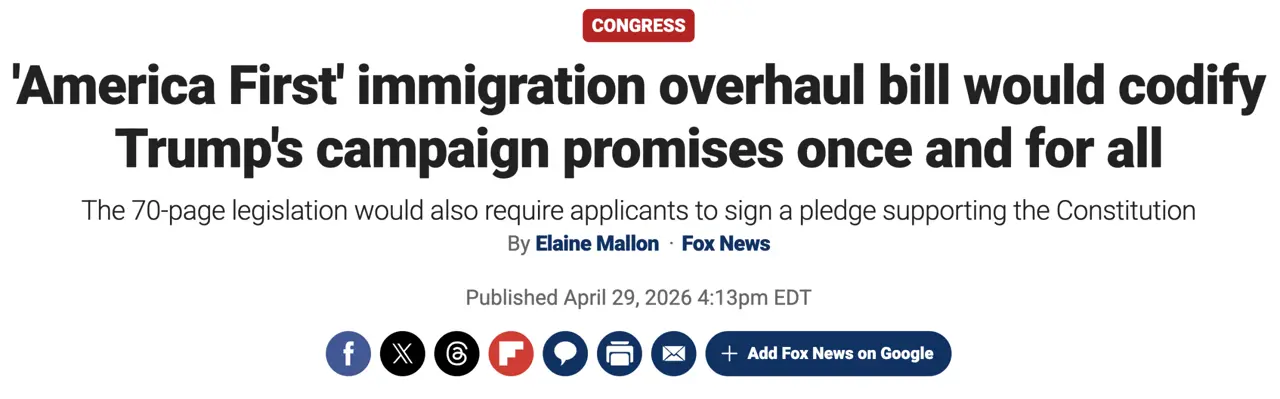
Emergency Alert! Seismic U.S. Immigration Proposal
Recently, U.S. immigration policy has once again signaled a strong tightening. The "Americans First Immigration Act," proposed by Republican Congressman Barry Moore, is attracting attention. This 70-page proposal has gained support from multiple Republicans and is currently in the preliminary discussion stage in the House of Representatives. The core of the proposal is to significantly restrict family-based immigration, eliminate the green card lottery, and introduce a new points-based system. Once passed, it could become a major adjustment to the U.S. legal immigration system in years.
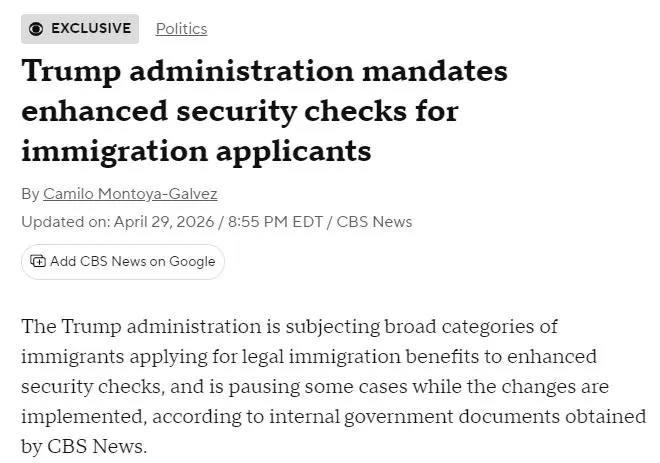
U.S. Immigration Processing Suspended? Truth Explained
Recently, a report regarding a "suspension of U.S. immigration processing" has sparked concern on social media, causing many families currently processing U.S. status, preparing for study abroad in the U.S., or planning for a U.S. Green Card to worry about whether their applications will be affected. However, it must be clarified that this is not a "comprehensive suspension of immigration processing by the U.S. Citizenship and Immigration Services (USCIS)." What is truly worth noting is that U.S. immigration vetting is further strengthening security background and compliance requirements. Not a comprehensive suspension but an increase in background review standards. More accurately, starting from April 27, 2026 (U.S. time), USCIS has implemented a more robust FBI background check mechanism for certain immigration benefit applications that require fingerprint submission. For some pending cases such as Green Card adjustment of status, naturalization, and asylum, if previous fingerprint checks have not been reviewed by the new system, final approval may be deferred while USCIS internally resubmits the fingerprints for re-verification.
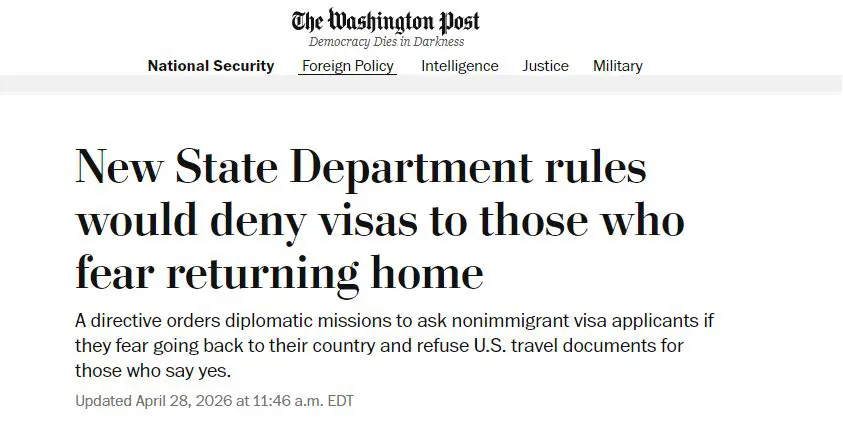
U.S. Visa Screening Tightened Again!
Recently, U.S. visa screening has once again drawn attention. On April 28, local time, the U.S. Department of State issued an urgent notice to all embassies and consulates worldwide: effective immediately, all applicants for U.S. non-immigrant visas must answer two additional questions during their interviews! What are the two new questions? The new regulation specifies that U.S. embassies and consulates abroad must ask applicants the following two questions when processing non-immigrant visa applications: 1. Have you ever suffered harm or abuse in your country of nationality or last habitual residence? 2. Do you fear that you will suffer harm or abuse if you return to your country of nationality or permanent residence? The visa review process can only proceed if the applicant verbally answers "No" to both questions; if the applicant answers "Yes," the visa will be denied on the spot.
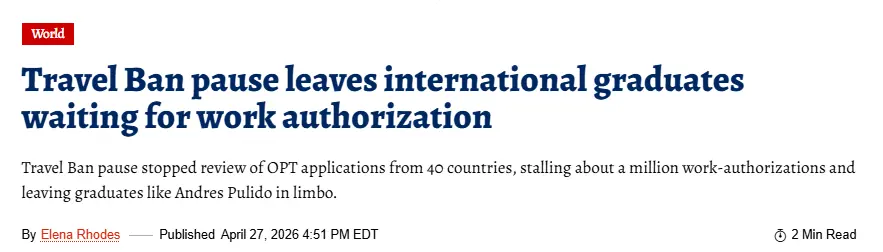
OPT Suspension Alarm: Don't Wait Blindly in the U.S.!
The spring of 2026, which should have been a critical juncture for international students transitioning from campus to the workplace, has been forced to a standstill due to a policy adjustment. According to multiple media reports, the U.S. government has expanded the scope of the "Travel Ban" in a series of statements, one of which is: suspending the processing of certain immigration benefits for applicants from approximately 40 countries and regions, including the Optional Practical Training (OPT) that countless international students rely on to remain in the United States. This has caused a large number of OPT applications to stall, leaving students to wait in uncertainty for a result with no timeline, even if they submitted their materials on time.
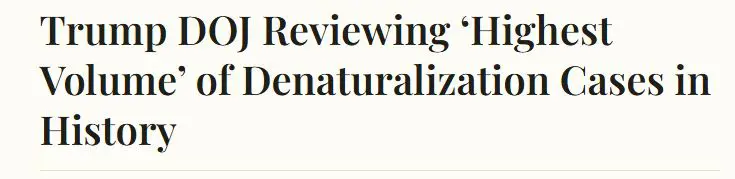
Under the Storm of U.S. Status Retrospective Reviews, Who Can Stay?
Recently, the U.S. government's statement on strengthening enforcement regarding the "revocation of citizenship" has sparked significant concern within the immigration industry and among applicant groups. According to reports, the U.S. Department of Justice has identified approximately 384 individuals whose citizenship may be at risk of revocation, with cases primarily targeting instances involving suspected fraud, concealment, or failure to meet statutory requirements during the naturalization process. This sends a clear signal: The U.S. immigration system is entering a phase that places greater emphasis on authenticity, transparency, and long-term compliance.

Studying in the U.S.: Where should you start with status planning?
The United States, a land yearned for by countless dreamers, continues to attract students from around the globe with its world-renowned education system, diverse and inclusive cultural atmosphere, and infinite career prospects. However, behind the polished narrative of studying abroad, the uncertainties surrounding status adjustment, internships, employment, and long-term residency are becoming a reality that many families must face squarely. When "studying abroad" no longer naturally implies that "subsequent development will fall into place," and when both the policy environment and status pathways are shifting, a more prudent and forward-looking approach is emerging: Before embarking on your educational journey, pave a more secure path for status planning for yourself and your family.