





The United States, a land yearned for by countless dreamers, continues to attract students from around the globe with its world-renowned education system, diverse and inclusive cultural atmosphere, and infinite career prospects. However, behind the polished narrative of studying abroad, the uncertainties surrounding status adjustment, internships, employment, and long-term residency are becoming a reality that many families must face squarely.
When "studying abroad" no longer naturally implies that "subsequent development will fall into place," and when both the policy environment and status pathways are shifting, a more prudent and forward-looking approach is emerging: Before embarking on your educational journey, pave a more secure path for status planning for yourself and your family.

The charm of U.S. education lies in its abundant resources and diverse development paths.
• A Hub of Prestigious Institutions: From long-standing private elite schools to mature public university systems, the U.S. possesses rich and multi-layered educational resources that can meet the growth needs of different students.
• Flexible Educational System: U.S. education encourages students to explore directions based on their interests, flexibly choose courses and majors, and places greater emphasis on individual development and the cultivation of comprehensive abilities.
• Diverse Environment Broadens Horizons: In a multicultural campus environment, students not only improve their language skills but also cultivate a global perspective and cross-cultural communication abilities.
It is precisely for these reasons that the U.S. has always been a key destination for many families in their educational planning. For many international students, the goal of studying in the U.S. is not just to obtain a diploma, but also to launch a career and perhaps even achieve long-term residency in this land full of opportunities.
Once upon a time, the "F-1 student visa → OPT internship → H-1B work visa → Green Card" sequence was viewed as a clear and viable path for staying in the U.S. However, in recent years, every link in this chain has been fraught with unprecedented challenges.
• Intensifying Uncertainty of OPT Policy: As a "buffer period" for students to work in the U.S. after graduation, the importance of OPT is self-evident. However, policy uncertainty has made it precarious. The Director of U.S. Citizenship and Immigration Services has previously indicated the possibility of terminating the OPT program and its extension policy for STEM majors. Once OPT is lost, international students lose their period for accumulating work experience in the U.S. and are forced to find an employer willing to sponsor an H-1B before graduation, increasing the difficulty of job hunting.
• Continuously Rising Threshold for H-1B Visas: Even if one successfully obtains OPT, it does not mean that the subsequent status path will be smooth. Today, the H-1B increasingly emphasizes the quality of the applicant's position, salary level, and the strength of the employer. An aggressive proposal even plans to completely shut down the Green Card Lottery system and fully terminate the H-1B visa program. This uncertainty makes years of academic investment and career planning full of risks.
• Increasingly Cautious Policy Environment: The U.S. visa policy for international students is becoming increasingly strict. From large-scale social media vetting to the suspension of certain visa interviews, and even the revocation of international student recruitment qualifications for some universities, a series of measures indicate that the U.S. is implementing the "America First" principle in the field of education.
When studying abroad can no longer reliably lead to status, and when "graduation equals unemployment, and unemployment equals departure" becomes a possibility, many families have begun to re-examine this high-investment, high-risk path.
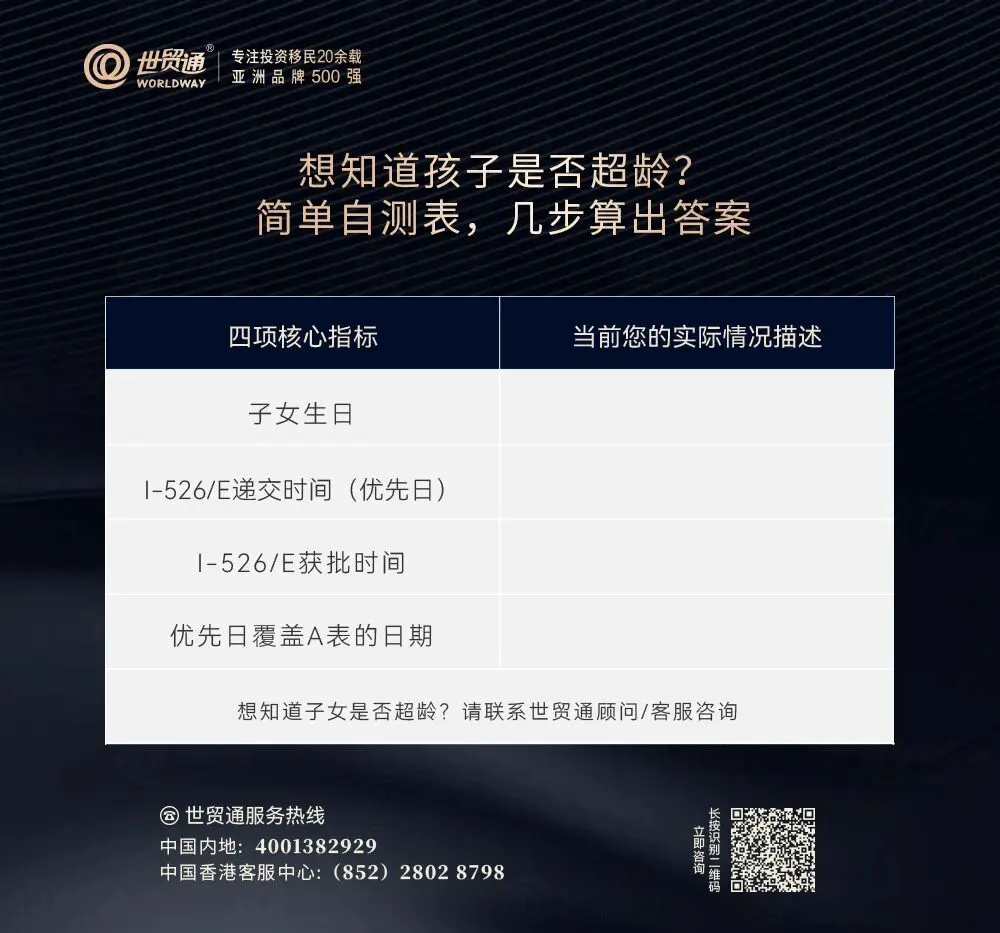
Facing the increasingly severe status dilemma, "Immigrate first, study abroad later" is becoming the choice of more and more forward-thinking families. Possessing a U.S. Green Card or citizenship means being able to enjoy the same treatment as local students.
• Significantly lower tuition costs, enjoying local student fee standards
• More opportunities to apply for scholarships and financial aid
• Greater freedom in choosing majors, without restrictions on international students
• More abundant employment opportunities, without worrying about work visas
• Higher admission rates for prestigious schools, enjoying local student enrollment quotas
It is precisely for this reason that more and more families are turning their attention to more direct status planning paths. And this is exactly why more and more families are focusing on EB-5: pave the status foundation for the child and the family first, and then embark on the path of U.S. education.
Under the new EB-5 law, Rural EB-5 projects are exempt from visa backlogs and have the advantage of priority processing; the "concurrent filing" policy allows applicants in the U.S. to file I-526E and I-485 simultaneously, and they can obtain a Combo card in about 3 months, quickly achieving legal residency and employment eligibility.
However, this advantage will not last forever. As the reserved quotas continue to be consumed, a silent backlog warning has quietly appeared; at the same time, the grandfather clause will expire on September 30; the minimum investment amount may also be raised from $800,000 to $900,000 or higher on January 1, 2027. In other words, the sooner you act, the more likely you are to lock in this relatively favorable policy window and secure greater initiative for your child's education and status planning.

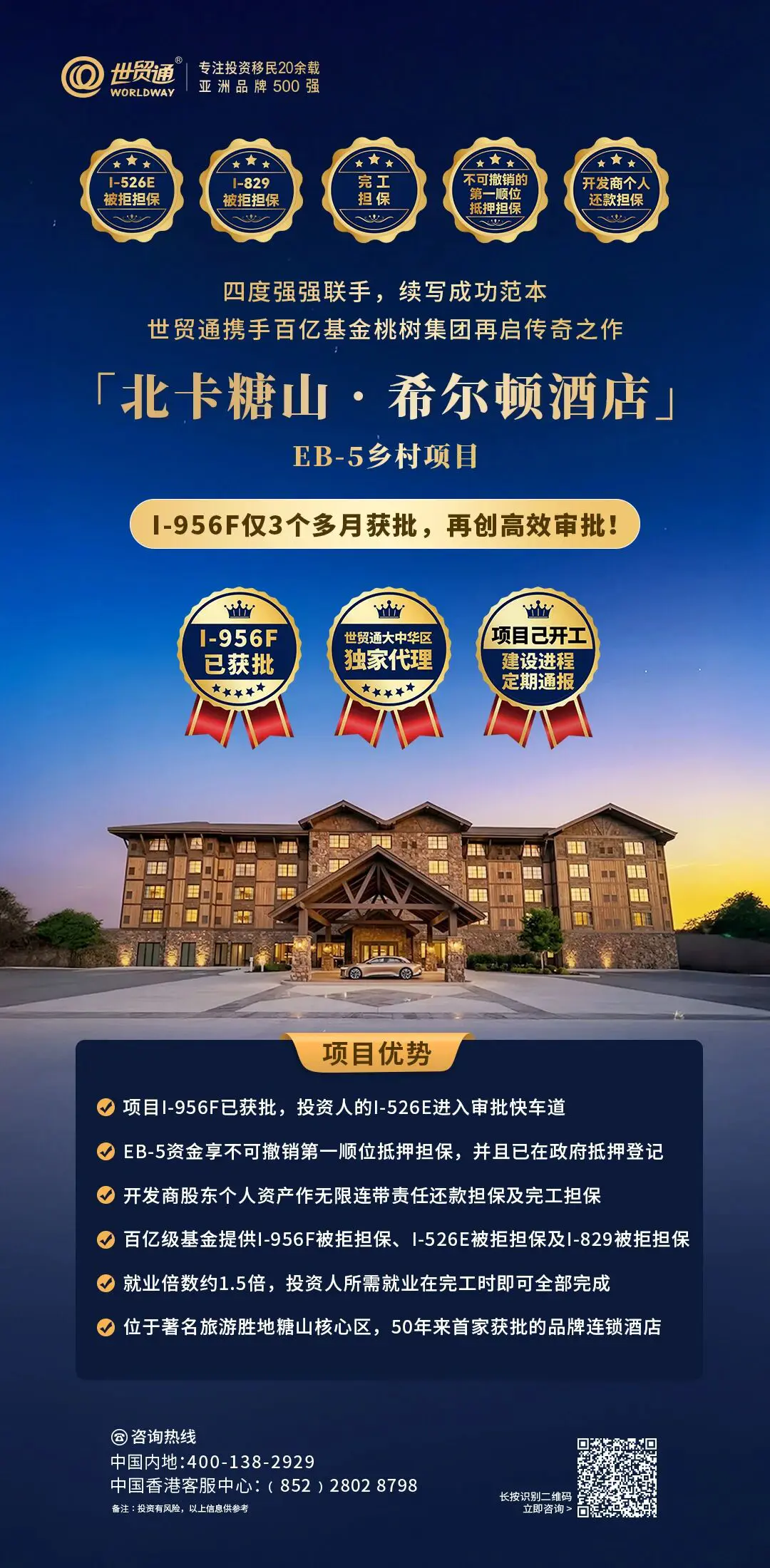
For inquiries in Mainland China: 400-138-2929, Hong Kong, China Customer Service Center: (852)2802 8798