





Those planning to visit Portugal in the near future need to pay attention to a new entry requirement change.
WorldWay Immigration notes that the Portuguese government recently announced that starting from September 6, 2026, 100% biometric data collection will be implemented for non-EU travelers subject to the Entry/Exit System (ES).
Portuguese Prime Minister Luís Montenegro stated during an inspection of Lisbon Airport that full biometric data collection will put additional pressure on airport border controls. Currently, major airports such as Lisbon, Faro, and Porto are addressing the new passenger flow pressure by increasing staff, equipment, and optimizing processes.
For ordinary tourists, this means entry verification will be more detailed, and more time may need to be reserved for border control during peak periods.
However, from the perspective of status planning, another aspect of this change warrants attention: as European border management becomes increasingly digitized, the distinction between short-term visitors and European residence status holders becomes even clearer.

1. Starting September 6
What Are the Changes to Portugal's Border Control?
This adjustment is related to the European Entry/Exit System (EES).
The EES commenced operation in October 2025 and was implemented in phases across European countries; since April 10, 2026, it has been fully operational at the external borders of the relevant European countries.
Simply put, this system mainly targets non-EU travelers making short stays in Europe.
In the past, when entering the Schengen Area, entry and exit stamps were usually placed on passports; with the implementation of EES, these records are gradually transitioning to digital management, and the system will record:
• Passport details and basic personal information
• Entry and exit times
• Facial images
• Biometric information such as fingerprints
Therefore, for EES-applicable travelers including Chinese passport holders, entry and exit records will be more digitized and precise when passing through Portugal's external borders in the future.
2. Short-Term Visitors and Residence Status
Clearance Rules Are Not the Same
It should be noted that the EES does not apply to all non-EU nationals.
citizens of EU and Schengen member states, as well as individuals already holding long-term visas, residence permits, or residence cards issued by European countries, are not subject to EES registration.
In other words, holders of a valid Portugal Residence Card still need to undergo standard border checks, but are not processed under the EES registration rules for ordinary short-term visitors.
For those who travel to Europe occasionally, a Schengen Visa can meet short-term travel needs; however, if a family's future plans involve long-term travel to and from Europe, children's education, business development, or living arrangements, the convenience provided by a stable European residence status is far more long-lasting.
3. Low Physical Presence Requirement
Makes Portugal Residence Status More Flexible
Among numerous residency programs in Europe, the Portugal Golden Visa Program has consistently attracted attention from international families, one major reason being its relatively flexible physical presence requirements.
According to current regulations, Portugal residence card holders can live and work in Portugal, and enjoy rights such as Schengen travel and family reunion for eligible family members.
Regarding physical presence requirements, current regulations stipulate:
An average of just 7 days of stay per year is required, with the freedom to work, invest, and conduct business locally.
For those whose career and family focus currently remain in their home country but who wish to arrange a European residency status in advance, this requirement eliminates the need to relocate long-term to Portugal immediately to maintain status, leaving greater room for future adjustments.
4. Upgraded Border Management
Makes Differences in Residency Status More Apparent
From the full operation of the EES to Portugal's implementation of 100% biometric data collection on September 6, European border management is entering an increasingly digital phase.
For short-term travelers, the changes are mainly reflected in entry/exit records and stay duration management; whereas for families with long-term European plans, a stable residence status can offer more options for future living, education, business, and travel.
This is also one of the reasons why the Portugal Golden Residence continues to receive ongoing attention. WorldWay Group continuously monitors Portuguese and European residence policy developments. Individuals with needs for European residency, children's education, business affairs, or long-term family planning can further evaluate residency options tailored to their financial arrangements and future plans.
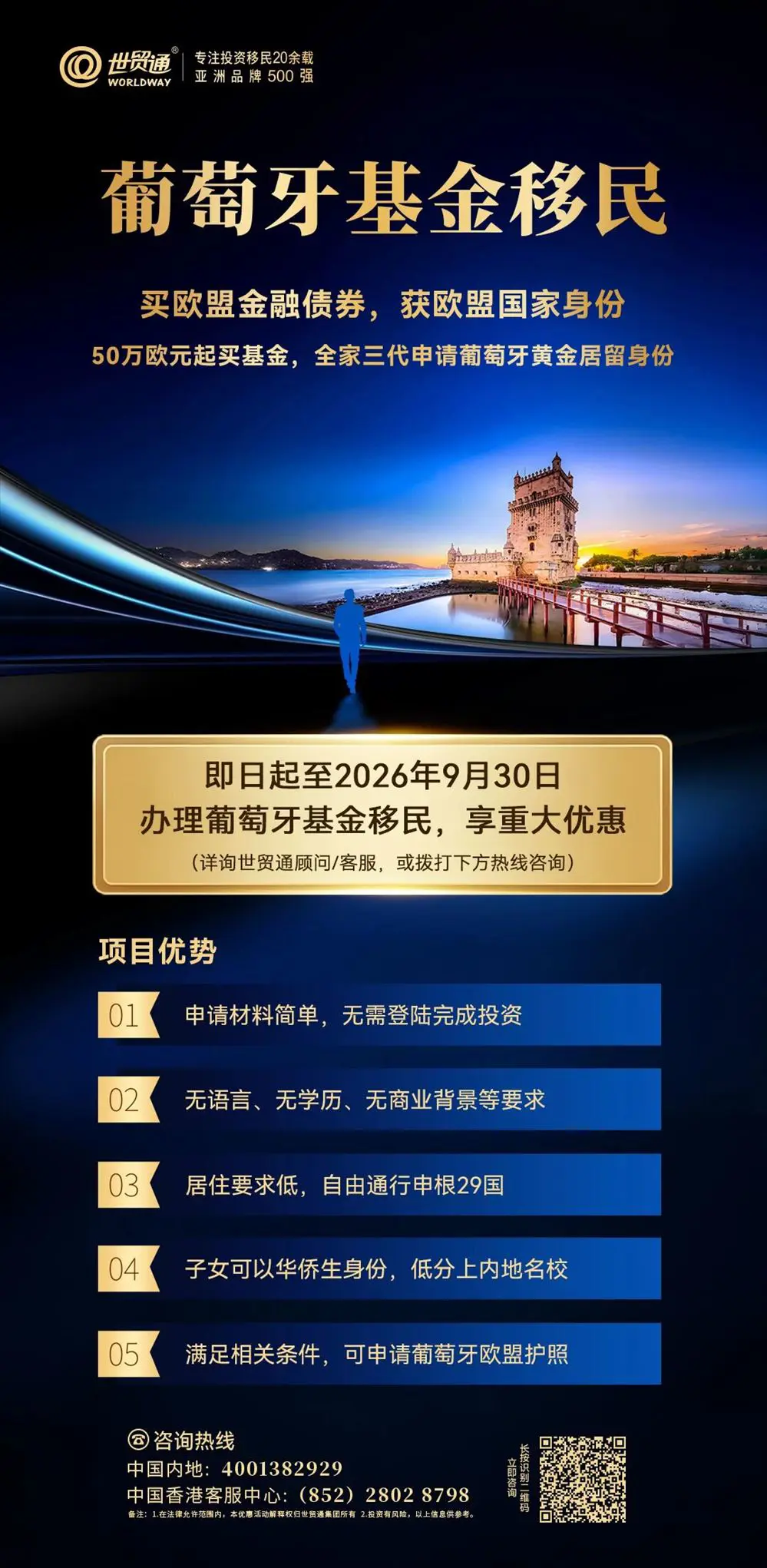
Currently, through the Portugal Fund Investment Immigration Program, you can invest from €500,000 in fund subscription to apply for Portugal Golden Residence status for three generations of your family. Clients applying for Portugal fund immigration from now until September 30, 2026, can enjoy limited-time promotional offers from WorldWay. Interested families are encouraged to assess and plan early to capitalize on the current application window.
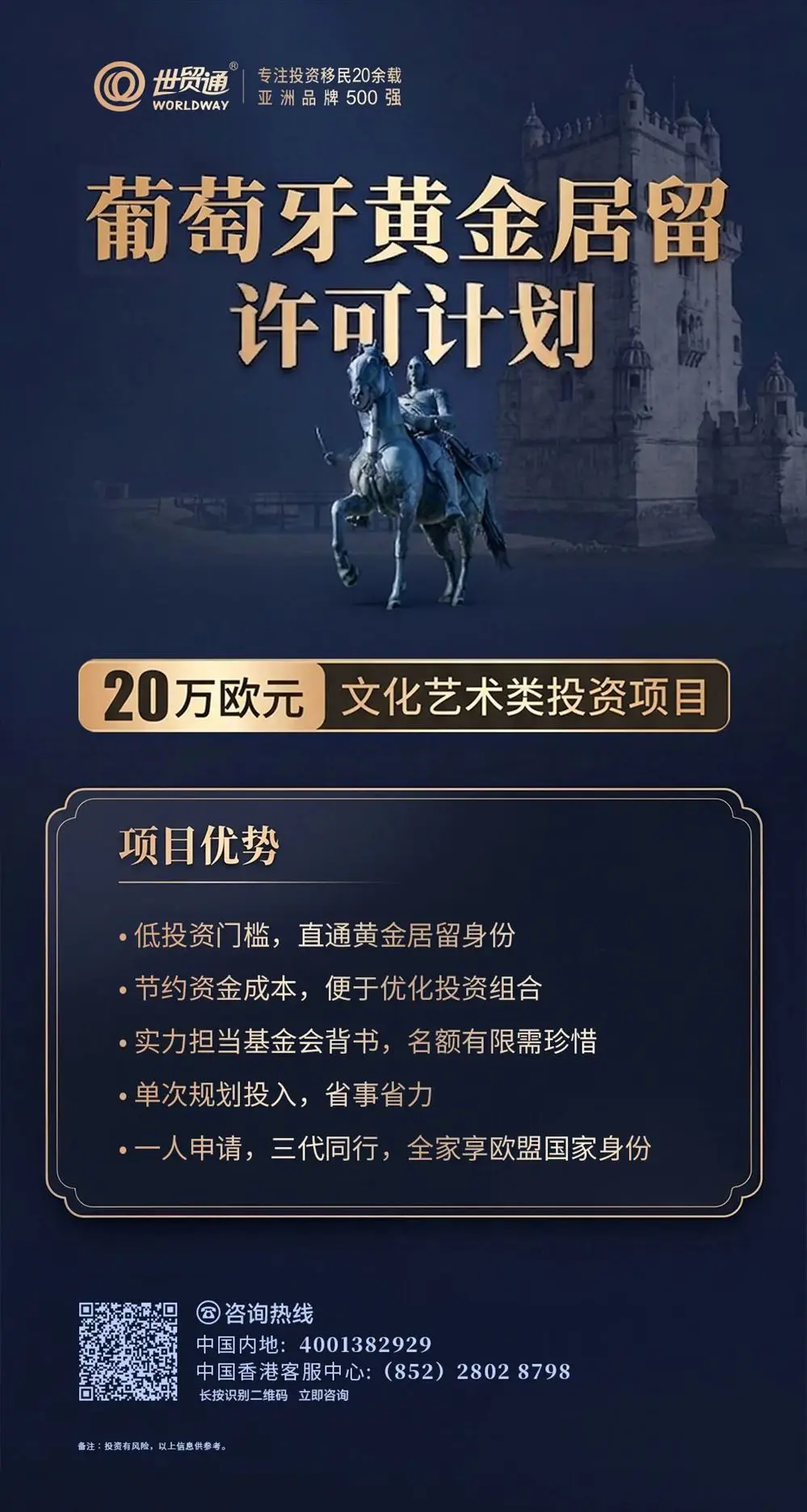
Additionally, immigration to Portugal is also available through the Portuguese Cultural and Artistic Donation Project. According to legal provisions, applicants only need to invest €200,000 to apply for Portugal Golden Residence status for three generations of their family.
WorldWay —— An Active Promoter of European Investment Immigration Programs
• In April 2013, WorldWay partnered with the Embassy of Portugal in China to hold the “Launch Ceremony of the Portugal Golden Residence Permit Program,” introducing the Portugal Golden Residence Program into China;
• In 2013, WorldWay launched and organized the nationwide “2013 European Immigration Year” campaign, hosting Europe-themed “European Property Expos” in Beijing, Shanghai, Shenzhen, and Qingdao, setting off a nationwide wave of European investment immigration across China;
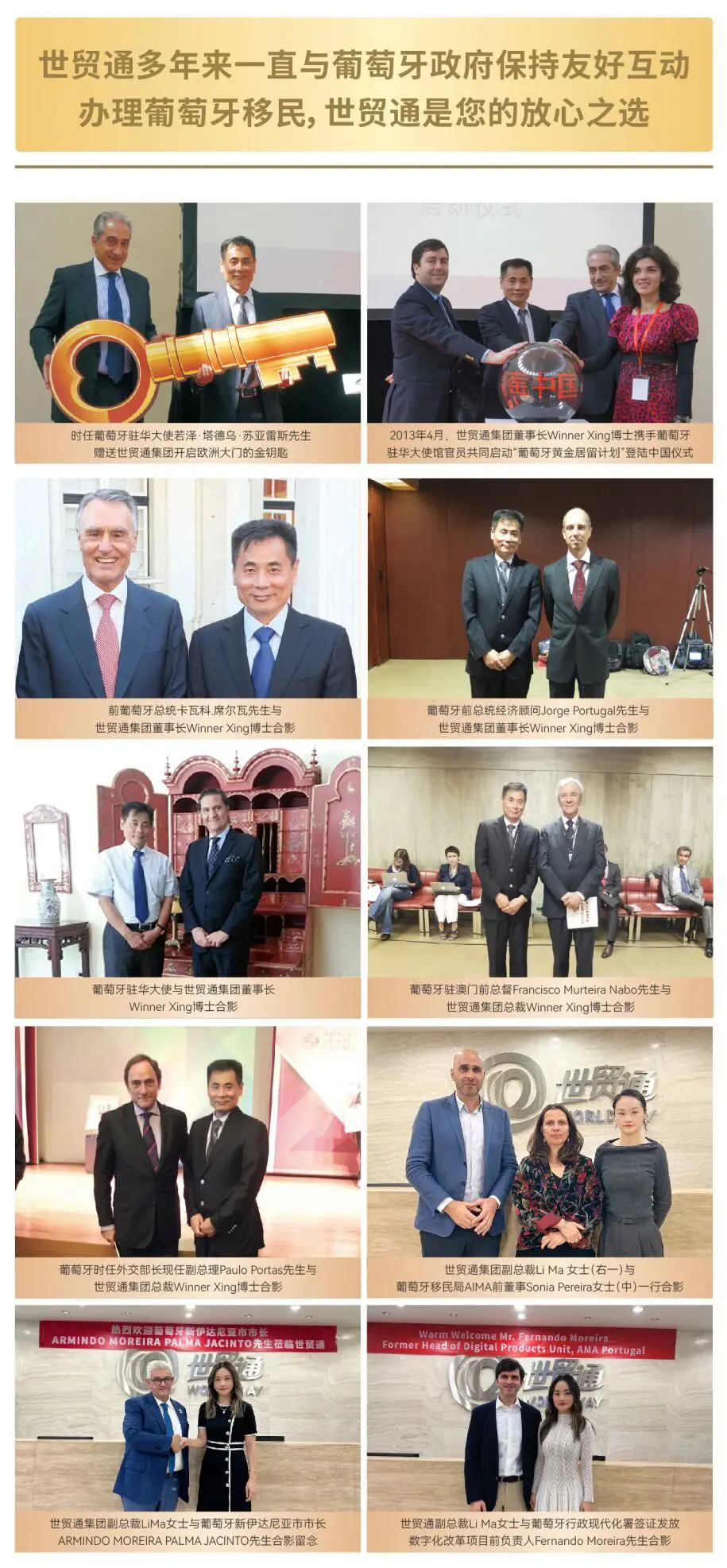
• Over the years, WorldWay has maintained friendly interactions with the Portuguese government. Executives of WorldWay Group have met with key dignitaries, including the President, Deputy Prime Minister, Minister of Foreign Affairs, and Ambassador to China of Portugal.
As an active promoter of European investment immigration programs, WorldWay boasts an experienced team of professional European immigration documentation specialists, making it your trusted choice for Portuguese immigration.
For more details on Portuguese immigration, please contact Mainland China: 400-138-2929, Hong Kong SAR Customer Service Center: (852)2802 8798