In recent years, Hong Kong residency status has drawn significant attention from mainland families.
Some value their children's education and hope to provide them with more pathways for higher education; some wish to leverage Hong Kong to connect the mainland with international markets, thereby expanding opportunities for career and business growth; others focus on asset allocation, aiming to enhance flexibility for their family's long-term planning.
As talent and investment immigration policies continue to refine, the target audience and strategic direction for acquiring Hong Kong residency status have become increasingly clear. For families with needs in education, career advancement, and asset allocation, Hong Kong is becoming an option well worth long-term consideration.
Backed by the Mainland, Connected to the World
A major advantage of Hong Kong is that it is close enough to the mainland while maintaining high connectivity with global markets.
Travel between Shenzhen and Hong Kong is highly convenient, and transportation connections with major mainland cities are exceptionally mature. For many families, planning for Hong Kong residency status does not mean completely shifting their existing focus of life and business.
At the same time, Hong Kong possesses a highly internationalized system of financial, commercial, and professional services, connecting mainland markets on one side and global capital and international enterprises on the other.
For business owners, professionals, and individuals with cross-border business needs, they can leverage Hong Kong to further expand into international markets while balancing their mainland careers and family life.
More Educational Choices
Academic Pathways Connecting Hong Kong, the Mainland, and Overseas
Children's education is an important reason why many families pay attention to Hong Kong residency status.
Hong Kong's compulsory education system covers 15 years and features a mature, diversified educational ecosystem spanning government, aided, direct subsidy scheme (DSS), private, and international schools. Covering mainstream international curricula such as IB, A-Level, and AP, it seamlessly aligns with international education while making it convenient to accommodate the lifestyle and companionship needs of mainland families.
Regarding further education, the Hong Kong Diploma of Secondary Education Examination (HKDSE) allows students to apply not only to local Hong Kong universities, but is also recognized by numerous overseas universities. Eligible students can also apply to mainland universities through schemes like the DSE Admission Scheme and the Joint Entrance Examination for Hong Kong, Macao, and Taiwan Students. The three higher education pathways—Hong Kong, the mainland, and overseas—can be flexibly chosen according to the child's development. Additionally, students qualifying as local Hong Kong students enjoy government-subsidized places and lower tuition fees when pursuing university education in Hong Kong.
Career and Asset Allocation
Both Enjoy Greater Opportunities
Beyond education, Hong Kong's mature financial system and tax environment are key reasons why it consistently attracts business owners and high-net-worth families.
Hong Kong's tax system is relatively simple and operates under a territorial principle of taxation. At the same time, Hong Kong boasts mature ecosystems in banking, insurance, securities, funds, family offices, and professional services.
For families with cross-border business operations, asset allocation, or family wealth management needs, Hong Kong residency status can be planned holistically alongside career development and asset allocation.
Thus, the value brought by this status extends beyond residency itself, creating greater scope for the family's future career and wealth arrangements.
Behind Policy Changes
The Direction Is Actually Very Clear
Over the past few years, Hong Kong's talent and investment immigration policies have undergone continuous adjustments.
In terms of talent, the Top Talent Pass Scheme continues to target high-income individuals and eligible university graduates meeting specific requirements. Applicants are not required to secure a Hong Kong job offer prior to applying, providing substantial flexibility for professionals intending to pursue career development in Hong Kong.
Regarding capital, the New Capital Investment Entrant Scheme has also undergone continuous optimization since its relaunch. Currently, applicants are required to make a qualifying investment of no less than HKD 30 million. In recent years, policy adjustments regarding net asset assessment periods, real estate investment arrangements, and investment holding via private holding companies have been introduced, offering high-net-worth families more flexible options for strategic planning.
The underlying direction behind these changes is actually very clear: Hong Kong welcomes those who have the capability to develop in Hong Kong, and equally welcomes those with long-term asset allocation and investment needs.
How to Plan for Hong Kong Residency Status?
The Key Lies in Assessing Your Own Qualifications
Currently, the Hong Kong residency status pathways that attract significant attention from mainland families mainly include the Top Talent Pass Scheme and the New Capital Investment Entrant Scheme.
Different pathways impose distinct requirements regarding applicants' academic qualifications, income, professional background, asset scale, and subsequent arrangements.
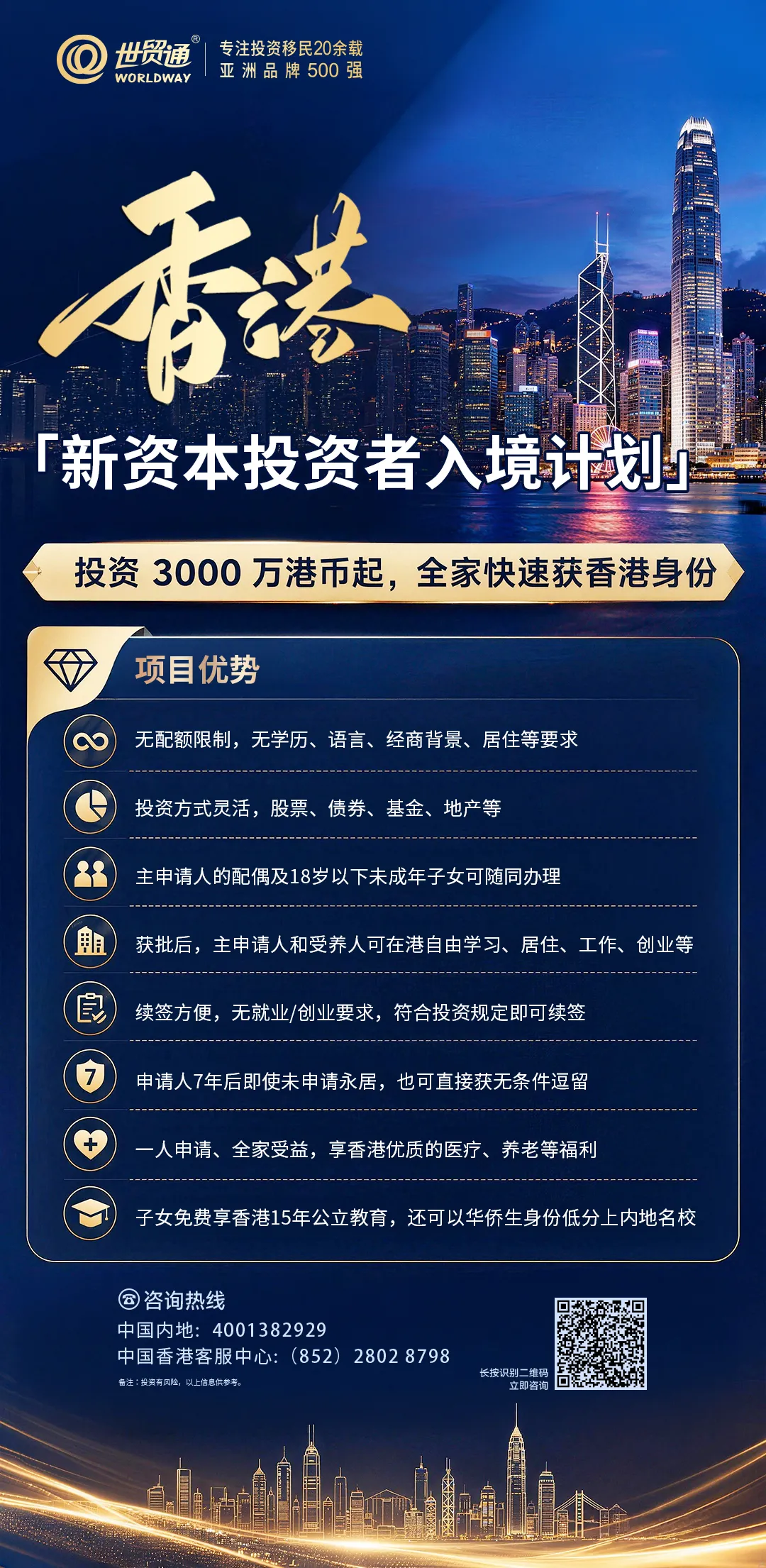
For high-net-worth families with substantial asset strength who wish to concurrently plan for Hong Kong residency status through investment, special attention can be given to the New Capital Investment Entrant Scheme. This scheme has no points system, no quota limits, no education requirement, and no mandatory residence requirement. Upon approval, applicants can freely work, start businesses, etc. in Hong Kong, benefiting the entire family with a single approval. With an investment starting from HKD 30 million, the entire family can quickly obtain Hong Kong residency status.
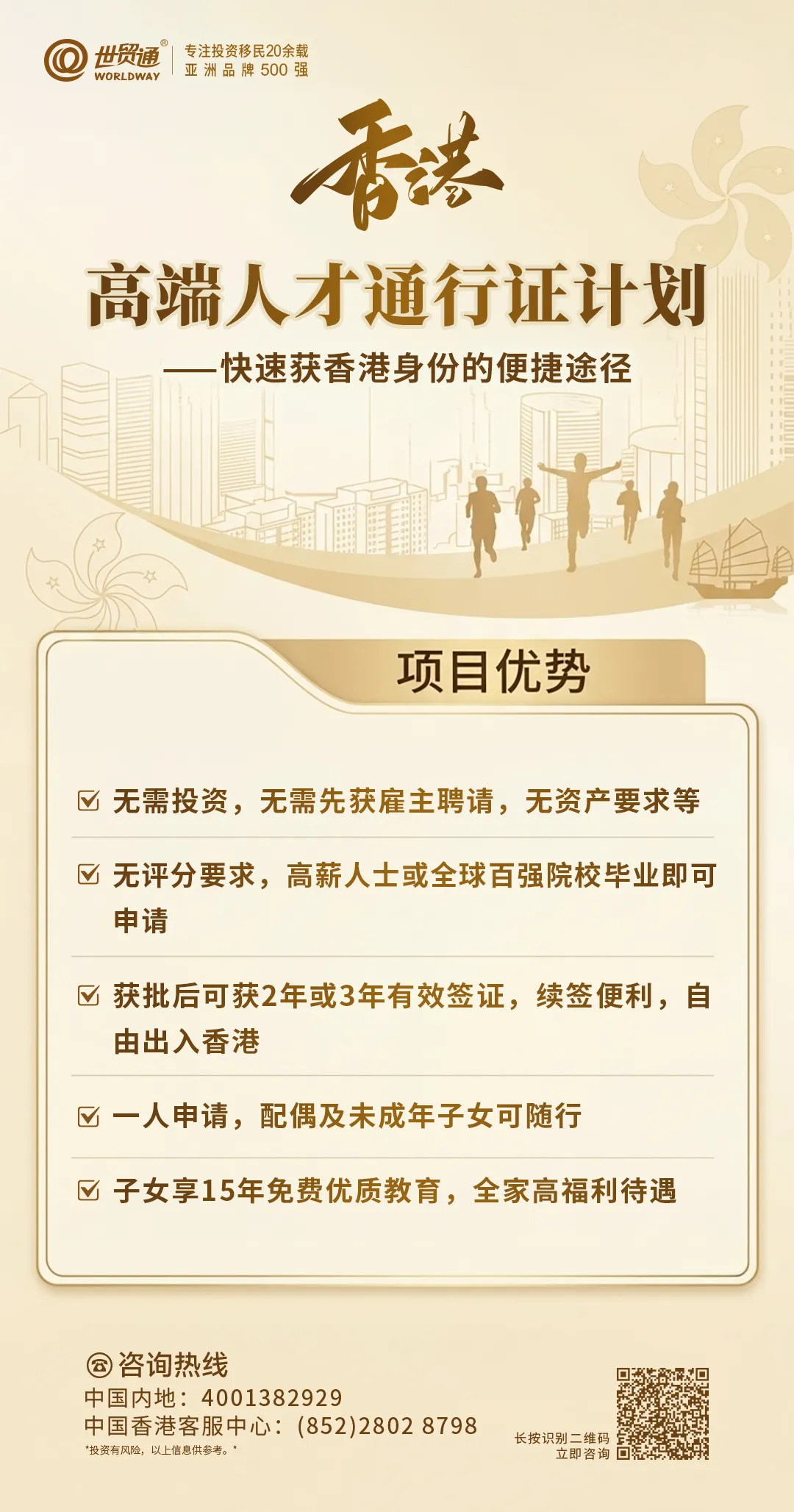
For individuals with strong academic qualifications or high-income backgrounds, the Hong Kong Top Talent Pass Scheme offers an alternative pathway to residency status. This scheme requires no investment, no prior employer job offer, no asset test, and no points assessment. With one person applying, the spouse and unmarried minor children can accompany them and freely enter and exit Hong Kong.
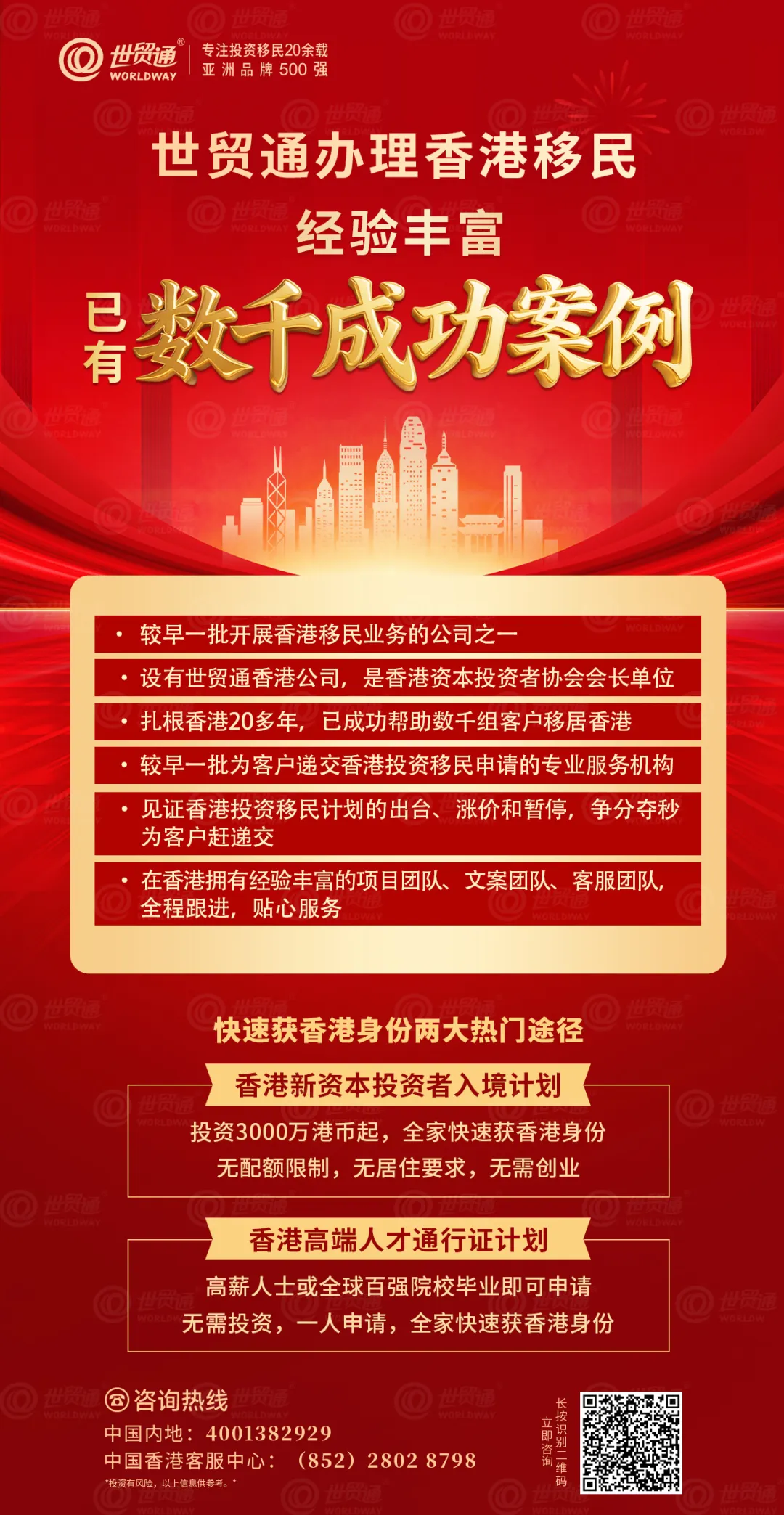
As one of the early professional institutions to undertake Hong Kong immigration services, WorldWay has established professional firms in Hong Kong, Macao, and the Mainland, accumulating numerous successful cases in Hong Kong residency status planning alongside extensive project experience.
WorldWay can tailor and outline a more suitable Hong Kong residency scheme for families by taking into account the applicant's family structure, education and income, career trajectory, asset structure, and children's educational needs.