Starting from January 2 this year, Turkey officially implemented visa-free travel and transit for Chinese citizens holding ordinary passports, allowing a cumulative stay of up to 90 days within 180 days.
Once the policy was announced, traveling to Turkey for tourism and business inspection trips became significantly more convenient.
However, from the perspective of residency and citizenship planning, the significance of this goes far beyond a simple "spontaneous trip."
PART 01
Beyond Visa-Free Travel
What Deserves More Attention Is the Turkish Passport Itself
Turkey's visa-free policy for ordinary Chinese passports makes it more convenient for Chinese families to travel to Turkey.
For families who already have needs for overseas residency and citizenship planning, what is even more worthy of attention is the Turkish Citizenship by Investment Program.
Under current policies, foreign investors can apply for Turkish citizenship through qualifying investments. The program itself does not set long-term residency, language tests, or educational background as main application thresholds, and eligible family members can apply together.
In other words, visa-free access solves the issue of making visits to Turkey easier, while the passport brings a more long-term identity and residency option.
PART 02
Turkish Passport,
What Is Its True Value?
From global travel to U.S. relocation, education, and family residency planning, the value of a Turkish passport is mainly reflected in the following aspects.
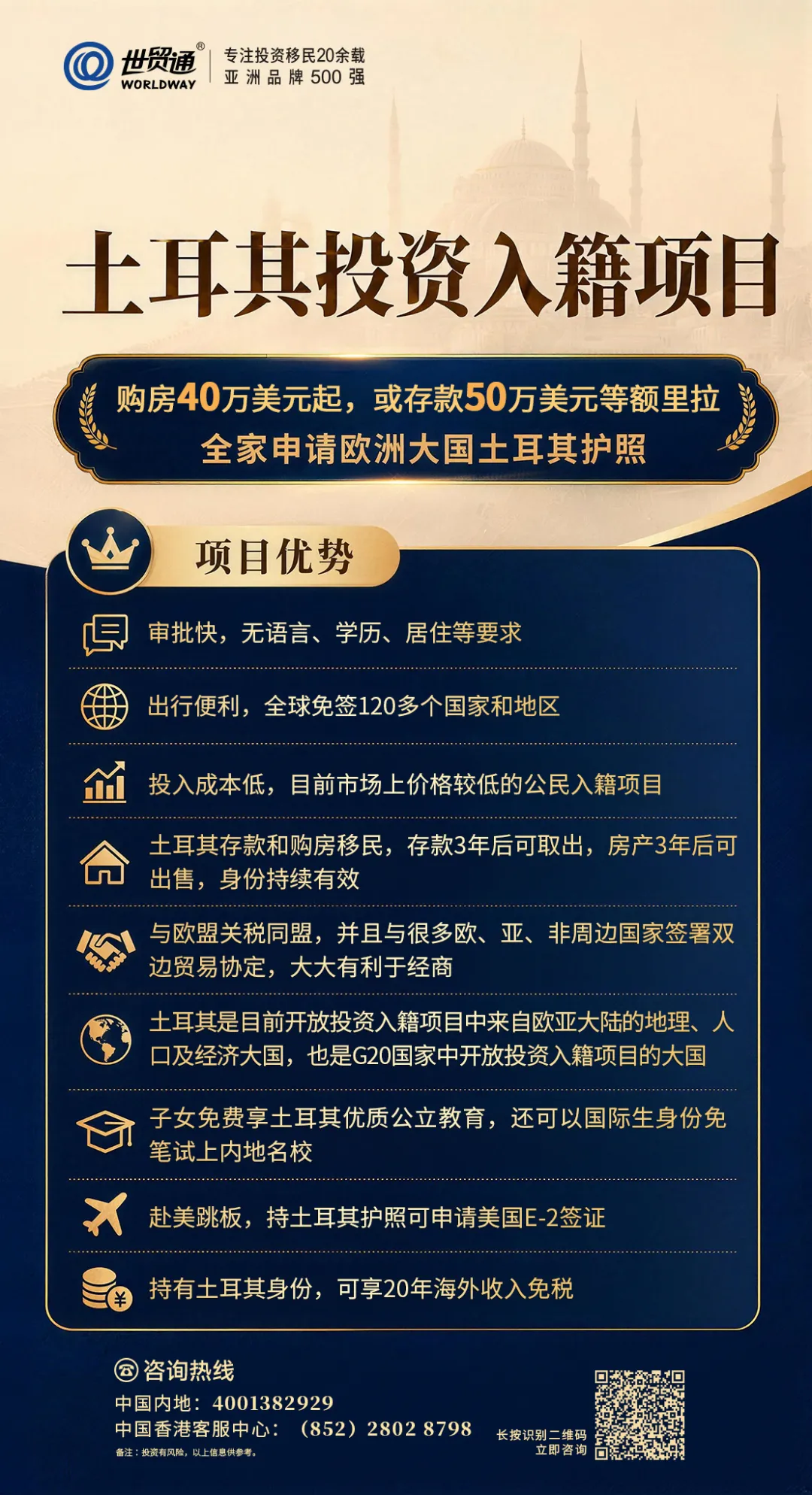
1. Global Mobility: Convenient Travel to Over 120 Countries and Regions
Holding a Turkish passport grants visa-free or visa-on-arrival entry to over 120 countries and regions worldwide, including popular business and travel destinations such as Singapore, Japan, and Hong Kong, China. For individuals who frequently engage in cross-border business, travel, or global family planning, having an extra passport also means greater flexibility in travel arrangements.
2. Springboard to the U.S.: E-2 Visa, an "Indirect Pathway to America"
This is one of the most widely praised aspects of the Turkish passport among high-net-worth families.
The U.S. E-2 Treaty Investor Visa is a non-immigrant visa available to citizens of designated treaty countries. Applicants are required to make a substantial investment in the U.S. and actively manage and operate the business. Upon meeting the criteria, they can reside and operate a business in the U.S. under E-2 status.
Currently, Mainland China is not on the list of U.S. E-2 treaty countries, whereas Turkey is an E-2 treaty country, with the relevant treaty having taken effect in 1990.
This means that lawfully acquiring a Turkish passport first and then applying for an E-2 visa as a Turkish citizen has become a "golden springboard" for many Chinese families planning for U.S. status. One passport quietly opens another door.
3. Flexible Residency Planning: No Requirement for Long-term Residency
Turkish Citizenship by Investment does not impose strict physical residency requirements. After approval, applicants can still live and work in their home country, simply completing the application process as required. For families who view an "alternative citizenship/residency" as a Plan B without wanting to disrupt their current lives, this versatile flexibility of "taking the offensive or defensive" is one of its greatest attractions.
4. Tax and Business Advantages: More Suitable for Global Asset Allocation
In 2026, Turkey introduced new tax incentive policies, allowing eligible individuals to enjoy income tax exemptions on overseas income for up to 20 years, while eligible inherited assets may be subject to a preferential tax rate of 1%. At the same time, Turkey has established a customs union with the European Union and signed free trade agreements with multiple countries and regions, providing greater convenience for cross-border business and global asset allocation.
5. Educational Springboard: Offering Children an Extra Option
A Turkish passport offers considerable possibilities for children's educational planning: whether applying to domestic international schools, planning university admission pathways as an international student, or directly benefiting from Turkey's high-quality domestic higher education resources, it paves an additional path for families.
6. Straddling Europe and Asia, Multiple International Identity Attributes
Turkey is a G20 member state, a NATO member state, and an EU candidate country. It has established a customs union with the EU and signed free trade agreements with more than 20 countries worldwide. This location as the "crossroads connecting Europe and Asia," coupled with a stable institutional framework, gives its passport an inherent filter of "security."
PART 03
How to Obtain a Turkish Passport?
One of the Two Pathways Will Suit You
Currently, there are two main pathways receiving significant attention from Chinese families:
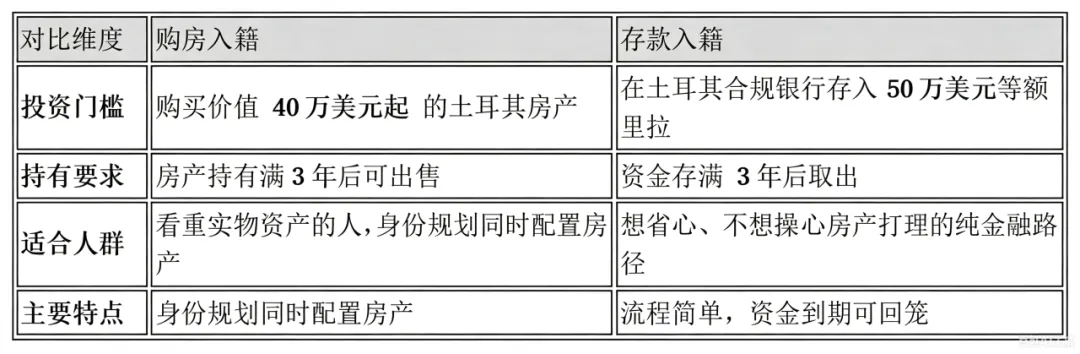
Key takeaway: Real estate purchase and bank deposit are only phased actions requiring a "3-year holding period." Upon expiration, investors can exit flexibly while retaining citizenship permanently.
PART 04
Residency & Citizenship
Is a "Right to Choose" Given to the Family
For many families, planning for Turkish status does not necessarily mean living in Turkey permanently.
More importantly, through a single passport comes an extra "right to choose": one more pathway for children's education, fewer hurdles for global travel, an additional anchor for asset allocation, and a stepping stone for U.S. planning.
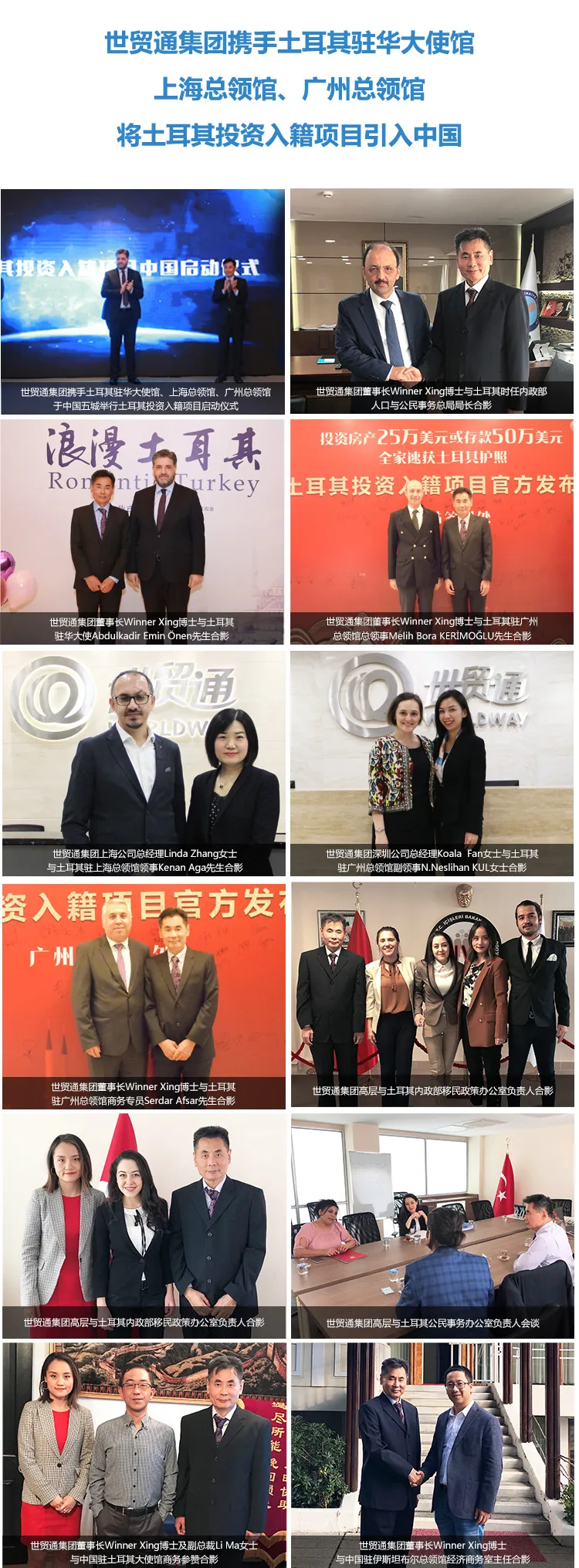
As an active promoter of European investment immigration programs and one of the early immigration agencies to market the Turkish Citizenship by Investment Program in China, in April 2019, WorldWay partnered with the Turkish Embassy in China, the Consulate General in Shanghai, and the Consulate General in Guangzhou to hold the official press conference and China launch ceremony for the Turkish Citizenship by Investment Program, officially introducing this globally anticipated program to China! Immigrating to Turkey with WorldWay means choosing a more professional, secure, and trustworthy status planning service.