





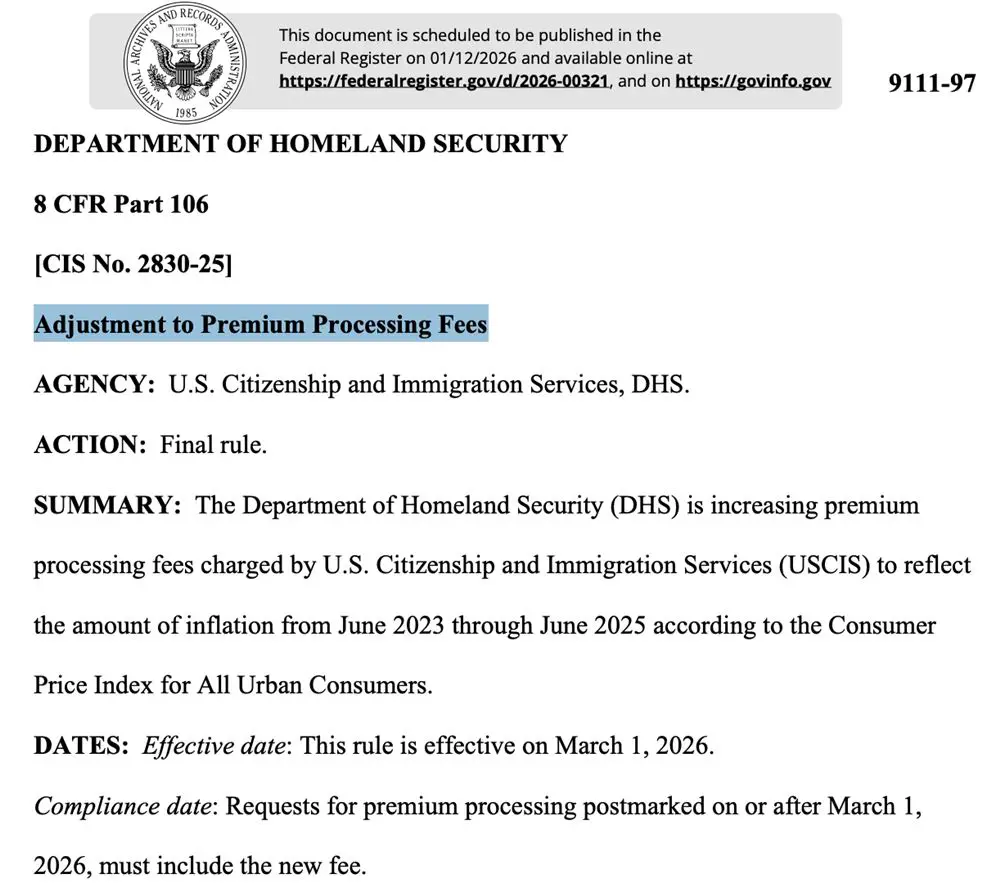
Recently, U.S. Citizenship and Immigration Services (USCIS) officially announced that it will increase premium processing fees for various immigration applications effective March 1, 2026.


01. Details of Price Adjustments
In the past, many families had a relatively simple understanding of the U.S. pathway: F-1→OPT→H-1B→Green Card, which seemed to be a mature and clear route. However, reality has long since changed.
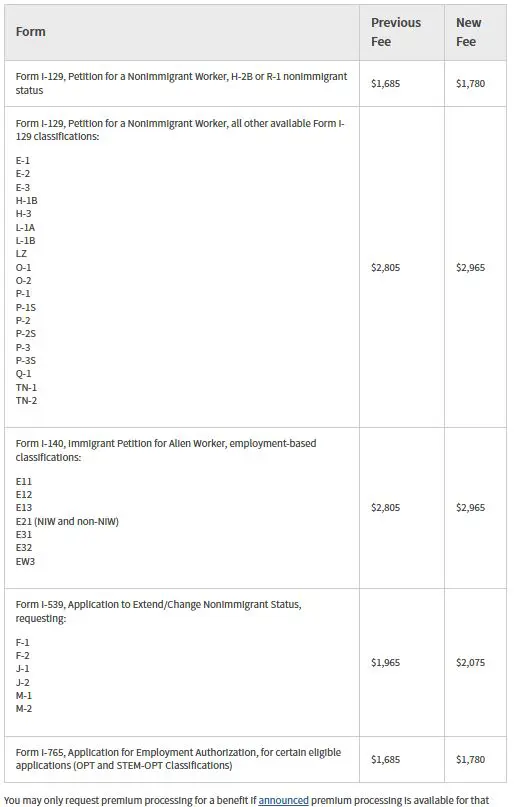
• Work visas such as H-1B, L-1, and O-1: The premium processing fee will rise from the current $2,805 to $2,965.
• I-140 employment-based immigration applications: Also increased to $2,965.
• Premium processing fees for OPT and STEM-OPT adjusted to $1,780.
• Extension or change of status (F/J/M categories) increased to $2,075.

02. Effective Date and Key Milestones
The effective date for this adjustment to premium processing fees is March 1, 2026 (inclusive).
USCIS has very clear requirements regarding timelines:
• Applications with a postmark date or electronic submission date before March 1, 2026: May still be paid at the current old rate;
• Applications with a postmark date or electronic submission date on or after March 1, 2026: Must use the new rate.
03. What is Premium Processing?
Premium processing is an optional paid service provided by USCIS. In addition to the standard filing fee, applicants or employers can submit Form I-907 and pay the premium processing fee to accelerate the processing time for certain immigration or non-immigrant applications to 15 business days (some categories may vary slightly).
This price increase is not a temporary adjustment but a routine adjustment made every two years based on the inflation rate, as required by the USCIS Stabilization Act.
It is evident from the periodic increases in premium processing fees that the U.S. immigration system is gradually returning to institutionalized and normalized operations. Despite the increased costs, the United States continues to consolidate its core appeal as a traditional global immigration destination, thanks to its stable legal environment, mature financial system, and high-quality educational and medical resources. For those pursuing long-term status planning, the "certainty value" of U.S. immigration remains irreplaceable.

04. EB-5: One of the Core Choices
for Immigrating to the U.S. Today
Among the many immigration pathways, the EB-5 investment immigration program has a history of over thirty years since it was legislated by Congress in 1990. Because its application requirements are simple—with no restrictions on age, education, language, business, or work experience background—and it can accommodate a large number of applicants, it has always been a key focus for investors. Especially under the new policy framework, rural EB-5 projects are exempt from visa backlogs and enjoy priority processing advantages; the "concurrent filing" policy allows applicants in the U.S. to file Form I-526E and Form I-485 simultaneously, enabling them to obtain a Combo card in about 3 months, quickly achieving legal residency and employment eligibility.
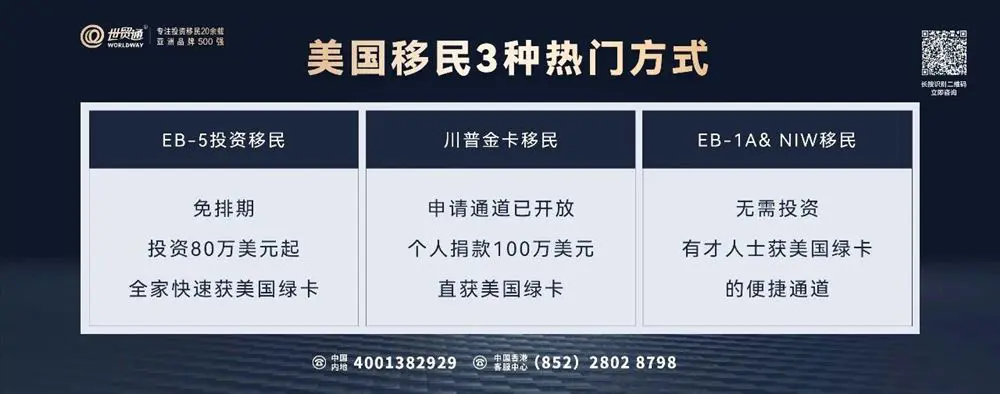
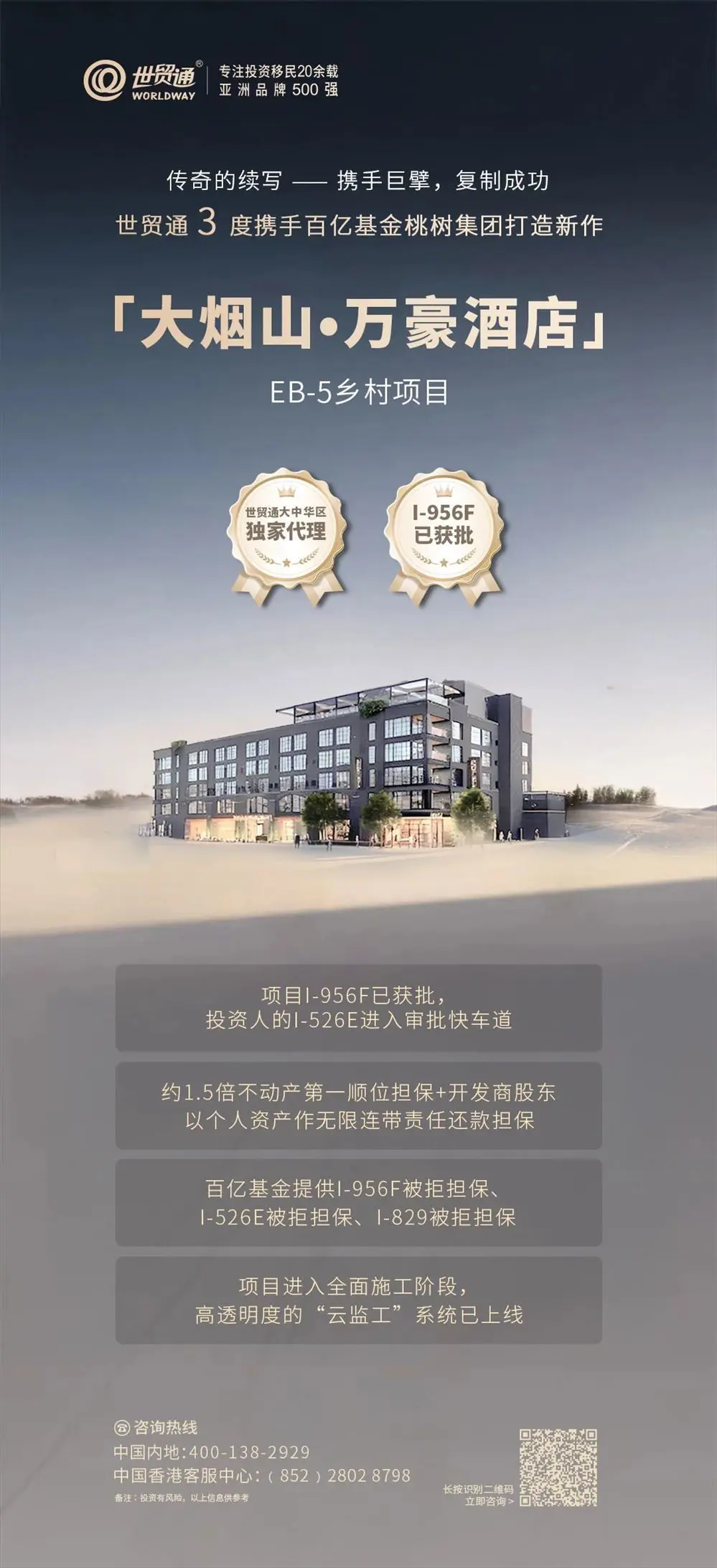
Worldway Group holds two high-quality EB-5 rural projects, helping investors achieve their U.S. status planning steadily, without backlogs, and efficiently, quickly embarking on a new life in the United States. Global quotas are limited, spots are scarce, and they are available on a first-come, first-served basis!

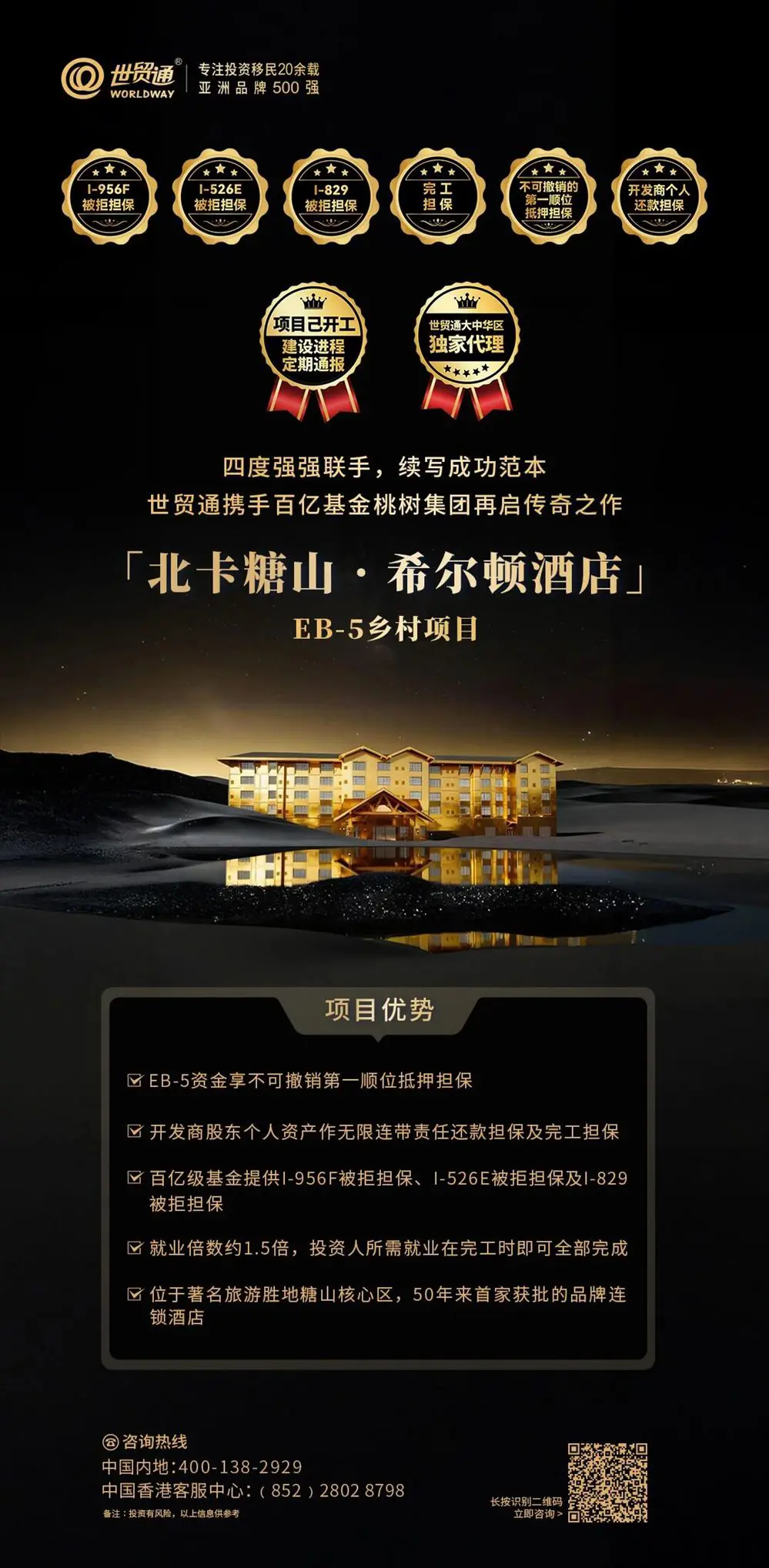

In addition, the Trump Gold Card immigration program is now officially open for applications. Worldway Group has taken the lead in launching Gold Card acceptance services, helping applicants efficiently advance their application processes and seize critical time windows.
For inquiries in Mainland China: 400-138-2929, Hong Kong, China Customer Service Center: (852) 2802 8798