





The tourism industry in Portugal is undergoing a structural transformation with long-term significance. With the systematic upgrades of high-speed rail networks, aviation hubs, clean energy, and digital infrastructure, Portugal not only achieved a rapid recovery in its tourism sector by 2025 but is also widely regarded as one of the most growth-predictable countries in Europe after 2026.
At a time when global travelers are redefining "destination value," Portugal is upgrading from a traditional tourist destination to a core European country that is livable, business-friendly, and suitable for long-term planning.


From tourism appeal
to long-term residency appeal
Portugal has consistently ranked among the world's most popular tourist destinations for many years. Cities such as Lisbon, Porto, and Coimbra have achieved a rare balance between historical heritage preservation, museum systems, contemporary art, and urban renewal—maintaining a rich cultural background while being highly internationalized.
For immigrant families, this "tourism-grade city quality" means:
• Safe cities with controllable living pace
• Highly developed public cultural facilities
• Well-established international communities and multilingual environments
• High tolerance for foreign residents and low social integration costs
This is a significant reason why Portugal has long been rated by international immigrants as "one of the most suitable countries in Europe for long-term residency."
Infrastructure determines long-term identity value
What truly supports Portugal's development potential for the next decade is the large-scale infrastructure projects that are being implemented.
High-speed rail network: The planned high-speed rail between Lisbon and Madrid is expected to be operational around 2030, significantly reducing travel time to about 3 hours, thereby facilitating the flow of people, capital, and business across the Iberian Peninsula.
Expansion of aviation hubs: After the expansion of Lisbon Humberto Delgado Airport and Faro Algarve Airport, a "air + high-speed rail" integrated transportation network will be formed with the high-speed rail system, making Portugal an important gateway connecting Europe, America, and Africa.
Regional cities will benefit comprehensively: Inland cities like Évora are transitioning from "tourism branches" to new livable cities and investment hotspots due to the improved railway network.
For immigrants, these infrastructure upgrades directly determine the following for the next decade:
• Stability of real estate and regional value
• Convenience of education for children, business travel, and transnational living
• Overall national competitiveness and public financial capacity
Surge in Chinese tourists
is a strong testament to confidence
According to the "Portugal News," Portugal's international visibility in Asia continues to rise, with the Chinese market being particularly prominent. One of the key goals for Portugal's tourism industry in the next three years is to increase the proportion of Chinese tourists, striving to become a core destination in European itineraries for Chinese travelers.
Official data shows: In 2024, China has become Portugal's largest source of tourists in Asia; that year, Portugal received over 280,000 Chinese tourists, contributing €154.5 million in revenue to the local tourism industry, significantly higher than other Asian markets such as South Korea.
The "Portugal Post" further disclosed: In the first half of 2025, the number of Chinese tourists visiting Portugal increased by 27% year-on-year; in May alone, the northern region received over 10,000 Chinese tourists, a year-on-year increase of 24%; it is expected that in 2025, Chinese tourists will contribute approximately €200 million in revenue to Portugal's tourism industry.
The clear goal set by the Portuguese tourism department is to receive 500,000 Chinese tourists by 2026 and to continuously increase the average number of overnight stays and length of stay.
Immigrating to Portugal is not just about "identity"
but an upgrade in lifestyle
Chinese families choosing to immigrate to Portugal often do not have a single demand but rather a comprehensive configuration of multiple goals:
• Providing children with a more open European education and language environment
• Securing a stable, friendly living environment for the family
• Achieving greater global mobility through EU identity
• Internationalizing assets and lifestyle under legal and compliant conditions
Looking ahead to the 2025-2026 time window, Portugal is no longer just a place to "visit and see" but is becoming a European country that more and more Chinese families are seriously considering settling down, living, and planning for the future.
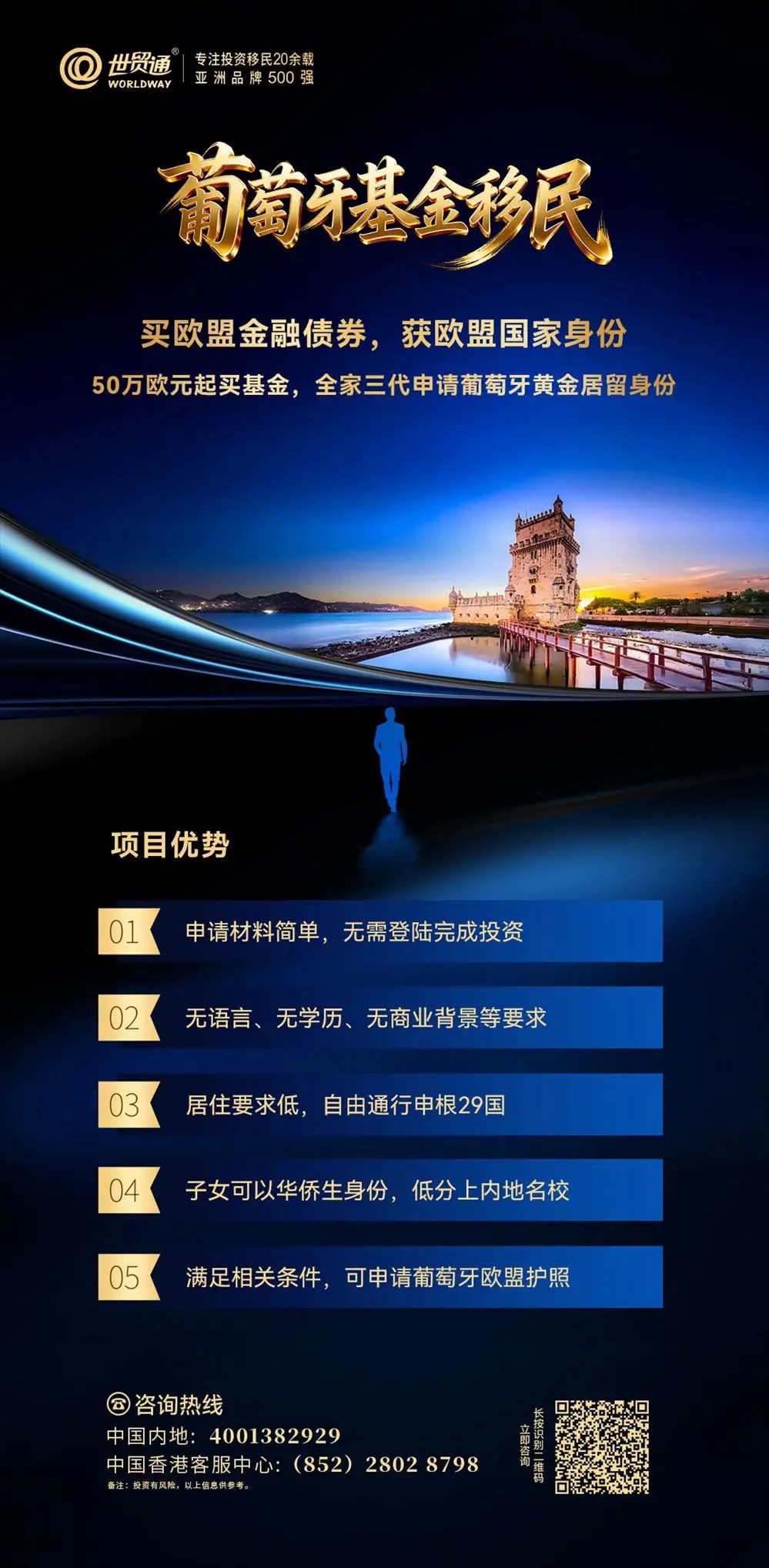
If you are interested in immigrating to Portugal, you can apply for the Portuguese Golden Residence Permit through the Portuguese Fund Investment Immigration Program, where investors can start with an investment of €500,000 to apply for the Golden Residence Permit for three generations of the family.

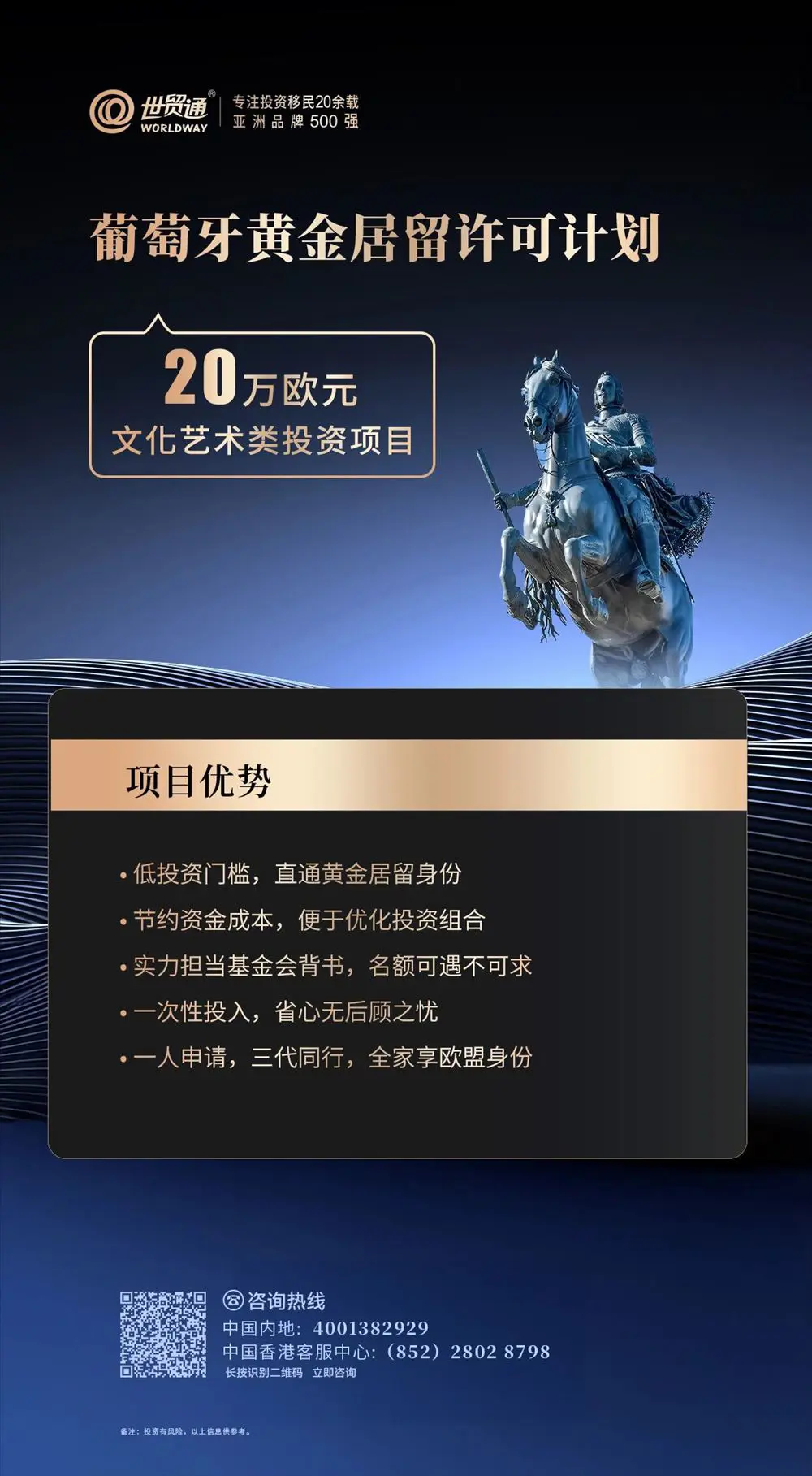
Additionally, you can immigrate to Portugal through the Portuguese Cultural and Artistic Donation Program. According to the regulations, applicants only need to invest €200,000 to apply for the Portuguese Golden Residence Permit for three generations of the family, achieving low-cost and convenient access to an EU passport.


For more information about immigration to Portugal, please contact mainland China: 400-138-2929, Hong Kong customer service center: (852)2802 8798