






The first wave of early admission results for Fall 2026 undergraduate programs in the United States has been gradually released. From the data currently available, a clearer trend is emerging— the competition among prestigious universities remains as intense as ever.
Given the ongoing increase in the number of applicants and the high stability of admission slots, the difficulty of breaking through the early application track has elevated once again. This round of results is not just an announcement of outcomes but resembles a reality description written for all applicant families. Why is it that conditions are similar, yet results can be drastically different?
Top 30 U.S. Undergraduate Early Application Data Overview
From the data released so far, this year's early applications show three highly consistent characteristics.
First, the admission rates remain at historic lows, with some schools demonstrating a downward trend.
• Massachusetts Institute of Technology (MIT): 11,883 EA applications, 665 admitted, admission rate 5.6%
• Yale University: 7,140 EA applications, 779 admitted, admission rate 10.9%
• Duke University: 6,159 early application submissions, 847 admitted, admission rate 13.8%
• Brown University: 5,406 ED applications, 890 admitted, admission rate 16.5%
These numbers indicate that early applications do not necessarily mean an easier path; rather, they reflect a different competitive pool.
Second, the admission scale for students from mainland China remains stable yet limited at individual schools.
From the single-school perspective, the admission numbers for mainland Chinese students during the early application phase at Ivy League and prestigious private universities have long remained at single to low double-digit levels, typically concentrated in the range of 8 to 13. Meanwhile, admission slots are highly concentrated in a few core cities.
The True Issues Revealed by Early Admissions
Which 'admission pool' were you placed in? After every round of early application results, similar confusions always arise:
• Academic achievements are similar, yet some are admitted while others are rejected.
• Competition, research experience, and extracurricular achievements are comparable, yet some end up empty-handed.
Many families attribute the reasons to 'luck,' but in fact, the issue often lies in a deeper structural aspect.
American universities have never constituted a unified admission pool. The actual order of admissions generally follows this logic:
• Students within the U.S. high school system
• U.S. citizens and green card holders
• International students (F-1 status)
Under similar academic conditions, different statuses correspond to completely different competitive dimensions.
This is why:
• Students who complete their high school education in the U.S. find it easier to enter stable ranges.
• Applicants with green cards are more likely to be viewed as 'local students.'
• International students are consistently competing in the most crowded and restricted pool.
The Impact of Status Extends Beyond 'Admission Probability'
Many families underestimate the systemic impact of status differences. Status not only affects 'access,' but directly determines:
• Whether or not need-blind admission policies are applicable.
• Whether limited by international student quotas.
• Whether able to apply to certain majors or schools that are closed to international students.
• Whether viewed as 'stable sources' during the early admission phase.
With the number of local early applicants continuously rising and the slots for international students consistently tightening, this gap is being exacerbated.
Holding a green card is not a shortcut, but it determines whether a child starts off on the right trajectory.

The Time Factor in Identity Planning
Is Becoming Increasingly Critical
For families who have already clarified their long-term plans to stay in the United States and are planning regarding their children's education and overall family development, early identity planning is essentially a form of risk management and path optimization.
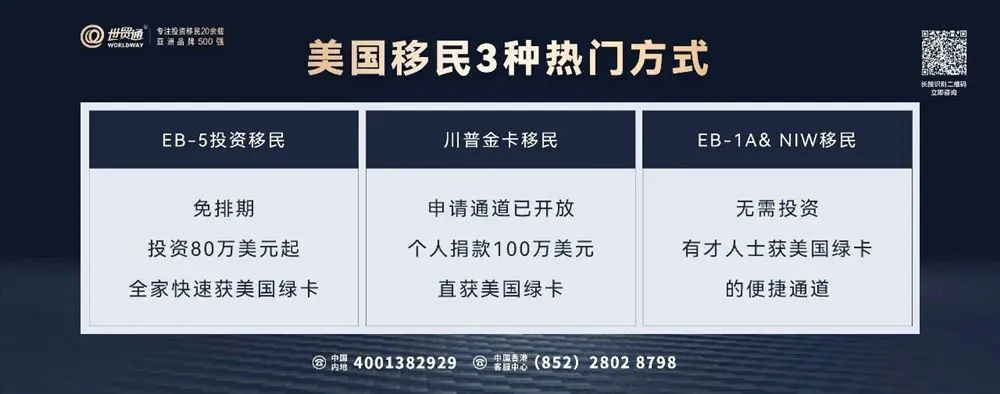
Increasingly, more families are choosing more stable routes—through the U.S. EB-5 Investment Immigration program to secure long-term, planned identity advantages for their children. Once the identity is in place, the child can enter the local student system when applying for U.S. universities, making the overall path more stable; after graduation, they can also directly enter the U.S. job market or research system, reducing the uncertainties brought about by identity transitions.
Under the new EB-5 legislation framework, a relatively clear policy window period has emerged:
• No Waiting Period: Ample reserved visa slots.
• Priority Approval: Rural projects enjoy statutory priority, resulting in significantly accelerated processing times.
• 'Concurrent Filing' Policy: Allows the simultaneous submission of I-526E and I-485 applications, with the possibility of obtaining the Combo Card approved in as fast as 3 months, achieving legal residence and work in the U.S. ahead of time.
It is worth noting that while the rural EB-5 projects are currently still in a no-waiting period status, 'no waiting period' does not imply long-term stability, but rather signifies that the current pace remains controllable. Once a waiting period is established, identity planning will shift from proactive configuration to passive waiting. Additionally, the EB-5 grandfather clause will expire on September 30, 2026, and the countdown has begun. Missing key timeline nodes may lead to changes in future policy environments, processing timelines, and uncertainties.
For families genuinely planning to stay long-term in the U.S. and vie for educational resources, early planning for U.S. identity is a systematic configuration for future paths. WorldWay holds two high-quality rural EB-5 projects, assisting investors in reliably, without waiting periods, and efficiently achieving U.S. identity planning, quickly embarking on a new life in the United States. Global quotas are limited, and seats are scarce; first come, first served!

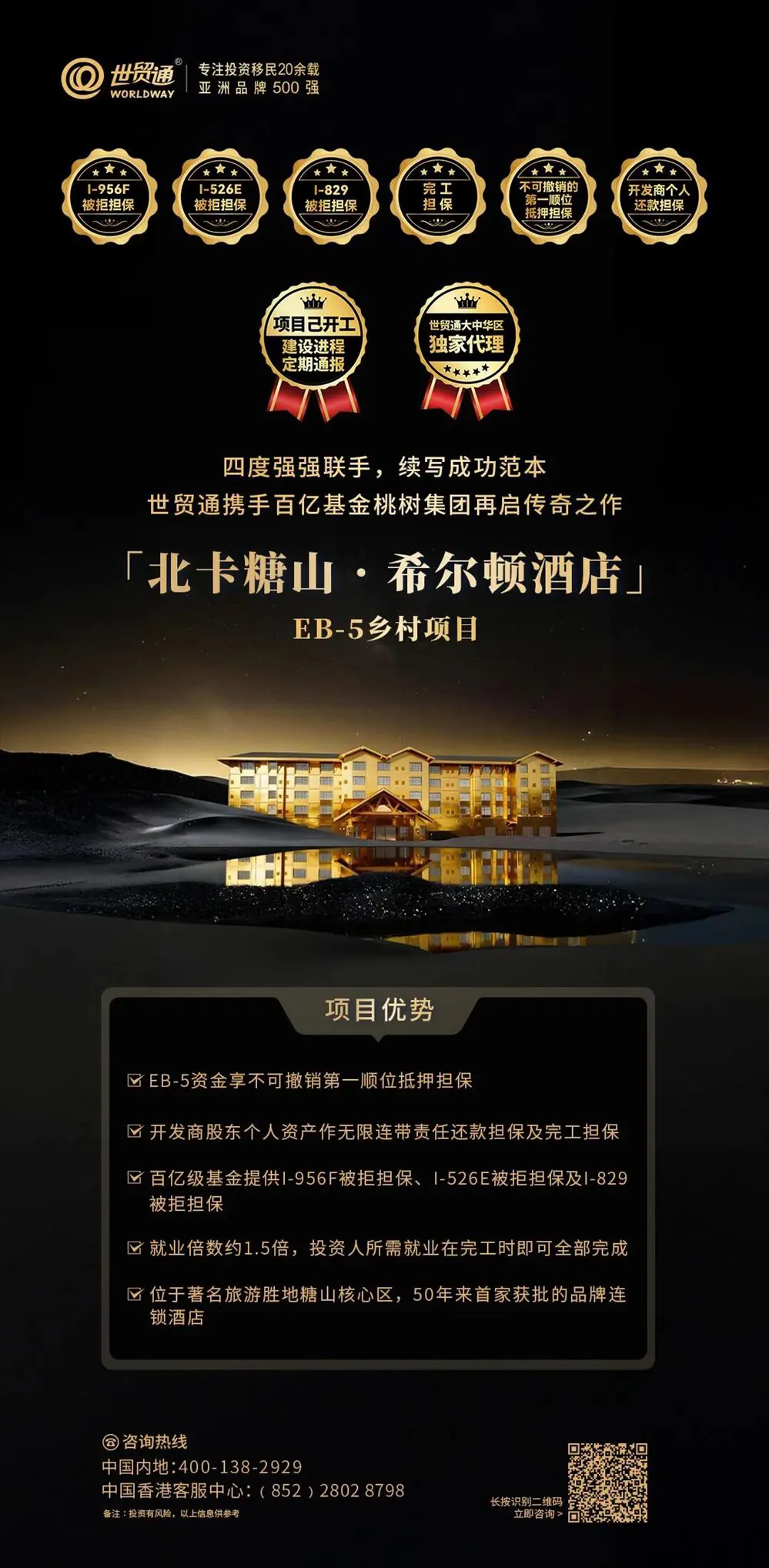


In addition, the Trump Gold Card Immigration Program has officially opened for applications. WorldWay has taken the lead in initiating Gold Card acceptance services, helping applicants effectively advance the application process and seize crucial time windows.
For inquiries in mainland China: 400-138-2929, Hong Kong customer service center: (852)2802 8798