





On September 16, 2026, the Panamanian government officially published Executive Decree No. 17 in Official Gazette No. 30613, replacing Executive Decree No. 722 of 2020 and its subsequent amendments.
This new policy focuses on adjustments to real estate investment thresholds, bank deposit thresholds, and other requirements. So, what specific changes does the new policy bring? Let us take a look together with WorldWay.
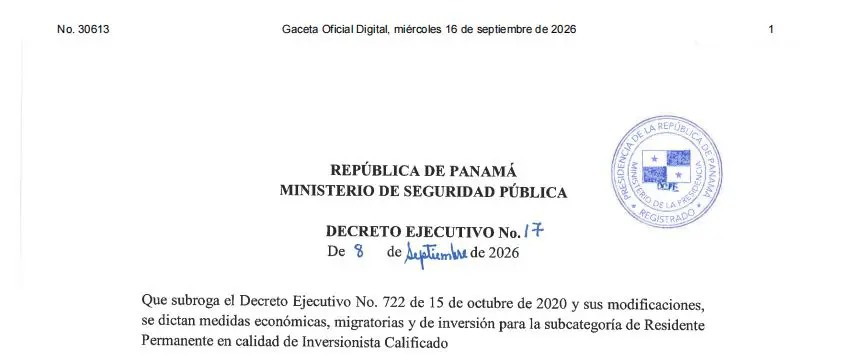

I. Investment Thresholds and Main Changes
Following this adjustment, the main investment methods and amounts for Panama Qualified Investor Permanent Residency are as follows:
1. Primary Real Estate / Off-Plan Properties: Remains at USD 300,000
Previously, the minimum threshold for real estate investment was USD 300,000.
After the implementation of the new policy, the minimum investment amount for eligible primary new properties and off-plan properties remains USD 300,000, with no increase in the investment amount.
2. Secondary Real Estate: Increased from USD 300,000 to USD 500,000
This is the most significant monetary change under the new policy. For secondary properties that have already been sold, used, leased, or transferred to an unrelated third party, the minimum investment amount has been raised from USD 300,000 to USD 500,000.
In other words, there is now a USD 200,000 investment threshold gap between primary new properties and secondary properties.
3. Securities Investment: Remains at USD 500,000
For qualifying securities investments made through licensed brokerage firms in Panama, the minimum amount remains at USD 500,000, and the investment must be maintained in accordance with regulations.
4. Private Bank Fixed Deposits: Remains at USD 750,000
If choosing a qualifying fixed deposit with a private bank in Panama, the minimum investment amount remains unchanged at USD 750,000.
5. Fixed Deposits in Two State-Owned Banks: Reduced from USD 750,000 to USD 500,000
The new policy also introduces a noteworthy option.
If the fixed deposit is made directly with the National Bank of Panama or the Savings Bank of Panama (Caja de Ahorros), the minimum amount is adjusted to USD 500,000. Compared to the previous USD 750,000 bank deposit threshold, this represents a reduction of USD 250,000.
II. Stricter Fund Verification and Further Clarification of Approval Timeframes
On one hand, the new policy strengthens the verification of the source of investment funds. Funds from gifts, uncompensated third-party transfers, and similar sources cannot be included in the qualified investment amount. If funds involve parental gifts, relative transfers, or third-party payments, the source of funds and transfer path must be reviewed and organized in advance.
On the other hand, the new policy also clarifies approval timeframes: the review for the Qualified Investor Certificate by the Ministry of Commerce and Industries (MICI) takes a maximum of 15 working days, and the permanent residency approval by the National Migration Authority takes a maximum of 30 working days.
III. A 6-Month Transition Period Established for New and Old Policies
For applicants who have already initiated their investments in advance, the new policy also provides transitional arrangements.
According to Executive Decree No. 17, applications officially submitted before the new policy takes effect on September 16, 2026 can continue to be processed under the investment amounts and conditions valid at the time of submission.
For individuals who have completed their investment before the new policy takes effect, or who have signed and executed a binding investment contract but have not yet officially submitted their application, they may also continue under the previous rules, provided that the application submission is completed within 6 months after the new policy takes effect.
Based on current calculations, this transition window will run until March 16, 2027. This transition period is particularly noteworthy for families that have already initiated investments or applications. It is recommended to confirm as soon as possible whether you meet the transitional provisions and advance subsequent application steps in a timely manner.
IV. Investment Immigration Policies Change—Plan Your Residency Status Early
As seen from this policy change in Panama, investment immigration policies are not permanently fixed.
In this adjustment alone, the threshold for secondary real estate has increased from USD 300,000 to USD 500,000, and investment types, fund arrangements, and subsequent regulatory requirements continue to be refined.
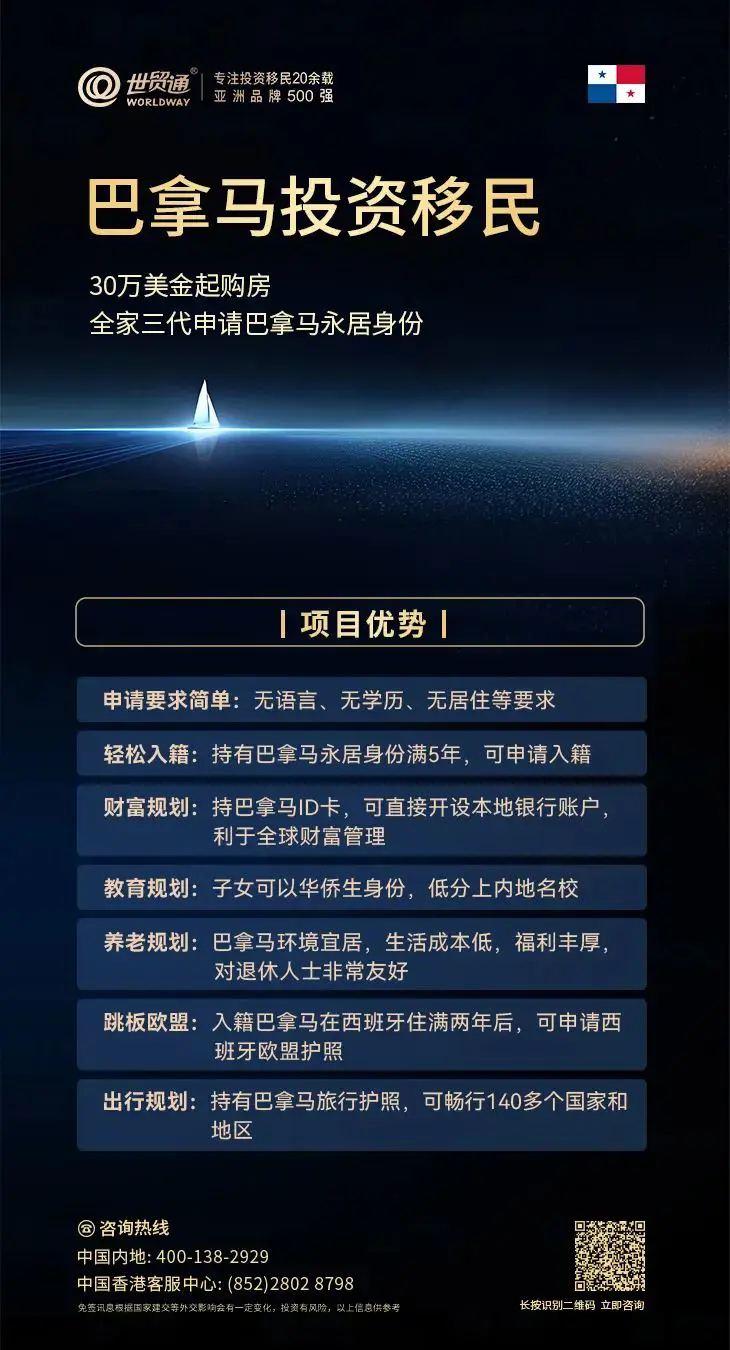
It is worth noting that the USD 300,000 investment threshold for primary new properties and eligible off-plan properties under the Panama Qualified Investor Program is currently retained.
For families that have clearly considered Panama residency status, overseas living, children's education, or global asset allocation, while the policy window remains open, what is most important is to understand the rules in advance, screen projects in advance, and arrange funds and applications in advance.
In immigration planning, it is often not a matter of having more options the longer you wait, but rather that the earlier you understand the options, the more choices you can preserve for yourself.
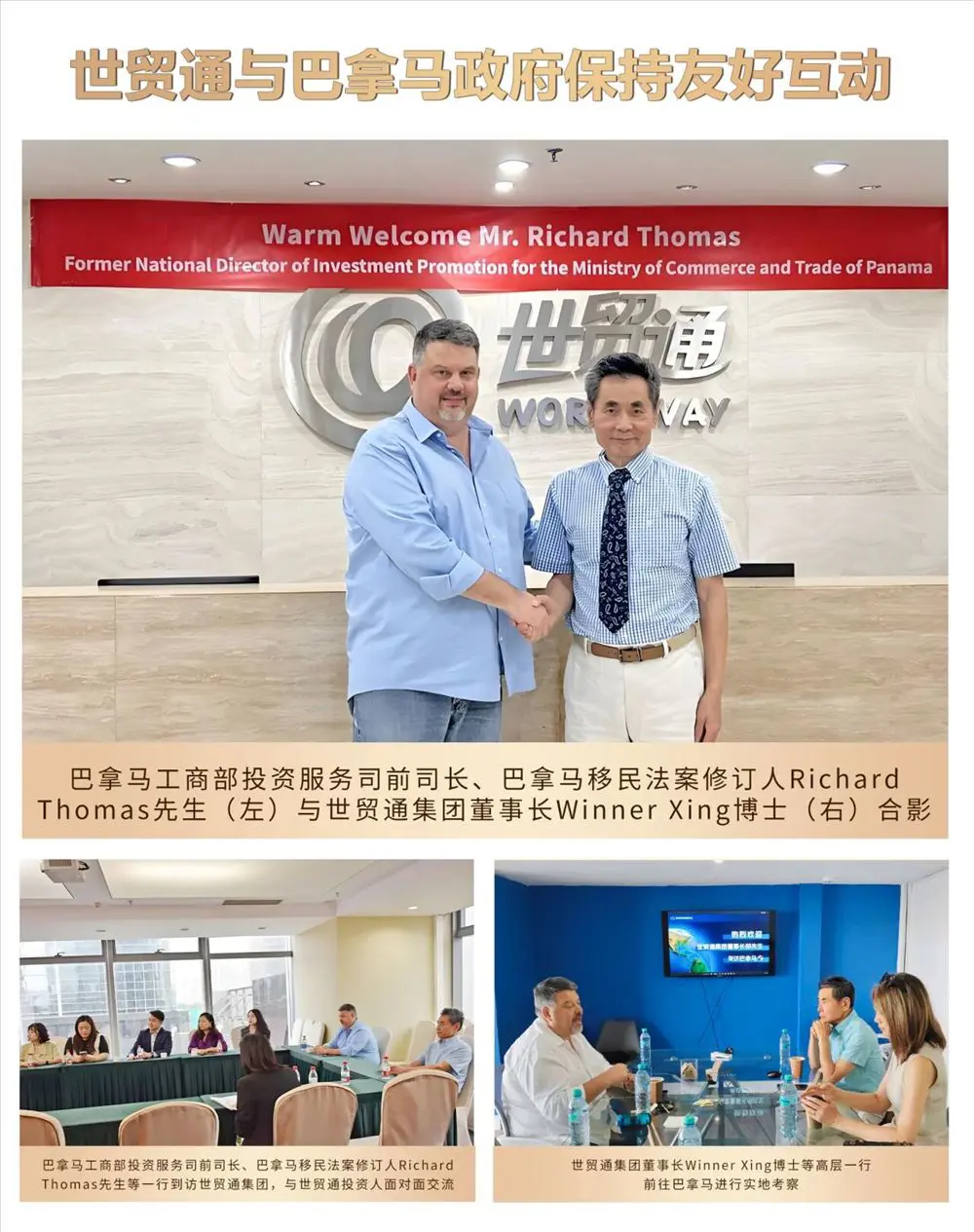
As a top 500 Asian brand specializing in immigration for over two decades, WorldWay started in Hong Kong in 1998 and operates professional companies in both Hong Kong and Mainland China. Over the years, WorldWay has continuously monitored global immigration policy changes to provide professional services to families with overseas residency planning needs.
Currently, Panama's primary new properties and eligible off-plan properties still retain the USD 300,000 investment threshold. For investors with clear planning needs, you can understand the policy as early as possible, evaluate your situation, and make preparations in advance to seize the policy window that remains open at this stage and add more choices for your family's future.
For details, please inquire Mainland China: 400-138-2929, Hong Kong Customer Service Center: (852)2802 8798