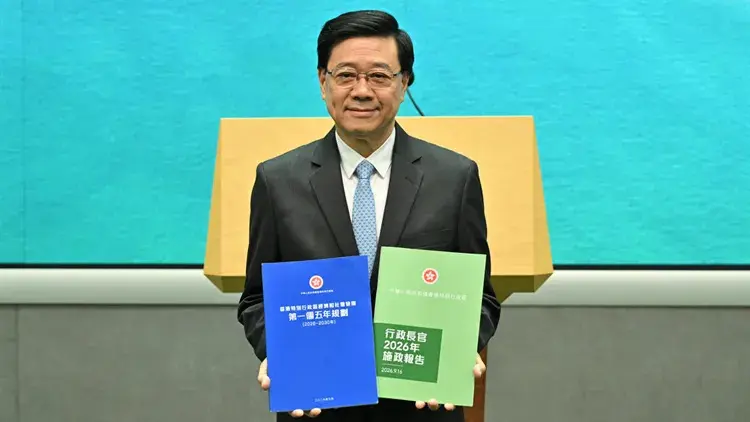
On September 16, 2026, John Lee, Chief Executive of the Hong Kong Special Administrative Region, announced the "First Five-Year Plan for Economic and Social Development of the Hong Kong Special Administrative Region (2026—2030)" and subsequently delivered the "Chief Executive's 2026 Policy Address" ("Policy Address"). This year's "Policy Address" is themed “Planning for the Long Term, Opening a New Chapter Through Reform, Fostering Development to Create Opportunities, and Benefiting Livelihoods Toward the Future”.
For families intending to acquire Hong Kong residency status, what key benefits does the new policy bring?Please join WorldWay Group to take a look.
Policy Overview: Key Highlights Worth Noting
1. The First Five-Year Plan Outlines Future Development Goals
Hong Kong's first Five-Year Plan further clarifies development targets for the next five years.
In finance, the plan proposes to continue consolidating Hong Kong's position as the world's third-largest financial centre and the world's largest cross-border wealth management centre.
In business, the total number of companies in Hong Kong with parent companies located outside Hong Kong currently stands at 11,070, and the plan targets an average annual growth of approximately 4%—5% in the future.
In tourism, the value added of Hong Kong's tourism industry is planned to increase from HKD 86.2 billion in 2024 to HKD 126 billion in 2030, representing a cumulative growth of about 40%—50%.
2. Further Strengthening the Advantages as an International Financial Centre
Hong Kong will continue to deepen development in capital markets, asset and wealth management, commodities trading, and other fields. As of the end of August this year, Hong Kong's IPO funds raised exceeded HKD 340 billion, surpassing the total for the entire previous year; Hong Kong also leapt to become the world's largest cross-border wealth management centre this year.
At the same time, Hong Kong will accelerate the building of an international gold trading market, planning to officially launch the Hong Kong Gold Central Clearing and Settlement System in the first quarter of 2027, while studying tax incentives related to gold and commodities trading.
3. TTPS Continues to Optimize, Further Attracting Talent
Extension requirements for tech startup talent under the Top Talent Pass Scheme (TTPS) will be relaxed. Non-local talent founding startups in Hong Kong may face lower revenues due to initial operational instability, encountering greater uncertainty when applying for extensions. Founders of tech startups supported by designated public bodies will be exempt from requirements such as providing company revenue proof when applying for TTPS extensions, facilitating their development in Hong Kong.
To advance closer cooperation with Mainland provinces and municipalities, starting from 2027, top universities in Mainland provinces and municipalities that have established high-level cooperation platforms with Hong Kong will be appropriately included in the List of Eligible Universities under the TTPS.
4. Continuous Expansion and Quality Improvement in Education
The Policy Address proposes multiple measures to develop quality education, including launching a major free digital education learning resource platform featuring AI large language models, raising school operating standards, promoting the digitalization of kindergarten educational administration, and further advancing the expansion and quality enhancement of student accommodation.
At the same time, in the 2026/27 academic year, UGC-funded universities in Hong Kong plan to conduct over 160 recruitment activities in the Mainland and overseas; pilot measures incorporating graduates from Greater Bay Area campuses of Hong Kong universities into the “Immigration Arrangements for Non-local Graduates” (IANG) will also be extended for another two years.
Regarding student accommodation, the “In-Town Hostel Scheme” has confirmed eligibility for 41 applications, capable of providing approximately 10,800 hostel places; currently, 48 Direct Subsidy Scheme (DSS) schools have participated in the relevant expansion program, and Hong Kong also plans to grant land next year to develop international schools.
5. Launching 11 Measures to Encourage Childbearing
The Policy Address mentioned that the government will introduce an additional package of 11 measures to encourage childbearing, including a stamp duty reduction of up to HKD 20,000 for eligible families purchasing residential properties, and extending the HKD 20,000 newborn allowance for three years.
If a second child is born starting today, the bonus will be increased to HKD 30,000, and the tax allowance will increase from HKD 140,000 to HKD 160,000. The additional tax allowance for the second and subsequent children during their first two years of birth will also be raised from HKD 140,000 to HKD 160,000. Eligible families buying property within one year before or two years after giving birth can enjoy a stamp duty reduction of up to HKD 20,000.
6. Ten Measures to Support Small and Medium Enterprises
Hong Kong has launched ten measures to support SME development, including expanding the geographical scope of funding under the “BUD Fund”, raising the per-case funding cap for “Easy BUD” to HKD 150,000, and supporting SMEs in applying AI, cybersecurity, and innovative logistics technologies to assist businesses in upgrading, transforming, and exploring new markets.
7. Continuing to Promote Tourism and Consumption Development
In 2025, total visitor arrivals to Hong Kong reached 49.9 million, representing a year-on-year increase of 12%; total expenditure related to inbound tourism in 2026 is expected to reach HKD 238.1 billion, an increase of about 10% compared to last year.
At the same time, the Policy Address also introduced various livelihood measures in areas such as housing, healthcare, community services, and elderly care, while further strengthening support for SME development.
For more details regarding the Policy Address and Hong Kong's first Five-Year Plan, please contact WorldWay Group to learn more.
From Attracting to Retaining Talent: Hong Kong Residency Planning Gains Attention
From this Policy Address and the first Five-Year Plan, it can be seen that while Hong Kong continues to attract talent, enterprises, and capital, it is also improving relevant supporting facilities in education, entrepreneurship, and family life.
For individuals intending to develop in Hong Kong, arrange education for their children, or make long-term family planning, they can also consider suitable Hong Kong residency pathways in advance based on their own qualifications.
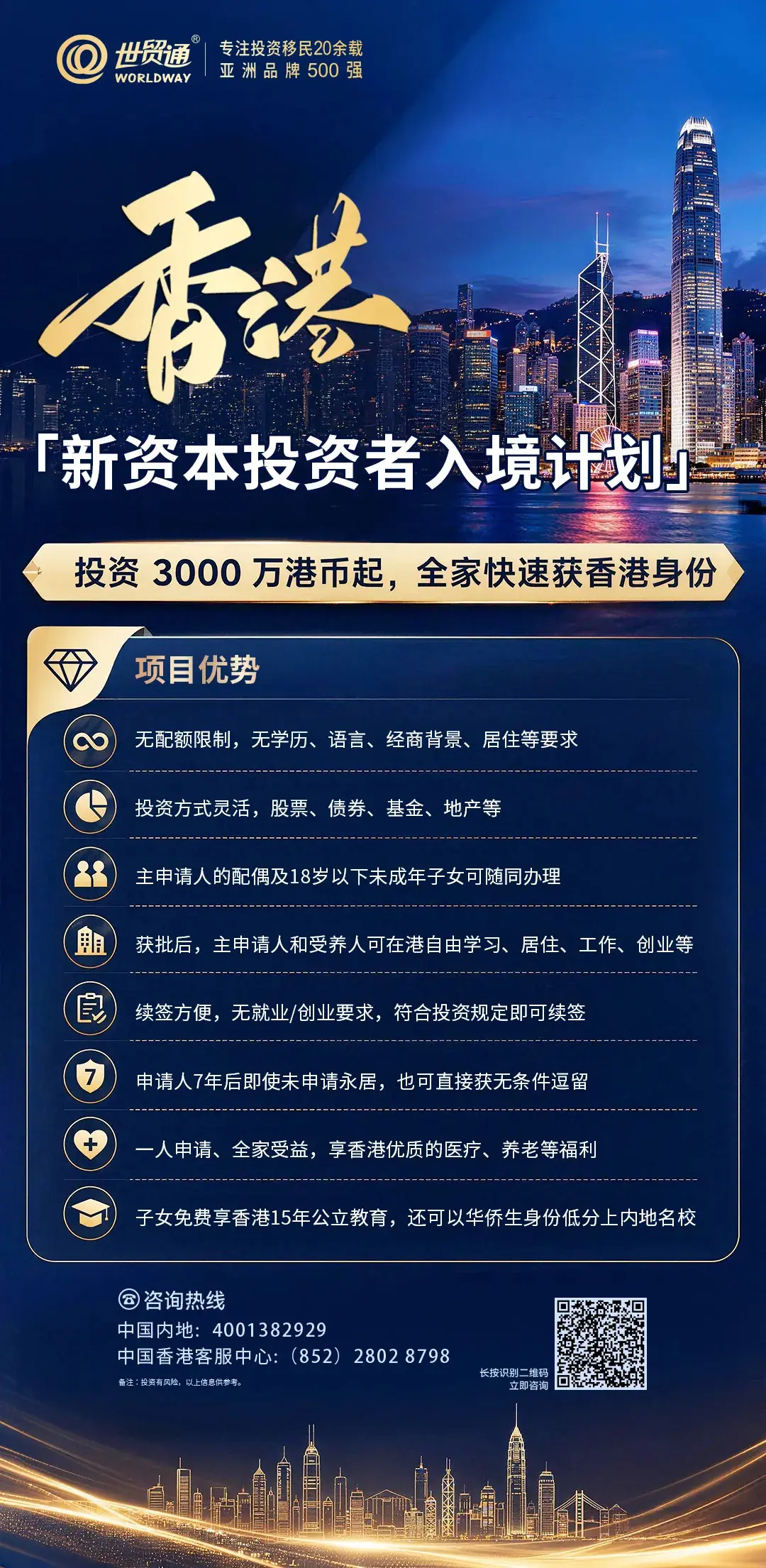
For high-net-worth families with solid financial strength who wish to simultaneously plan for Hong Kong residency through investment, key focus can be placed on the New Capital Investment Entrant Scheme. This scheme has no point system requirements, no quota limits, no educational requirements, and no physical residency requirements. Once approved, candidates can work and start businesses freely in Hong Kong, benefiting the entire family through one person's approval. With an investment starting from HKD 30 million, the entire family can rapidly obtain Hong Kong residency status.
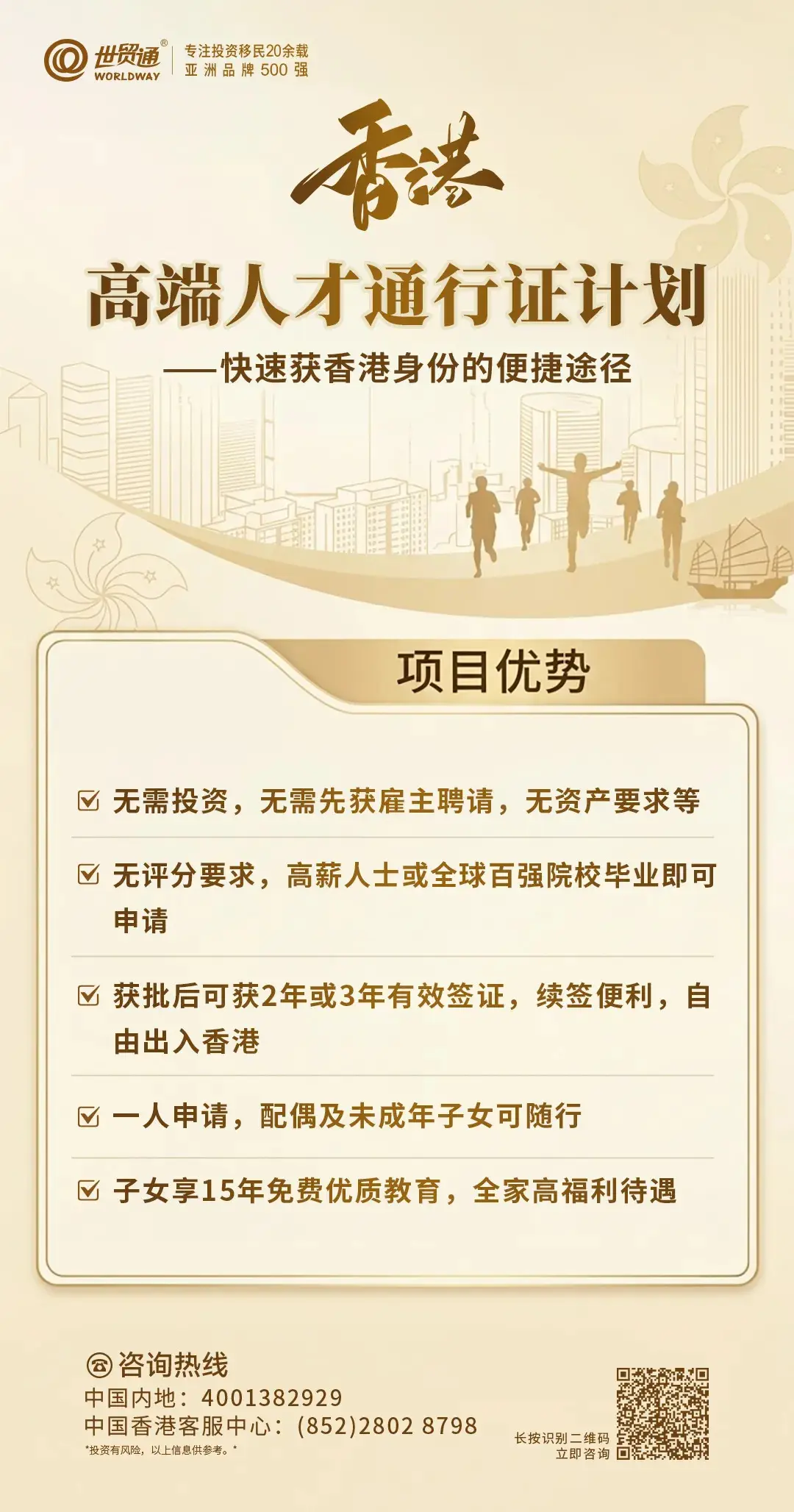
For individuals with high academic qualifications or high-income backgrounds, the Top Talent Pass Scheme provides another residency pathway. This scheme requires no investment, no prior employment offer, no asset test, and no point system requirement. A single applicant allows the spouse and minor children to accompany, enjoying free entry and exit from Hong Kong.

As one of the early professional institutions to undertake Hong Kong immigration business, WorldWay has established professional firms in Hong Kong, Macao, and Mainland China, accumulating numerous successful Hong Kong residency planning cases and rich project experience.
From selecting a suitable residency option to connecting children's education with long-term family development, WorldWay will integrate the practical needs of each family to provide more systematic Hong Kong residency planning services.