





When thinking of Turkey, many people first picture Istanbul spanning Eurasia, as well as the Citizenship by Investment program that has gained attention in recent years.
However, taking a broader view beyond “citizenship” itself reveals what makes Turkey truly unique: its dual role as a major investment hub connecting European, Asian, and Middle Eastern markets.
In 2025, Turkey attracted approximately USD 13.1 billion in Foreign Direct Investment (FDI), a year-on-year increase of 12.2%; to date, more than 87,000 foreign-capital enterprises are operating in Turkey.
Entering 2026, Turkey introduced further new investment and tax reforms.
In the view of WorldWay Immigration, from its location advantages and international capital inflows to the increasing policy dividends for enterprises and individuals, Turkey is demonstrating an increasingly diversified global asset allocation value.
01. Crossroads of Eurasia
Connecting Multiple Major Markets
One of Turkey's greatest advantages is its location.
It connects to Europe to the west, reaches Asia to the east, borders Middle Eastern and Mediterranean markets to the south, and leads to the Black Sea, the Caucasus, and Eastern Europe to the north.
Istanbul, in particular, is one of the few global cities in the world that spans both Europe and Asia.
This strategic geographical position has long positioned Turkey as a vital conduit for trade, logistics, manufacturing, and business exchanges among Europe, Asia, and the Middle East.
Meanwhile, Turkey has been a NATO member since 1952, retains its status as an EU candidate country, and has established a Customs Union with the EU.
For international businesses, this means Turkey's value is not limited to its domestic market, but lies even more in its ability to reach multiple major surrounding economic regions.
02. Continuous Inflow of International Capital
Investment Appeal Continues to Unfold
Turkey's locational advantages are also receiving a strong response from international capital.
In 2025, Turkey attracted approximately USD 13.1 billion in foreign direct investment, with capital sources spanning various countries including the Netherlands, Luxembourg, the United States, Germany, France, the UAE, and the United Kingdom.
Over a longer time horizon, from 2003 to 2025, cumulative foreign direct investment inflows into Turkey exceeded USD 287 billion.
The number of foreign-capital enterprises has also grown from around 5,600 in 2002 to more than 87,000 today.
In the first seven months of this year, exports from Turkey's free zones reached USD 7.7 billion, setting a record high for the same period, including contributions from hundreds of foreign-invested enterprises.
From manufacturing and trade to information and communications, finance, and regional headquarters, an increasing number of international enterprises are incorporating Turkey into their global footprint.
03. Stepping Up Efforts in 2026
Further Release of Corporate Policy Dividends
Since 2026, Turkey has launched a new round of economic and investment reforms.
A key objective of these reforms is to further attract multinational enterprises, international capital, and high-value-added industries.
On the corporate front, new policies have established systems such as “Qualified Service Centers.”
Eligible enterprises providing regional or global management, coordination, and support services to affiliated entities in multiple countries can receive a significant corporate income tax deduction on qualifying foreign-sourced profits.
For certain qualifying enterprises located in the Istanbul Financial Center and designated regions, tax support will be enhanced even further.
Meanwhile, Turkey has been steadily developing the Istanbul Financial Center in recent years, aiming to further strengthen its position in international finance, trade, and regional headquarters economies.
It is clear that Turkey is extending from a traditional manufacturing and trade market into a hub for finance, international services, and multinational corporate operations.
04. New Personal Tax Policies
Gaining Attention from High-Net-Worth Families
Beyond corporate policies, another major change in 2026 comes from personal taxation.
Under the new regulations taking official effect this year, qualifying individuals who relocate to Turkey and become local tax residents can enjoy up to a 20-year exemption from Turkish personal income tax on foreign-sourced income and gains.
For high-net-worth families with offshore businesses, dividends, investment returns, and other global assets, this policy adds compelling new value to Turkey.
In terms of policy direction, Turkey has sent a clear signal:
It seeks not only to attract international capital, but also to encourage businesses, talent, and high-net-worth families to participate in the local economy long term.
05. From an Investment Destination
To Family Identity and Asset Planning
Why does capital remain focused on Turkey?
Behind this is more than just a single incentive policy.
Its location at the crossroads of Europe and Asia connects it to multiple major markets; its industrial base in manufacturing, trade, and finance provides space for international companies to grow; and further adjustments to corporate and personal tax policies since 2026 have boosted Turkey's appeal on the global investment map.
On the back of these national and market fundamentals, the Turkish Citizenship by Investment Program offers an alternative option for families seeking global citizenship solutions.
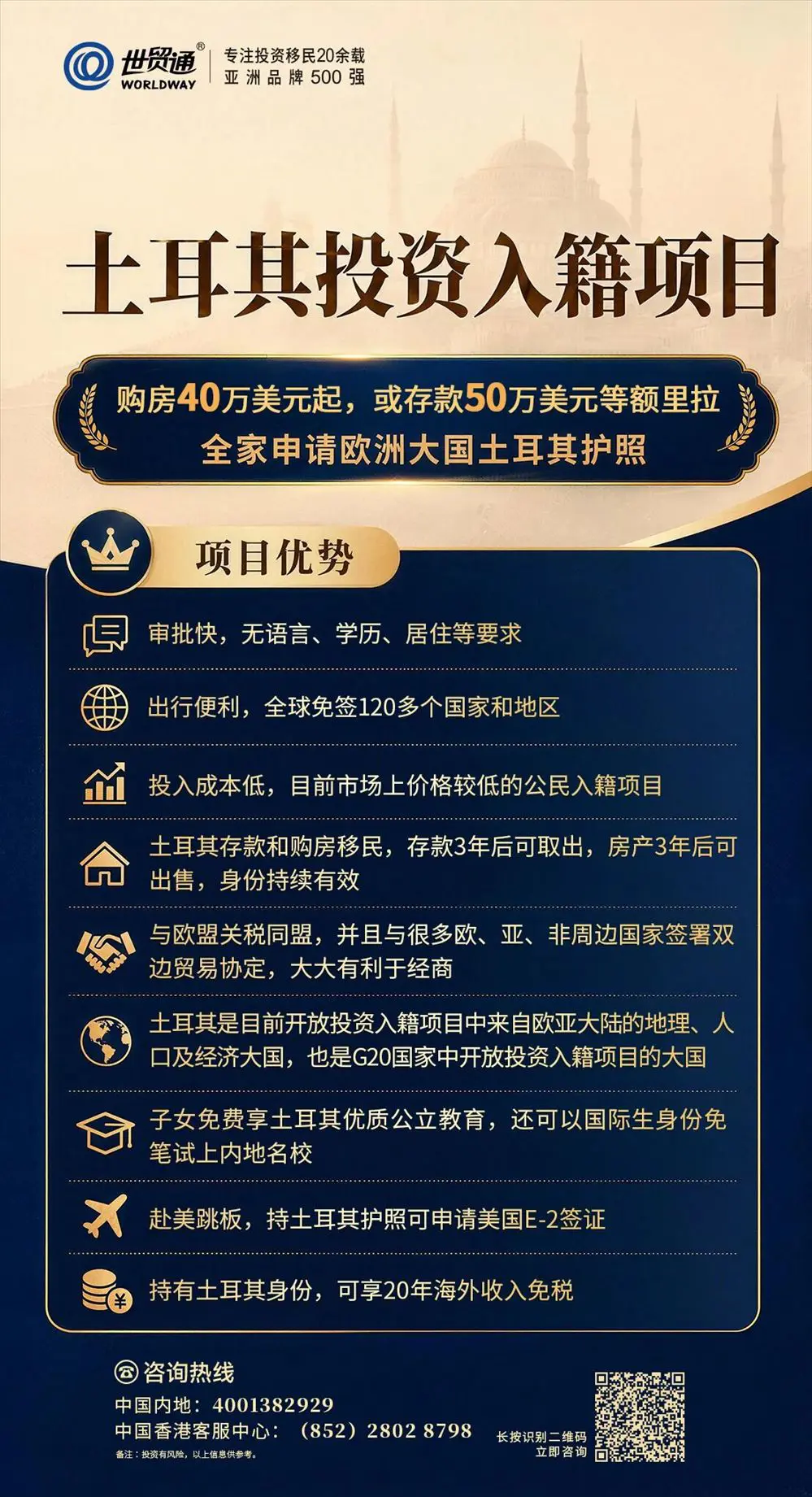
Currently, there are two primary Citizenship by Investment routes in Turkey that receive significant attention:
• Bank Deposit Route: Investors who deposit USD 500,000 or equivalent in Turkish Lira can apply for Turkish passports for the whole family. After 3 years, the deposit can be withdrawn at any time with potential returns, while the citizenship status remains permanently valid.
• Real Estate Route: Applicants who purchase real estate in Turkey starting from USD 400,000 can apply for Turkish citizenship. After holding the property for 3 years, it may be sold while citizenship status remains permanently valid.
For WorldWay Group, evaluating a citizenship/residency program requires looking not only at the investment threshold, but also at the underlying national environment, market fundamentals, and whether it seamlessly aligns with a family's future asset, business, and citizenship planning.
For individuals considering overseas assets, international business, and family identity planning simultaneously, Turkey remains an option well worth considering.
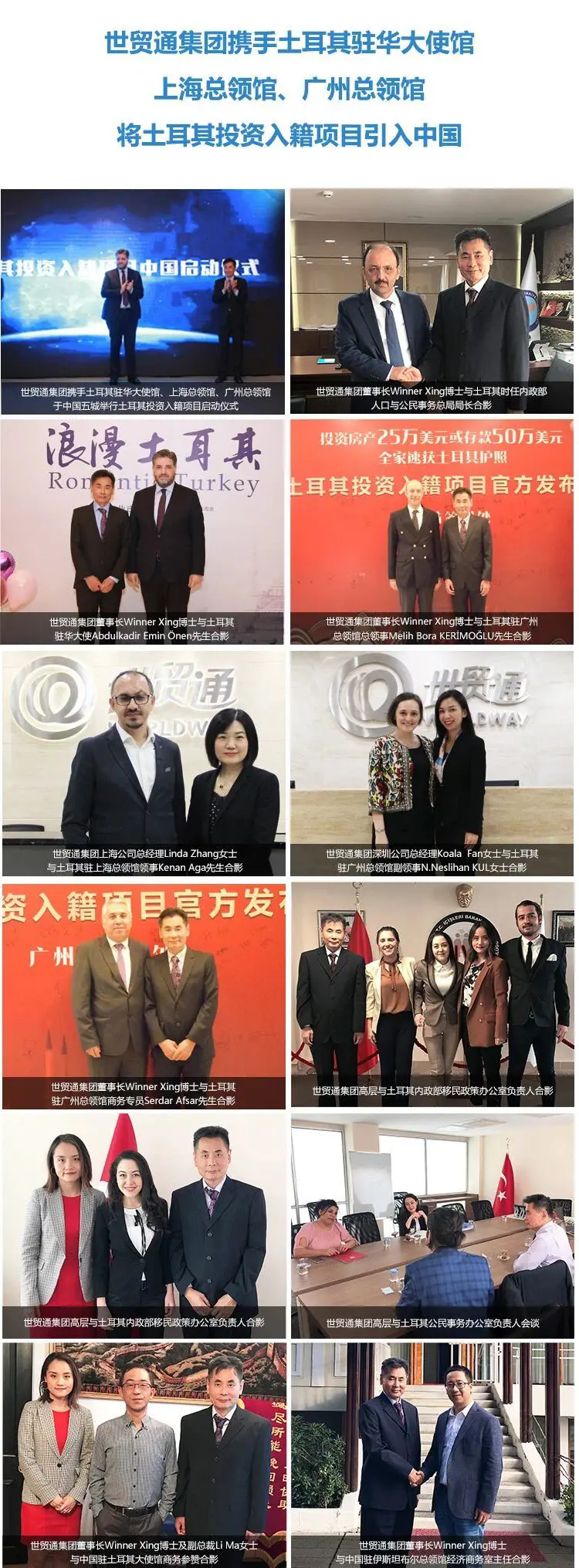
As a professional immigration institution that promoted the Turkish Citizenship by Investment Program in the Chinese market early on, in April 2019, WorldWay joined hands with the Embassy of Turkey in China, the Consulate General in Shanghai, and the Consulate General in Guangzhou to hold the “Official Launch Conference and China Ceremony of the Turkish Citizenship by Investment Program” simultaneously in Beijing, Shanghai, Guangzhou, Shenzhen, and Qingdao, officially introducing the highly anticipated Turkish Citizenship by Investment Program to China. (For details, click to read: A Historic Milestone! Turkish Citizenship by Investment Program Officially Introduced to China)
For inquiries in Mainland China: 400-138-2929; Hong Kong SAR Customer Service Center: (852)2802 8798