



For many families planning to acquire Hong Kong, China residency status, children's education is always a crucial consideration.
Hong Kong not only possesses an internationalized education system, but is also closely connected with the Mainland's education. From basic education to university admission, children can choose among multiple pathways in Hong Kong, Mainland China, or overseas, reserving greater flexibility for their future.
1. Diverse Education System: Seamless Connection with International Standards Right at Home
Hong Kong possesses a mature and diverse basic education system.
Starting from kindergarten, families can choose from different types of schools—such as government, aided, Direct Subsidy Scheme (DSS), private, and international schools—based on their children's development direction.
Hong Kong's 15-year free compulsory education system covers early childhood education (3 years), primary education (6 years), junior secondary education (3 years), and senior secondary education (3 years).
At the same time, Hong Kong boasts rich international school resources covering mainstream international curricula such as IB, A-Level, and AP. Many schools adopt English medium instruction, allowing children to adapt to an international learning environment early on and prepare for future studies abroad.
More importantly, Hong Kong enjoys close ties and convenient travel connections with the Mainland, enabling families to balance quality family companionship and lifestyle arrangements while accessing international education resources.
2. A Single DSE Score Connects to Universities in Hong Kong and Worldwide
The Hong Kong Diploma of Secondary Education Examination (HKDSE) not only allows applications to local Hong Kong universities, but is also recognized by numerous higher education institutions worldwide.
Students can apply to universities in countries and regions such as the UK, US, Canada, and Australia using their DSE scores, providing another pathway for studying abroad.
At the same time, Hong Kong's higher education strength itself is highly prominent. Institutions such as The University of Hong Kong, The Chinese University of Hong Kong, The Hong Kong University of Science and Technology, The Hong Kong Polytechnic University, and City University of Hong Kong have long ranked among the top globally.
Children can flexibly choose between Hong Kong and overseas universities based on their academic performance, interests, and developmental goals.
3. Seeking to Pursue Higher Education in the Mainland? Pathways Are Equally Available
Outwardly connecting to the world, and inwardly linking to Mainland higher education institutions.
For eligible Hong Kong students, in addition to universities in Hong Kong and overseas, there are multiple admission channels to enter Mainland higher education institutions.
Eligible Hong Kong DSE candidates can apply to Mainland universities through the “Scheme for Admission of Hong Kong Students to Mainland Higher Education Institutions”.
In addition, Hong Kong and Macao students who meet the relevant identity and academic requirements can take the Joint Entrance Examination for Hong Kong, Macao, Taiwan and Overseas Chinese Students (JEE) to apply to Mainland universities.
Therefore, Hong Kong, Mainland China, and overseas—all three education pathways can be integrated into a family's long-term planning.
4. Local Student Status Offers Clearer Education Cost Advantages
By the university stage, the difference brought by residency status becomes even more obvious.
The Hong Kong SAR Government provides approximately 15,000 government-funded first-year undergraduate degree places for local students each year. Non-local student self-financed places are calculated separately and do not consume local students' government-funded quotas.
The tuition fee gap is equally striking.
Taking the 2026/27 academic year as an example, the local student tuition fee for Hong Kong government-funded full-time degree programs is HK$47,000 per year.
By contrast, tuition fees for non-local undergraduate students at The Chinese University of Hong Kong for the 2026/27 academic year are HK$214,000 per year, while at The Hong Kong University of Science and Technology, tuition fees for non-local undergraduates are HK$215,000 per year.
Calculated by this standard, the tuition difference between local and non-local students can reach over HK$100,000 per year, accumulating into a significant education cost over four undergraduate years.
This also means that if a family has decided that their child will receive an education in Hong Kong in the future, residency planning should not be delayed until just before university applications.
5. Educational Planning Is Also Long-term Residency Planning
The appeal of Hong Kong education lies not only in its abundance of prestigious schools and high degree of internationalization, but also in its capacity to connect Hong Kong, Mainland China, and overseas simultaneously.
From basic education to university, from the DSE to overseas higher education, and to Mainland universities, children can make different choices in the future according to their abilities and development directions.
Residency status, meanwhile, is an essential element behind these educational options that requires advance consideration.
Planning for Hong Kong residency status earlier is not about deciding your child's future for them, but about reserving more paths for their future in advance. Currently, Hong Kong also offers a variety of residency pathways for families with different backgrounds.
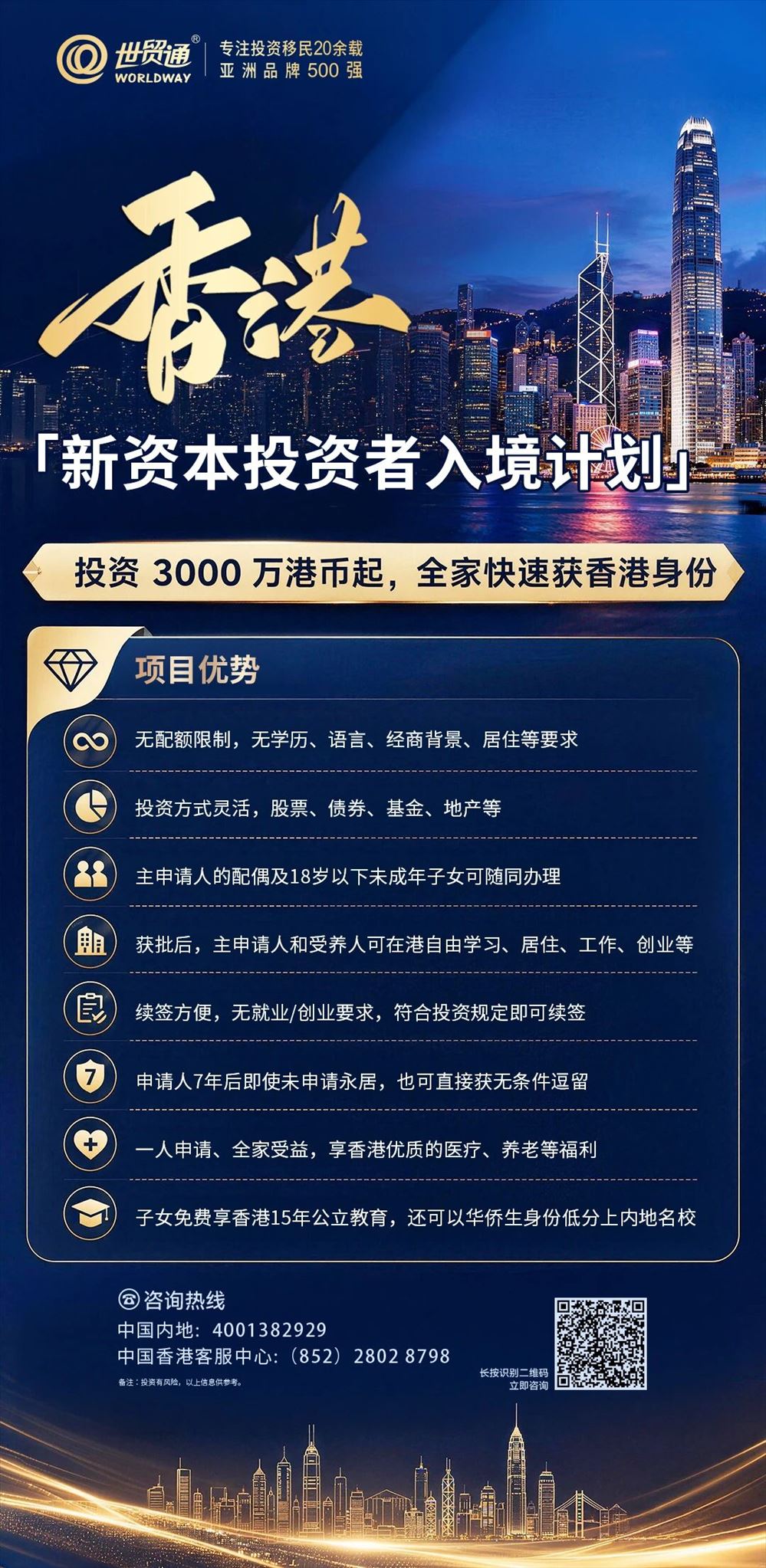
For high-net-worth families with solid financial strength who wish to plan Hong Kong residency status through investment, special attention can be given to the New Capital Investment Entrant Scheme. This scheme has no points requirement, no quota limits, no educational requirements, and no residency requirements. Upon approval, applicants can freely work and start businesses in Hong Kong. One person's approval benefits the entire family. With an investment starting from HK$30 million, the whole family can quickly obtain Hong Kong residency status.
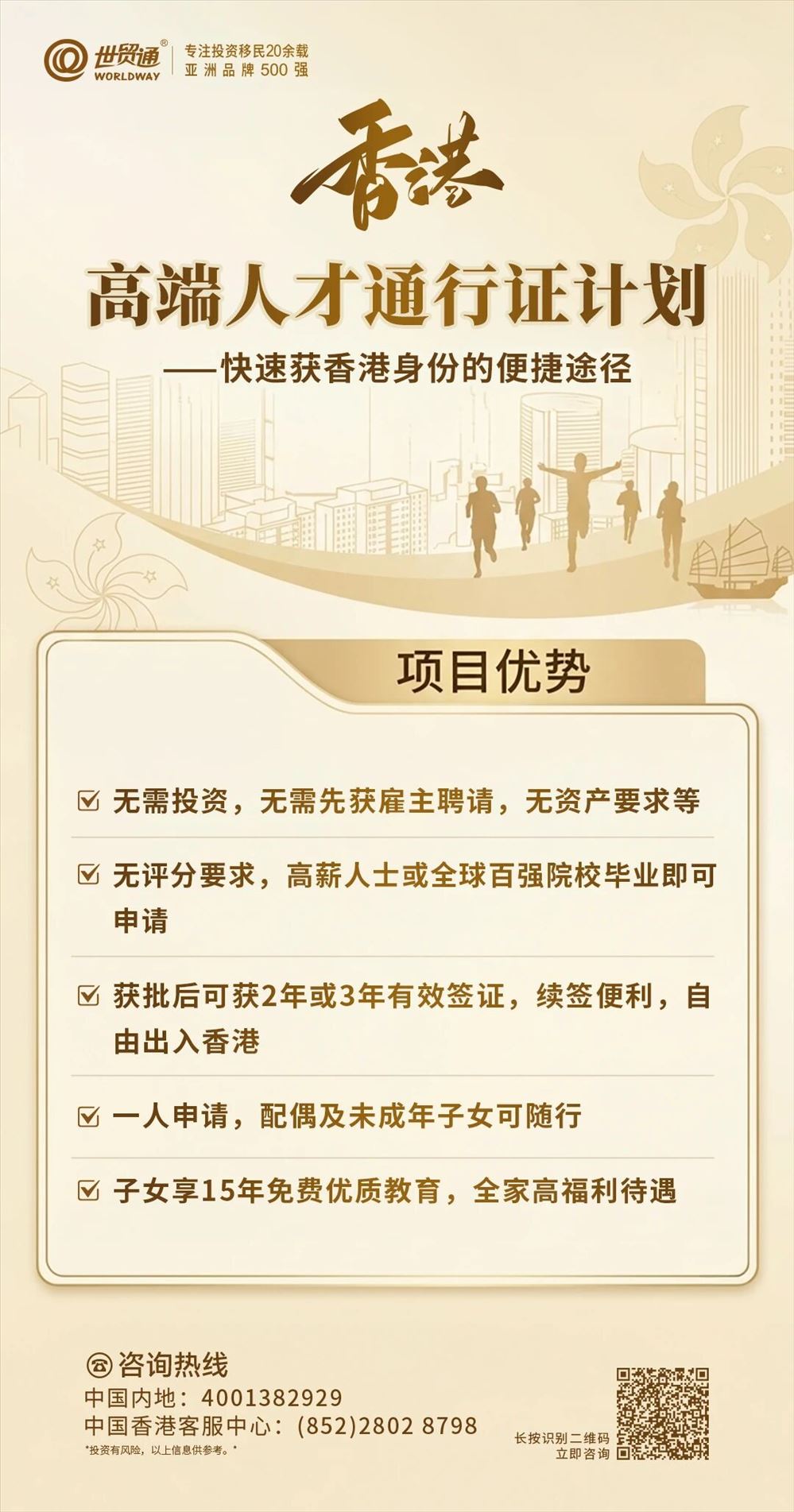
For individuals with high academic qualifications or high-income backgrounds, the Hong Kong Top Talent Pass Scheme offers another residency pathway. This scheme requires no investment, no prior employer sponsorship, no financial proof, and no points assessment. With one person applying, the spouse and unmarried minor children can accompany them and freely enter and exit Hong Kong.
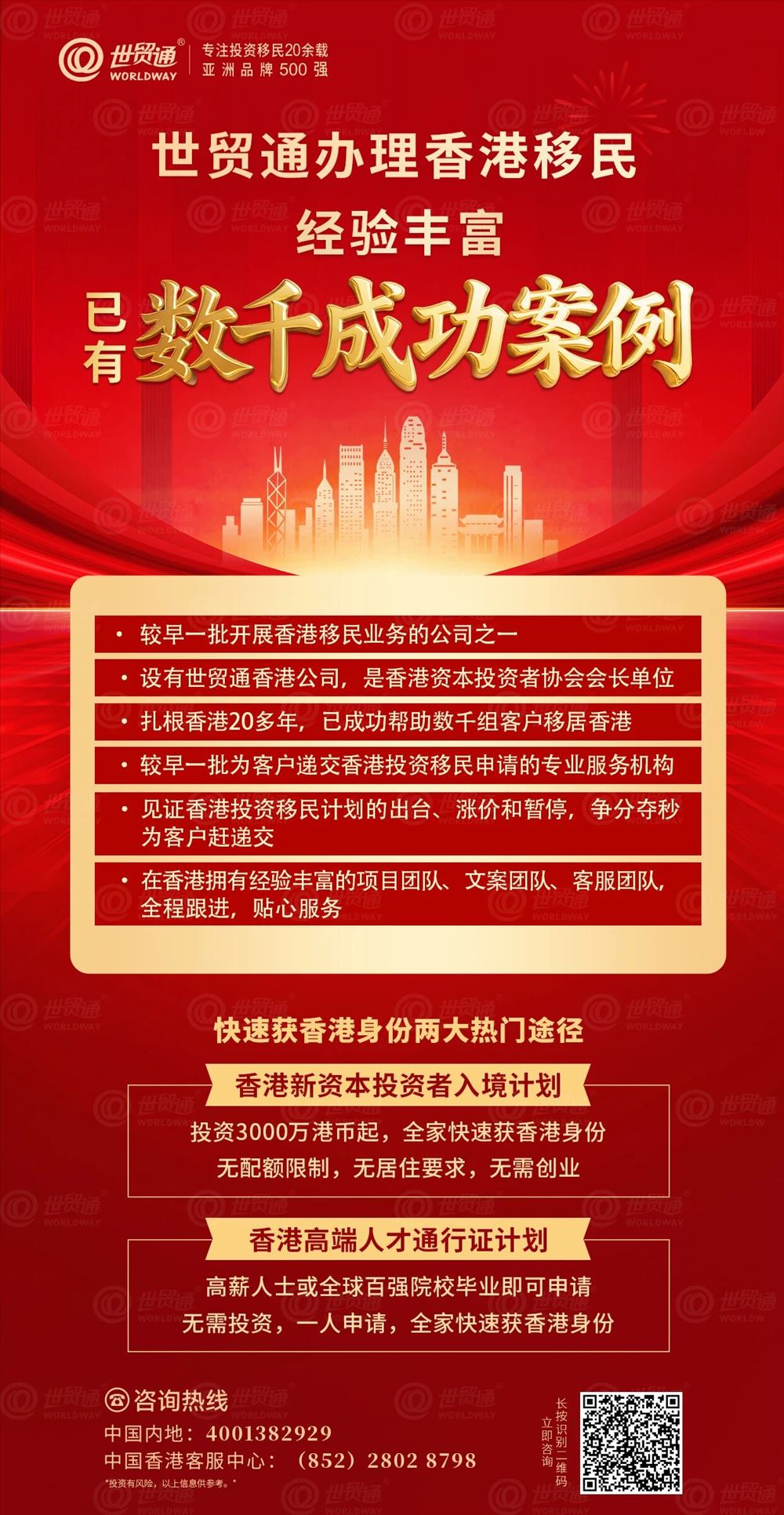
As one of the earliest professional institutions to conduct Hong Kong immigration business, WorldWay has established professional companies in Hong Kong, Macao, and the Mainland, accumulating numerous successful Hong Kong residency planning cases and rich project experience.
From selecting suitable residency solutions to connecting children's education and family future development, WorldWay will provide more systematic Hong Kong residency planning services tailored to the actual needs of each family.
For detailed inquiries in Mainland China: 400-138-2929, Hong Kong, China Customer Service Center: (852)2802 8798