U.S. short-term visit visas have undergone another major adjustment.
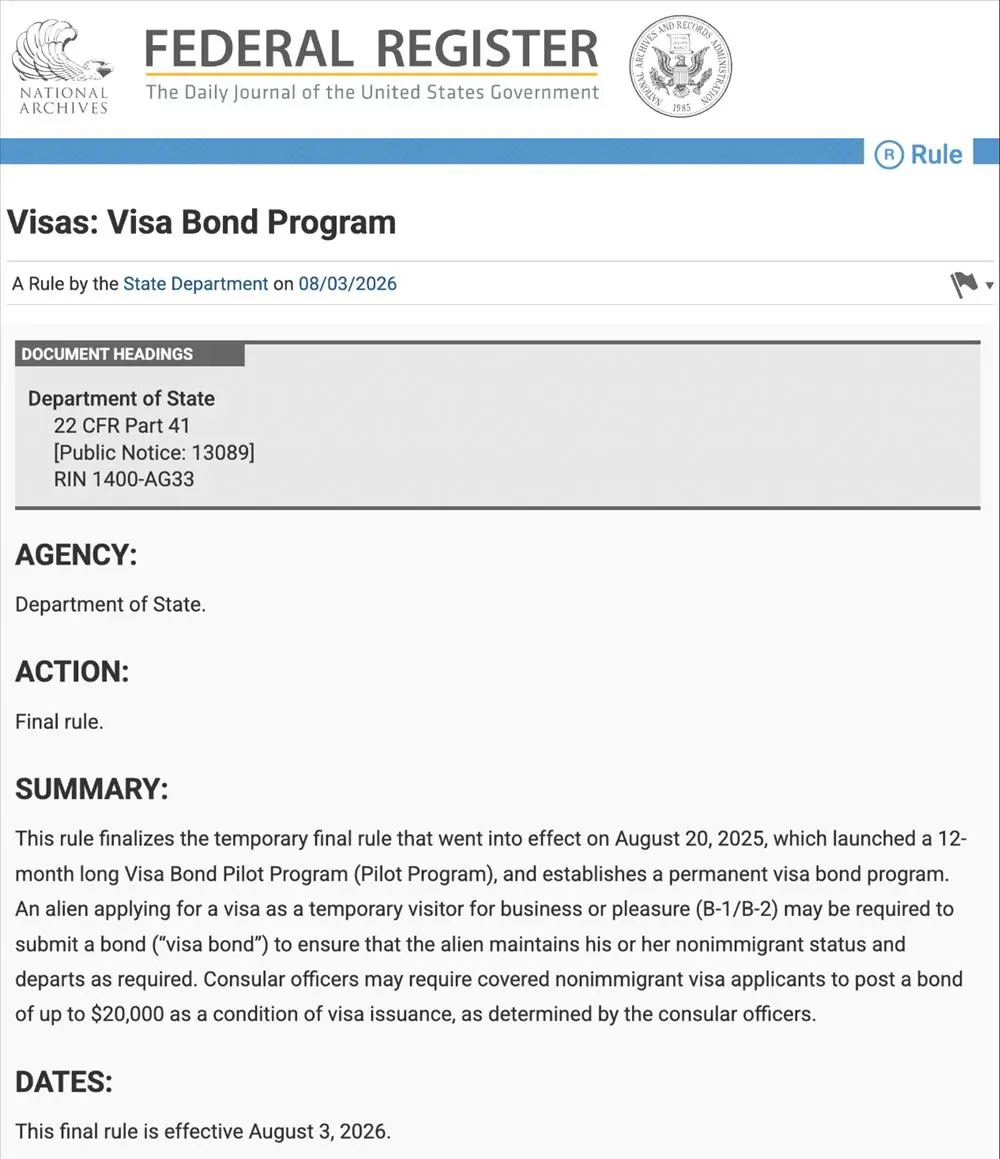
On August 3, 2026, the U.S. Department of State officially made the “Visa Bond Program”, which had been implemented for nearly a year, a permanent system.
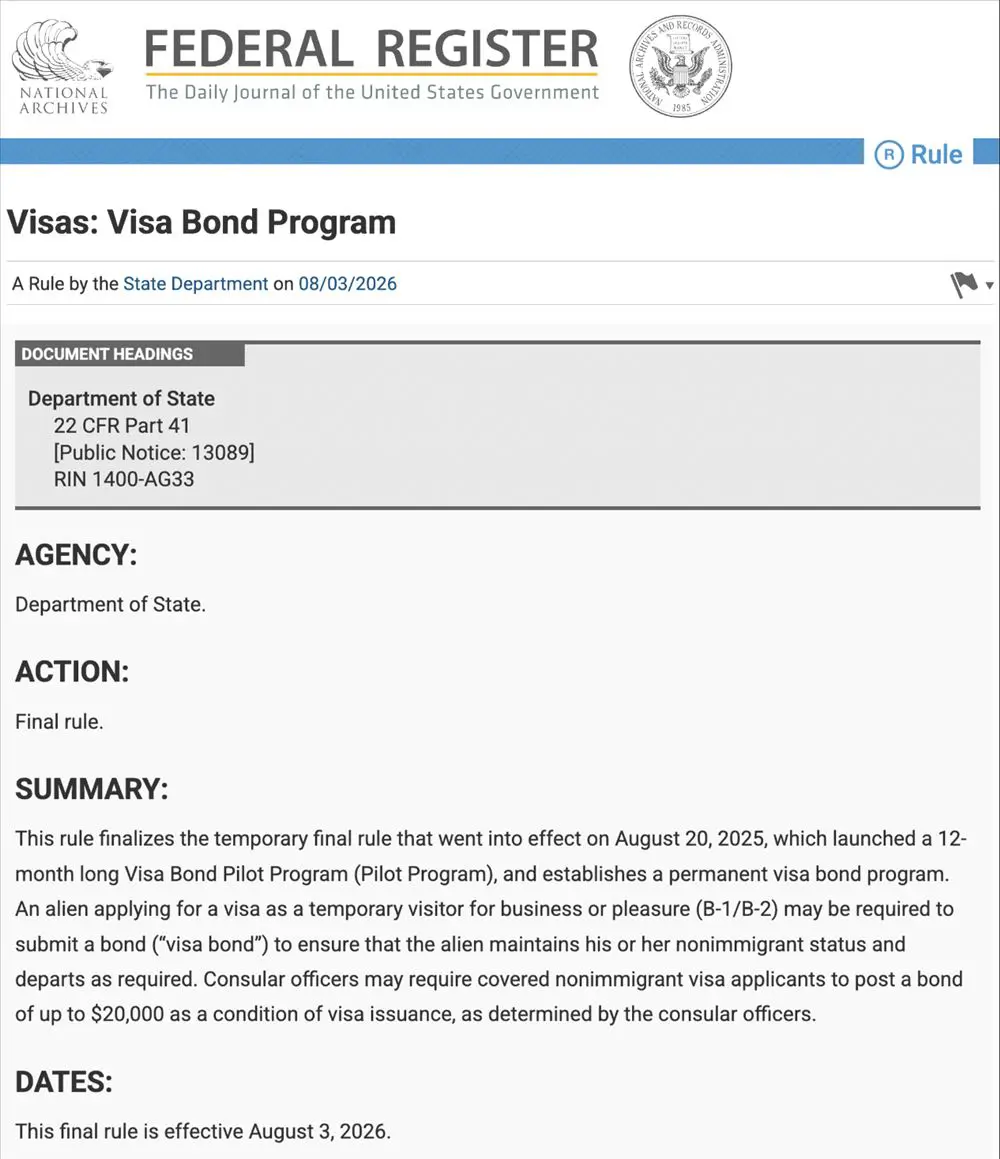
Under the new rule, applicants from specific countries applying for B1 business visas or B2 tourist visas who meet the basic visa qualifications may still be required to post a refundable bond before being issued a visa.
Compared with the previous pilot program, this transition is not only a shift from “temporary” to “permanent,” but the bond thresholds have also been further increased.

Up to $20,000, Minimum Bond Amount Directly Doubled
When the pilot program launched in August 2025, the visa bonds were divided into three tiers: $5,000, $10,000, and $15,000.
Following the implementation of the permanent rule, the $5,000 tier was eliminated, while the maximum amount was raised from $15,000 to $20,000.
Currently set at: $10,000, $15,000, and $20,000.
The specific amount is determined by the consular officer based on the applicant's individual circumstances.
It should be noted that the bond is not an additional “visa fee,” but rather a security deposit designed to ensure applicants comply with U.S. visa and stay regulations. If the applicant is refused a visa, or strictly complies with visa rules and departs on time after obtaining the visa and traveling to the U.S., the bond can be refunded in accordance with regulations; if violations of visa terms occur, such as overstaying or unauthorized employment, the bond may face forfeiture.
At the same time, posting the bond itself does not guarantee visa approval; applicants must still satisfy the eligibility criteria for the B1/B2 visa itself.
50 Countries Included, China Currently Unaffected
Currently, a total of 50 countries are included in the Visa Bond Program. Notably, this list is not fixed. The U.S. Department of State can dynamically adjust it based on visa overstay rates, identity verification capabilities, and other risk factors of the relevant countries.
Currently, China is not on this 50-country list. At this stage, Chinese citizens applying for U.S. B1/B2 visas will not generally be required to post an additional bond of $10,000 to $20,000 due to this new rule.
However, this does not mean that the U.S. visa environment is relaxing.
In recent years, the U.S. has continuously tightened its review of non-immigrant visa applications, status usage, and entry compliance, including placing greater emphasis on the authenticity of application materials, personal backgrounds, travel purposes, past entry and exit records, and relevant online information.
From this perspective, the transition of the visa bond from a pilot program to a permanent system releases a signal that merits even greater attention:
The U.S. is further strengthening its review and management of temporary U.S. statuses.
For applicants, whether or not they are on the bond list, genuine and complete documentation, a clear and reasonable purpose of visit, and a good record of entry and exit compliance have become all the more crucial.
From Temporary Visas to Planning Long-Term Status in Advance
For individuals visiting the U.S. short-term for tourism, visiting relatives, or business, the B1/B2 visa remains an option. However, if children plan to study or work in the U.S. in the future, or if the family itself has long-term living requirements in the U.S., relying solely on temporary visas will mean continuously facing uncertainties such as policy changes, visa vetting, and entry inspection.
Therefore, for families with clear long-term goals in the U.S., rather than repeatedly dealing with temporary status changes, planning a more stable U.S. status in advance is becoming increasingly important.
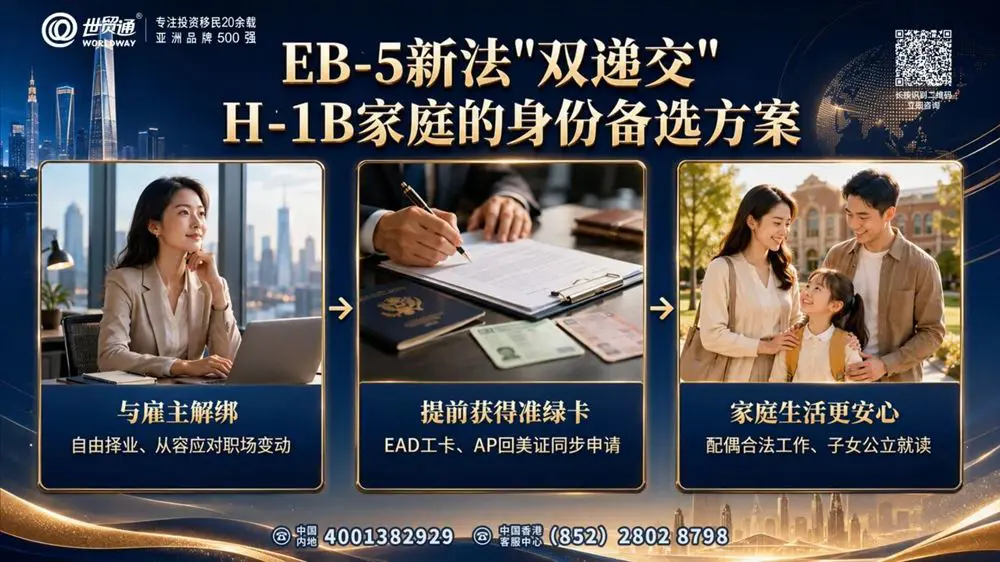
Unlike short-term visas, EB-5 Investment Immigration targets U.S. Permanent Resident status. Currently, under the Reform and Integrity Act, EB-5 set-aside visa categories remain without retrogression; eligible applicants inside the U.S. can concurrently file Form I-526E and I-485 to initiate the adjustment of status process earlier. At the same time, rural projects enjoy policy advantages such as reserved visa quotas and priority processing, offering investing families a choice with greater certainty.
For families with future plans for U.S. education, employment, or long-term living, holding a green card means children will not have to rely entirely on F-1, OPT, or a single sponsoring employer, giving them greater autonomy in higher education, employment, and family living arrangements.
Meanwhile, the current $800,000 investment threshold for EB-5 is entering a crucial window. According to current policy schedules, the minimum investment amount will be adjusted starting January 1, 2027, and is expected to rise to $900,000–$950,000 or even higher. For families with clear U.S. status needs, starting earlier is more advantageous for locking in current policy and investment terms.
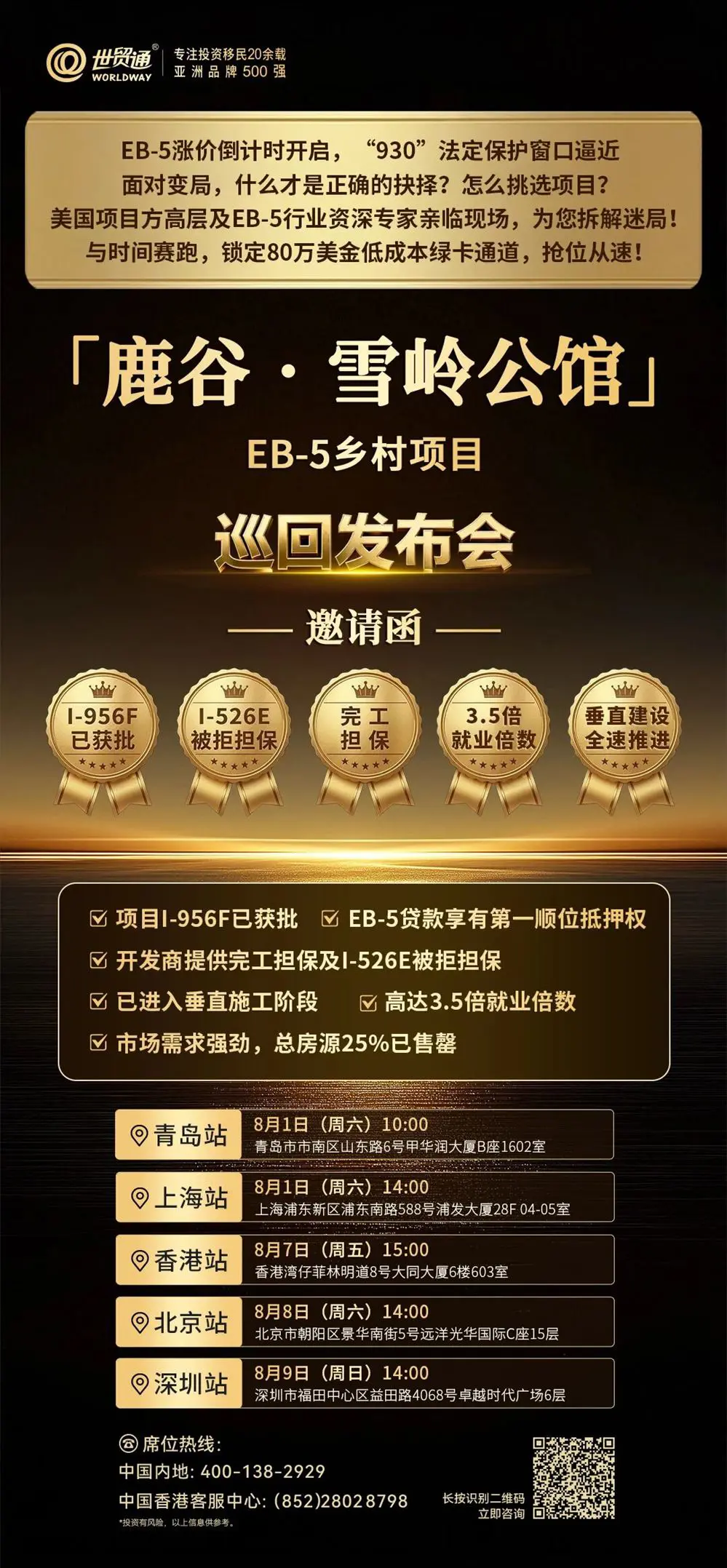
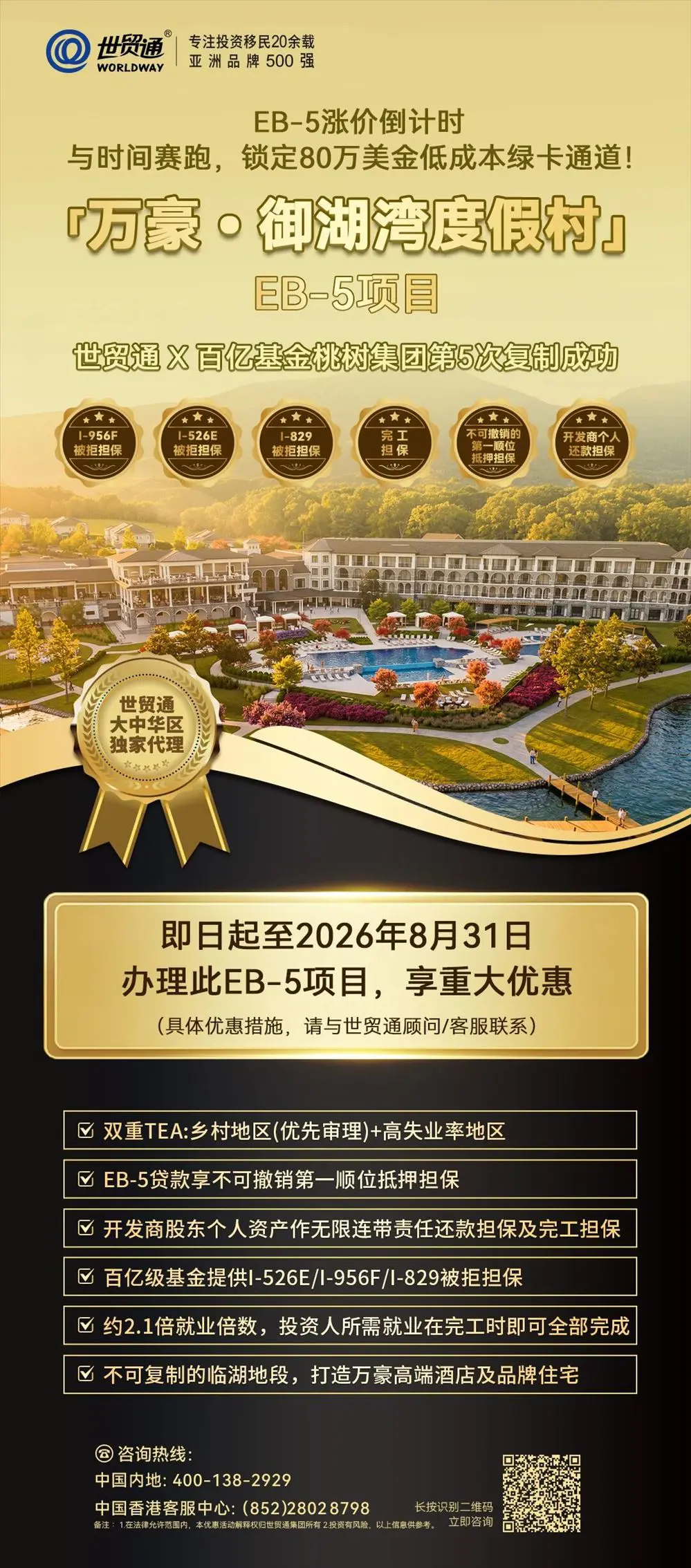
Currently, WorldWay holds two premier EB-5 projects: “Deer Valley · Snow Park Residences” and “Marriott · Lakeview Bay Resort”, providing investing families with more project options.
From now until August 31, applying for EB-5 immigration through WorldWay also comes with limited-time exclusive offers. Quotas for premier projects are limited; families interested in planning their U.S. status are advised to seize the current $800,000 window and initiate their applications as early as possible.
Inquiries for Mainland China: 400-138-2929, Hong Kong, China Customer Service Center: (852)2802 8798