WorldWay·US Immigration Policy Watch
In the US midterm elections held on local time November 3, 2026, the Democratic Party successfully regained control of Congress. According to data from Decision Desk HQ (DDHQ), the Democrats are projected to secure 53 seats out of the 100 Senate seats, taking back control of the Senate; at the same time, they reclaimed control of the House of Representatives with 225 seats, ending their four-year minority status.
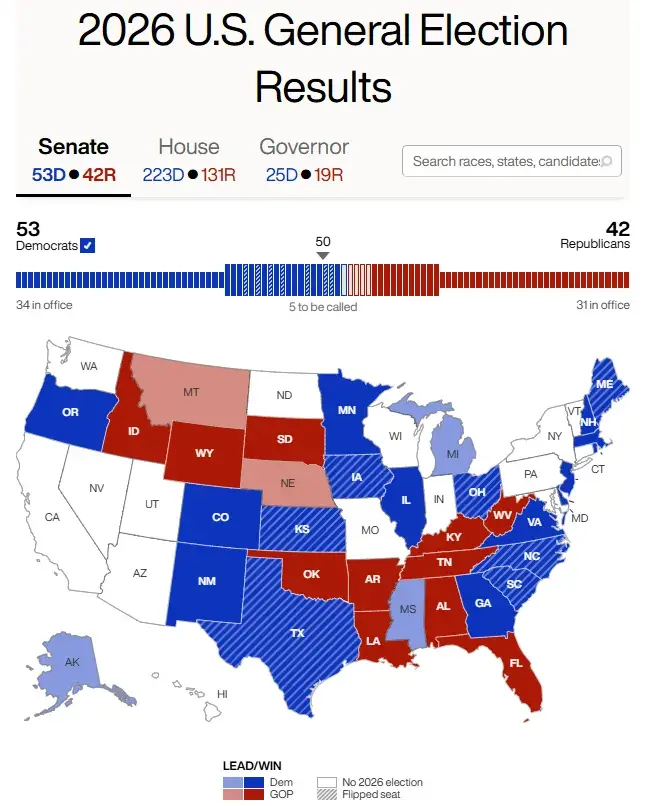
The shift of control in both houses of Congress will not only affect the direction of US domestic and foreign policies, but new variables will also emerge in the legislative pace and bill negotiation logic in the field of immigration, directly impacting the plans to study in or relocate to the US for countless Chinese families.
For families planning to study in the US or those with students already studying or working there, a change in policy direction means that status planning can no longer be passively delayed; early layout has become an essential prerequisite.
I. Reshaping of the Congressional Landscape
Increased Uncertainty in US Immigration Policy
After the Democratic Party gains control of both the Senate and the House of Representatives, the leadership of congressional committees will undergo a major reshuffle. As the core deliberative body for immigration bills, the Judiciary Committee will adjust its agenda and legislative priorities accordingly.
The current EB-5 Regional Center Program is set to expire on September 30, 2027. According to past practice, program extensions usually rely on piggybacking on federal spending bills to pass. Now that the political landscape in both houses has changed, negotiations over budget bills will intensify. The future direction of the EB-5 extension, attached clauses, investment thresholds, and quota rules all remain variable, leading to multiple possibilities for future policy adjustments.
At the same time, the dilemma of traditional paths to stay in the US remains unresolved:
▍H-1B Work Visa
The lottery success rate continues to decline, and holders are highly dependent on employers; upon unemployment, legal status instantly enters a red zone. The proposed additional fee of $103,265 for H-1B has also concluded its public comment period. Once implemented, employer sponsorship willingness and lottery dynamics will both be reshaped.
▍OPT / Student Visa
Policies frequently face legislative disruptions, making "facing a status crisis right upon graduation" a major pain point for international students and their families. The proposed OPT fee requires schools to pay $70,000 for the first year and $30,000 for subsequent years per student, with public comments closing on November 9, 2026.
▍Employment-Based Visa Retrogression
Wait times are lengthy, often stretching over several years, making the time cost unbearable for many.
Many families assume they can take a wait-and-see approach to stay in the US. However, US immigration policy is heavily influenced by party politics. Once policies tighten, starting the planning process late could mean missing the window of opportunity. Given the changing landscape, relying on lotteries, employers, or policy luck to secure legal status carries increasingly high risks.
II. Amid Changing Circumstances
EB-5 Becomes the Preferred Option for Staying in the US
01Concurrent Filing Window Remains Open, Offering "Quasi-Green Card" Benefits
In the November 2026 Visa Bulletin, the three set-aside categories (Set-Aside) for applicants born in mainland China still show as "Current" (no retrogression). Applicants residing in the US who meet the requirements for adjustment of status can concurrently file Form I-526E and Form I-485:
· Apply for an Employment Authorization Document (EAD) to work freely, unconstrained by employers or the H-1B lottery;
· Apply for Advance Parole (AP) to travel freely into and out of the US.
Once retrogression hits the set-aside categories, the concurrent filing window will close, at which point it will be too late to resolve legal status in the US quickly. The Current status will not last forever; seizing the present opportunity is key.
02EB-5 Price Increase Timeline Clear: Delaying Means Higher Costs
Under the automatic inflation adjustment mechanism of the EB-5 Reform and Integrity Act (RIA), starting January 1, 2027, the minimum investment threshold for EB-5 Targeted Employment Areas (TEA) is expected to increase from the current $800,000 to $900,000. The final amount is subject to official publication in the Federal Register by USCIS.
The signal from policy levels is already crystal clear: the earlier you file, the lower the cost and the more options you have.
03Year-End Budget Negotiations May Be a Highlight for Reauthorization
US temporary funding regulations stipulate that federal stopgap funding will last until December 11, 2026 at the latest. For these year-end budget negotiations taking place before the new Congress takes office, the industry is closely watching whether EB-5 Regional Center reauthorization terms will be included in a broader spending bill. Every adjustment in the policy environment serves as a reminder to applicants: Plan early and do not wait for uncertainties to unfold.
III. Policies Are Changing
Seize the Window of Opportunity and Plan Your US Legal Status Early
With the Democratic Party taking both houses, the congressional landscape has shifted, and the battle over immigration legislation has just begun. Timelines for OPT, H-1B, and EB-5 could all be rewritten. The best way to prepare for the future is to arrange your status planning before changes arrive.
We have seen too many families wait until their children are near graduation or their visas are about to expire before hastily starting status planning, only to face retrogression and policy shifts, ultimately missing out. US policies are deeply impacted by party politics, and variables are always present. Status planning is never suited for last-minute efforts.
Rather than passively reacting to policy shifts, it is better to proactively seize the current window of opportunity and use EB-5 to lock in a certain US legal status for yourself and your family.