





Changes in a city's population often reflect shifts in the trends of the times.
In recent years, the immigration structure of New York has been quietly reshaping. According to the decennial "New New Yorkers" report released by the New York City Department of City Planning, the Chinese population has reached 397,000, accounting for 12.8% of New York City's 3.1 million immigrant population, historically rising to become the largest immigrant group in New York City.
This change represents more than just an increase in the number of Chinese residents; it signifies profound shifts in the degree of integration, level of development, and long-term planning awareness of Chinese families in the United States.
In the past, Chinese people moved to the United States primarily to seek opportunities and establish a foothold; today, an increasing number of families are considering U.S. residency, children's education, career development, and asset allocation within a single, integrated planning framework.
The rise of the Chinese community in New York is a microcosm of this trend.
From "Settling in New York" to "Planning for the Future"
The Structure of Chinese Immigration is Changing
Looking back over the past few decades, early Chinese immigrants to New York were mostly concentrated in traditional communities like Chinatown, focusing on industries such as catering, retail, and wholesale, with the core goal of establishing roots and stabilizing their lives in the city.
Over time, more and more Chinese individuals have entered professional fields such as education, healthcare, engineering, finance, and technology. Their professional structure has gradually upgraded, and their immigration status has shifted from "survival-oriented" to "development-oriented."
Over the past decade, this change has further accelerated.
Today's Chinese families are no longer migrating for a single job opportunity; instead, they are increasingly planning as a family unit, focusing on long-term goals such as children's education, residential stability, career development, and asset allocation.
Residential distribution has also expanded from traditional enclaves to various areas including Queens, Brooklyn, and Long Island, forming a more diverse and mature urban living landscape.
This means that Chinese immigrants are moving from "arriving in the United States" to "putting down roots in the United States"; from seeking a single status to comprehensive family planning.
Rising Chinese Influence
Status Planning Awareness is Advancing
With the expansion of population size, the upgrading of professional structures, and the increase in family income, the influence of the Chinese community in New York continues to strengthen.
From business, education, healthcare, and finance to art, media, and public affairs, the Chinese community is no longer just an immigrant enclave in the city, but is gradually becoming an important force participating in urban operations and social development.
However, at the same time, a more realistic issue is facing an increasing number of families:
When education, career, assets, and family life are deeply tied to the United States, the importance of a stable status rises accordingly.
For international student families, issues such as post-graduation OPT, H-1B lottery, and employer sponsorship always carry uncertainty; for those already working in the United States, whether the status path is stable directly affects career choices and long-term development; for families hoping to move to the United States as a whole, being able to secure a clear path in advance is even more critical to children's education, asset allocation, and life arrangements.
Therefore, status planning is gradually shifting from the "final step" to a key step in long-term family planning.
EB-5 Reserved Visa Categories
Become an Important Window for Family Status Planning
Against this backdrop, the value of EB-5 investment immigration is being recognized by more families.
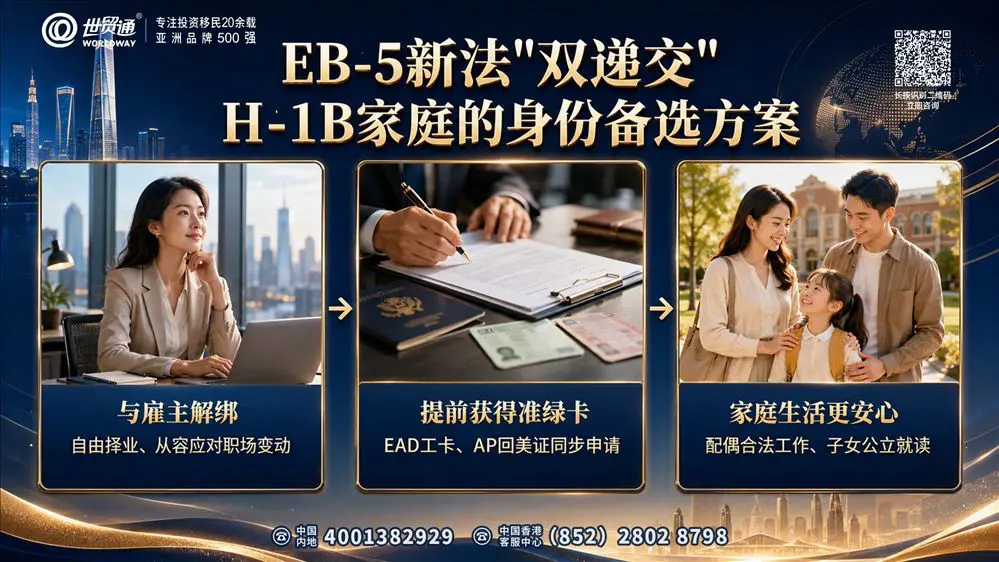
Especially after the implementation of the new EB-5 law, its two major advantages continue to attract market attention: first, the opportunity for no visa backlog provided by the reserved visa categories; second, the "concurrent filing" policy, which allows applicants already in the United States to file Form I-526E and Form I-485 simultaneously, quickly obtaining a Combo card to achieve legal residency and work authorization. In addition, rural projects also enjoy priority processing advantages.
With the combination of "no backlog + concurrent filing + priority processing," EB-5 provides a more proactive status path for families with long-term planning needs.
It relates not only to the green card application itself but also to more possibilities for educational choices, career freedom, and long-term family development.
The Window Period Will Not Last Indefinitely
Key Time Nodes Deserve Attention
However, it is worth noting that the current EB-5 policy window will not remain unchanged forever.
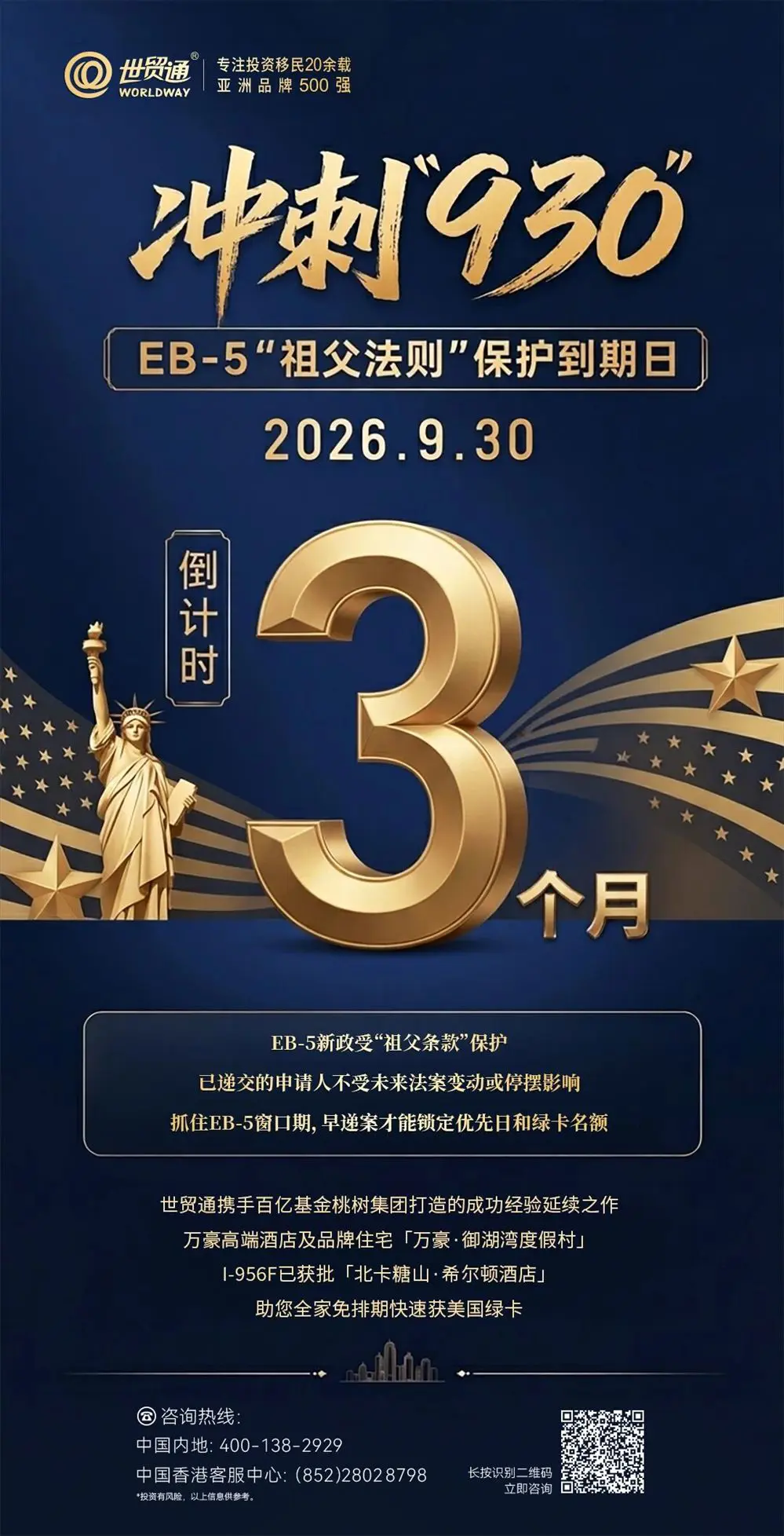
Key time points widely watched by the market include: the grandfather clause will expire on September 30; the minimum investment amount may increase from the current $800,000 to $900,000-$937,500 or even higher on January 1, 2027.
Furthermore, once a backlog appears in the new EB-5 reserved categories, the current golden window of "no backlog + concurrent filing" will also change accordingly.
Rather than waiting in uncertainty, it is better to plan ahead with a clear path. In other words, the earlier you plan, the more likely you are to lock in the window advantages under current conditions.
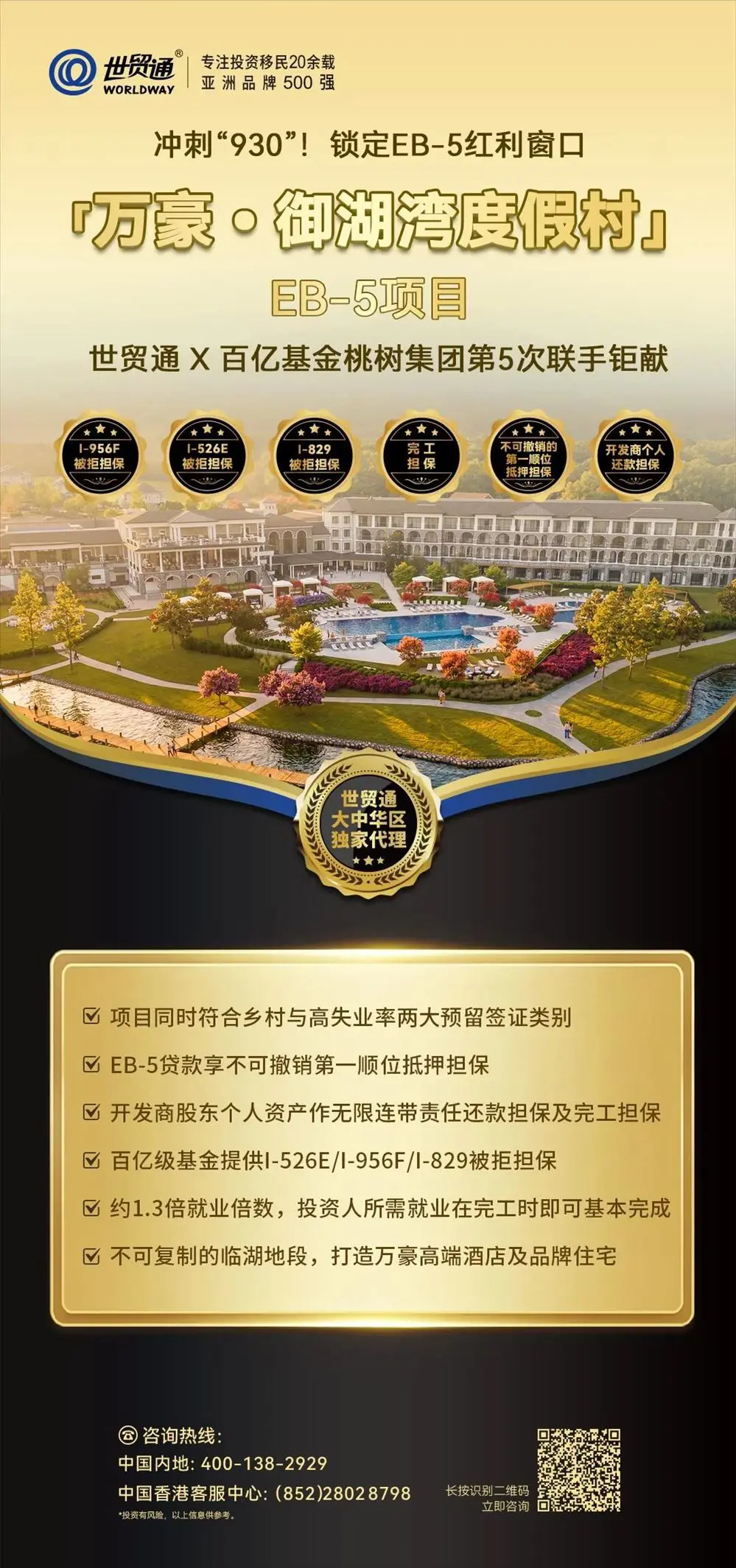
WorldWay offers high-quality EB-5 projects, including the "Marriott Resort at Lake Oconee" and "Hilton Hotel at Sugar Mountain, North Carolina," to help investors quickly achieve their U.S. status planning.
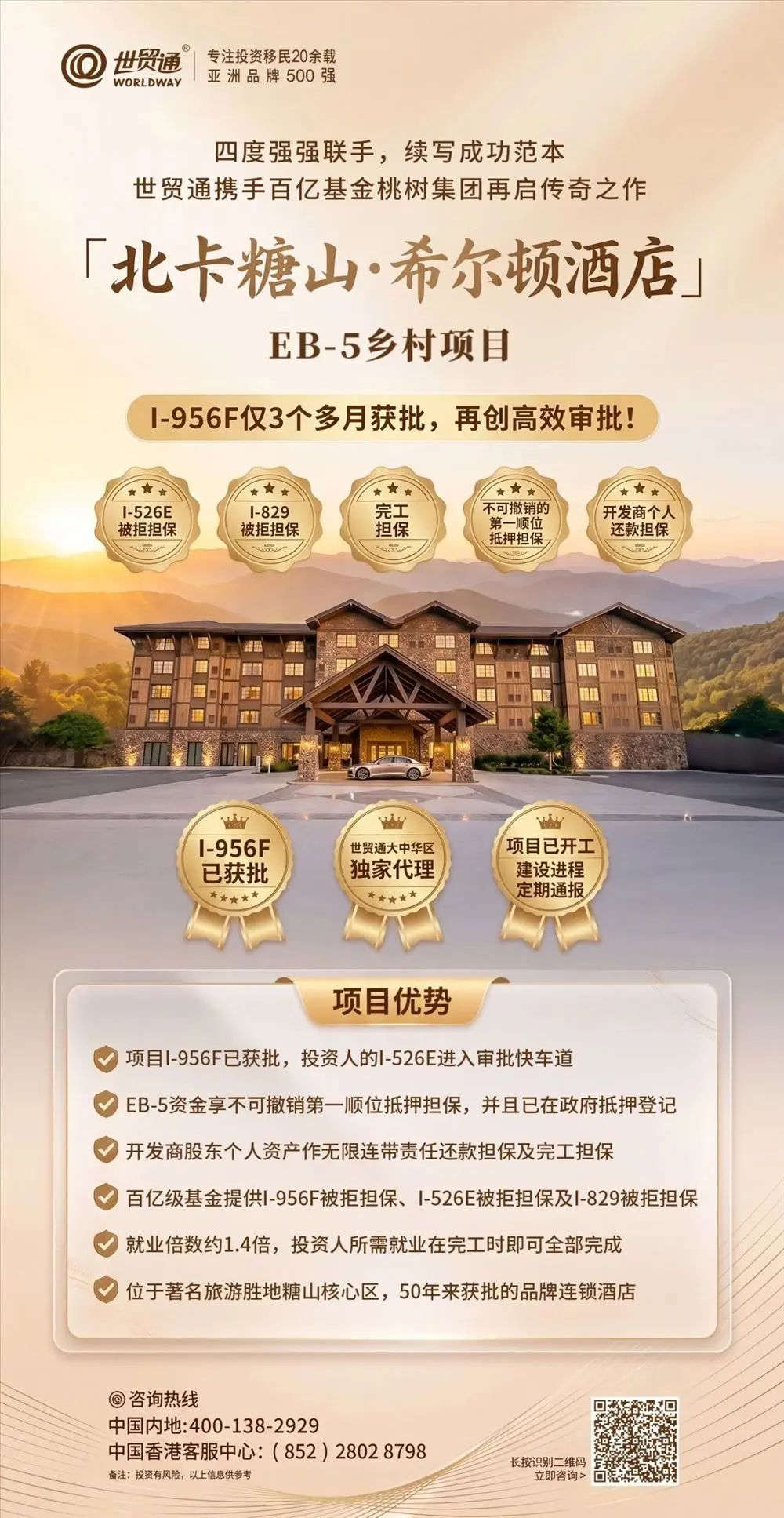
For detailed inquiries in Mainland China: 400-138-2929, Hong Kong Customer Service Center: (852)2802 8798