





Recently, many international students have been repeatedly refreshing their systems, waiting for their H-1B lottery results.
The H-1B registration for the 2027 fiscal year closed on March 19, and results have begun to appear in some applicants' myUSCIS accounts. Meanwhile, reports suggest that this year's H-1B registration volume may have declined by 30%-50% compared to last year. This does not reflect a lack of desire to stay in the U.S., but rather that this path is becoming increasingly difficult.
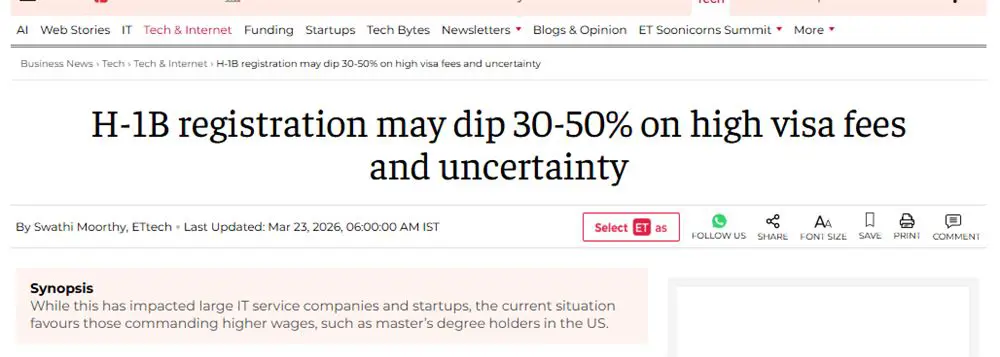
The annual H-1B quota is 65,000 regular spots plus 20,000 spots reserved for those with a U.S. master's degree or higher, totaling approximately 85,000. However, the number of applicants consistently far exceeds the quota. Even with a decline in registration for the 2026 fiscal year, the reality of hundreds of thousands of people competing for 85,000 spots remains unchanged.
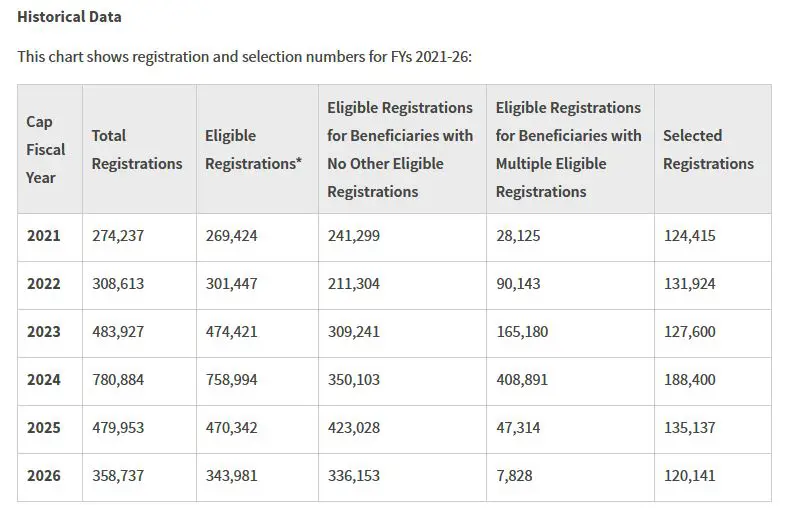
Many people originally thought the hardest part of the H-1B was just "winning the lottery"; but it is becoming increasingly clear that even if you win, it is not necessarily secure. Because the U.S. screening logic for H-1B is quietly changing: it is no longer just about luck, but increasingly about salary, job position, and employer strength.

Before the lottery results are even out
Major news regarding salary thresholds
Just as everyone is focused on the lottery results, the U.S. Department of Labor has released a major proposal: to comprehensively increase the "prevailing wage" standard for H-1B visas.
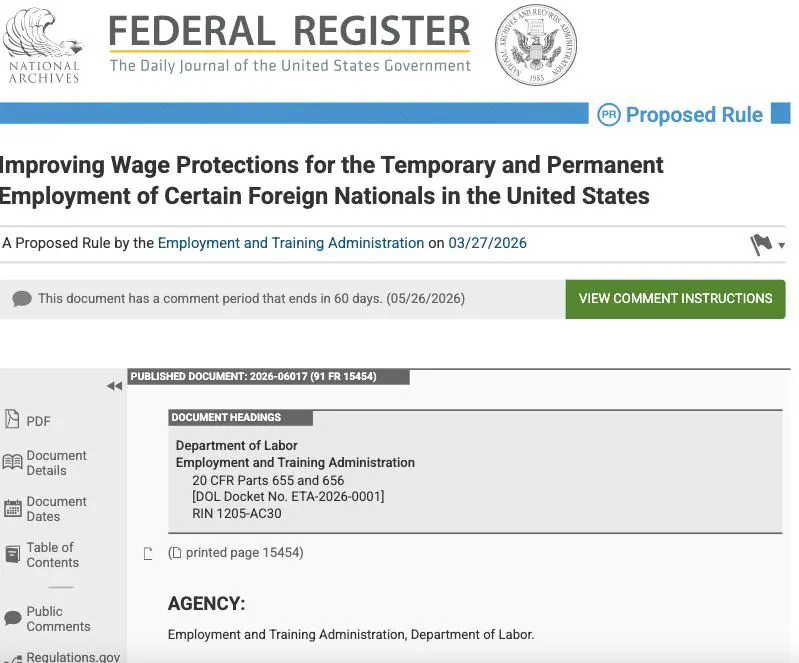
According to the proposal, the current four-level wage structure will be significantly adjusted upward:
• Level 1 (Entry Level): The minimum wage standard will increase from the 17th percentile to the 34th percentile of the industry wage.
• Level 2 (Qualified Level): From the 34th percentile to the 52nd percentile.
• Level 3 (Experienced Level): From the 50th percentile to the 70th percentile.
• Level 4 (Fully Competent/Expert Level): From the 67th percentile to the 88th percentile.
The term "percentile" can be understood as the position within the salary range for the same position; the higher the value, the higher the salary requirement.
In simple terms: in the future, if employers want to sponsor H-1B visas for foreign employees, they may need to offer higher salaries. Positions that were previously barely affordable may no longer be sustainable; companies that previously supported international students may become more hesitant; and applications that were previously "worth a try" may be rejected internally by the company in the future.
More notably, the Department of Labor estimates in its own document that if this proposal is implemented, the average certified wage could increase by approximately $14,000 per year. This is not a minor adjustment, but a substantial increase in costs.
Currently, this rule has not been officially implemented and is still in a 60-day public comment period (ending May 26, 2026). While it will not affect the concluded FY2027 lottery, for applicants preparing for next year's H-1B and those currently processing PERM green cards, the pressure of policy tightening has already arrived.
As the H-1B becomes more difficult
Staying in the U.S. requires better planning
If many families previously regarded the H-1B as the primary path to staying in the U.S., then in the last two years, more and more people have begun to realize: when the lottery, salary thresholds, employer costs, and policy environment are all changing, pinning long-term status entirely on the H-1B is a risk in itself.
After all, the H-1B is essentially a path that is highly dependent on employers, salaries, and policy changes. It is not something you can apply for whenever you want, nor does winning the lottery guarantee a smooth outcome. For international students and families already in the U.S. who hope to stabilize their status as soon as possible, the real problem to solve is no longer just "can I win the lottery this year," but: if the H-1B path becomes increasingly difficult, do I have a more controllable long-term status path?
It is precisely for this reason that more and more families are shifting their focus from "a single lottery result" to "the certainty of long-term status."
U.S. "Plan B":
Why are more people paying attention to EB-5?
In the current environment, more and more families are paying attention to EB-5 for a simple core reason: it does not solve the job opportunity itself, but the uncertainty of status.
Compared to the H-1B, the biggest difference with EB-5 is: it does not rely on employers, does not participate in a lottery, and corresponds directly to a green card path. This means that for those who want to stay in the U.S. for the long term, status planning no longer needs to be completely constrained by employers, positions, and lottery results.
From the perspective of the current policy environment, EB-5 is still in a window period worth seizing. According to the U.S. Department of State's Visa Bulletin, the EB-5 reserved visa category under the new act currently remains in a non-backlogged status; at the same time, the concurrent filing policy also provides a more efficient status adjustment path for applicants within the U.S. In addition, rural projects enjoy priority processing advantages.
However, it is worth noting that this window will not remain unchanged forever. The key time point that the market is generally concerned about is that the grandfather clause will expire on September 30; the minimum investment amount may increase from $800,000 to $900,000 or more on January 1, 2027. Furthermore, once the new EB-5 reserved category becomes backlogged, the current "no backlog + concurrent filing" golden window will end. In other words, the earlier you plan, the more likely you are to lock in the window advantages under current conditions.

WorldWay currently has two high-quality rural EB-5 projects with official I-956F approval—"Sugar Mountain Hilton Hotel, North Carolina" and "Great Smoky Mountains Marriott Hotel", helping investors quickly obtain U.S. green cards.


For inquiries in Mainland China: 400-138-2929, Hong Kong Customer Service Center: (852)2802 8798