





After an 8-month silence, the U.S. Department of State's monthly immigrant visa issuance data was finally updated in early March 2026. On the monthly immigrant visa statistics page, the official source released data for June, July, and August 2025 all at once.
This update holds significant meaning for the market. It not only provides a renewed look at the latest visa issuance pace for Chinese applicants but also reaffirms an increasingly clear trend: under the framework of the new EB-5 law, the advantages of rural projects are gradually being reflected in actual approvals and visa issuance results.
Below, join WorldWay Group as we examine the key signals released by this set of data.
Applicants Born in Mainland China
EB-5 Reserved Visa Issuance (June-August)
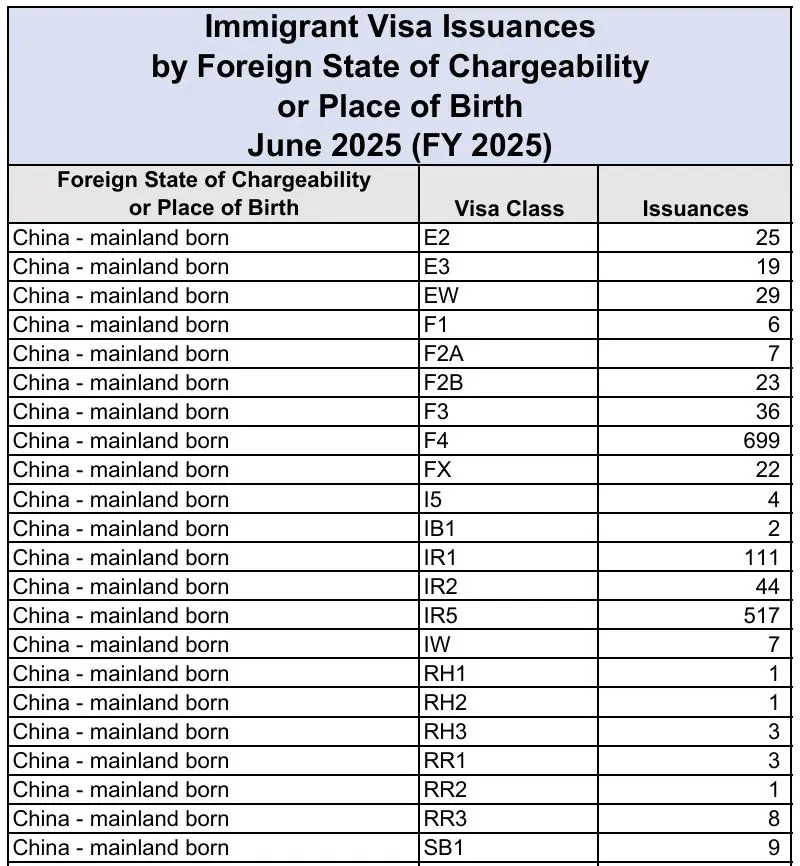
June Visa Issuance Data for Chinese Applicants
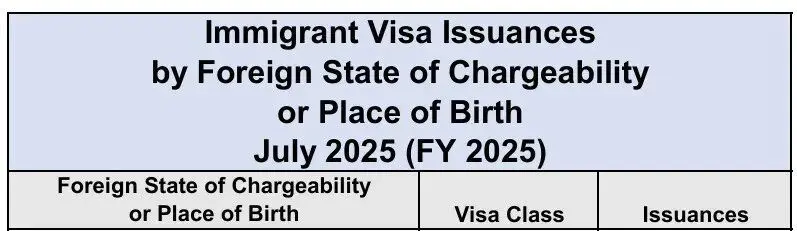
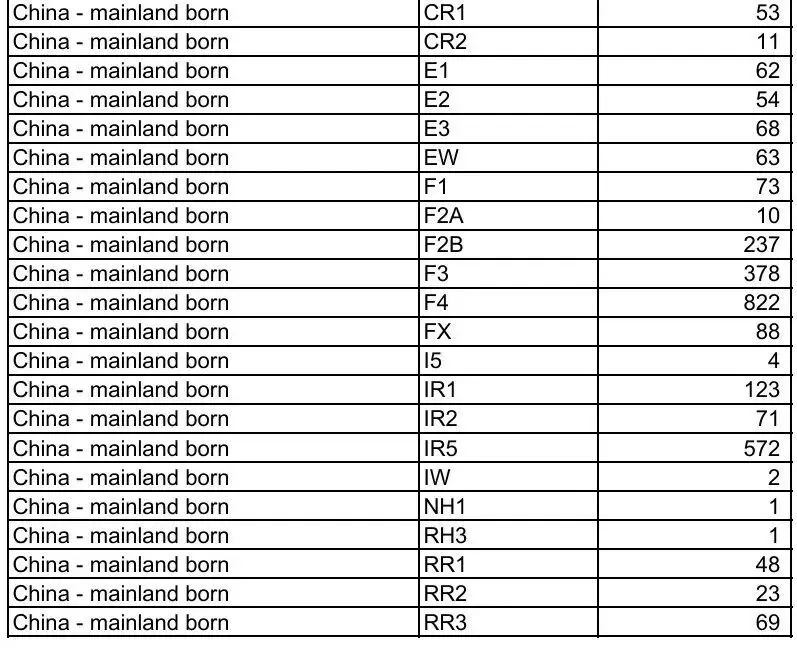
July Visa Issuance Data for Chinese Applicants
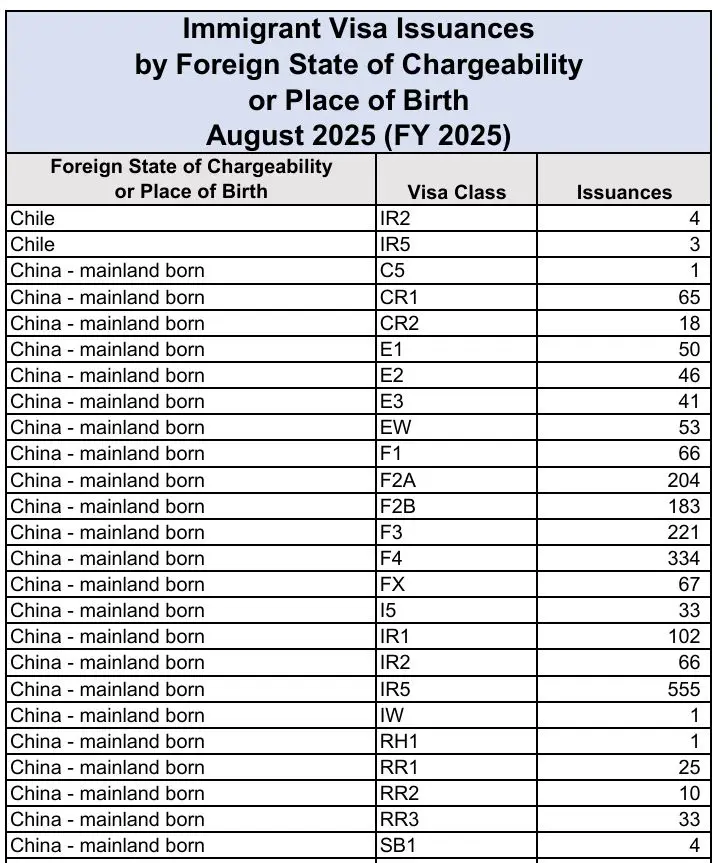
August Visa Issuance Data for Chinese Applicants
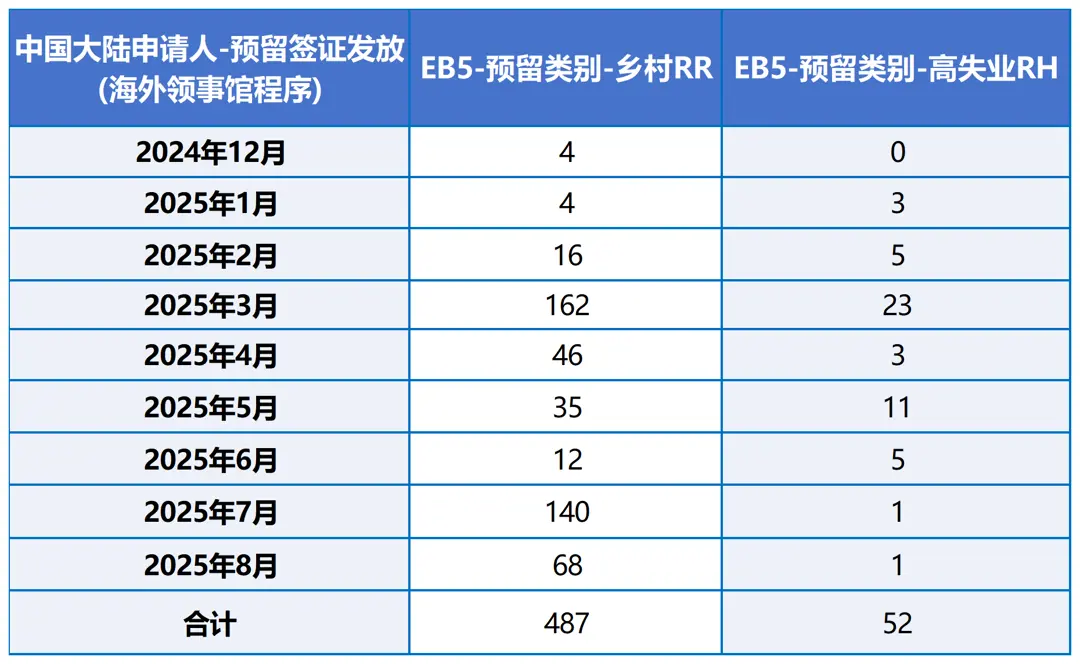
According to the data, the number of EB-5 reserved visas issued to applicants born in mainland China from June to August 2025 is:
• RH (EB-5 Regional Center Reserved Visa - High Unemployment Area Projects): 5, 1, 1
• RR (EB-5 Regional Center Reserved Visa - Rural Projects): 12, 140, 68
In comparison, it is evident that rural projects are significantly leading high unemployment area projects in both overall issuance volume and periodic growth. High unemployment area projects have remained at a low level during these three months, overall staying in a relatively "silent" state.
Additionally, as of August 2025, a total of 539 EB-5 reserved category visas have been issued to applicants born in mainland China through overseas consular processing, including 487 for rural projects and 52 for high unemployment area projects.
Global Data:
EB-5 Reserved Visa Issuance
As of August 2025, the global EB-5 reserved visa issuance status is as follows:
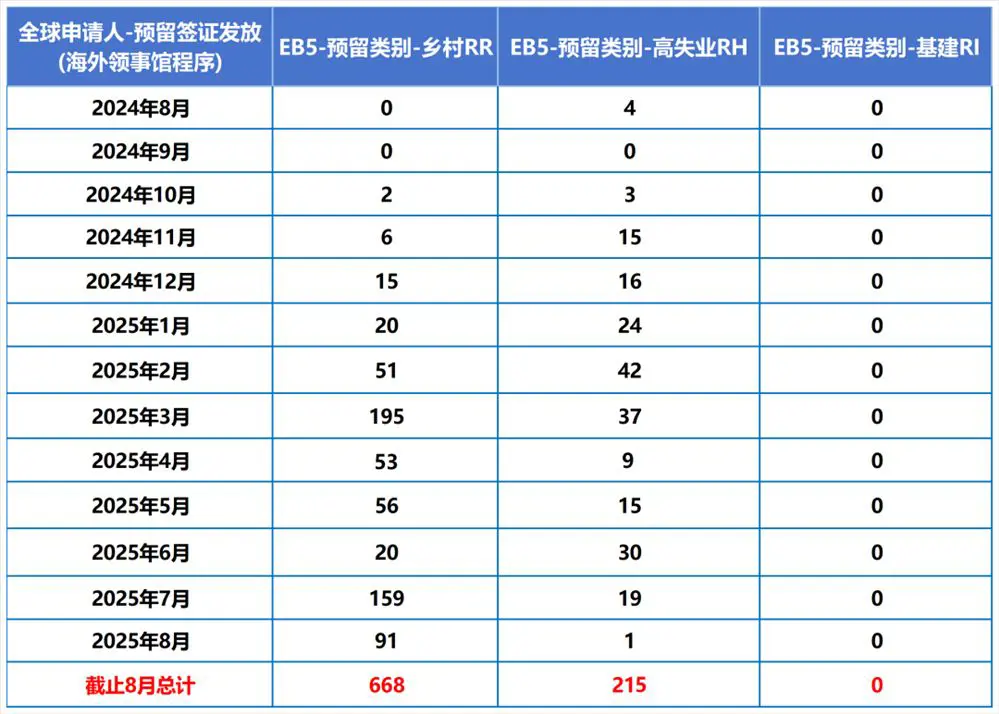
According to the data, the global EB-5 reserved category issuance status for June, July, and August 2025 is as follows:
• RH (EB-5 Regional Center Reserved Visa - High Unemployment Projects): 30, 19, 1
• RR (EB-5 Regional Center Reserved Visa - Rural Projects): 20, 159, 91
As of August 2025, a total of 883 reserved visas have been issued globally through consulates, including 668 for rural projects and 215 for high unemployment area projects. Among these 883 reserved visas, applicants born in mainland China received 539, accounting for as much as 61%.
Conclusions Behind the Data:
Rural Projects: Leading One Step, Leading Every Step
From the issuance status for Chinese applicants to the overall global data on reserved visas, everything repeatedly illustrates that:
First, "priority processing" for rural projects under the new law is not just empty talk.
Second, rural projects are not only more advantageous for Chinese applicants but also demonstrate stronger issuance momentum on a global scale.
Third, applicants from mainland China occupy a very important position in the EB-5 reserved visa category.
Fourth, the current EB-5 reserved category, especially rural projects, remains one of the most important main tracks for Chinese applicants to focus on.
Ultimately, the lead of rural projects is not accidental, but the result of the combined effects of priority processing and visa issuance advantages. This lead has also recently been confirmed by the latest adjudication rules from the U.S. Citizenship and Immigration Services (USCIS). Effective March 30, 2026, USCIS will generally adopt the "First-In, First-Out" (FIFO) principle to allocate the processing order for I-526/I-526E applications and will prioritize the processing of rural projects.
For EB-5 applicants, this lead means that once they enter the rural project track, they are more likely to take the initiative in subsequent stages such as processing, visa issuance, and status acquisition.
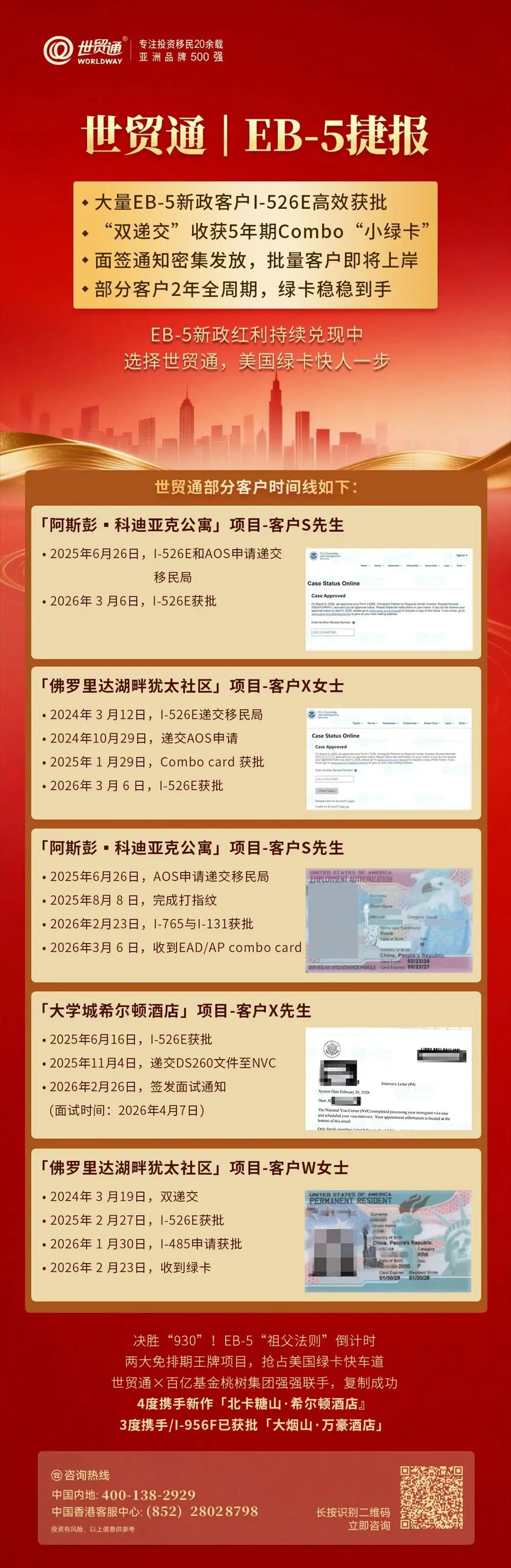
And judging from actual results, WorldWay has successively achieved many successful cases for EB-5 investors who chose rural projects, covering key milestones such as I-526E approval, receipt of interview notices, successful completion of interviews, acquisition of immigrant visas, and final receipt of green cards. This is the real-world confirmation that the priority processing advantage of rural projects is continuously being realized.
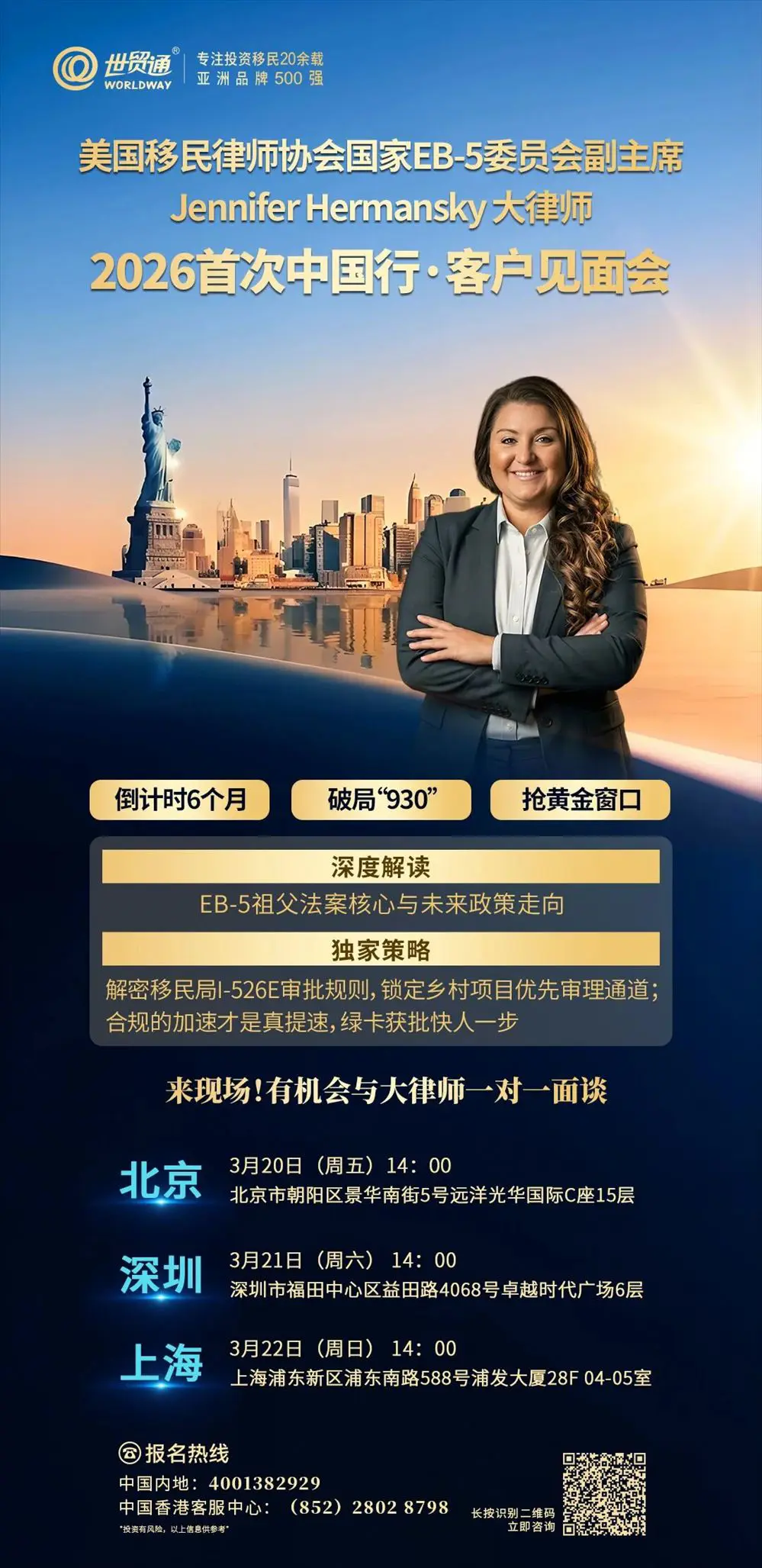
If you would like to learn more about changes in U.S. immigration policy, please contact WorldWay for a one-on-one consultation, or attend the offline U.S. immigration seminars hosted by WorldWay in Beijing, Shenzhen, and Shanghai from March 20th to 21st.
This event specially invites Jennifer Hermansky, Vice Chair of the National EB-5 Committee of the American Immigration Lawyers Association, to attend in person. She will provide an in-depth interpretation of USCIS I-526E adjudication rules, combined with the application logic and future policy trends of EB-5 in the current environment, and share how to more effectively grasp the priority processing opportunities for rural projects. Seats are limited; please scan the code to register.
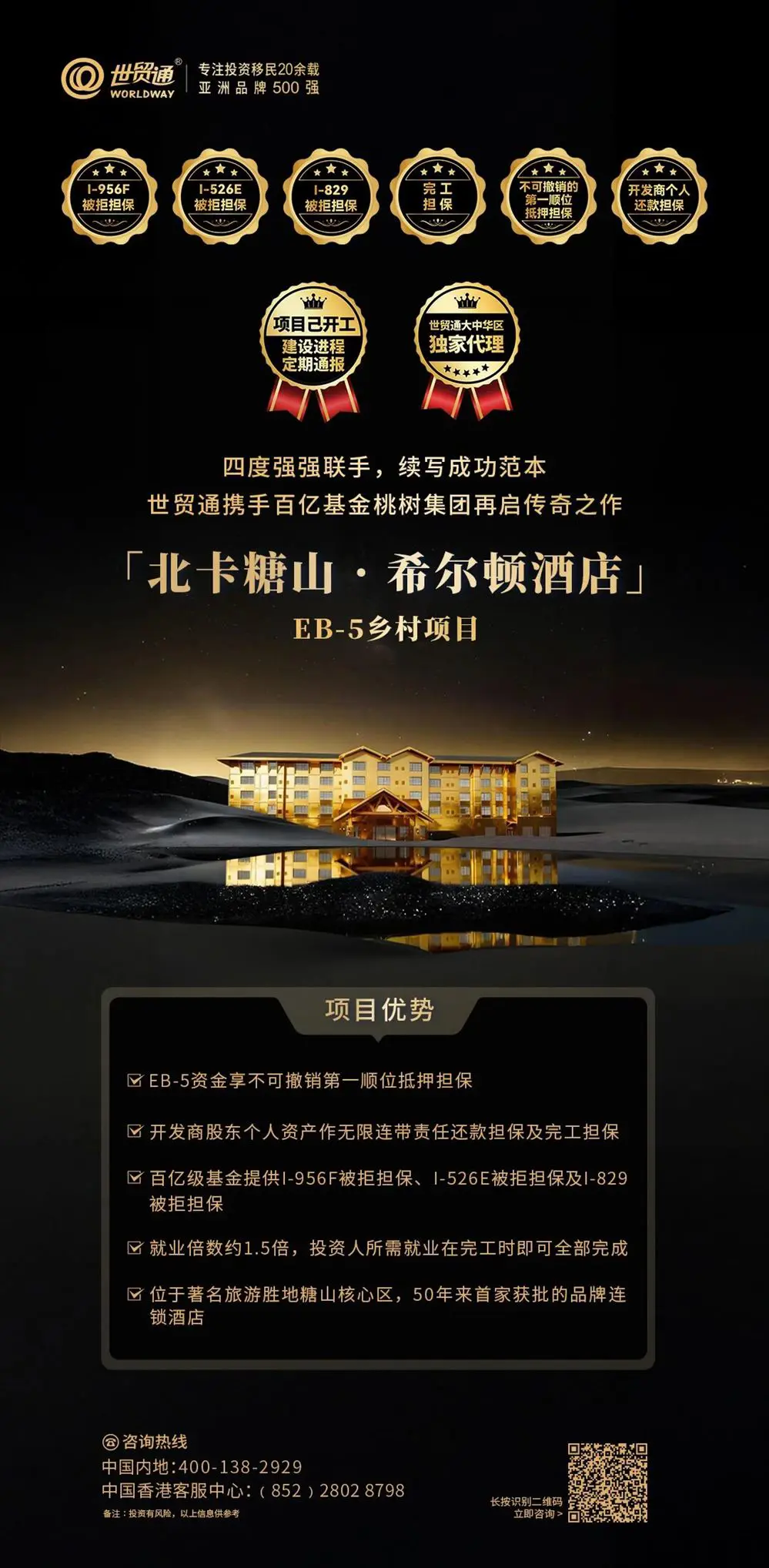
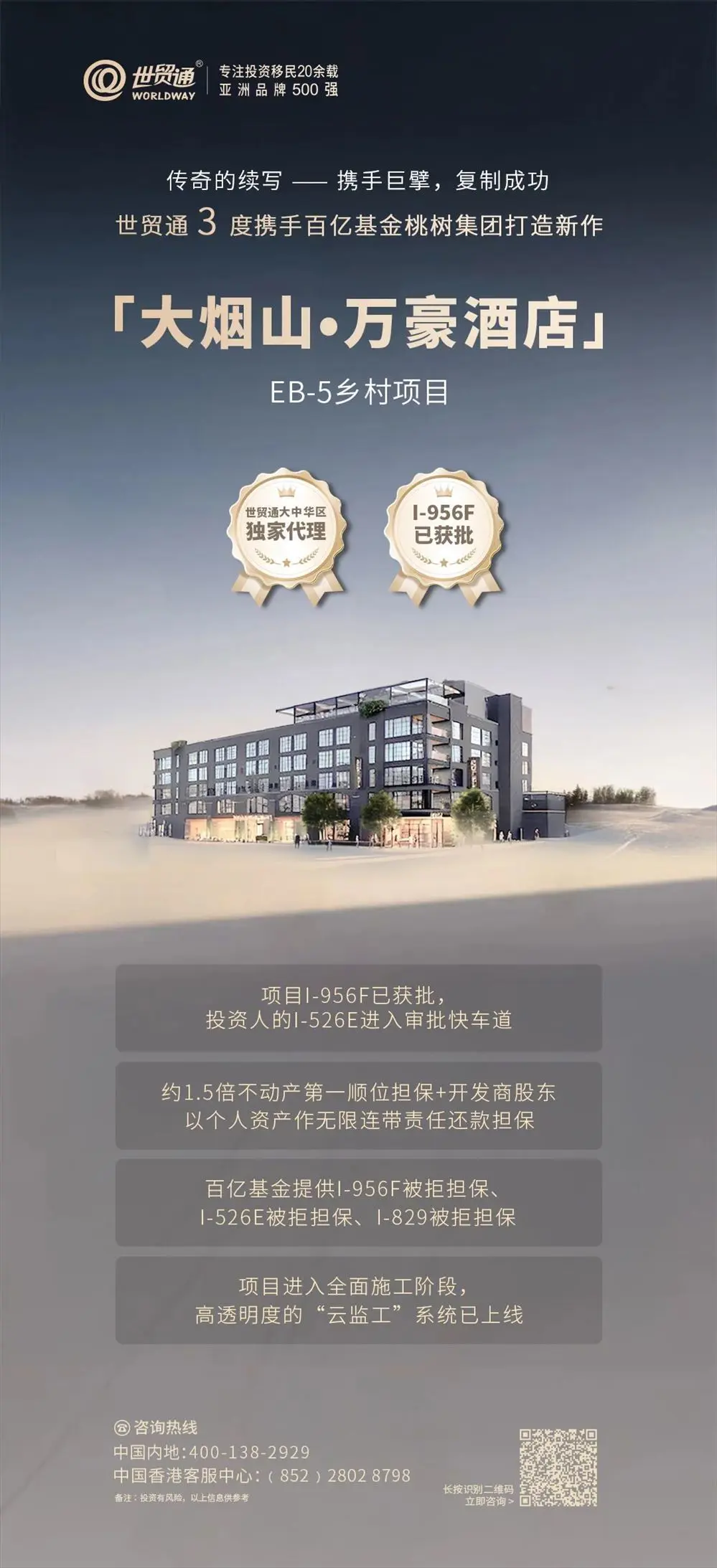
For applicants intending to immigrate to the United States, now is the critical period to enjoy the benefits of "no visa backlog, concurrent filing, and priority processing." WorldWay holds two high-quality EB-5 rural projects, helping investors achieve their U.S. status planning steadily, without backlogs, and efficiently, quickly embarking on a new life in the United States. Global quotas are limited, seats are scarce, and they are available on a first-come, first-served basis!
For inquiries in Mainland China: 400-138-2929, Hong Kong Customer Service Center: (852)2802 8798
Data Source: Official Website of the U.S. Department of State Visa Office https://travel.state.gov/content/travel/en/legal/visa-law0/visa-statistics/immigrant-visa-statistics/monthly-immigrant-visa-issuances.html