





If you are following trends in U.S. education, you have likely heard this phrase: “When studying in the U.S., public universities are often seen as the more cost-effective choice.”
Facts are proving this once again. With their solid academic strength, flexible program offerings, higher admission capacity, and more competitive tuition compared to private institutions, U.S. public universities remain a top priority for families worldwide for study abroad and immigration.
In the newly released 2026 U.S. News Best Public Universities in the U.S. rankings, the University of California (UC) system has once again stunned the world, refreshing perceptions of the quality of “U.S. public higher education” with a powerful collective performance.

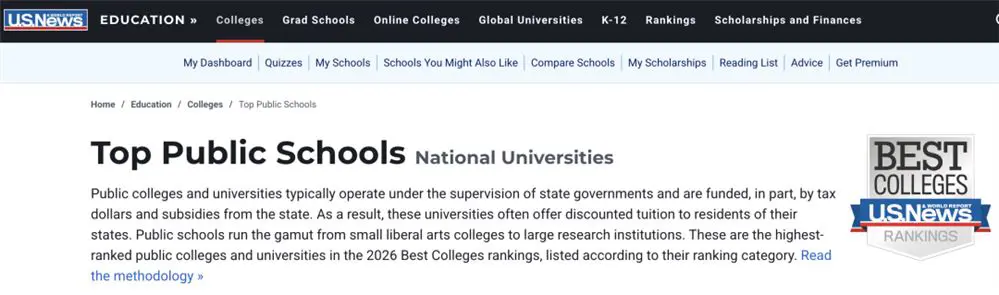


Quick Highlights of the Rankings
The biggest highlight of this year's list is the collective brilliance of the UC system:
• University of California, Berkeley (UCB) returns to No. 1, defending its glory as the “premier public university”;
• University of California, Los Angeles (UCLA) ranks No. 2;
• University of California, San Diego (UC San Diego) remains at No. 6 for the third consecutive year;
• University of California, Davis (UC Davis) and University of California, Irvine (UC Irvine) are tied for No. 9 in the U.S.;
• University of California, Santa Barbara (UC Santa Barbara) ranks No. 14;
• University of California, Merced (UC Merced) ranks No. 25.
Beyond the UC system, other Top 10 institutions are well-known traditional powerhouses:
• University of Michigan, Ann Arbor remains firmly at No. 3, unchanged for seven consecutive years
• University of North Carolina at Chapel Hill and University of Virginia are tied for No. 4
• University of Florida and University of Texas at Austin are tied for No. 7 in the U.S.
• Georgia Institute of Technology is tied with UC Davis and UC Irvine for No. 9 in the U.S.
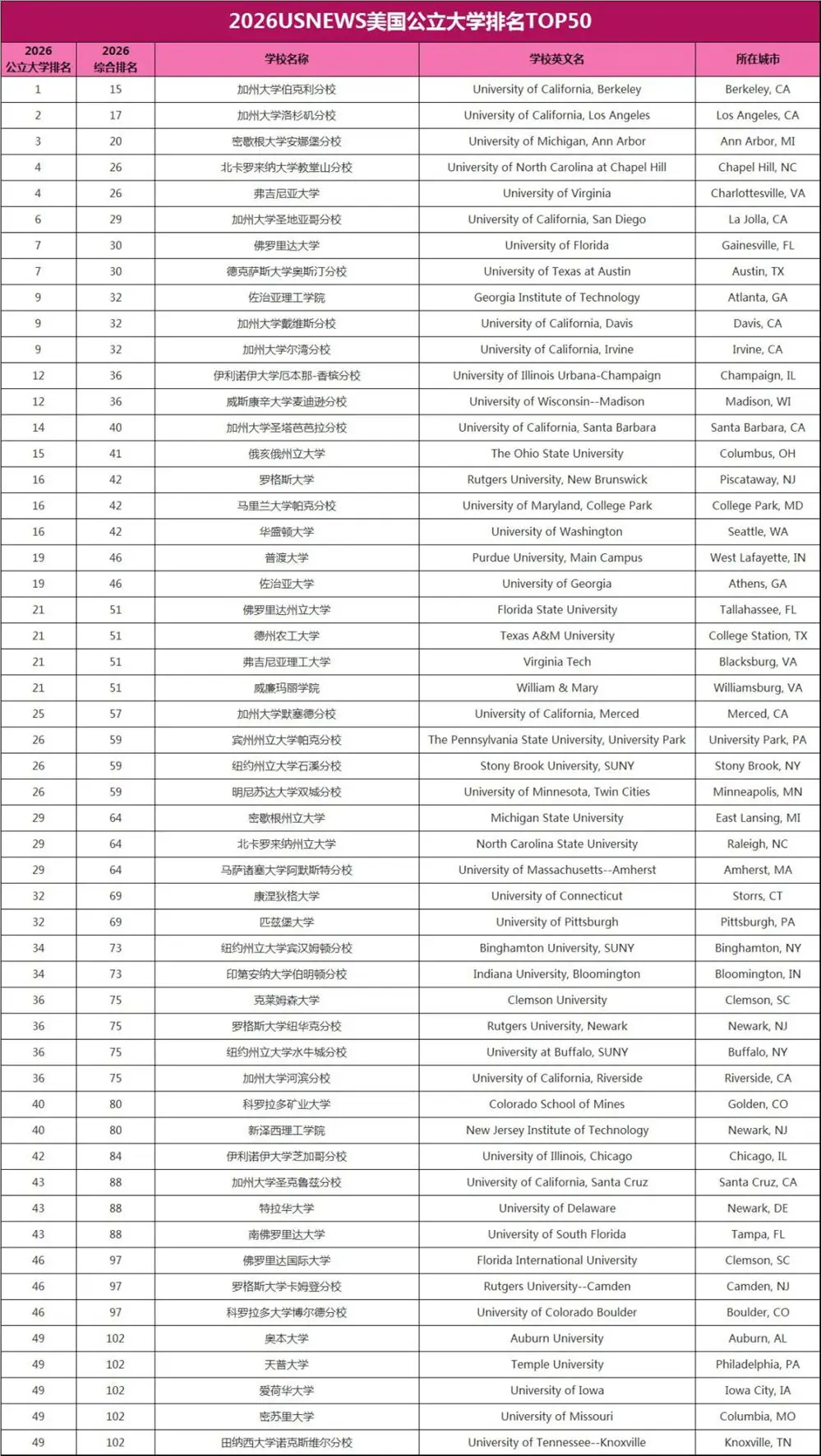

This list once again confirms that U.S. public universities remain one of the most comprehensive and highly recognized high-quality choices in the global education system.
Why do high-net-worth families prefer U.S. education?
1. World-leading higher education system
In mainstream global university ranking systems (QS, U.S. News, Times Higher Education, ARWU), U.S. universities have long maintained a broad lead. Whether in research investment, faculty strength, or innovation environment, the U.S. consistently ranks among the best in the world and is one of the most concentrated destinations for international students.
2. Strong performance across all disciplines, especially in STEM
In popular fields such as artificial intelligence, computer science, engineering, business, life sciences, and new materials, U.S. universities maintain a global advantage, with research output and industrial transformation capabilities that are significantly competitive internationally.
3. Employment resources and alumni networks with global appeal
From Silicon Valley tech firms to Wall Street investment banks, and from Global 500 companies to fast-growing innovative startups, U.S. universities leverage a mature industrial ecosystem and vast alumni networks to provide students with broader internship, employment, and career development opportunities.
4. Larger admission capacity and relatively stable tuition structure
For many families, U.S. public universities offer a high comprehensive cost-performance ratio in terms of scale, academic quality, admission opportunities, and fee structure.
Behind Education Investment
Is the Initiative of Status Planning
For many high-net-worth families, U.S. education remains the international development path with the most long-term value. However, more and more families are realizing that to truly enjoy the dividends of the U.S. education system, “status” is often more important than “grades.”
• Different tuition structures: Status holders can more easily enjoy in-state tuition, significantly reducing costs.
• Different admission channels: Local students face a more relaxed competitive environment, while international student quotas are limited.
• Different employment policies: International students must rely on visas, while status holders have greater freedom in employment.
• Different planning flexibility: Status provides more flexible paths for transferring, choosing majors, and career development.
Families with U.S. status can secure lower thresholds, greater opportunities, and a more stable growth path for their children in advance.
This is why “Education + Asset Planning + Status Layout” has become a consensus among an increasing number of high-net-worth families in recent years.
EB-5: The Core Path to U.S. Education
and an International Lifestyle
Education determines a child's growth path;
Status grants families more initiative for the future.
Among the many ways to obtain U.S. status, the EB-5 investment immigration program has become a key choice for high-net-worth families due to its mature policy, simple application requirements, and the benefit of one person applying for the whole family to immigrate.
Under the new EB-5 law, rural EB-5 projects are exempt from visa backlogs and enjoy priority processing advantages; the “concurrent filing” policy allows applicants to file Form I-526E and Form I-485 simultaneously in the U.S., enabling them to obtain a Combo card in about 3 months, quickly achieving legal residency and employment eligibility.
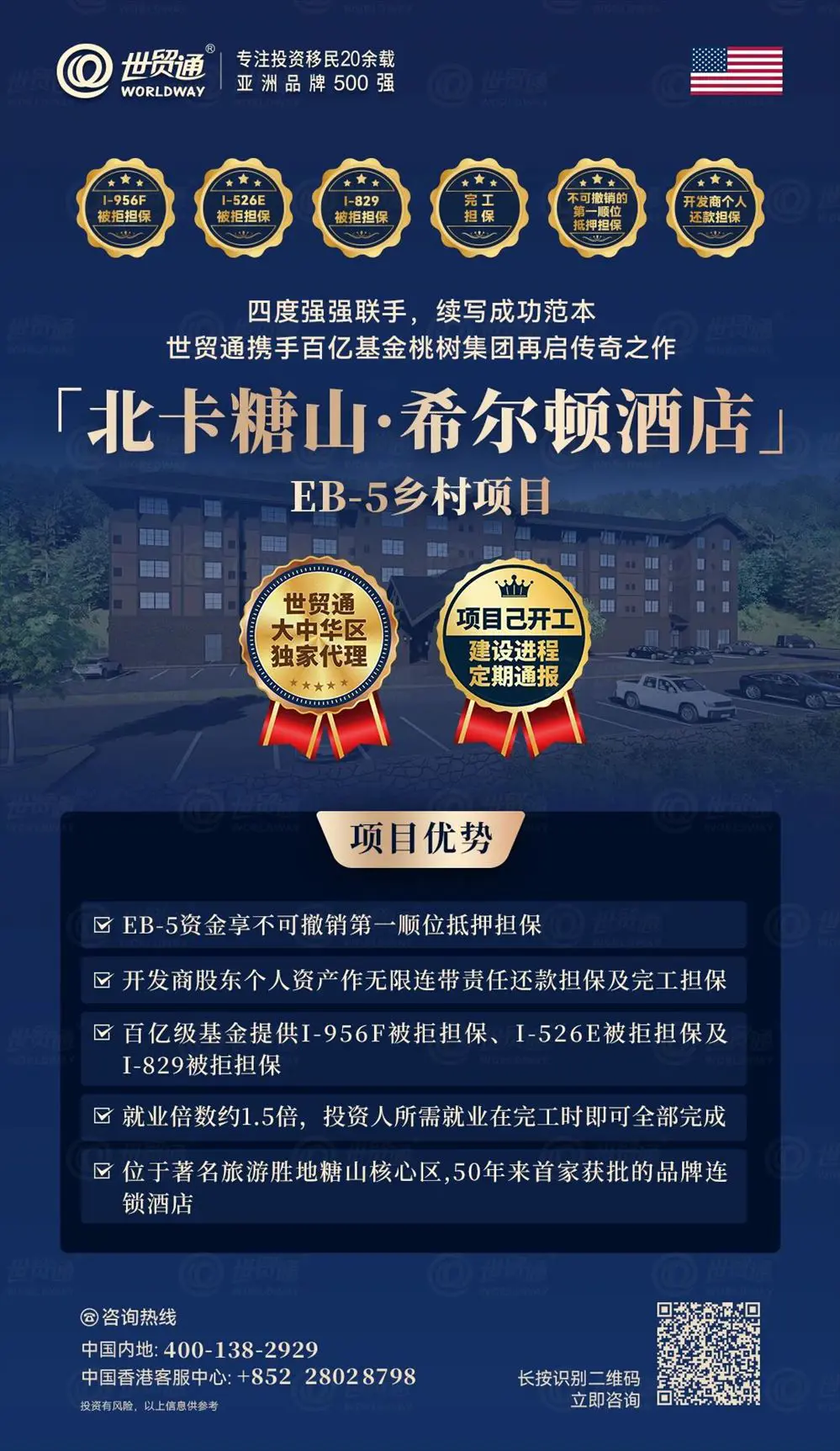
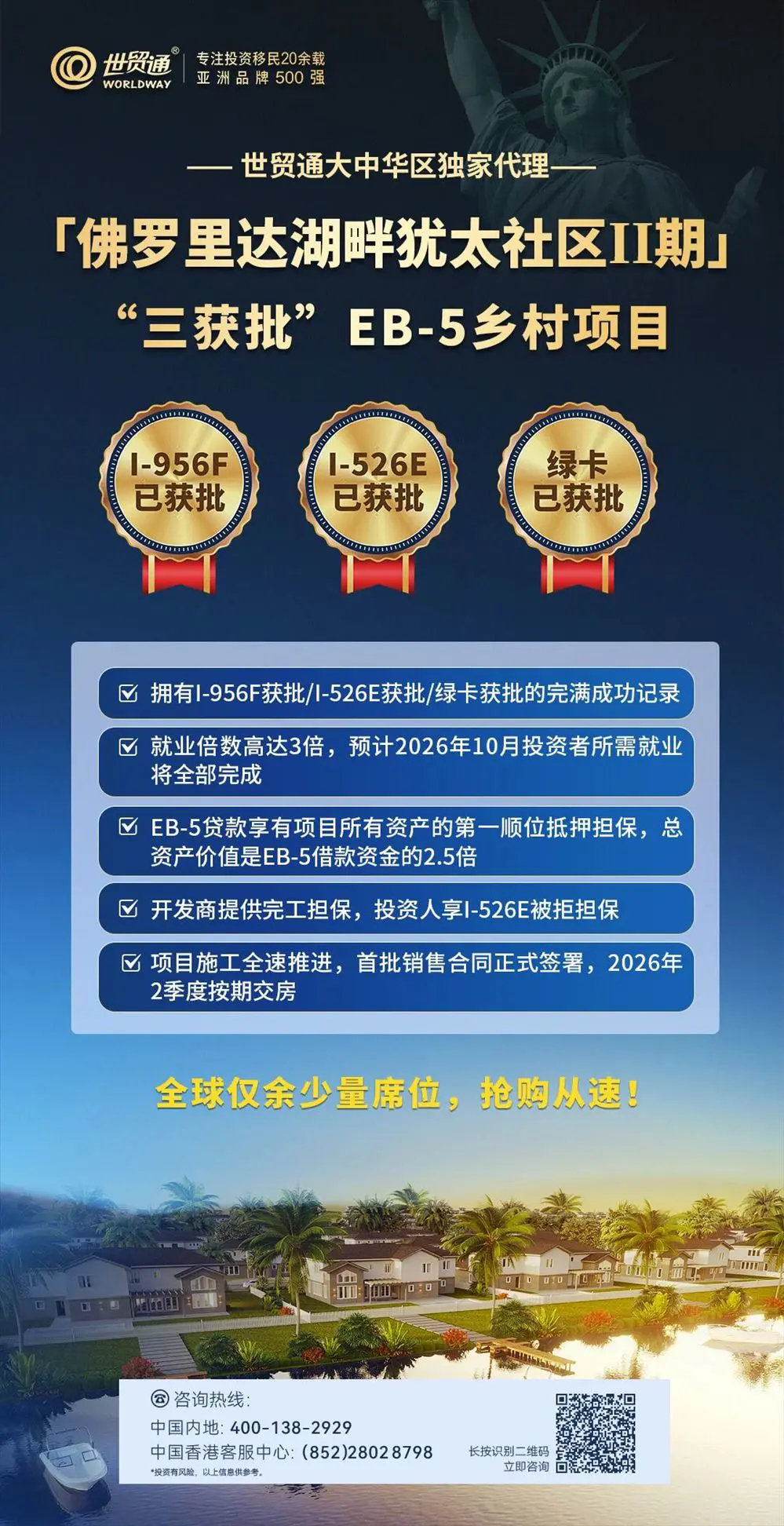
WorldWay holds 3 high-quality EB-5 rural projects, helping investors obtain U.S. Green Cards quickly without backlogs, opening up a more relaxed and stable new international life for the family. Quotas are limited, first come, first served; opportunities are fleeting.




For inquiries in Mainland China: 400-138-2929, Hong Kong Customer Service Center: (852)2802 8798