





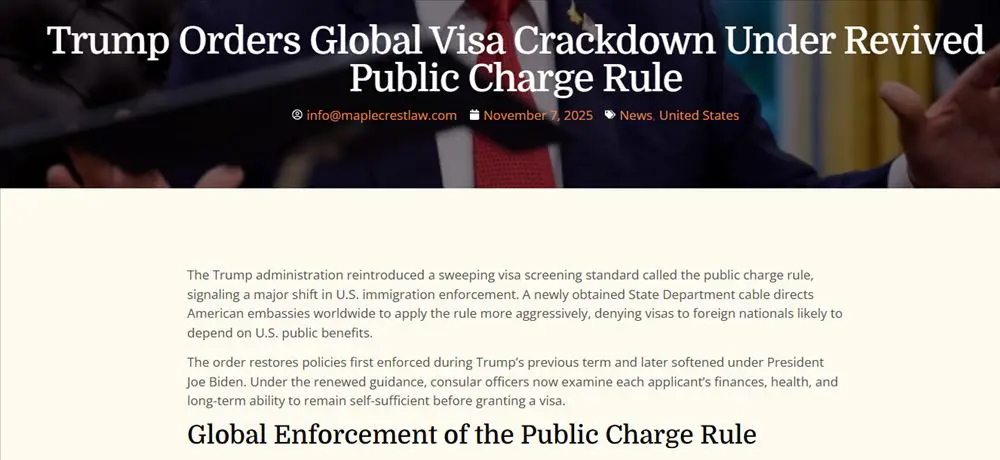
Recently, "Public Charge 2.0" has become a hot topic in the U.S. immigration community. According to reports, the U.S. Department of State has issued a cable ordering embassies and consulates worldwide to reinstate and expand the "Public Charge" review system for visa applicants. This news has once again caused anxiety among many families with immigration plans.
What is a "Public Charge"?
"Public Charge" is a concept in U.S. immigration law. Simply put, the U.S. government wants immigrants to be self-sufficient and not rely on government assistance for their livelihood. This standard is not new; it has existed since the last century. The difference is that with policy adjustments, the strictness of the "Public Charge" standard fluctuates.
Trump 2.0 Era:
Policy "Returns with Added Measures"
Before the first Trump administration, "Public Charge" primarily targeted cash benefits, such as cash assistance and long-term care funded by the government.
In 2019, during the first Trump administration, the definition of "Public Charge" was significantly expanded. In addition to cash assistance, non-cash benefits such as SNAP (food stamps), most Medicaid medical assistance (excluding pregnant women, children, and emergency medical care), and housing subsidies and public housing were included in the review scope. At the same time, it was required that during immigration reviews, immigration officers and consular officers evaluate the applicant's age, health status, employability, family caregiving burdens, and financial resources as a "totality of circumstances."
During the Biden administration, these regulations were revoked and returned to a more lenient version.
Now, in the 2.0 era, Trump has brought up "Public Charge" again, planning to have the 2019 standards "return and expand": the 2019 version of non-cash benefits will once again be taken into consideration. At the same time, it has been clarified that if the applicant or a family member has a chronic illness, obesity, advanced age, or poor health, they may be classified as a "Public Charge."
However, this proposed rule is currently still under review by the Office of Information and Regulatory Affairs (OIRA) and has not yet been officially announced or implemented. Worldway will continue to monitor this and will share any new information with you as soon as possible.
What does this mean for applicants?
In fact, there is no need to worry excessively. Although the news seems somewhat "sudden," it is not a brand-new policy change, but rather a reactivation of old rules that may be further expanded.
"Public Charge" 2.0 is not intended to stop everyone from obtaining a green card, but rather to further strengthen the requirement for "self-sufficiency." The policy is indeed more "selective," but as long as one has the ability, assets, and can be self-reliant, they still fit the immigration direction welcomed by the United States. In other words, groups that can demonstrate economic strength and social contribution will be more welcome.
EB-5 Investment Immigration Advantages Become Prominent
Against the backdrop of "self-sufficiency" becoming a key standard, the advantages of EB-5 investment immigration are even more obvious.
As a popular immigration method, EB-5 investment immigration can both guarantee employment and promote economic growth.
It can be said that EB-5 is exactly the type of "high-quality immigrant" currently favored by the U.S. government—applicants who have strength, make contributions, and can drive economic development.
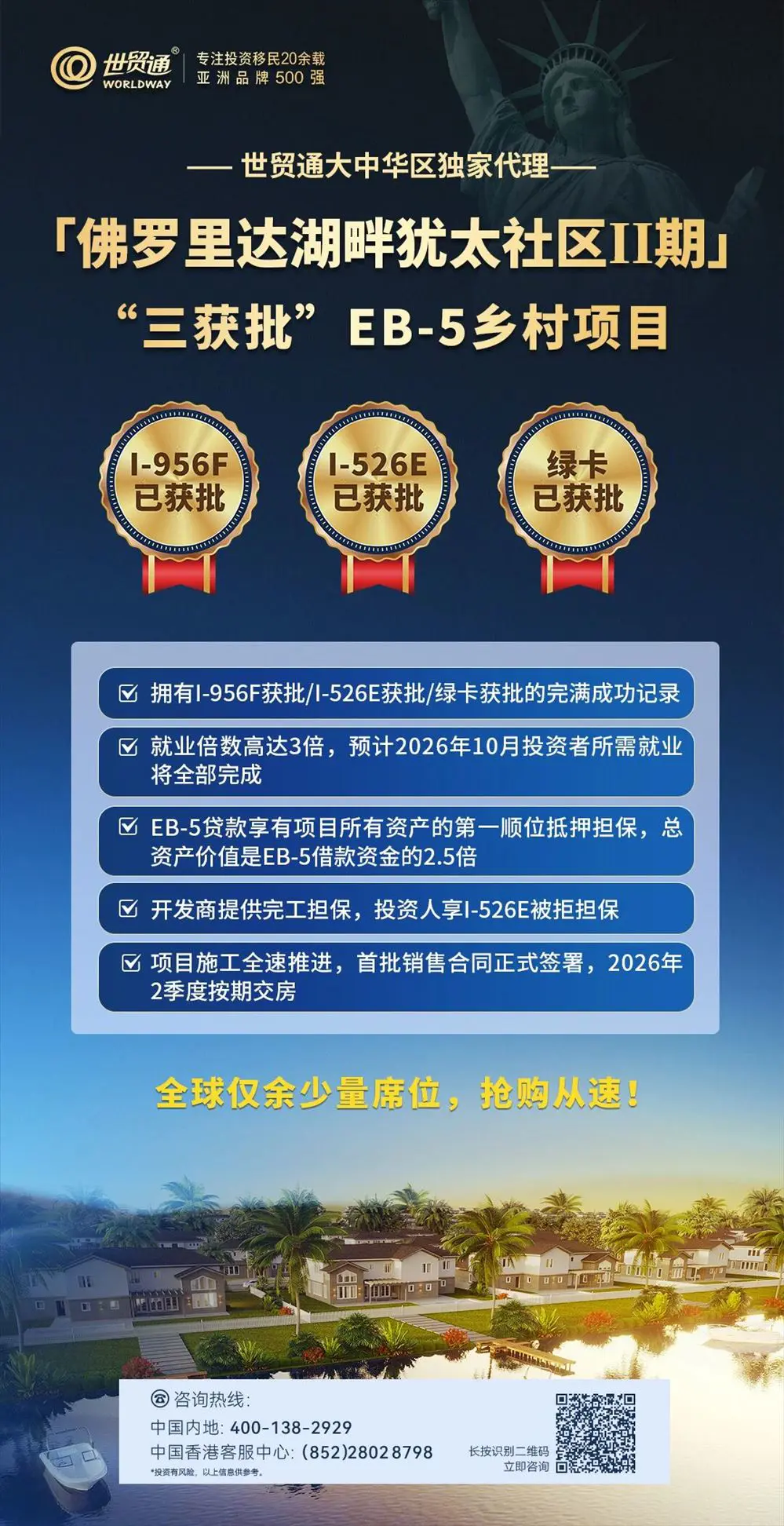
Currently, it is the best time to plan for U.S. status through EB-5. Worldway holds three high-quality EB-5 rural projects, helping investors obtain U.S. green cards quickly without waiting periods, opening up a more relaxed and wonderful new life for their families. Global quotas are limited, first come, first served; do not miss this opportunity!
Important Reminder
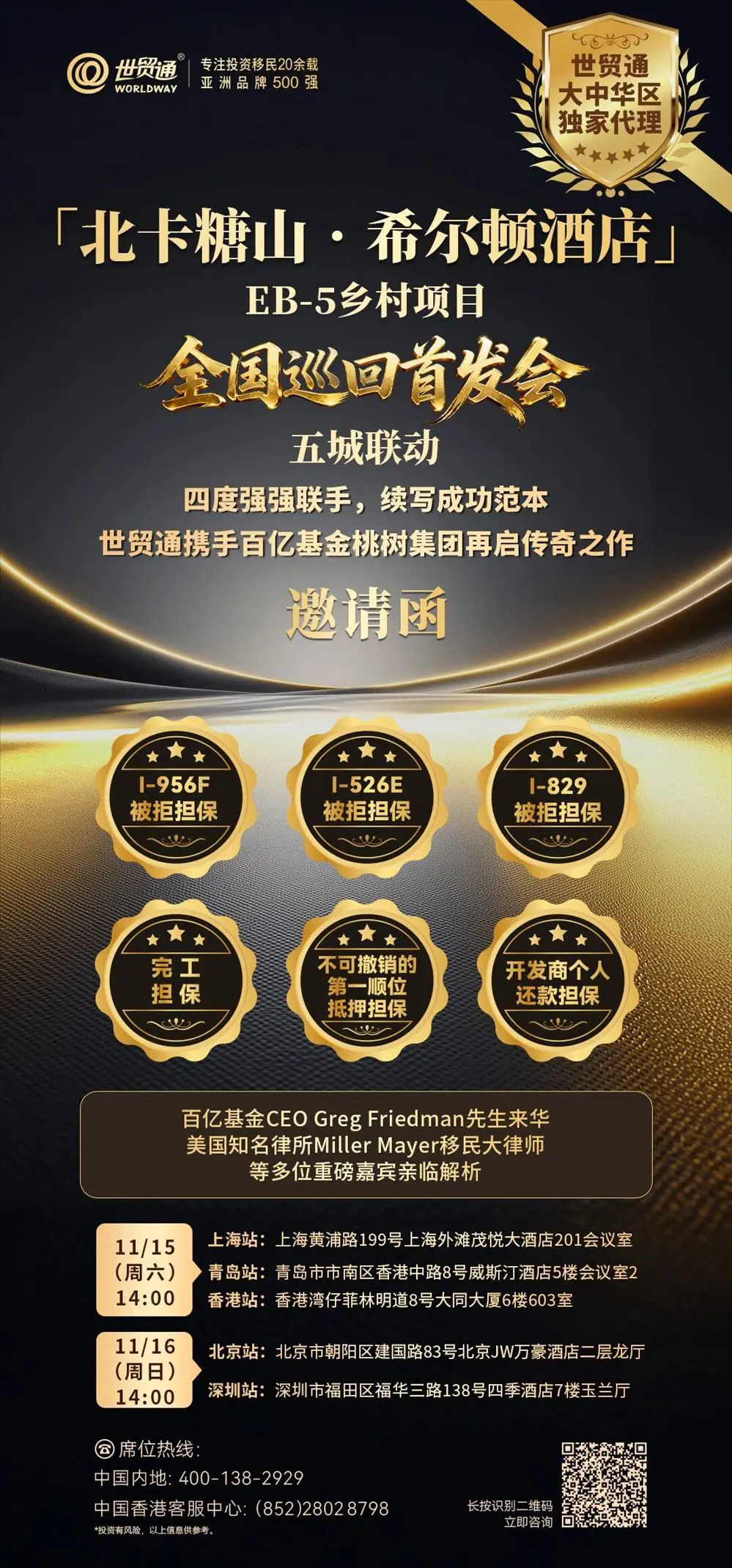
Joining hands for the fourth time, replicating success
Worldway and the multi-billion dollar fund Peachtree Group launch another legendary new project
"North Carolina Sugar Mountain Hilton Hotel" EB-5 Rural Project
National Tour Launch Event
Five-city linkage, grand opening
☑ November 15: Shanghai, Qingdao, Hong Kong
☑ November 16: Beijing, Shenzhen
Registration for the launch event has entered the countdown
Seats are limited, book early to secure your spot

For detailed inquiries in Mainland China: 400-138-2929, Hong Kong Customer Service Center: (852)2802 8798