





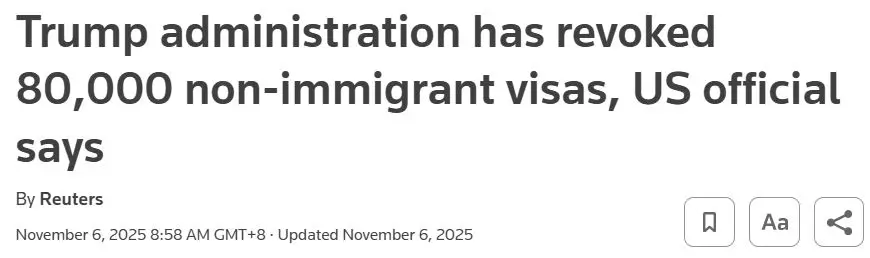
Recently, a senior official from the U.S. Department of State revealed that since Trump took office, approximately 80,000 non-immigrant visas have been revoked, involving various temporary statuses including student visas (F category) and work visas (H category).
80,000 Visas Revoked:
Clear Signals of Policy Tightening
The reasons for revocation have extended from common offenses such as DUI, theft, and assault to areas such as social media statements and political inclinations. This indicates that the U.S. immigration and visa policies are undergoing a profound structural transformation.
According to reports, among the 80,000 revoked visas, approximately 8,000 were student visas. In August of this year, the U.S. Department of State reported the revocation of over 6,000 student visas—within just a few months, the number of revocations increased by 2,000.
This policy action not only targets illegal immigrants but also places unprecedented pressure on international students and professionals holding legal status.
The "Temporary" Nature of Non-Immigrant Visas
Is Being Amplified
For a long time, non-immigrant visas have been viewed as one of the pathways to enter the United States. However, as policies tighten, the "security" and "sustainability" of these temporary visas are being systematically undermined.
In this new round of tightening:
• B visas (Business/Tourist visas): Significant reduction in interview waivers, increased fees, and stricter entry inspections.
• H-1B visas (Work visas): Significant increase in employer costs, with the lottery system prioritizing high salaries and high skills.
• F-1 visas (Student visas): Increased scrutiny of social media and rising refusal rates for interviews, with stricter regulations during the OPT phase.
• Even STEM exchange programs and business visas are facing stricter background checks and increased uncertainty.
Overall, the U.S. has adopted higher threshold screening standards for almost all non-immigrant categories—from increased interview ratios and stricter reviews to rising fees, and even direct restrictions in the form of "administrative discretion."
Real Risks of Studying and Working in the U.S.:
From Identity to Sense of Security
For those studying and working in the U.S., this policy shift means threefold real risks:
• High dependency on identity: Visas are strongly tied to schools or employers, and once studies are interrupted or employment is terminated, the identity immediately becomes invalid.
• Uncertain screening standards: Social media, political positions, and social circles may be amplified and interpreted, becoming factors of visa risk.
• Increased difficulty in visa renewal and status change: Extended approval times, uncertain interviews, and reduced quotas have become a "normalized phenomenon."
Many international students and professionals in the U.S. are beginning to realize that "valid visas" do not equate to "secure identities." The core essence of non-immigrant visas is "temporary permission," and temporariness means that once policies tighten or situations change, the risks will be borne by individuals.
Trend Shift:
From Short-Term Visas to Long-Term Identity Planning
In the face of visa policy uncertainties, an increasing number of highly educated individuals studying and working in the U.S. are beginning to actively manage identity risks, shifting from "maintaining visas" to "planning for green cards."
Especially for family planning and children's education, proactively arranging for long-term identity has become a trend: Currently, the new EB-5 investment immigration policy is becoming a key channel for achieving long-term identity in the U.S.
Under the new law, rural EB-5 projects are exempt from waiting periods and have priority approval advantages; the "dual submission" policy allows applicants to submit I-526E and I-485 simultaneously in the U.S., obtaining a Combo card in about three months, quickly achieving legal residency and employment eligibility.
The U.S. EB-5 investment immigration program has been legislated by the U.S. Congress since 1990, and has a history of over 30 years, providing the most robust identity pathway for global investors with a clear legal foundation and stable institutional guarantees.
Choosing is More Important than Effort
From the revocation of 80,000 visas to the comprehensive tightening of various non-immigrant visas, this is not an isolated event, but a structural reshuffling of the U.S. immigration system. In the future, whether for studying, working, or immigrating, short-term identity is merely the starting point, while long-term identity is the bottom line. Only through proactive planning and scientific choices can one secure true peace of mind for family and career.
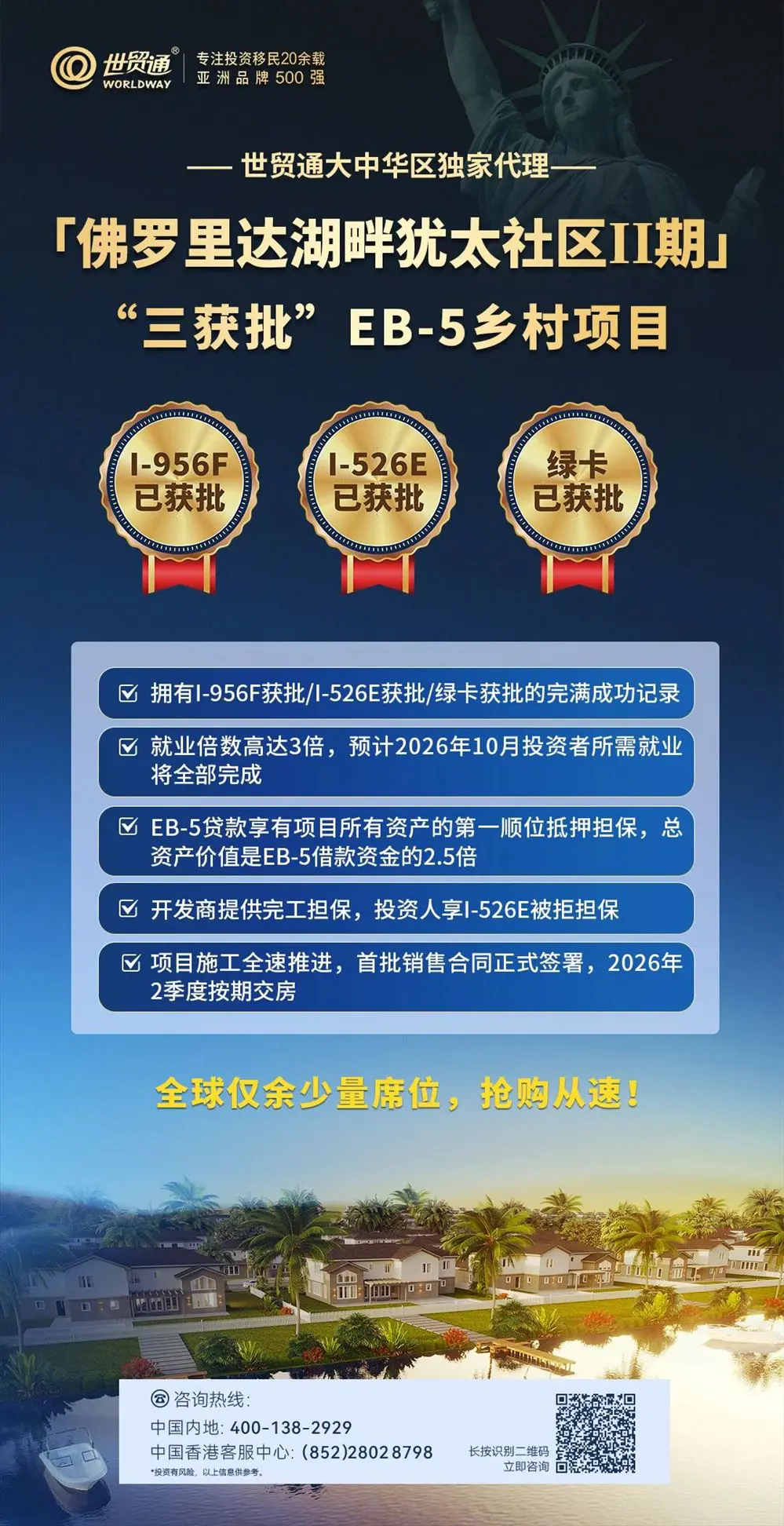
Currently, it is a critical time to achieve U.S. identity planning through EB-5. WorldWay holds three high-quality EB-5 rural projects, assisting investors in obtaining U.S. green cards without waiting periods and quickly opening a more relaxed and beautiful new life for their families. Global quotas are limited, first come first served, and opportunities should not be missed!
Important Reminder
Four-time Collaboration, Replicating Success
WorldWay and the Billion Fund Peach Tree Group Launch a New Legendary Project
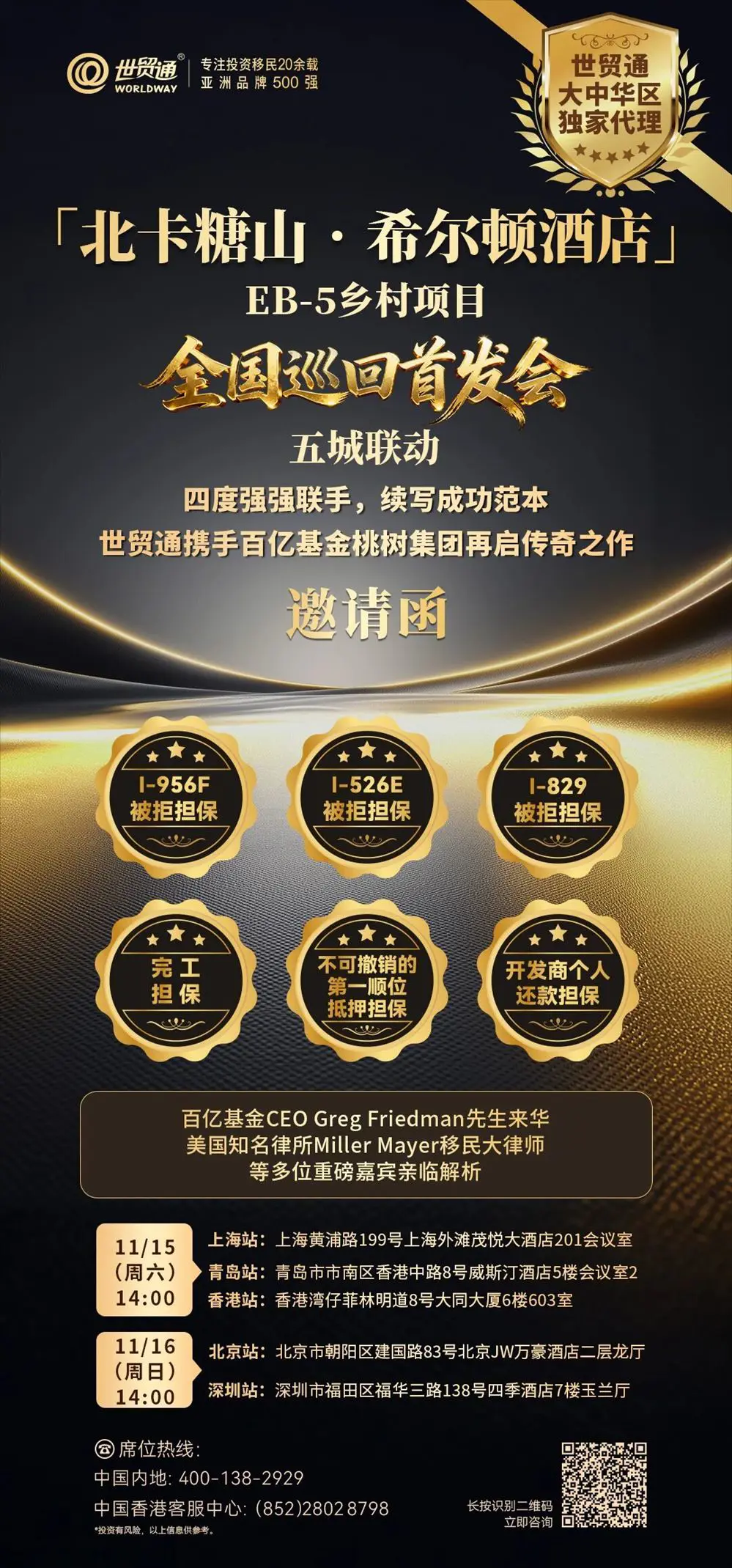
"North Carolina Sugar Mountain • Hilton Hotel" EB-5 Rural Project
National Tour Launch Conference
Five Cities Linked • Shocking Launch
☑ November 15 in Shanghai, Qingdao, Hong Kong
☑ November 16 in Beijing, Shenzhen
The launch conference reservation channel is now fully open
Limited seats • Reserve early • Opportunities should not be missed

For inquiries in mainland China: 400-138-2929, Hong Kong customer service center: (852)2802 8798