Key Timeline for H-1B Lottery
● H-1B Registration Period
March 7, 2025: H-1B electronic registration begins
March 24, 2025: H-1B electronic registration ends
● Lottery Results Announcement
March 31, 2025: USCIS expects to release lottery results on or before this date
● Submission of Formal H-1B Applications by Selected Candidates (Estimated)
April 1, 2025 – June 30, 2025: Selected candidates have 90 days to submit a complete H-1B application (Form I-129 + supporting documents).
● Official H-1B Effective Date
October 1, 2025: H-1B visa officially takes effect, and beneficiaries may begin working
Key Changes and Important Notes
● Registration Fee Adjustment: The H-1B electronic registration fee has been adjusted to $215 per applicant. Please note that this registration fee remains non-refundable, even if the H-1B application is not selected.
● USCIS Online Account Requirement: Employers must have a valid account; previous accounts will be converted to organizational accounts. New users can create accounts at any time, but must wait until after March 7 to enter beneficiary information and submit registrations.
● Lottery Method Adjustment: The "one-person-one-lottery" model continues, meaning each applicant is counted only once in the lottery, regardless of the number of registrations submitted. If the number of registrations is sufficient, USCIS will conduct a random lottery; if not, all eligible applicants will be granted a quota directly.
As an H-1B applicant, you need to prepare in advance: Ensure your employer completes registration by March 24, or you will miss the opportunity; ensure information is filled out accurately, especially passport details, as the one-person-one-lottery rule remains in effect and duplicate registrations will not increase your chances of being selected; monitor the lottery results at the end of March, and if selected, prepare materials to submit your formal H-1B application.
As you know, the H-1B visa is a non-immigrant work visa established by the United States for hiring foreign professionals. It is applicable to professional positions requiring a bachelor's degree or higher, such as in technology, engineering, and law. The visa is typically valid for 3 years and can be extended for up to 6 years. It is sponsored by an employer and is subject to an annual quota (approximately 85,000). H-1B holders can legally work and reside in the U.S. and apply for a Green Card, but they are constrained by the lottery process and employer sponsorship.
Data shows that in 2024, there were a total of 479,953 H-1B registrations, with 470,342 valid registrations and 135,137 final selections, resulting in a selection rate of approximately 28.7%. Applicants who are not selected must leave the U.S. within 90 days once their OPT expires. Even if you are lucky enough to be selected, the challenges are far from over—EB-2/3 Green Card applications typically face a 4-5 year backlog, during which career choices and professional development are highly restricted by employer attitudes and company stability. More severely, the recent wave of layoffs in the tech industry and the frequent suspension of PERM processing have significantly reduced the sustainability of H-1B sponsorship, posing a risk of status loss in the event of unemployment.
On this challenging and uncertain path of staying in the U.S., planning for Green Card status in advance has become increasingly important. For families whose children are already studying in the U.S. or those planning to study abroad, there is never just one path to development in the U.S. Only by planning ahead and preparing on multiple fronts can children maintain the initiative.
For example, by obtaining a U.S. Green Card quickly through the EB-5 investment immigration program, choosing an EB-5 set-aside visa project, investing $800,000, and simultaneously filing Form I-526E and Form I-485, you can obtain a Combo card in about 3 months. During the wait for the Green Card, you can travel freely, reside, study, and work legally in the U.S. without employer sponsorship, enjoying the freedom of a quasi-Green Card in advance. This not only resolves concerns about your status but also provides a stable guarantee for long-term development in the U.S.
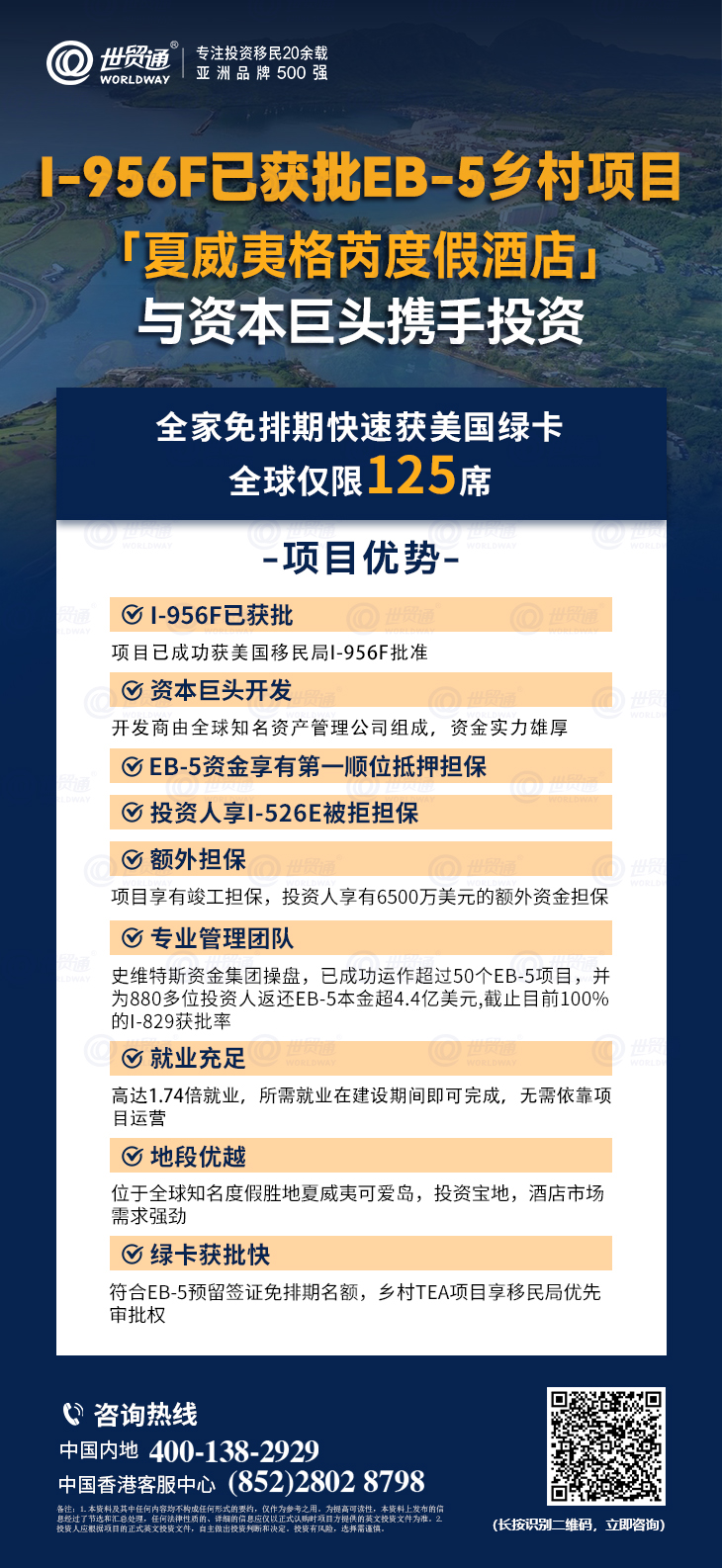
Currently, the two premium EB-5 rural projects with approved I-956F, "Aspen Kodiak Apartments" and "Hawaii Grei Resort," are high-quality EB-5 rural projects that have been strictly screened and vetted by the WellTrend Group. They are your best choice for rapid immigration to the U.S. Both of these premium EB-5 projects qualify as rural TEA projects under the new act, not only enjoying EB-5 visa set-aside quotas but also receiving priority processing from USCIS. They offer numerous advantages, including no backlog, priority approval, and first-priority mortgage collateral for EB-5 funds. The entire family can obtain a U.S. Green Card quickly without a backlog. Quotas are limited, so act fast.