





In today's era of globalization, possessing a second identity has become a common pursuit for an increasing number of high-net-worth individuals. Second identity planning is not only an enhancement of quality of life but also a thoughtful consideration for the family's future and personal development. So, when faced with numerous desirable destinations, how does one choose an ideal place that aligns with one's vision?
Let us take a look at a typical case from Worldway! Recently, Worldway Japan Immigration has received good news: a group of clients has been approved for the Japan Highly Skilled Professional Visa. The Worldway Group extends its heartfelt congratulations to the investors. Among them, one client was born in 1943 and is already 81 years old. So, for what reason did this client choose to immigrate to Japan at this age?
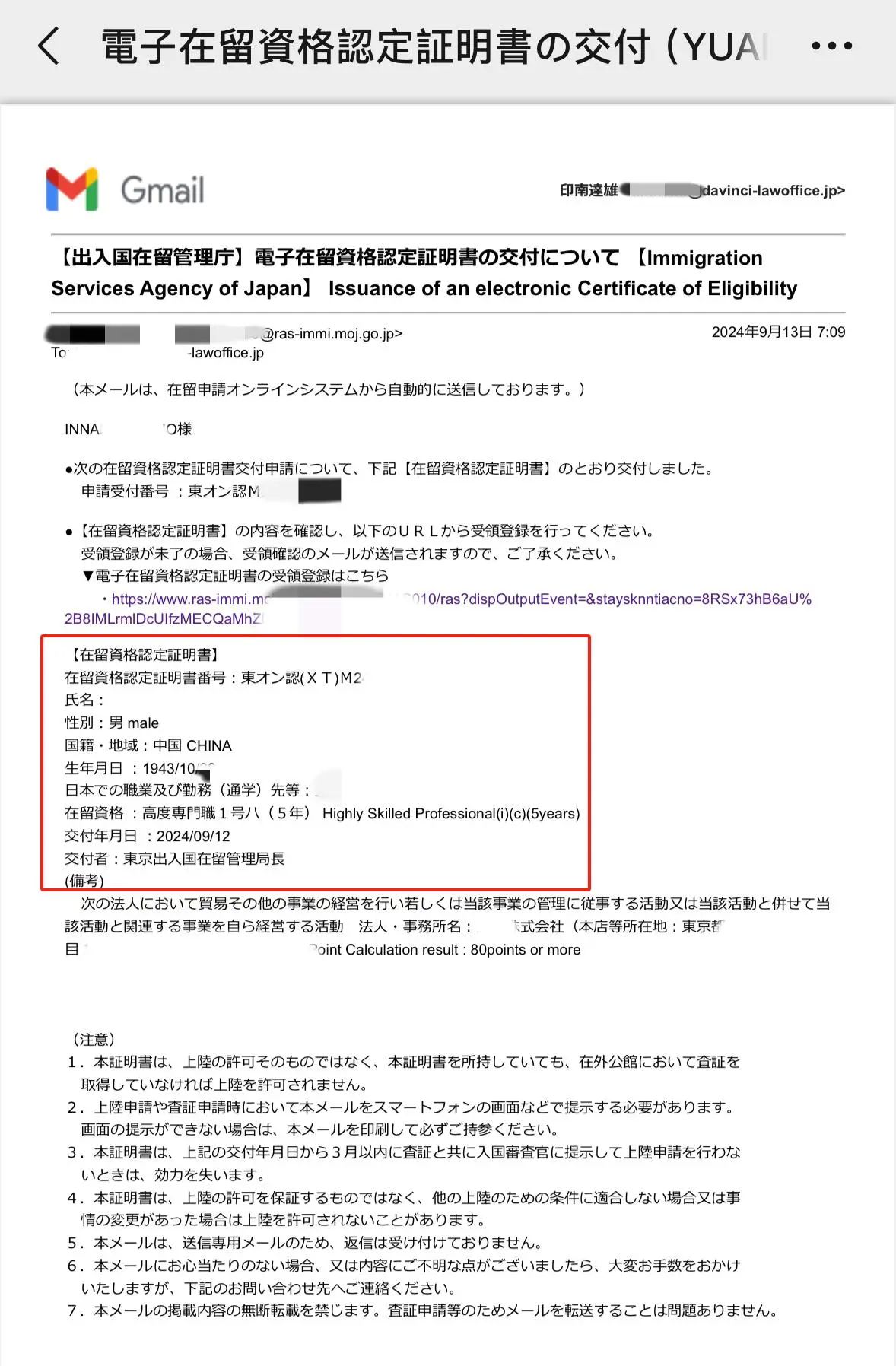
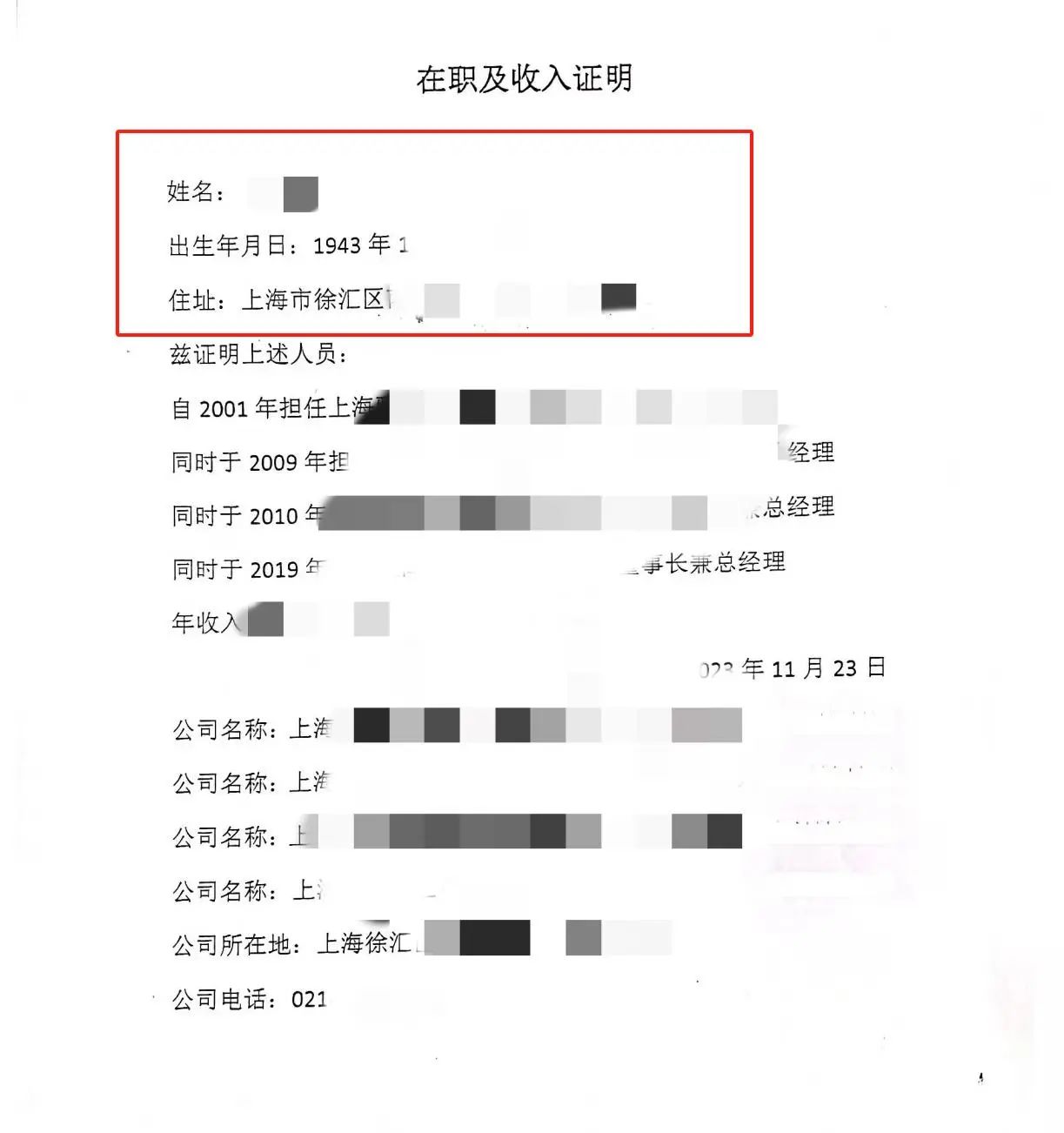
As one of the developed countries in Asia, Japan is relatively close to China, shares cultural and dietary similarities, and possesses relatively comprehensive education, medical, and welfare systems. Furthermore, its beautiful natural environment is very suitable for retirement. This 81-year-old investor from Worldway chose to immigrate to Japan primarily for retirement.
Japan is one of the countries with the longest life expectancy in the world. The client's choice of Japan was made after careful consideration. Having entered an aging society relatively early, Japan, as a pioneer in exploring an "aging society," has developed a rich and comprehensive institutional model for elderly care. This includes a social insurance system composed of pension insurance, labor insurance, medical insurance, and long-term care insurance, which continuously provides good living security for the elderly.
When it comes to retirement, medical care is the most important factor. Japan's medical standards are among the best in the world, with the 10-year survival rate for cancer reaching new highs every year, hitting 58.9% in 2021. Japan implements a universal health insurance system. For children under 6 years old: the state covers 80%, and the individual pays at most 20%; for those aged 6-69: the state covers 70%, and the individual pays at most 30% (with a payment cap between approximately 57,000 and 80,000 yen); for those aged 70-74: the state covers 80%, and the individual pays at most 20%; for those aged 75 and above: the state covers 90%, and the individual pays at most 10%. Furthermore, standard hospital rooms are free, and ambulances are also free. For the elderly, this does not impose a heavy burden, nor will it bring additional financial pressure to their children.
In addition, Japan also has professional training and strict management in elderly care services and nursing. Whether it is nursing homes or home care services, they can provide high-quality services to meet the living and spiritual needs of the elderly.
With policy support and a social atmosphere full of humanistic care for the elderly, the client believes he can fully enjoy a comfortable retirement life.
Worldway once again congratulates this investor on successfully making meticulous plans for their retirement life. The client's successful approval once again demonstrates Worldway's professionalism. The Worldway Group, a top 500 Asian brand, has been focusing on investment immigration for over 20 years. With extensive experience, Worldway provides customized applications based on the applicant's background, age, and other individual circumstances, helping investors successfully obtain the Highly Skilled Professional Visa.
In recent years, Japan has been highly favored by immigration applicants. In addition to retirement, immigrating to Japan offers many other benefits.
Regarding family and child benefits: After a child is born, a subsidy called "Child Allowance" is paid monthly for children aged 0-15. For 0-3 years old: 15,000 yen/month per child; 3 years old to elementary school graduation: 10,000 yen/month for the first child, 10,000 yen/month for the second child, and 15,000 yen/month for the third child (and beyond); elementary school graduation to 15 years old: 10,000 yen/month per child. In general, children aged 0-15 can receive a subsidy of about 10,000 yen per month. There are also subsidies for children of single-parent families, with varying degrees of support for the first, second, and third child until the age of 18, ranging from 40,000 to 60,000 yen. Regarding education benefits: After obtaining Japanese residency, one can enjoy: 9 years of free compulsory education (tuition for elementary and middle school is fully waived); since October 2019, kindergarten tuition has been fully waived; for attending Japanese universities, tuition is only 1/3 to 1/5 of that for international students, and there are no restrictions on international student quotas, providing far greater opportunities to enter world-renowned universities compared to international students.
Overall, Japan can be considered a leader in many aspects globally. Its perfect pension system, excellent medical technology, high-quality education, high-level welfare benefits, and comfortable and livable environment have made Japan popular with countless people. Currently, the Japan Highly Skilled Professional Visa is a convenient way to immigrate to Japan quickly, with priority processing and the possibility of applying for permanent residency in as little as 1 year. Applicants are scored based on education, work experience, age, annual income, etc., and can apply for the visa upon reaching 70 points. Interested investors are welcome to contact Worldway for a professional assessment.
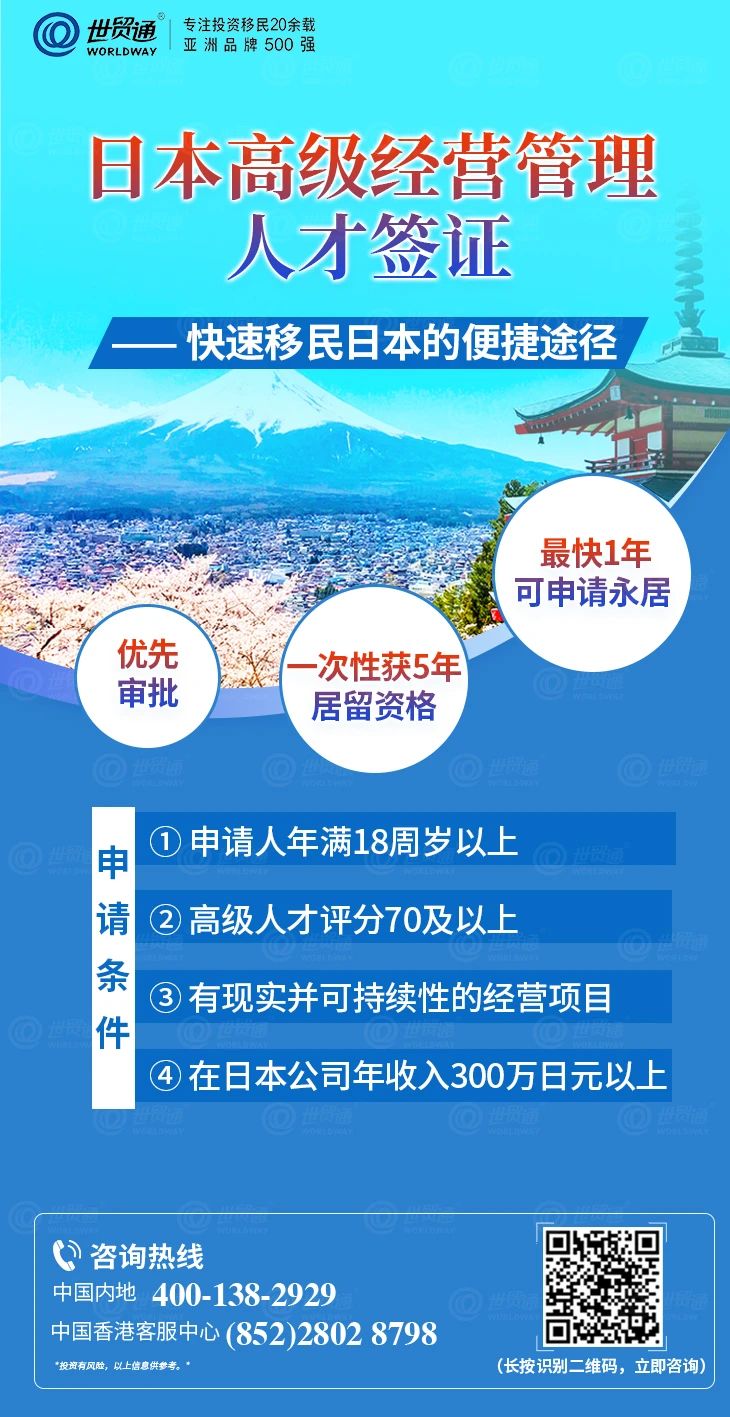
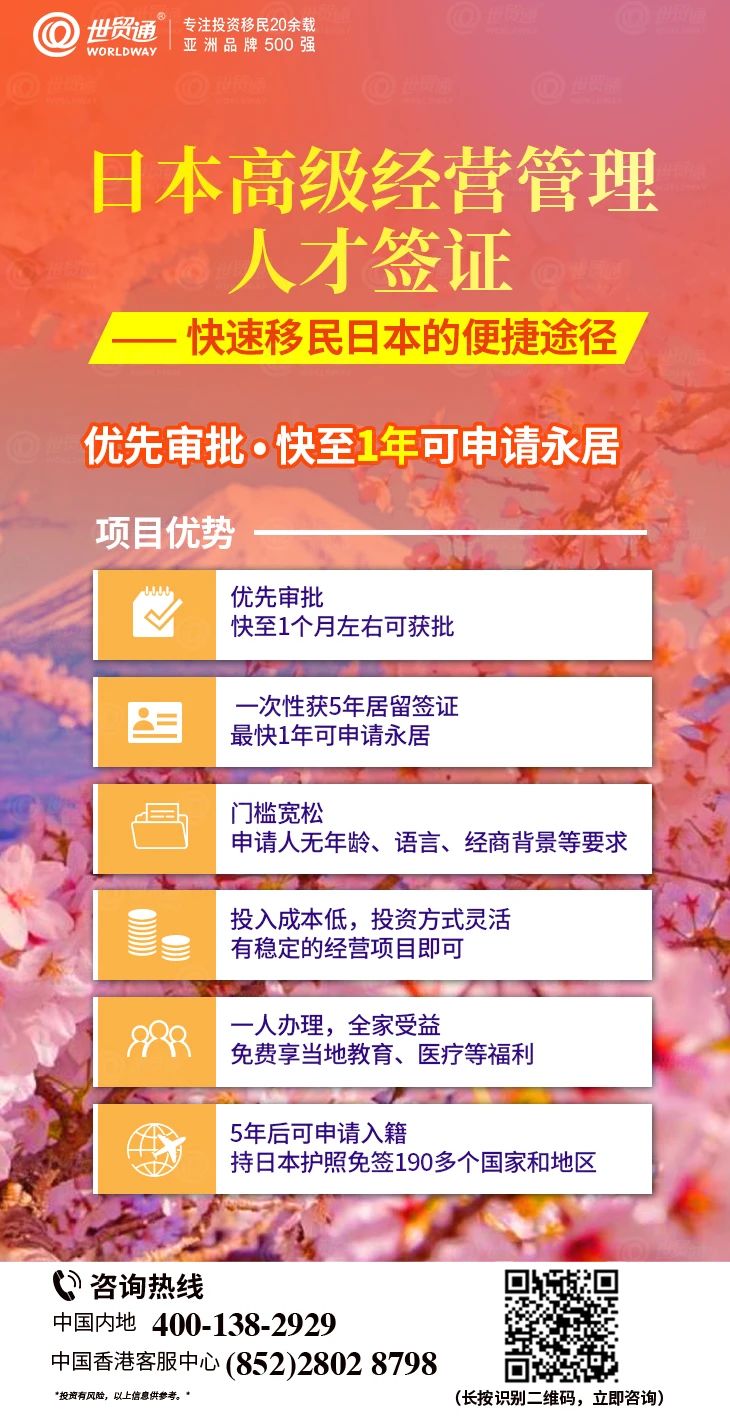
In addition, the standard Business Manager Visa is another way to immigrate to Japan. The applicant needs to have a stable place of business in Japan, a registered capital of over 5 million yen, and an annual income of over 2 million yen from the Japanese company. The initial visa is valid for 1 year, after which one can apply for renewal. After five years of renewals, one can apply for naturalization, and after ten years of renewals, one can apply for permanent residency.
For detailed inquiries, please contact Mainland China: 400-138-2929, Hong Kong, China Customer Service Center: (852)2802 8798