





Recently, U.S. Citizenship and Immigration Services (USCIS) officially announced that all H-1B lottery results for the 2024 fiscal year have been released! USCIS has clearly stated that the number of H-1B registrations received this year has reached the annual cap for lottery-based H-1B visas.
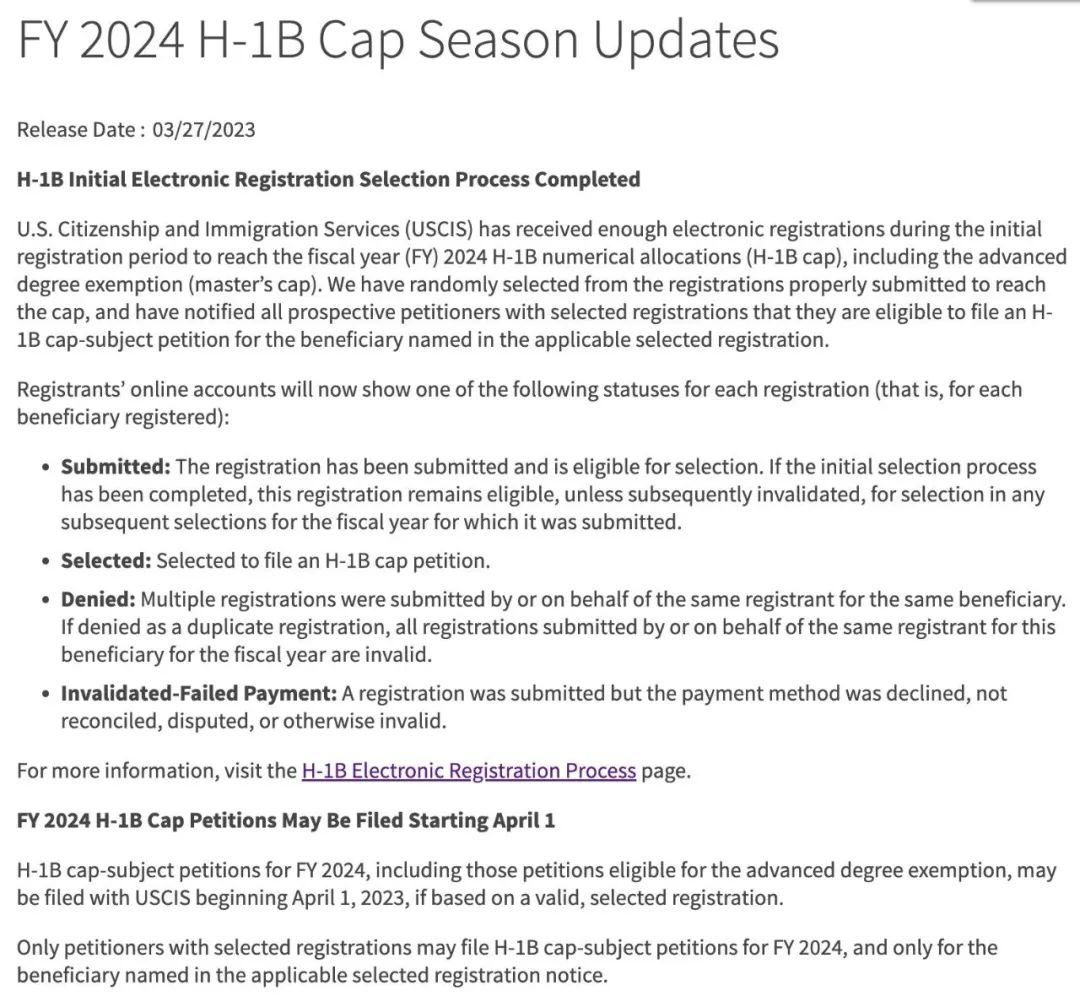
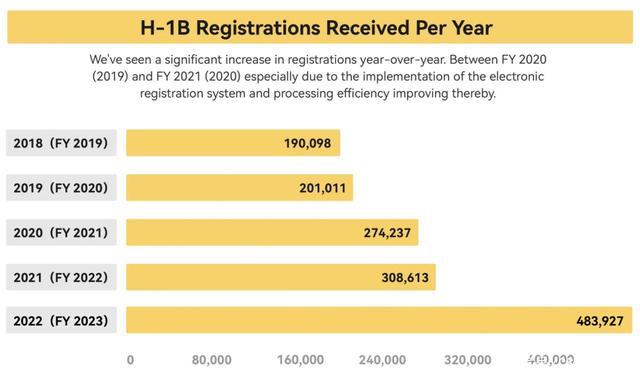
USCIS has not yet disclosed the total number of electronic registrations received or the specific lottery outcomes. However, it is projected that the number of H-1B applicants for the 2024 fiscal year may exceed 500,000, while the annual cap for H-1B visas remains at only 85,000. This results in a selection rate of approximately 17%, significantly lower than last year's 26%.
Furthermore, major U.S. tech companies are undergoing large-scale layoffs. For H-1B visa holders, maintaining their hard-won work visas requires diligent performance. If they are unfortunately laid off and fail to secure a new job or transition to another legal status within the prescribed timeframe, they must leave the United States, which in turn jeopardizes the legal status of their spouses and the schooling eligibility of their children. This highlights the uncertainty and limitations of the H-1B visa regarding employment, career development, and daily life.
Meanwhile, an interesting phenomenon has emerged during this wave of layoffs: companies with large-scale layoffs often see their stock prices surge. Simply put, in the current environment, these employees may be viewed as financial liabilities rather than human resources. Consequently, for recent graduates on F-1 visas entering the workforce, the current job search presents significant challenges. As is well known, international students in the U.S. on F-1 visas have one year of Optional Practical Training (OPT) after graduation. During this period, if they remain unemployed for more than 90 days, their valid OPT status will immediately expire, and they must leave the U.S. immediately. Even if they secure an internship, they must obtain an H-1B visa before their OPT ends to continue working and remain in the U.S. after the internship concludes.
Staying in the U.S. is not easy; the employment situation is severe, and the H-1B lottery has a low selection rate and high volatility. For investors, it is essential to plan for their status early—having an extra Plan B provides an extra option. Obtaining a U.S. Green Card early is the most secure strategy.
EB-5 investment immigration is a reliable choice. The new EB-5 Reform and Integrity Act of 2022, passed in March 2022, significantly adjusted the rules for the EB-5 program. A major benefit is that it provides an option for investors born in mainland China to avoid visa retrogression. Specifically, by investing in projects under the EB-5 visa set-aside categories (20% for rural projects, 10% for high-unemployment area projects, and 2% for infrastructure projects), investors are currently in a non-retrogression status and can immigrate to the U.S. quickly.
At the same time, the new act allows eligible applicants to concurrently file Form I-526E/I-526 (Immigrant Petition) and Form I-485 (Adjustment of Status). Upon filing the I-485, applicants may also apply for travel authorization (I-131) and work authorization (I-765). Once the I-485 receipt is received, the applicant can legally reside in the U.S. for an extended period; upon approval of the I-765 (3-6 months), they receive an Employment Authorization Document (EAD) to work freely; upon approval of the I-131 (6-12 months), they receive Advance Parole (AP) to enter and exit the U.S. legally and freely. In other words, once these applications are approved, they can work and travel freely in the U.S., the applicant and their spouse can work legally, their children can attend local public schools, and they can apply for local state government health insurance, enjoying most of the life conveniences of U.S. residents.
For investors, if they apply for a visa category without retrogression and are currently within the U.S. meeting the relevant conditions, they can file for an I-485 adjustment of status concurrently with their immigration petition, thereby living and working in the U.S. more quickly.
Currently, the popular "Florida Lakeside Jewish Community" project on the market qualifies as a rural area (TEA) EB-5 project under the new act. It not only enjoys the EB-5 visa set-aside quota but also receives priority processing from USCIS. It combines multiple advantages, including no retrogression, a high job creation multiplier of 5.44, and first-priority mortgage security for EB-5 funds, helping investors immigrate to the U.S. quickly! Investors interested in immigrating to the U.S. are advised to seize the time to subscribe; good projects do not wait.
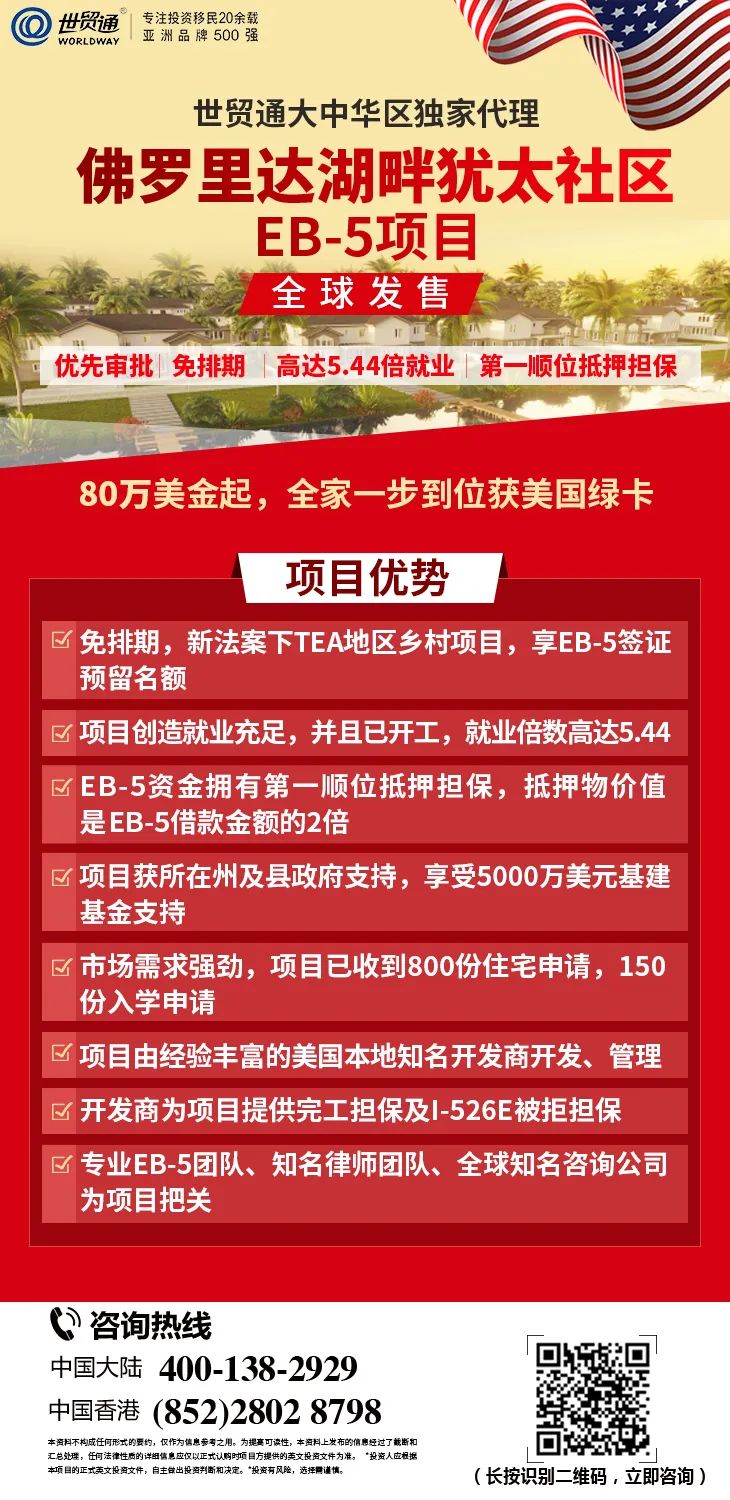
There are two key elements to immigration—timing and choice! The Florida Lakeside Jewish Community EB-5 project is currently in high demand. Project quotas are limited, so subscribe quickly. Interested investors should seize the opportunity. For more details, please send us a private message in the comments section or call the WorldWay service hotline: Mainland China: 400-138-2929, Hong Kong, China: (852) 2802 8798.
Some materials in this article are sourced from the internet, and the copyright belongs to the original author. If there are any copyright issues, please contact us for removal.
*This material does not constitute an offer of any kind and is for informational purposes only. To improve readability, the information published in this material has been truncated and summarized. Any detailed information of a legal nature should be based solely on the English investment documents provided by the project party at the time of formal subscription. *Investors should make their own investment judgments and decisions based on the formal English investment documents of this project. *Investment involves risks; choose carefully.*