


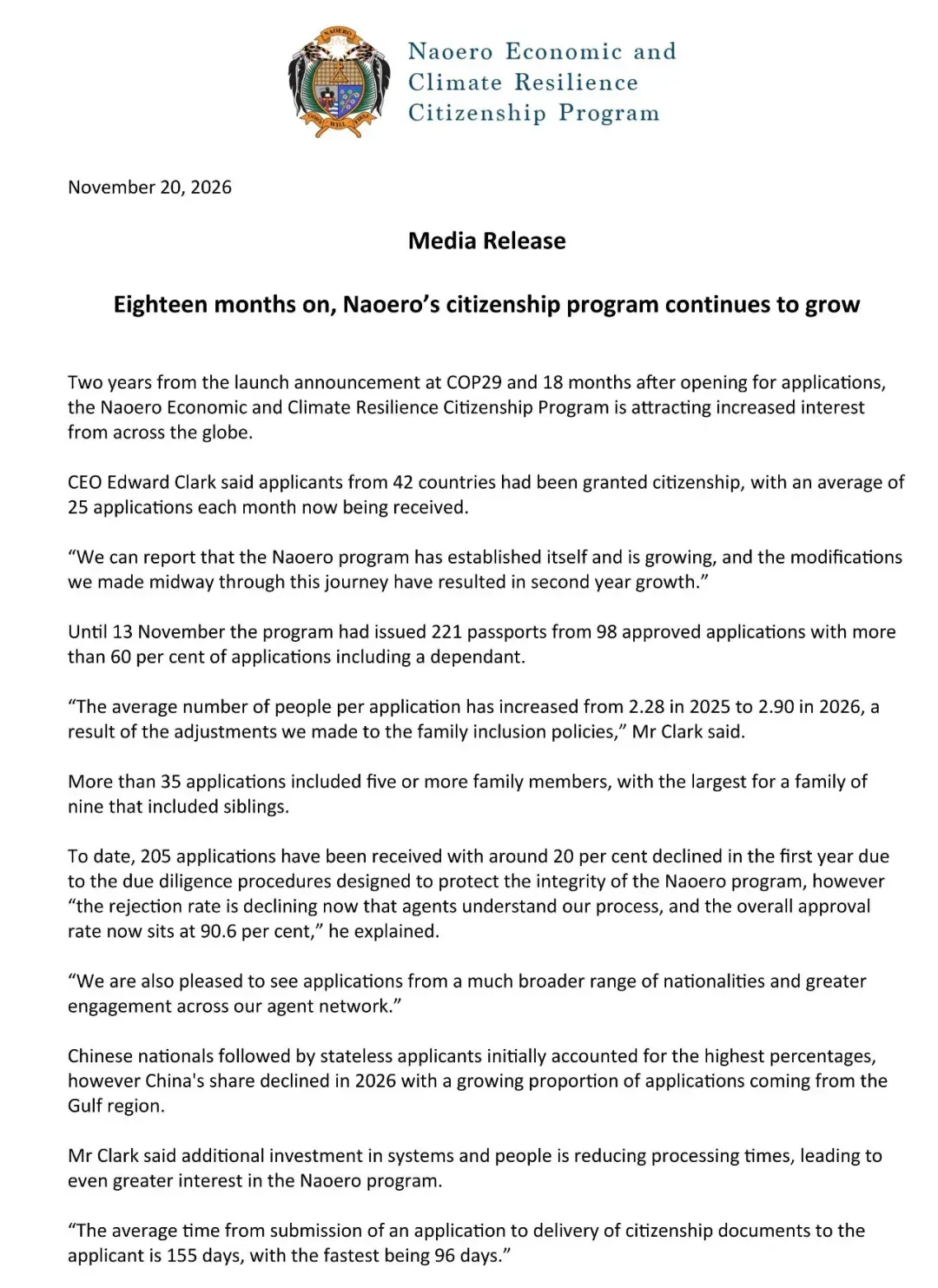
Amid current realignments across the global citizenship planning market, the citizenship planning programme from the Pacific island nation of Nauru is quietly delivering an impressive "report card."
Recently, a set of latest figures released by the Nauru Citizenship Program Office has drawn widespread attention across and beyond the industry. The new data shows: over the past 18 months, applicants from 42 countries have accounted for 98 approved applications, with a total of 221 Nauruan citizenship documents issued.
In tracking global citizenship planning policies, WorldWay has observed that data transparency in such emerging programmes often speaks volumes. Today, through these comprehensive figures, we conduct an in-depth analysis of the underlying operational logic and market trends of the Nauru citizenship planning programme from an objective and rational perspective.
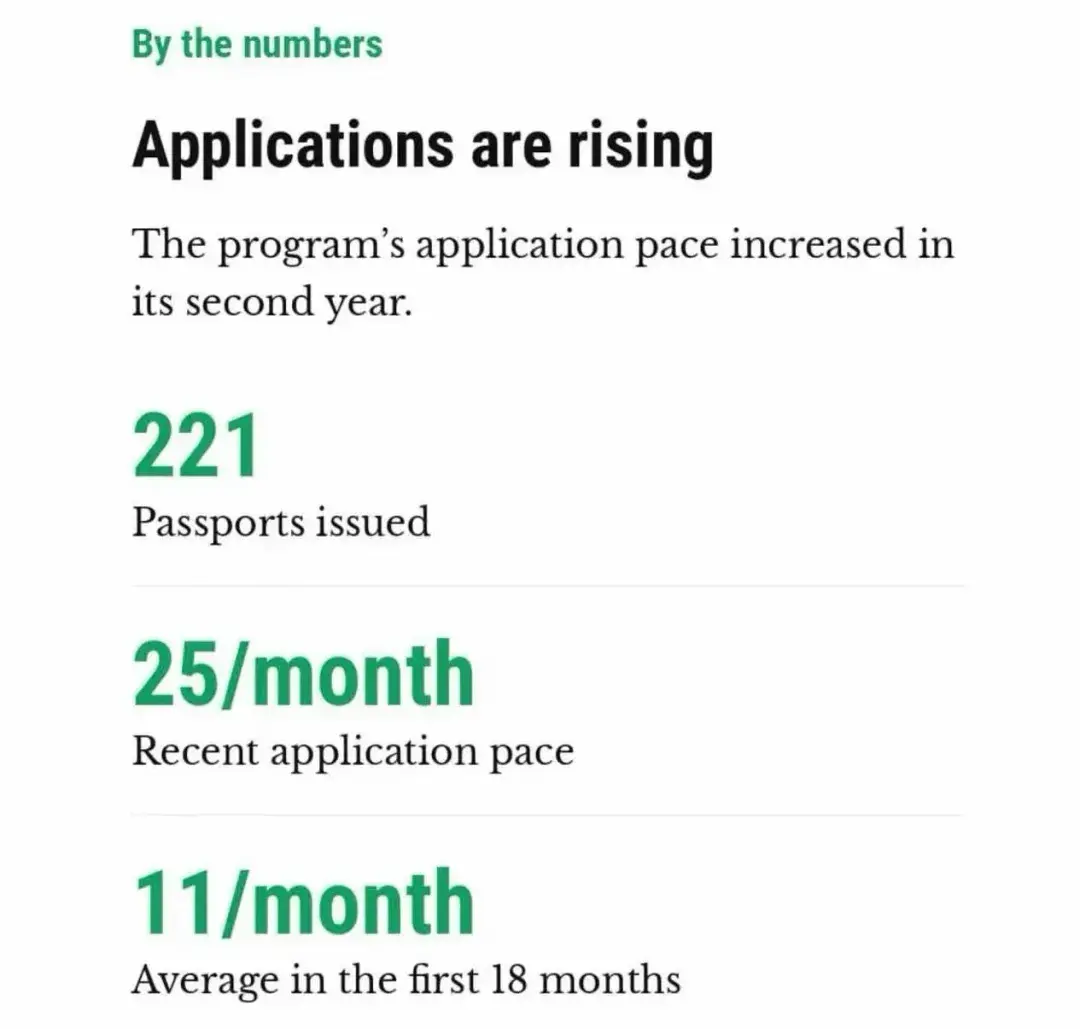
According to charts disclosed officially, the Nauru CIP has demonstrated a clear and steep growth trajectory over the 18 months since opening for applications. Data reveals that the programme averaged 11 applications/month during its initial 18 months; heading into its second year (recently), this figure surged to 25 applications/month.
This signifies that, against the backdrop of increasingly diversified demands for second citizenship among global high-net-worth individuals, the Nauru citizenship planning programme—leveraging its distinctive positioning—has successfully moved past its initial market wait-and-see period to achieve exponential application growth. Such growth is not accidental, but rather the result of a strong alignment between the programme's inherent attributes and targeted market demands.
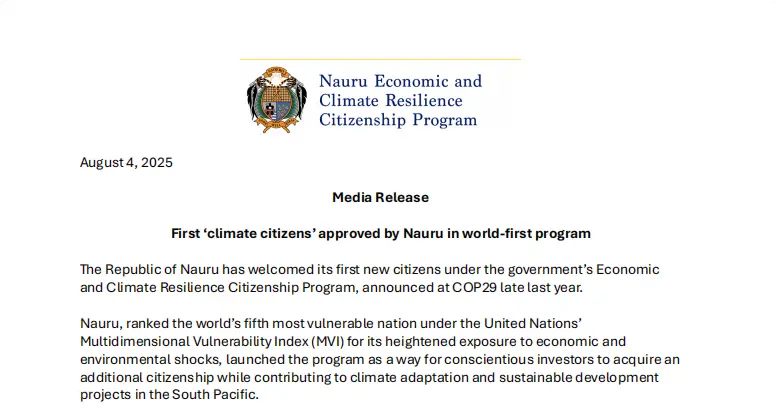
Evidence indicates that the initiative has attracted interest from an increasing number of global investors. Official Nauruan authorities stated they are encouraged by the progress achieved. As of November 2026, its expanding international reach was further validated: applicants from 42 nations have been granted citizenship, reflecting the growing global profile of the Nauru immigration programme.

When examining the factors driving the surge in applications, media reports highlighted a key variable: "price reductions prompted a spike in applicants."
This illustrates a clear market economics principle: cost-effectiveness remains a pivotal lever in activating emerging markets. A calibrated reduction in entry thresholds effectively lowered barriers for prospective cohorts, thereby unlocking pent-up application demand.
Notably, for an immigration framework designed for long-term operation, while short-term pricing incentives can stimulate statistical booms, a programme's enduring viability ultimately hinges on its regulatory compliance, processing efficiency, and the global practical value of the citizenship. This serves as a reminder for discerning applicants that evaluating a programme requires looking beyond temporary concessions to focus on its foundational fundamentals and long-term sustainability.
According to officially published adjudication metrics, the current overall application approval rate stands at 90.6%, reflecting enhanced submission quality and increasing agent comprehension of the programme's due diligence requirements. Concurrently, the trend toward greater family inclusion is equally pronounced: over 60% of applications include dependants, with the average family size per application rising from 2.28 in 2025 to 2.90 in 2026.
Beyond the shift in volume, the "quality" behind the data is equally compelling. Approved applicants currently hail from 42 countries worldwide, fully underscoring the programme's broad international recognition. The demographic diversity of applicants not only promotes the healthy evolution of the programme's ecosystem, but also corroborates that it does not rely on a single origin market, possessing genuine global appeal.
Official sources indicate that while Chinese and stateless applicants initially formed the largest applicant pools, a wider spread of nationalities is now evident, with escalating interest from the Gulf region contributing to an increasingly representative global cohort.
Furthermore, to handle the increasing application volume, Nauruan authorities have invested continuously in systems modernization, personnel deployment, and agent network collaboration. These infrastructure enhancements have directly led to an effective reduction in processing times. Official statistics demonstrate that the average end-to-end processing timeframe from submission to delivery of citizenship documentation is currently 155 days, with the fastest turnaround recorded at 96 days. For applicants, time investment represents a vital consideration, and official measures to elevate service efficiency undoubtedly bolster the programme's long-term sound operation.
Taking a broader view, beyond the mobility advantages offered by the status itself, the Pacific island nationality represented by the Nauru CIP carries profound relevance in today's macroeconomic landscape. For families navigating global asset allocation, tax planning, children's education, or pursuing a second living environment, an investment immigration framework grounded in statutory legislation provides a viable route for risk mitigation and diversification.
It is worth highlighting that Nauru incorporates "Climate Resilience" into the programme title. This not only underscores Nauru's resolve to address global climate change, but also ensures that investment capital directly supports local infrastructure and sustainable development. For applicants, this entails acquiring citizenship while engaging meaningfully in global environmental governance and socially responsible investing.
In summary, the data performance of the Nauru citizenship planning programme over the past 18 months provides a noteworthy case study for the global immigration industry. From surging monthly application volumes and diverse applicant origins to continued operational optimization, the programme demonstrates a clear commitment to self-refinement and progress.
For families seeking a second citizenship, seizing policy window opportunities is essential. Currently, the Nauru immigration programme offers an official limited-time incentive: from just USD 90,000, up to four generations of a family can apply for Commonwealth member Nauru citizenship, with an offer deadline of December 31, 2026.
If you are interested in the Nauru immigration programme or wish to learn more about application criteria and fee schedules, please contact a WorldWay consultant or client advisor for a one-on-one consultation. We are dedicated to providing professional and attentive services to help you seize the advantage in your citizenship planning journey.