WorldWay · U.S. Immigration Policy Watch
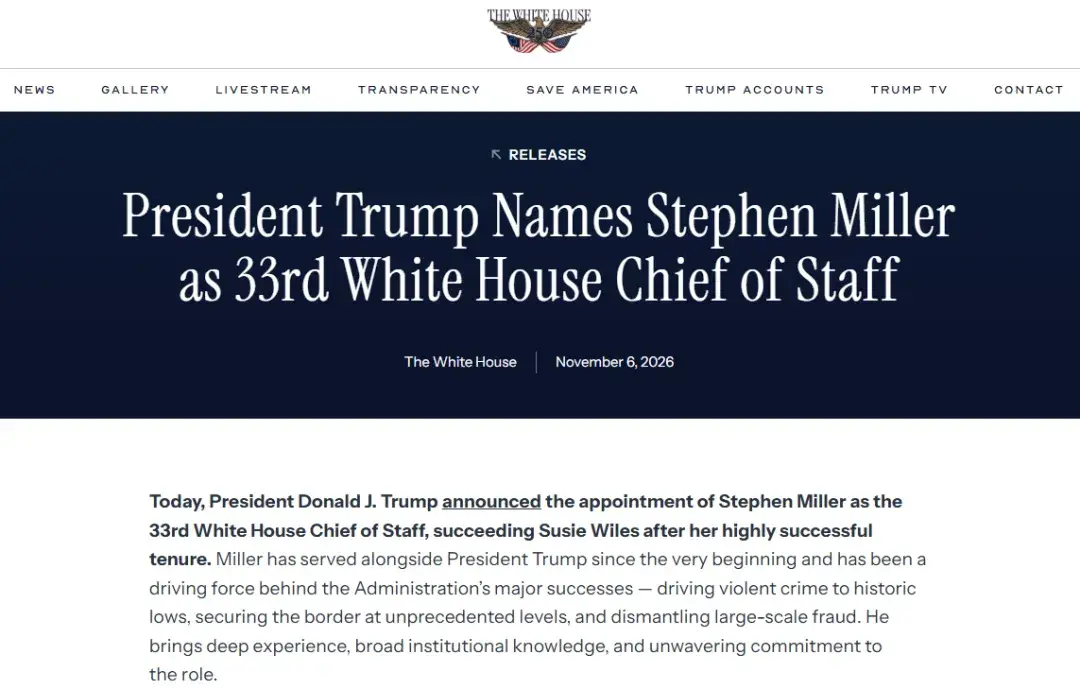
On November 6, 2026, local time, the White House announced that Trump appointed Stephen Miller as the 33rd White House Chief of Staff, officially taking effect on the 9th. The announcement contained little embellishment, repeatedly emphasizing one central sentence——Miller is the most steadfast and enduring driver of the "America First Agenda".
Many people's first reaction was: it's just another senior official taking office. But for international students in the U.S., H-1B holders, and families waiting for green cards in visa queues, the weight of this personnel news is far from ordinary.
1 Why a Change of "Gatekeeper" Matters to Families Living in the U.S.
The White House Chief of Staff is not a ceremonial post. He determines which issues reach the President's desk, in what order they are advanced, and coordinates implementation across various departments. While the policy direction is set by the President, the intensity and pace of policy implementation are often decided by the Chief of Staff.
Miller joined Trump's campaign team in 2016 and was a key architect of the Trump administration's hardline immigration stance. During the first term, he pushed for the "zero tolerance" family separation policy and the travel ban; after returning to the White House in 2025 as Deputy Chief of Staff and Homeland Security Advisor, he publicly proposed a target of "arresting 3,000 people per day", and pushed to crack down on "birth tourism" while challenging birthright citizenship. A White House observer described him as "having only one mode: pedal to the metal."
2 More Critical than the Candidate Is the Timing
The appointment occurred after the midterm elections, in which Democrats took control of both the House and the Senate. With the legislative path through Congress blocked, executive orders have become the primary battleground. Miller previously co-led a months-long review specifically aimed at identifying measures that "can be implemented without congressional approval."
From this, three trends can be deduced:
① Faster —— Rules will land abruptly in the form of notices, memos, and proposed rules;
② More Granular —— Scrutiny will extend down to social media, employer qualifications, and school programs;
③ Harder to Roll Back —— Propelled by executive orders, blocking them often relies on litigation, which itself takes several years.
3 What Has Already Happened Over the Past Year or So
In September 2025, an additional $100,000 fee was imposed on new H-1B petitions: ruled unlawful by a federal judge in June 2026, appealed by the government, and followed in August by a proposed fee of approximately $103,000.
H-1B shifted from a random lottery to "weighted selection," favoring high-paying positions, taking effect on February 27, 2026.
In August 2026, a proposal was made to eliminate the 60-day grace period following unemployment——leaving insufficient time to find a new job after being laid off.
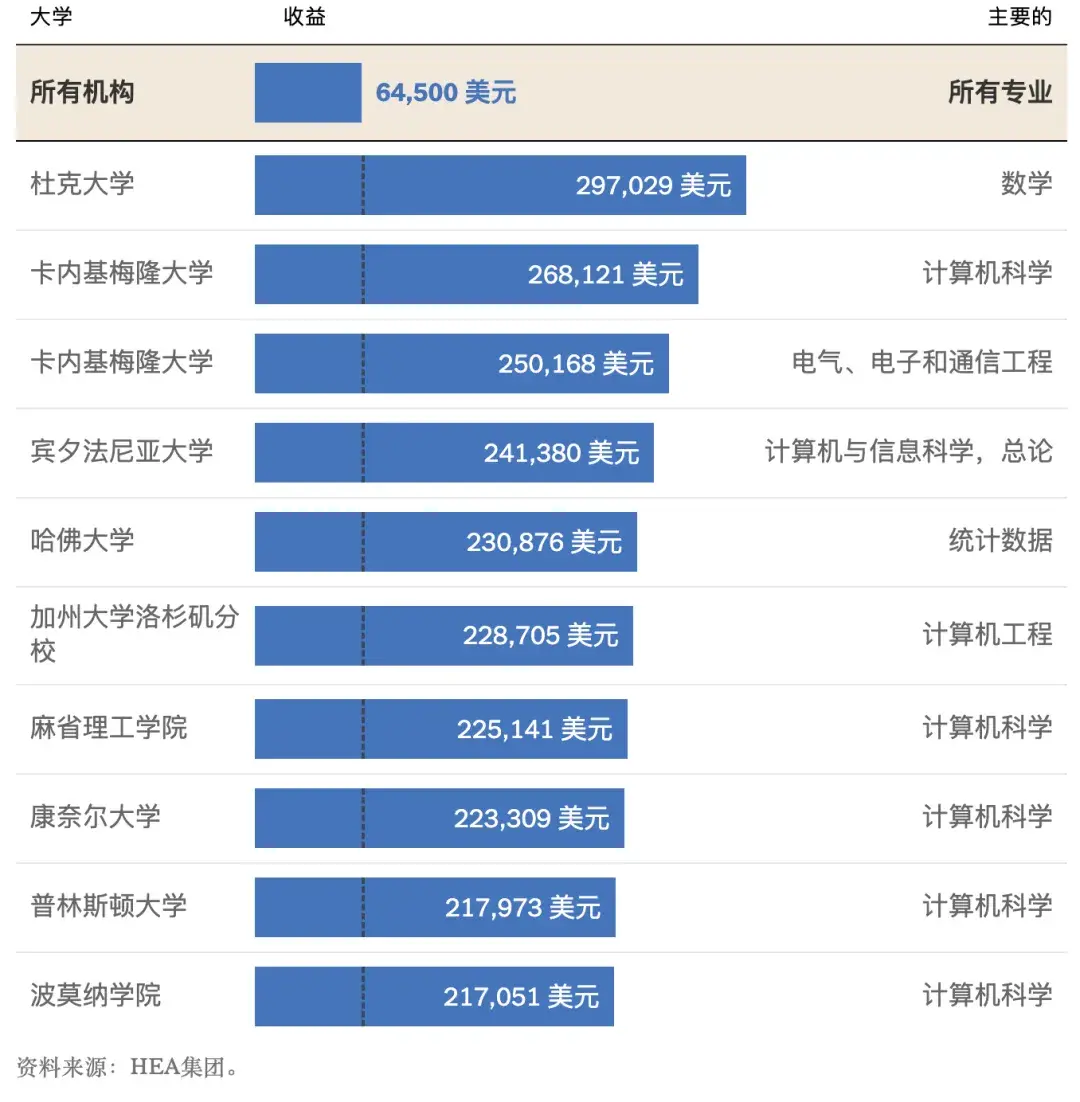
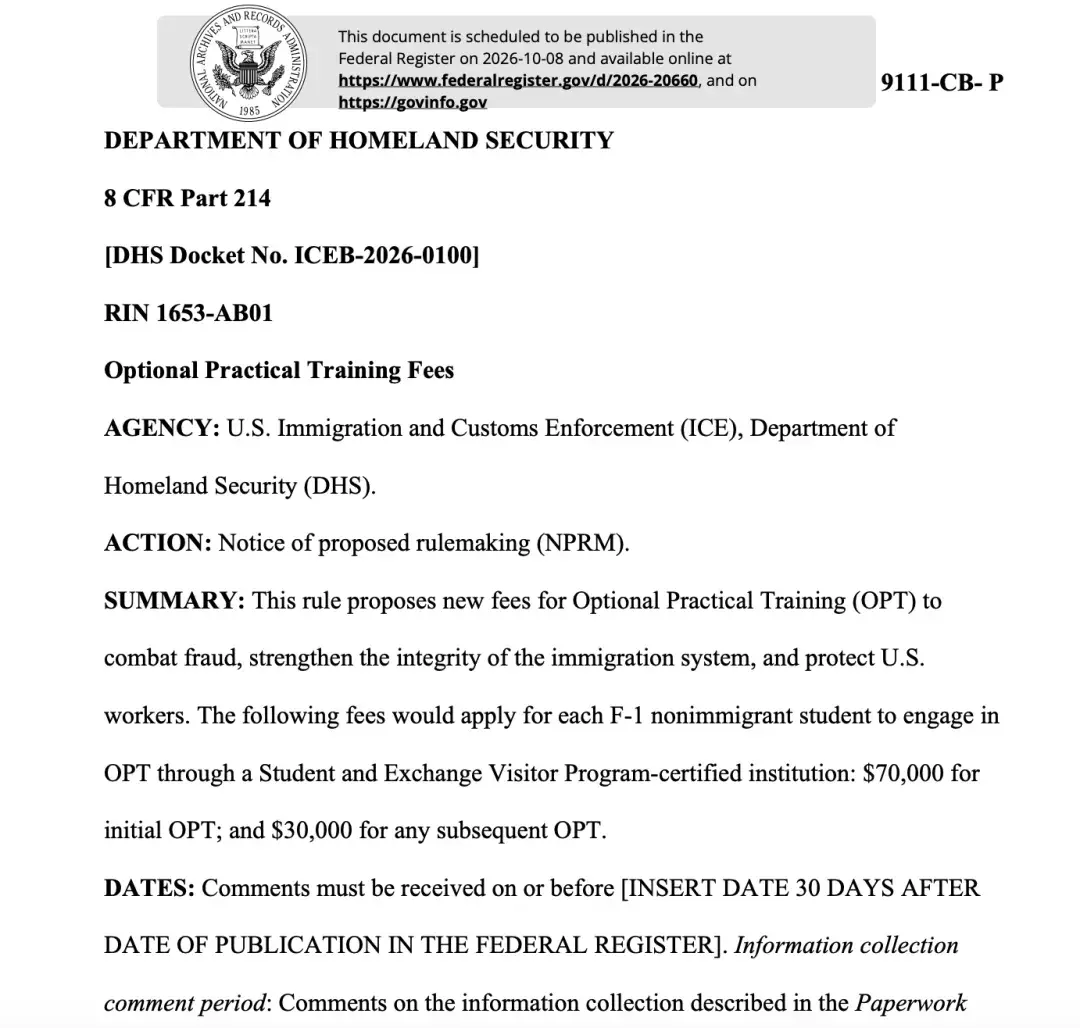
In October 2026, nine universities were investigated over J-1 visas; international students applying for OPT for the first time face a proposed fee of $70,000, with an additional $30,000 for extensions.
In May 2026, USCIS adjusted the green card process: immigrant visa processing through overseas consulates was made the standard pathway; eligible applicants can still file Form I-485 domestically, with approval determined on a case-by-case discretionary basis.
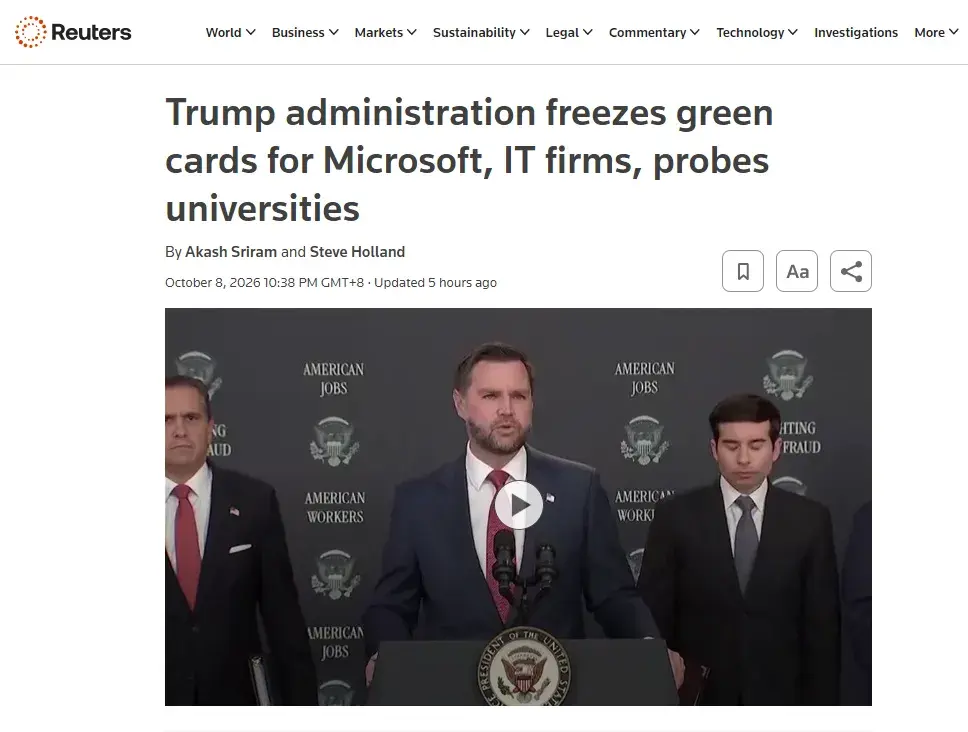
In October 2026, PERM processing was suspended for multiple companies including Microsoft, with PERM being the initial step for employment-based green cards;
In October 2026, the proposed PERM labor certification reform rule completed White House review, aiming to overhaul the U.S. labor market recruitment testing and strengthen protections for U.S. workers.
Connecting the dots, the central narrative is clear: staying in the U.S. is shifting from "waiting in line by process" to "snatching a spot within windows of opportunity."
4 Three Types of Families, Three Types of Risks
▍Current Students or Recent Graduates
OPT→H-1B→PERM→Green Card: every single stage is seeing rising costs, increased scrutiny, and growing uncertainty. Look beyond tuition fees alone—factor in the total timeline required to secure permanent status.
▍Current H-1B Holders
An employer is not merely a payroll provider, but an immigration sponsor. Layoffs and PERM suspensions can wipe out years of accumulated progress overnight.
▍Navigating PERM Green Card Queues
Waiting in line is not the real danger; the real danger is having the rules changed midway——while you wait, rules can shift, thresholds can rise, or windows may close entirely.
5 Why EB-5 Merits Standalone Discussion
Let's be clear: EB-5 is not a shortcut; it operates on an entirely different logic——untethered from employers, independent of lotteries, trading verifiable investment for a relatively autonomous path to legal status. Established under federal statute with statutory framework backing, EB-5 provides significantly greater stability compared to immigration channels driven by executive orders.
Among these, reserved category projects are exceptionally favorable for eligible families: when investors maintain lawful status within the U.S. and visa quota is available, they can concurrently file Form I-526E and Form I-485, securing an Employment Authorization Document (EAD) and Advance Parole (AP) during the pending period to legally reside, work, and travel internationally.
⚠️ However, this window of opportunity likewise comes with a clear timeline boundary:
Starting January 1, 2027, the minimum EB-5 investment amount will undergo a statutory inflation adjustment, with Targeted Employment Area (TEA) projects projected to increase from $800,000 to over $900,000. Under current regulations, locking in the existing investment threshold is determined by USCIS's formal receipt of the petition——source-of-funds documentation, project due diligence, and petition preparation all require substantial lead time.
— Conclusion · Seize the Initiative While Rules Remain Clear —
Policy cycles have their ebbs and flows, but the opportunity window for immigration planning waits for no one. Miller's appointment is merely the latest example, and likely not the last. Rather than passively waiting for rules to shift, it is far better to evaluate early, file early, and lock in a priority date early while regulations remain clear——this serves as both a definitive response to uncertainty and an urgent, pragmatic imperative for every family planning a future in the U.S.