Boarding requirements for travel to the United States are about to change! Effective November 3, 2026, all passengers boarding international flights bound for the United States must sign a travel history declaration prior to boarding, confirming that they have not visited or passed through 21 daysin the past the Democratic Republic of the Congo (DRC).
Applicable to U.S. citizens, Green Card holders, and all other travelers to the U.S.WorldWay Immigration reminds investors and their family members planning to travel to the U.S. recently to familiarize themselves with the relevant requirements in advance to avoid impacting their travel.
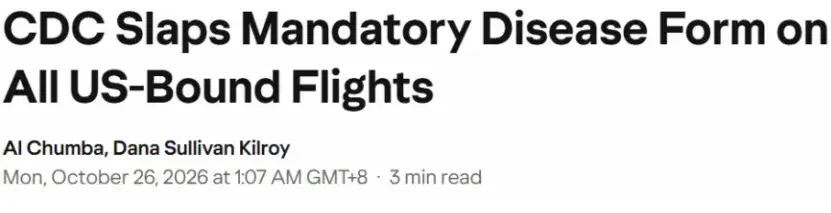
According to regulations issued by the U.S. Centers for Disease Control and Prevention (CDC) on October 22, all passengers taking international flights to the United States must complete and sign a Travel History Declaration before boarding. Passengers who fail to complete the declaration will not be allowed to board unless granted a government exemption.
Broad Scope of Application: Regardless of nationality or immigration status, U.S. citizens, Green Card holders, and other travelers must comply.
Paper or Electronic Submission: The specific method depends on the airline's notification. Airlines must confirm that passengers have completed the declaration at or before boarding.
Applies to Transit via the U.S.: As long as you enter the United States on an international flight, even if the U.S. is not your final destination, you must complete the declaration.
Truthful Completion: Knowingly providing false or misleading information may result in fines or criminal penalties.
💡 Please note that this requirement is primarily used to verify passengers' recent travel history, and does not mean that all travelers to the U.S. must undergo additional temperature checks or health screenings.
This regulation is related to the ongoing Bundibugyo ebolavirus outbreak in Africa. According to the CDC, this virus can cause severe illness, and the current outbreak continues to spread across multiple provinces in the DRC.
If you have recently stayed in or transited through the DRC, you may be unable to board your scheduled U.S.-bound flight. The CDC calculates the 21-day period based on calendar days: the day of departure is Day 0, the first full calendar day after departure is Day 1, and boarding is permitted starting from Day 22 at the earliest, subject to applicable CDC regulations and airline verification.
For families planning to visit relatives, travel on business, accompany students, or currently applying for U.S. legal status, it is recommended to make the following preparations in advance:
01 Check Travel History for the Past 21 Days
Confirm whether you have visited relevant countries or regions, paying special attention to layovers and transits.
02 Review the Latest Airline Notifications
Learn about the completion method and submission requirements for the travel declaration in advance to avoid missing the declaration and affecting boarding.
03 Confirm Declaration Arrangements for Traveling Companions
Accompanying family members must also complete the declaration as required. Passengers under 18 years old should have their declarations signed by a parent, guardian, or other authorized person.
U.S. entry and public health regulations may be adjusted as the epidemic situation evolves. WorldWay Immigration reminds investors and their families that when planning itineraries to the U.S., in addition to confirming the validity of status documents such as visas or Green Cards, they should also verify the latest boarding and entry requirements in a timely manner to ensure travel arrangements comply with relevant regulations.
As one of Asia's Top 500 Brands with over 20 years of expertise in immigration, WorldWay Group started in Hong Kong in 1998 and operates professional offices in both Hong Kong and Mainland China. WorldWay Immigration closely monitors U.S. immigration policies and entry requirements, providing professional residency planning services to families in need and assisting clients in making reasonable plans for travel to the U.S. based on their individual circumstances.