



Macro Cycles and Policy Countdowns: The End-Game Strategy of the $800,000 Window
Reviewing the evolution of immigration policies in major global economies in recent years, arbitrage opportunities are narrowing at a faster-than-expected pace. For cross-border asset allocation families targeting the United States, the primary variable at present is not the macro-narrative of geopolitics, but rather an impending policy time window——under current legislation and inflation adjustment mechanisms, starting January 1, 2027, the minimum investment amount for EB-5 Targeted Employment Area (TEA) projects faces rigid upward pressure, increasing from $800,000 to a range between $900,000 and $950,000.
This represents more than just a nominal capital increment of $100,000 to $150,000. Against the backdrop of declining global capital yields and geometrically rising compliance costs for outbound capital deployment, locking in committed funds early not only directly hedges against future inflation and exchange rate volatility, but also serves as a precise actuarial calculation for the overall immigration budget. The common intermediary phrase “capturing the $800,000 dividend” often remains superficial; the core determinant of safety and efficiency for high-net-worth assets lies in leveraging the institutional dividends granted by the new policy to complete a transformation from “passive waiting” to “active hedging” in residency and capital restructuring.
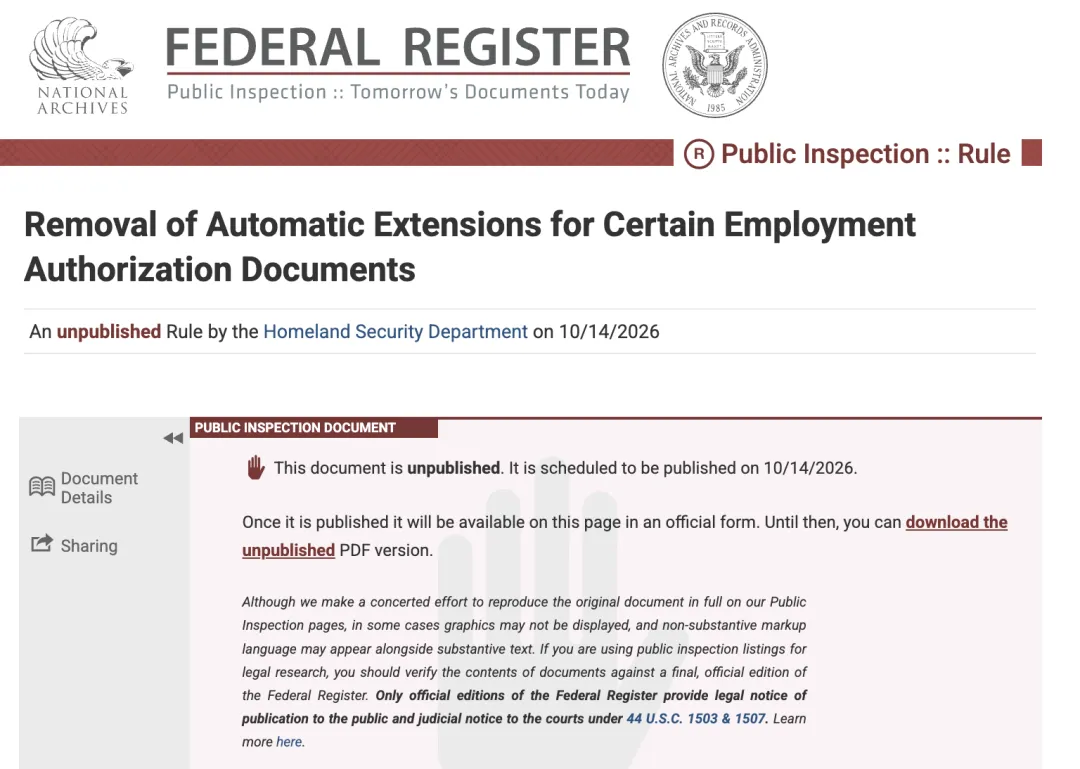
Deconstructing the “Concurrent Filing” Mechanism: Balancing Time Leverage and Lawful Residency
The “Concurrent Filing” mechanism for I-526E (Immigrant Petition by Regional Center Investor) and I-485 (Application to Register Permanent Residence or Adjust Status), introduced by the EB-5 Reform and Integrity Act of 2022 (RIA), represents the most tactically valuable institutional design in offshore financial and immigration planning in recent years.
Under the traditional model, applicants were required to wait abroad through lengthy I-526 approvals before initiating visa processing, facing massive sunk time costs and family planning disruptions along the way. In contrast, “Concurrent Filing” allows applicants residing within the United States (such as those holding valid non-immigrant visas like H-1B, L-1, F-1, or O-1) to concurrently lock in their I-485 adjustment of status while submitting their immigrant investment petition.
| Traditional Model Pain Points | Concurrent Filing Solutions | Underlying Capital Logic |
|---|---|---|
| Visa queue uncertainties leave long-term family planning in limbo | Concurrently file I-485 to secure lawful U.S. residence status | Substantially compresses the opportunity cost of status transition |
| Capital locked offshore long-term without enjoying U.S. benefits | Concurrently apply for EAD (Work Permit) and AP (Advance Parole) | Achieves seamless integration between business activities and status conversion |
| Policy change risks transmitted across the family life cycle | New Act protective clauses for lawful U.S. residents | Mitigates legal exposure stemming from abrupt policy tightenings |
This mechanism functions essentially as a form of “time leverage.” It permits high-net-worth individuals to secure the right to freely work and live within the U.S. early while deploying capital into projects, converting what was an uncontrollable “compliance waiting period” into a “productivity window” suitable for commercial positioning.

Reserved Visas (Set-asides) and Retrogression Gaming: Navigating the Safe Harbor for Capital
Over the past decade, the largest bottleneck in EB-5 has been the catastrophic multi-decade visa retrogression faced by mainland China-born investors. The “Reserved Visas” mechanism introduced by the RIA new legislation has fundamentally transformed this dynamics.
The new act reserves annual visa quotas of 20%, 10%, and 2% for Rural Areas, High Unemployment Areas (TEA), and Infrastructure Projects, respectively. Within the current cycle, rural projects have not experienced widespread retrogression due to a smaller base and relatively rational application numbers, effectively forming a “green channel” for mainland Chinese investors.
However, from an independent asset management and risk control perspective, blindly pursuing “retrogression-free” rural projects may harbor liquidity traps:
- True Yield and Exit Capability of Underlying Assets: The commercial logic of rural projects often relies on long-cycle infrastructure, resorts, or public-private partnerships in remote locations. Amid macroeconomic fluctuations, the cash flow resilience of such assets is significantly weaker than that of core assets in tier-one and tier-two cities.
- Compliance Margin for Job Creation: The primary demand of USCIS for EB-5 is the creation of "10 full-time jobs." Although rural projects may hold an advantage in multiplier effect calculations, compliance crises where green cards fail to convert from conditional to unconditional status (I-829 stage) will be directly triggered by construction delays or operational underperformance leading to unmet job metrics.
Therefore, when screening projects, an investor's evaluation framework must shift from a singular focus on “immigration speed” to a “dual stress test of project commercial viability and EB-5 compliance security.” High-quality rural or TEA projects must possess clear exit routes (such as third-party buyback guarantees, mature asset securitization, or smooth refinancing plans), alongside strong Regional Center backing.
A Future-Oriented Roadmap for Offshore Allocation and Asset Compliance
In a tight regulatory environment, standalone residency planning is no longer an isolated event; it forms a critical piece of overall global asset allocation and tax compliance engineering.
Faced with the 2027 price increase countdown and increasingly stringent outbound FX compliance scrutiny, high-net-worth families should adopt the following matrix strategies when making EB-5 decisions:
- Upfront Compliance of Capital Pathways: Explaining the Source of Funds (SOF) is the most vulnerable link in the entire immigration chain. Fluke mindsets must be discarded; a closed loop of funds should be established through legitimate salary income, corporate dividends, compliant equity transfers, or proper cross-border asset disposals to ensure it withstands dual look-through audits from immigration authorities and foreign exchange regulators.
- Isolation Design for Residency and Tax Residency Status: Following concurrent filing or after obtaining a green card in the future, early planning must be conducted to manage the impact of U.S. worldwide taxation (FATCA/FBAR) on existing offshore trusts and offshore corporate equity structures. Sound residency planning should iterate in lockstep with offshore wealth management architectures rather than acting as a post-hoc remedy.
- Dynamic Tracking of Capital Tied-up Costs During the Window: Treat the $800,000 principal as a long-term, illiquid private equity (PE) investment. When evaluating projects, look beyond the probability of green card approval and scrutinize the project's capital structure, preferred equity protections, and collateral adequacy through the eyes of an institutional investor.
Amid uncertain macro cycles, leveraging the final policy dividends and the concurrent filing mechanism is not merely purchasing an overseas transit pass, but executing a refined hedge covering global assets, taxation, and long-term family living space. The gaps between time and rules are always reserved for rational strategists equipped with visionary insights and disciplined execution.