



The U.S. Department of State's Visa Office has officially released the Immigrant Visa Bulletin for the second month of Fiscal Year 2027 (November 2026).
This month's EB-5 cutoff date results show that both Chart A and Chart B for the unreserved/old law remain unchanged, and the three reserved visa categories under the new law continue to have no retrogression. Additionally, USCIS has confirmed that Chart B will remain open for use in November.
While cutoff dates remain unchanged for now, key policy milestones such as adjustments to investment thresholds and filing fees are approaching. For families currently planning U.S. status, what information deserves attention next? WorldWay Immigration breaks it down for you.

▎Chart A: Final Action Dates For Employment-Based Preference Cases
(Note: Entering U.S. consulate visa interview proceedings)
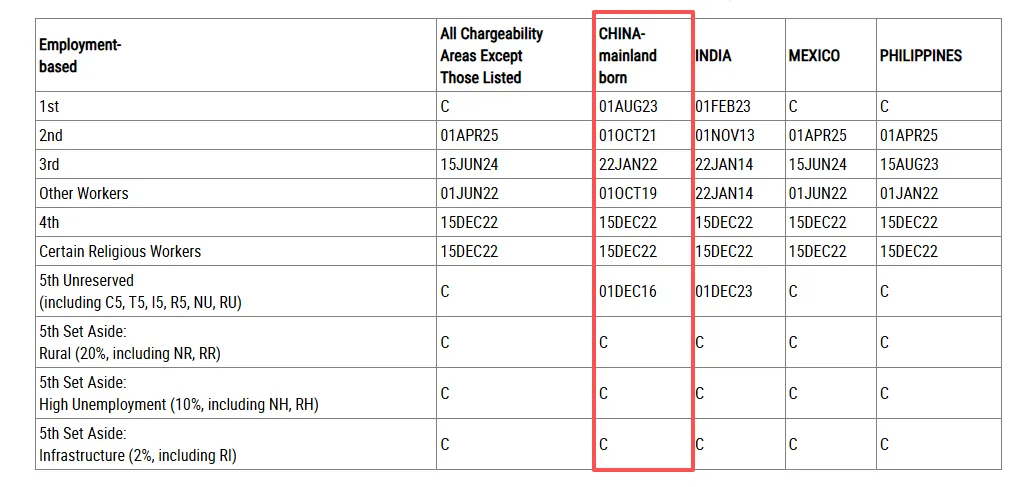
▲ November 2026 Chart A Cutoff Dates (Red box for mainland China-born applicants)
▎Chart B: Dates For Filing Of Employment-Based Visa Applications
(Note: Residing legally in the U.S. and meeting relevant conditions to submit an AOS adjustment of status application to USCIS)
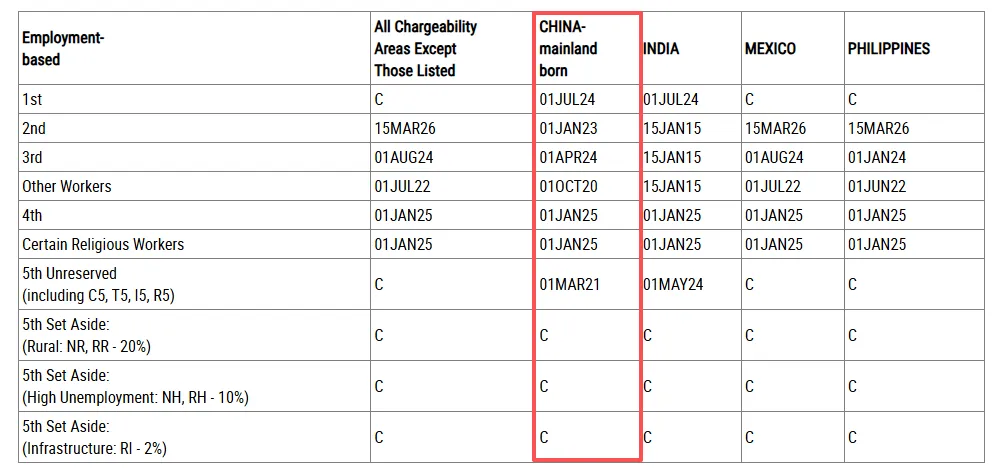
▲ November 2026 Chart B Cutoff Dates (Red box for mainland China-born applicants)
Additionally, USCIS has officially announced the opening of Chart B for November 2026.
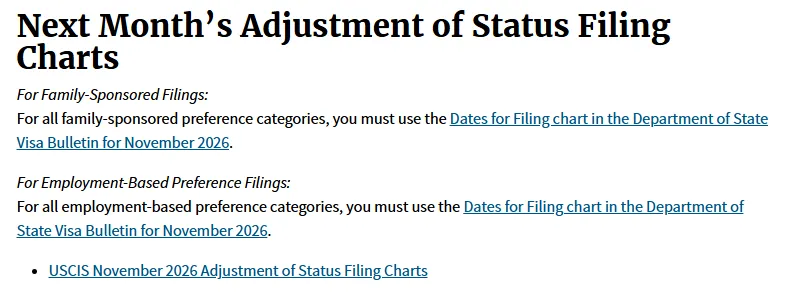
▲ USCIS Announcement: Employment-based preference categories continue using Chart B in November
▎1. Old Law EB-5: Both Chart A and Chart B Remain Unchanged
In November 2026, the cutoff dates for the EB-5 unreserved categories remain the same as last month:
Old Law Cutoff Dates (Mainland China-Born)
▎2. New Law EB-5: Three Reserved Visa Categories Continue Without Retrogression
Under the new law, EB-5 set-aside visa categories (20% reserved for Rural Area projects, 10% reserved for High Unemployment Area projects, and 2% reserved for Infrastructure projects) currently continue to have no visa retrogression.
This means that eligible applicants who maintain lawful status in the United States can still concurrently file their immigrant investor petition and adjustment of status application, while simultaneously applying for an Employment Authorization Document (EAD) and Travel Document (Advance Parole).
Based on this month's visa bulletin, the cutoff dates for applicants under the old law have not advanced, while the three reserved visa categories under the new law remain current. For investors considering EB-5, in addition to tracking current cutoff dates, future application costs and processing timelines also merit attention.
▎1. January 1, 2027: Minimum Investment Threshold Expected to Be Adjusted
Starting January 1, 2027, in accordance with the automatic inflation adjustment mechanism under the EB-5 Reform and Integrity Act (RIA), the minimum investment threshold for Targeted Employment Areas (TEAs) will begin to increase; based on current CPI data calculations, the current $800,000 threshold is expected to increase to at least $900,000, with the final amount subject to official publication by USCIS in the Federal Register.
Changes in investment thresholds not only impact financial budgeting, but may also influence project selection and application scheduling. For families considering EB-5, it is recommended to plan their application arrangements reasonably in advance.
▎2. November 30, 2026: Multiple EB-5 Application Fees Will Increase
In addition to the investment threshold, changes in application fees also warrant attention.
According to an announcement issued by U.S. Citizenship and Immigration Services (USCIS), multiple EB-5 filing fees such as I-526, I-526E, and I-829 will be increased starting November 30, 2026. For more details on fee adjustments, please click to read WorldWay's previous report: EB-5 Immigration Application Fees to Increase Starting November 30, 2026!
▎3. Whether Reserved Visas Will Face Retrogression in the Future Still Requires Continuous Monitoring
Currently, the three reserved visa categories continue without retrogression, providing a relatively advantageous application environment for eligible applicants.
However, with shifts in application demand and annual visa quota utilization, retrogression may still occur in the reserved categories in the future. Once retrogression occurs, the current "concurrent filing" fast track will no longer be available, and the application pace as well as waiting times will undergo fundamental changes.
Adjustments to investment thresholds, increases in application fees, and future visa retrogression uncertainties all indicate that EB-5 applications require more thorough advance preparation. For families currently planning U.S. status, it is recommended to focus on the following three aspects:
Three Key Recommendations
For families with clear plans to relocate to the U.S., preparing in advance helps to navigate immigration status planning more smoothly amid policy changes.
Currently, the three reserved visa categories under the new law continue to have no retrogression, providing noteworthy application opportunities for eligible investors. Among them, Rural Area projects not only remain free of retrogression, but also enjoy a priority processing mechanism. For investors interested in U.S. EB-5, it is recommended to learn about projects as early as possible, plan applications properly, and seize the current policy window.
WorldWay Group offers two premium EB-5 projects for investors to choose from:


As a Top 500 Asian Brand with over 20 years of dedication to immigration, WorldWay Group originated in Hong Kong in 1998 and has professional offices in both Hong Kong and Mainland China. To help investors capture application opportunities under current EB-5 investment thresholds, WorldWay has launched a limited-time promotional campaign: From now until December 31, 2026, clients applying for U.S. EB-5 immigration projects can enjoy WorldWay's exclusive offers. For details, please contact your dedicated WorldWay consultant or customer service representative.