





The Turkish investment-based citizenship market has once again received a strong signal of strict regulation.
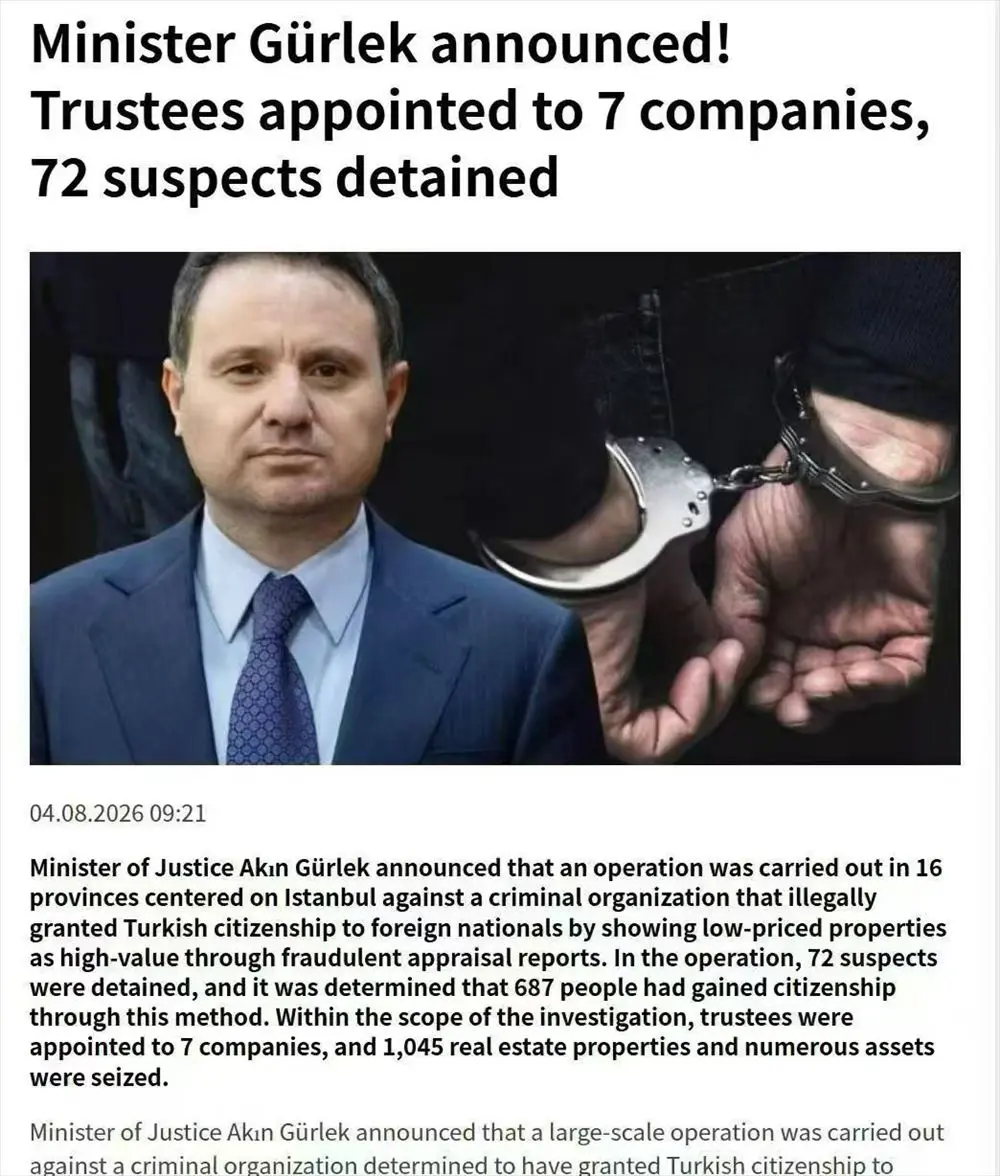
According to reports from Turkish media on August 4, Turkish authorities, centered in Istanbul, have launched a special operation across 16 provinces nationwide to crack down on criminal gangs assisting foreigners in obtaining Turkish citizenship through fraudulent real estate appraisal reports.
A total of 72 suspects have been arrested, 7 companies involved in the cases have been taken over, and 1,045 properties along with various assets have been seized. The investigation also revealed that 687 foreign applicants who obtained Turkish citizenship through related transactions are currently undergoing individual reviews and are entering the process of citizenship revocation.
This incident serves as a reminder to investors: There is no such thing as a "low-cost shortcut" to investment-based citizenship. Whether a project is authentic, whether the investment amount meets the requirements, and whether the payment and application materials are compliant are factors that not only determine whether one can be successfully approved, but also whether the status can be held stably in the long term.

What is being cracked down on is not investment-based citizenship,
but fraudulent investment.
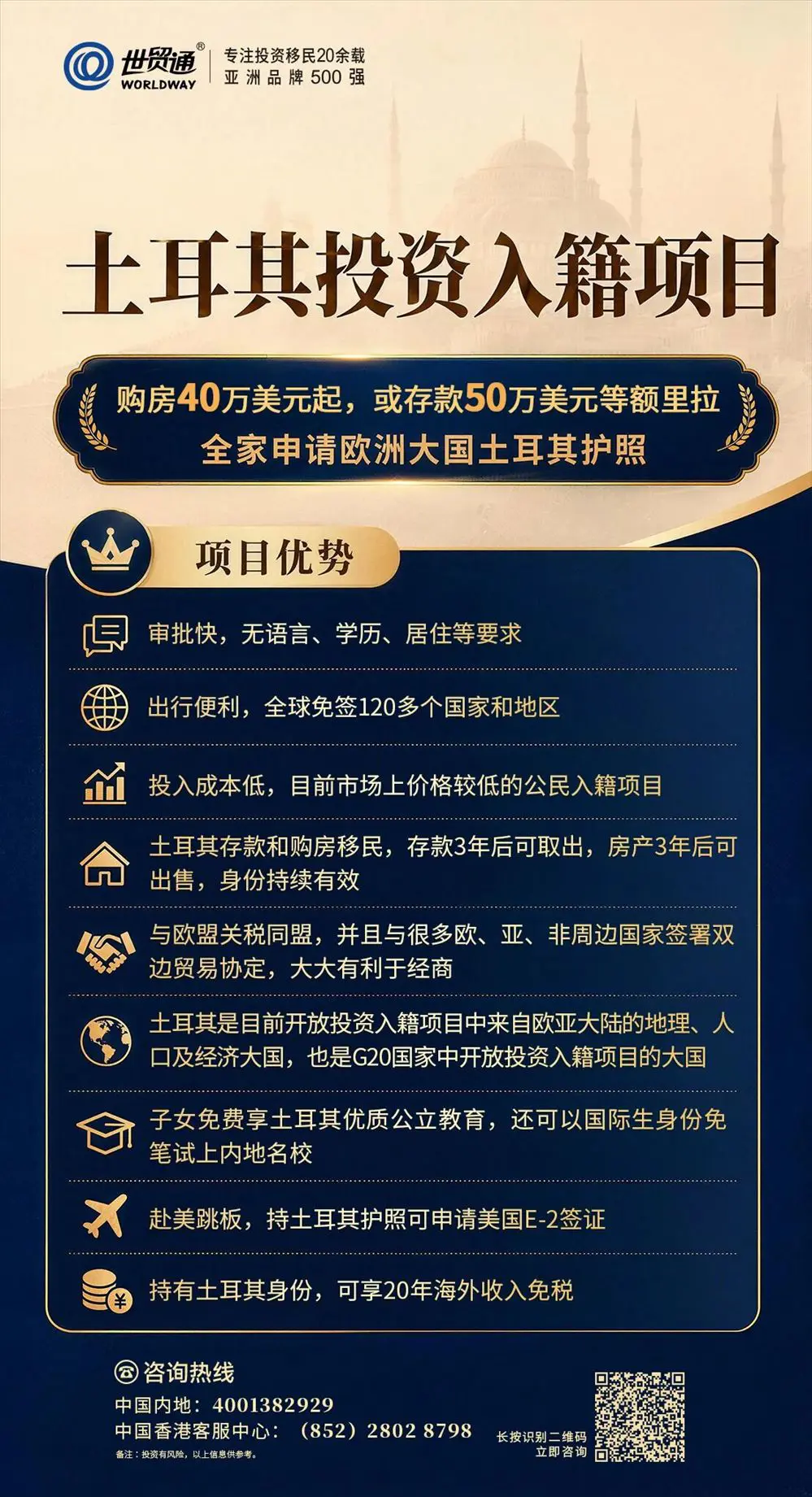
Currently, foreign investors can still legally apply for Turkish citizenship by purchasing Turkish real estate worth no less than USD 400,000. The property can be sold after being held for 3 years, and the citizenship status remains valid.
The core issue being investigated this time is not that investors are applying for citizenship through real estate, but that some agencies have packaged properties with insufficient actual value into ones that meet the investment threshold through fraudulent appraisal reports, and have coordinated with fake transactions to complete the application.
Such channels often attract investors with methods like "low cost," "special operations," or "insider pricing." While it may appear to save on the investment amount, it actually places the applicant in long-term status risk.
Even if the passport has been approved, once subsequent investigations reveal that the transaction was not authentic, the property value was insufficient, the appraisal report was forged, or the capital path was abnormal, the relevant status may still be subject to re-examination and even face revocation.
Government-exempt appraisal projects
offer more prominent compliance advantages
This case mainly targets non-compliant projects that require third-party appraisals and inflate property prices through forged appraisal reports. In contrast, appraisal-exempt projects, especially government-exempt appraisal projects, do not require third-party real estate appraisals. The project price itself meets the statutory investment threshold, and the property purchase, payment, and application materials are all completed in accordance with regulations, which can avoid the status risks brought about by inflated appraisals and forged appraisal reports.
As Turkey continues to strengthen its retrospective verification of historical applications, the requirements for compliance in overseas status planning are becoming increasingly high. In addition to focusing on costs and processing speed, investors must attach greater importance to project authenticity, capital compliance, and the long-term security of their status.
Turkish status planning
requires professional agency oversight throughout the process
Turkish investment-based citizenship is not simply about buying a property. From project screening, confirmation of property ownership and investment amount, to capital remittance, property registration, and citizenship application, every step is related to the application result and status security.
Therefore, choosing an experienced and professional immigration agency to oversee the entire process can help investors identify risks in advance and carefully select compliant projects, making the entire application process more secure.
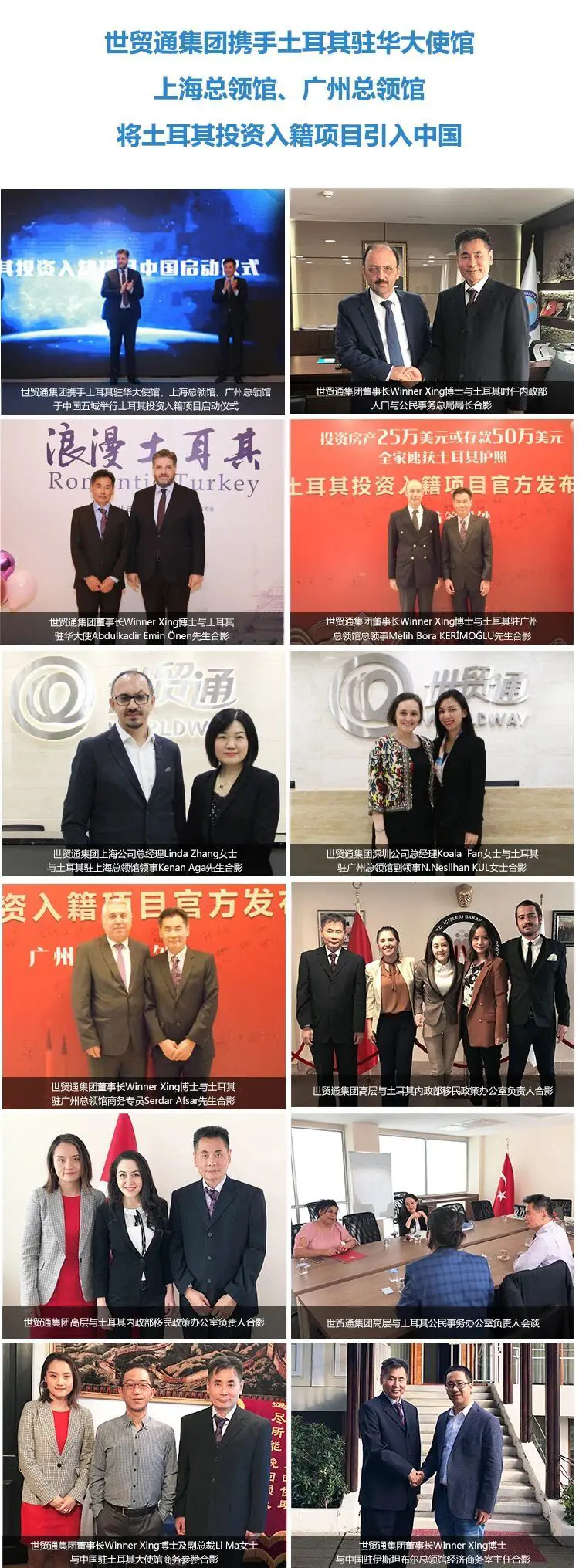
As an active promoter of European investment immigration projects, WorldWay is one of the professional immigration agencies that introduced the Turkish investment-based citizenship project to China at an early stage. In April 2019, WorldWay, in collaboration with the Embassy of Turkey in China, the Consulate General in Shanghai, and the Consulate General in Guangzhou, held the official launch conference and China initiation ceremony for the Turkish investment-based citizenship project, officially introducing this project, which has attracted global investor attention, to the Chinese market.
With years of project experience and a comprehensive service system, WorldWay has formed a service closed-loop covering the entire cycle of Turkish investment-based citizenship: from initial status planning, property screening and purchase, to citizenship application and approval, and even property sale after the holding period, all are assisted by a professional team throughout the process. This not only reflects WorldWay's solid project implementation and follow-up service capabilities, but also further confirms its long-accumulated professional strength in the field of Turkish investment-based citizenship.
Currently, applicants can apply for a Turkish passport for their whole family by purchasing properties starting from USD 400,000 or by depositing USD 500,000. Tailored to the status needs, financial arrangements, and asset allocation goals of different families, WorldWay will provide full-process services from plan formulation to application implementation, making Turkish status planning more professional and secure.
For inquiries in Mainland China: 400-138-2929, Hong Kong, China Customer Service Center: (852)2802 8798