





A single proposal has left the entire immigration community sleepless.
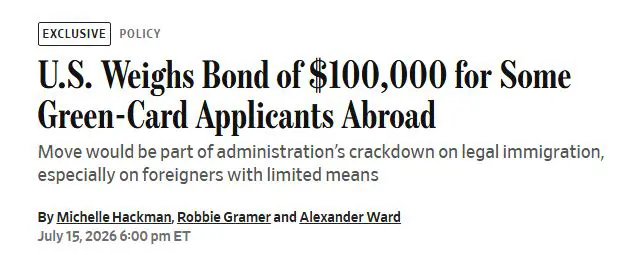
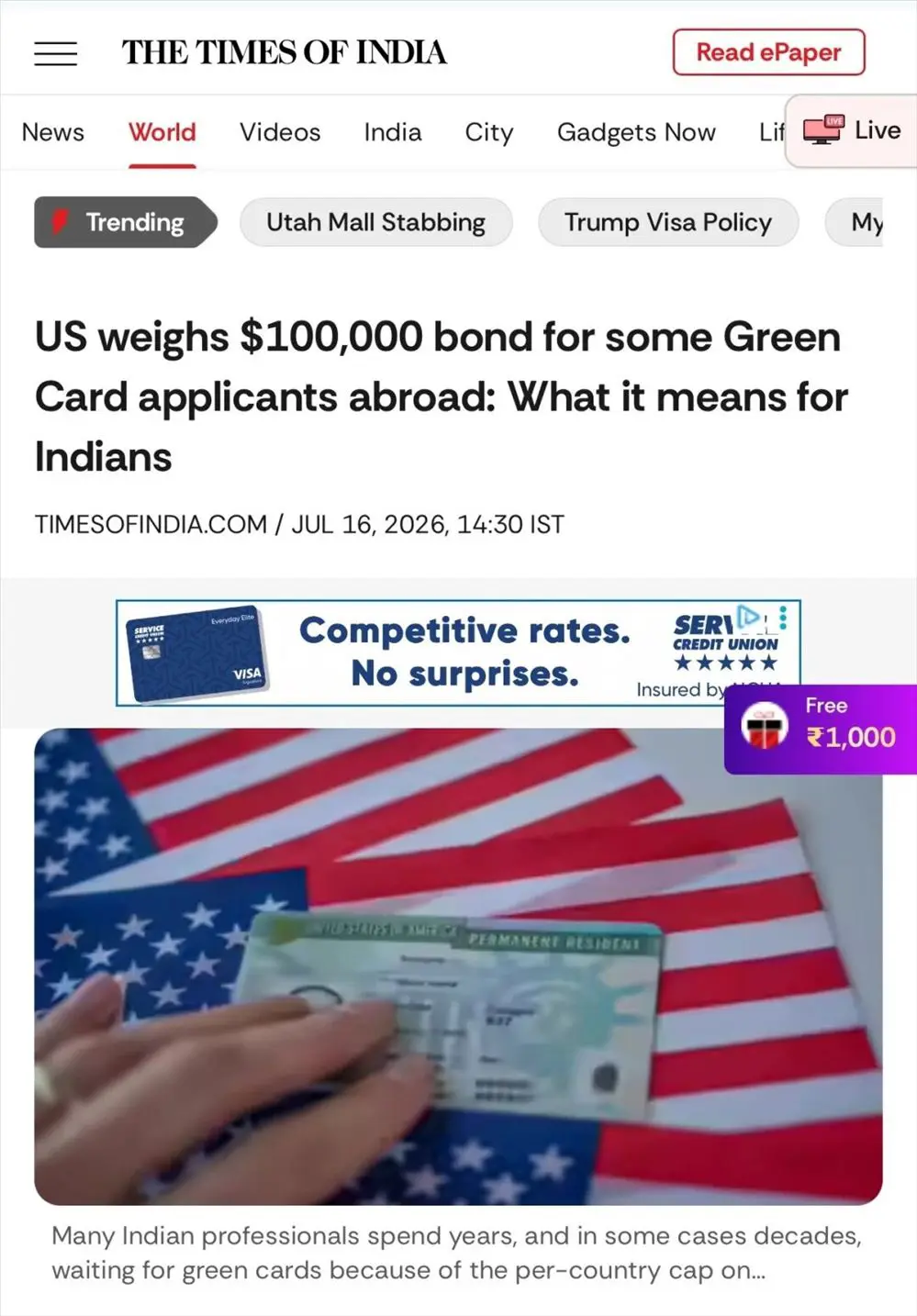
According to a report by The Wall Street Journal on July 15, the Trump administration is brewing a major new policy—mandating a "refundable deposit" of up to $100,000 for certain applicants applying for immigrant visas (green cards) at U.S. consulates abroad! This is another "heavy blow" from the Trump administration against legal immigration, following the court-ordered suspension of the H-1B visa fee.
I. Core of the Policy Proposal:
A $100,000 deposit, refundable only after naturalization
This proposal is led by the U.S. Department of State and is currently in the internal evaluation stage, but its core content has already caused a massive shock:
• Target Audience: Primarily aimed at applicants who are applying for immigrant visas through "consular processing" at U.S. consulates abroad.
• Amount and Nature: A "deposit" of up to $100,000, which is not an administrative fee but is held by the government as a financial guarantee.
• Refund Mechanism: This fund can only be refunded after the applicant has officially naturalized as a U.S. citizen. Considering that green card holders typically need to wait at least 5 years before applying for naturalization, this means that the applicant's family will face an interest-free capital lock-up for over 5 years.
• Implementation Method: The Department of State is considering launching a "pilot program" in a few specific countries first, before deciding whether to promote it globally.
In short: The money may not be spent, but it will certainly be "frozen".

II. Policy Indicator
Legal immigration is tightening across the board
This proposal is not an isolated incident, but one of a series of measures by the Trump administration in its second term to tighten legal immigration and promote the principle of "self-sufficiency." Behind the proposal lies a clear trajectory of the overall shift in U.S. immigration policy:
• Restricting low- and middle-income immigrants: "Cash-izing" the financial review threshold to ensure that new immigrants will never rely on U.S. public welfare.
• Linked policy—forcing return for consular interviews: The government is recently attempting to push for new regulations requiring many temporary visa holders who originally adjusted their status to green cards within the U.S. (Adjustment of Status) to leave the U.S. and return to their home country's consulate for an interview. Once they return home for the interview, they may directly hit this $100,000 "deposit threshold."
Previously, the Trump administration signed a presidential proclamation requiring H-1B visa applicants to pay a $100,000 fee. Although it was ruled "ultra vires" and abolished by a federal court in June this year, it clearly sent a signal: the executive branch is attempting to restrict immigration by "building a financial wall."
Although the "green card deposit" proposal is currently still in the internal discussion stage and faces legal challenges, combined with the previous game over the H-1B fee case, the general trend of U.S. immigration policy becoming "stricter and tighter" is irreversible.
III. Will the $100,000 deposit proposal be implemented?
Who will bear the brunt?
If this policy is eventually implemented, it may have a profound impact on specific immigrant groups:
• Low- and middle-income and family-based immigrant families: This is not just a freeze on $100,000 in liquidity, but may turn "family reunification" into a privilege for a small number of high-income individuals.
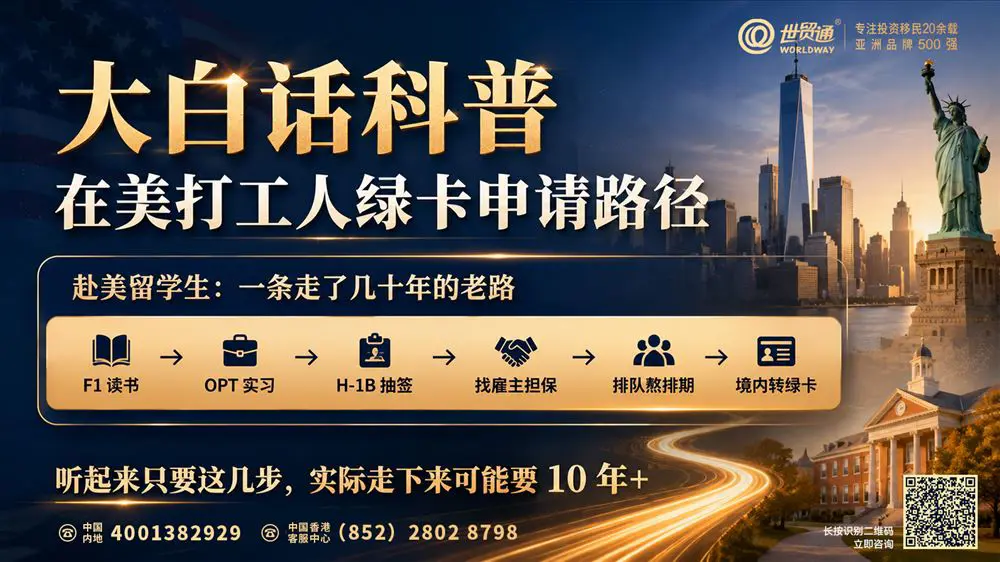
• High-skilled immigrant groups: Although most employer-sponsored (such as EB-2/EB-3) applicants adjust their status within the U.S., due to long waiting periods and volatile domestic policies, once some applicants are forced to return to their home countries for interviews, the $100,000 deposit will be the "Sword of Damocles" hanging over their heads.
• All applicants on the sidelines: The policy wind has changed, and the cost of waiting is increasing.
From visas and green cards to naturalization, the time and financial costs are rising across the board. There is only one direction: the threshold is being built higher and higher.
IV. EB-5: A Breakthrough Choice Amidst the Changing Situation
At a time when policy uncertainty is surging, for applicants who intend to immigrate to the United States, "speed" is the strategy to cope.
When the path of overseas application is full of anxiety, there is one path that is clear and certain—EB-5 investment immigration.
Moreover, the essence of EB-5 is to create jobs for the United States and to make a tangible contribution to the U.S. economy, rather than to collect welfare. Choosing EB-5 is not only choosing a faster immigration path, but also choosing a valuable way to become a part of American society, which can better earn respect.
The unique "dividend combination" in the current window period:
• No backlog: Rural projects currently have no backlog, and there are sufficient visa quotas;
• Concurrent filing: For those in the U.S. with legal entry status, I-526E and I-485 can be filed simultaneously (concurrent filing) to directly adjust status within the U.S., without the need for an overseas consular interview;
• Benefit the whole family: Starting from an $800,000 investment, one person applies, and the spouse and unmarried children under 21 can accompany;
• Freedom of movement: During the waiting period for processing, you can apply for an Employment Authorization Document (EAD) and Advance Parole, so that work, study, and travel are not restricted.
When others are worried about the $100,000 deposit, EB-5 applicants are already waiting for their status to be settled!
Historical experience tells us that immigration policy is generally tightening. From the H-1B fee proposal to the current green card deposit proposal, every policy probe is raising the threshold for immigration. Instead of passively waiting in the policy storm, it is better to take the initiative while the window is still open.
WorldWay has been deeply involved in the U.S. immigration field for twenty years, accompanying countless client families on their U.S. journey with professionalism and experience. Book a one-on-one exclusive assessment now and take control of the initiative yourself.
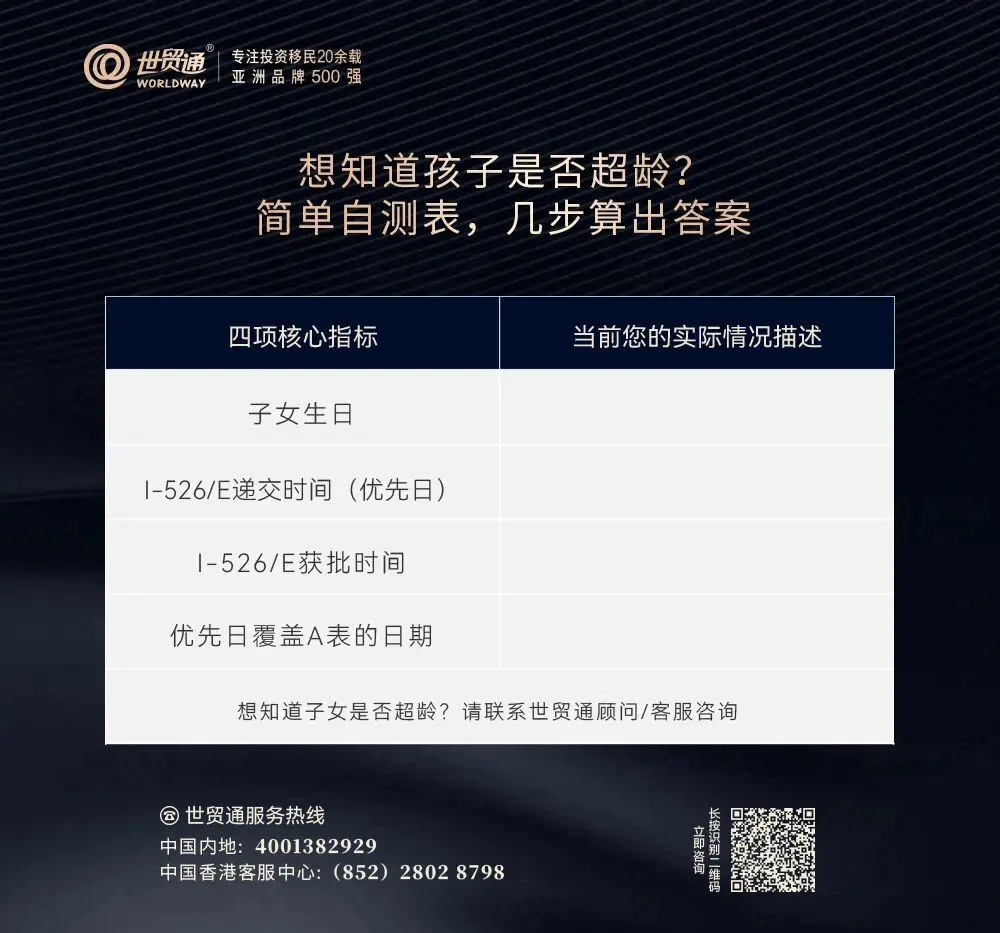
It should be noted that the "grandfather clause" in the new EB-5 law will reach a key time node on September 30, 2026. On January 1, 2027, the minimum investment amount will be raised from $800,000 to $900,000-$937,500 or even higher.

Currently, WorldWay is joining hands with the multi-billion dollar fund PeachTree Group for the 5th time to create the successful experience inheritance work "Marriott Lakeview Resort" EB-5 project, which can provide more stable choices for applicant families.

For detailed inquiries in mainland China: 400-138-2929, Hong Kong, China customer service center: (852)2802 8798