





According to a recent Hurun Report, 55% of the high-net-worth individuals surveyed have plans to send their children abroad for education, with the United States remaining the most preferred destination for the third consecutive year.
Relevant data indicates that 44% of high-net-worth Chinese families consider the United States their top choice for their children's education, with average high-net-worth families beginning their planning when their children are 16, while ultra-high-net-worth families start as early as 14.
From international curricula and language proficiency scores to background enhancement and university applications, an increasing number of families are preparing for their children's studies in the United States well in advance. This trend of earlier planning reflects the high priority that high-net-worth families place on their children's education.
However, planning early does not necessarily mean planning correctly.
If a family's goal is not merely for their child to enter a U.S. university, but for them to secure more internship and employment opportunities after graduation, or even to remain in the United States for long-term development, then what truly requires early preparation is not just the admission letter, but legal status.
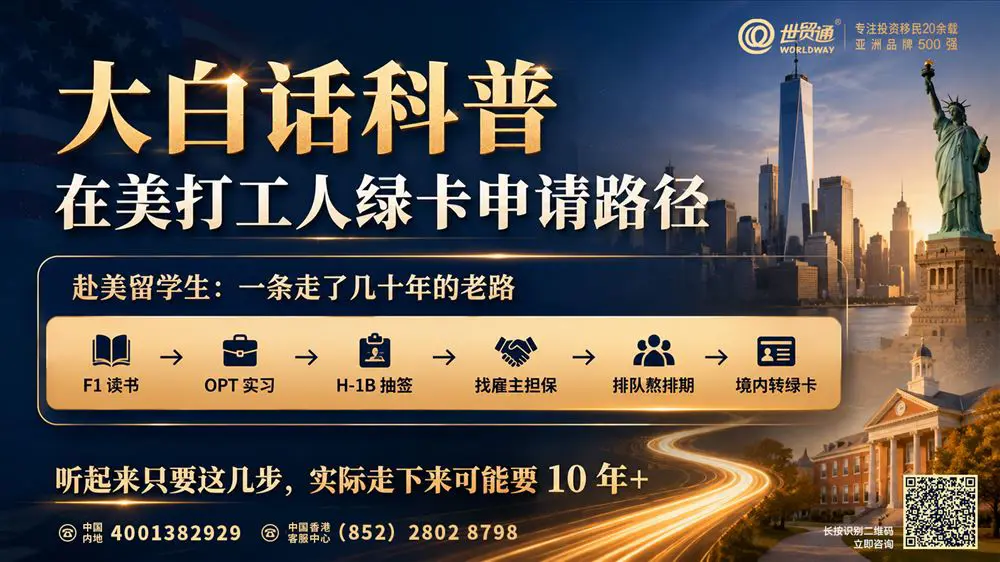
Studying abroad solves the issue of "entering the United States," while legal status determines whether one can stay.
For most Chinese students, studying in the United States typically begins with F-1 student status. After graduation, eligible students may obtain work authorization for a limited period through OPT. Subsequently, if they wish to remain in the U.S., they often need to find an employer willing to provide sponsorship to apply for work statuses such as H-1B.
While this traditional path may seem clear, it is fraught with uncertainties.
Whether one can secure a qualifying job in time, whether the employer is willing to provide visa sponsorship, and whether the transition of status can be completed smoothly all impact a child's plans to stay in the U.S. Once faced with layoffs, job changes, or visa application difficulties, professional development can be interrupted by status-related issues.
Therefore, studying abroad and staying in the United States are actually two distinct planning processes.
Securing admission to a U.S. university addresses the question of "where to study"; however, the ability to freely choose jobs, accumulate professional experience, and develop long-term after graduation is closely tied to one's legal status.
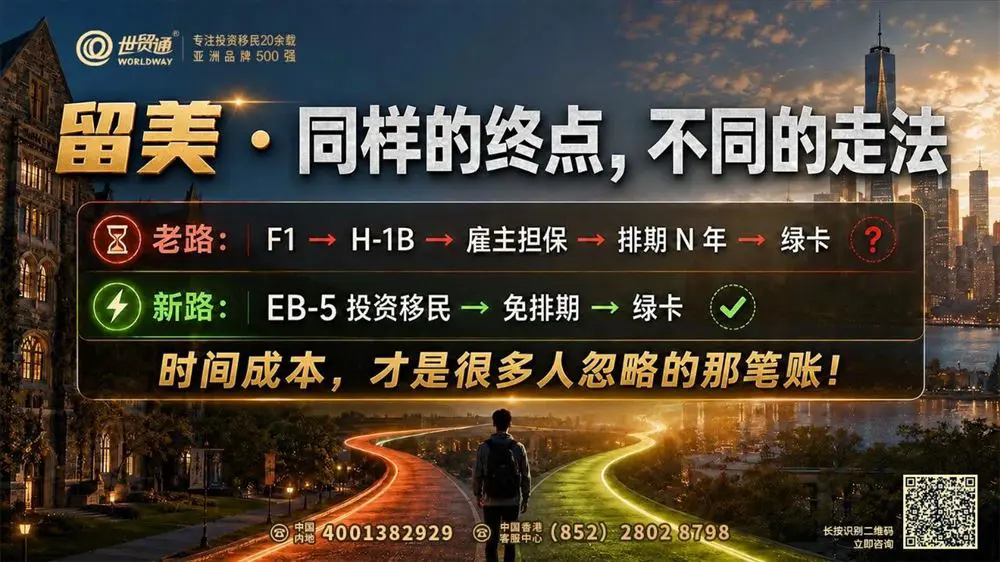
Plan early, but ensure the direction is correct.
Many parents believe that as long as their child attends a prestigious school, chooses a popular major, and possesses strong personal capabilities, they will be able to remain in the United States without issue.
However, in the real job market, legal status is a critical factor that employers must consider. For international students requiring work visa sponsorship, some companies may raise recruitment thresholds or even narrow the range of positions available to them. Future job changes or adjustments in career direction may also be constrained by status limitations.
With U.S. permanent resident status, a child no longer relies on an employer for work visa sponsorship during internships and employment, allowing them access to a wider range of positions and greater freedom in choosing companies, industries, and cities.
Therefore, a truly comprehensive educational plan should consider academic advancement, employment, and legal status together. By initiating status arrangements while planning for studies abroad, the status will be at a relatively mature stage by the time the child enters university, participates in internships, or seeks employment after graduation, rather than scrambling for solutions after problems arise.
The earlier the planning, the greater the options for the family. Education determines how high a child can reach, while legal status influences how far they can go.

EB-5, building a foundation for U.S. status for the whole family in advance.
For families with long-term needs for U.S. education and development, the new EB-5 investment immigration program is a highly favored path for obtaining status.
The principal applicant's spouse and eligible unmarried children can apply concurrently. This means that by making a single family status plan, parents have the opportunity to establish a foundation for their children's future studies, internships, employment, and life in the United States in advance.
For those already in the United States with legal status and in the absence of a visa backlog, it is possible to perform "concurrent filing," which means submitting Form I-526E and Form I-485 simultaneously to quickly obtain a Combo card, thereby reducing the impact on studies, daily life, and career arrangements during the waiting period.

It should be noted that the "grandfather clause" in the new EB-5 law will reach a critical milestone on September 30, 2026. On January 1, 2027, the minimum investment amount will increase from $800,000 to $900,000-$937,500 or even higher.
When planning for U.S. studies, schools must be chosen in advance; if you want your children to stay in the U.S. long-term, status must be planned even earlier.
WorldWay has long been deeply engaged in the field of U.S. investment immigration. We can provide full-process services—from status solution design, project screening, and application submission to post-arrival support in the United States—based on the applicant's family structure, children's ages, financial arrangements, and plans for moving to the U.S., helping families effectively integrate their children's education and career development with U.S. status planning.


For inquiries in Mainland China: 400-138-2929, Hong Kong Customer Service Center: (852)2802 8798