





Renowned Wall Street investor Jim Rogers once mentioned in an interview that if one only has one passport in the future, they may face more uncertainties. He believes that owning a second or even multiple passports will become an important Plan B for dealing with future changes.
Looking at this statement today, it is becoming increasingly relevant.
Against the backdrop of continuously changing global situations, tax environments, travel policies, educational planning, and asset allocation, a second identity is no longer just "an extra passport," but a space of choice prepared in advance for a family to face future uncertainties.
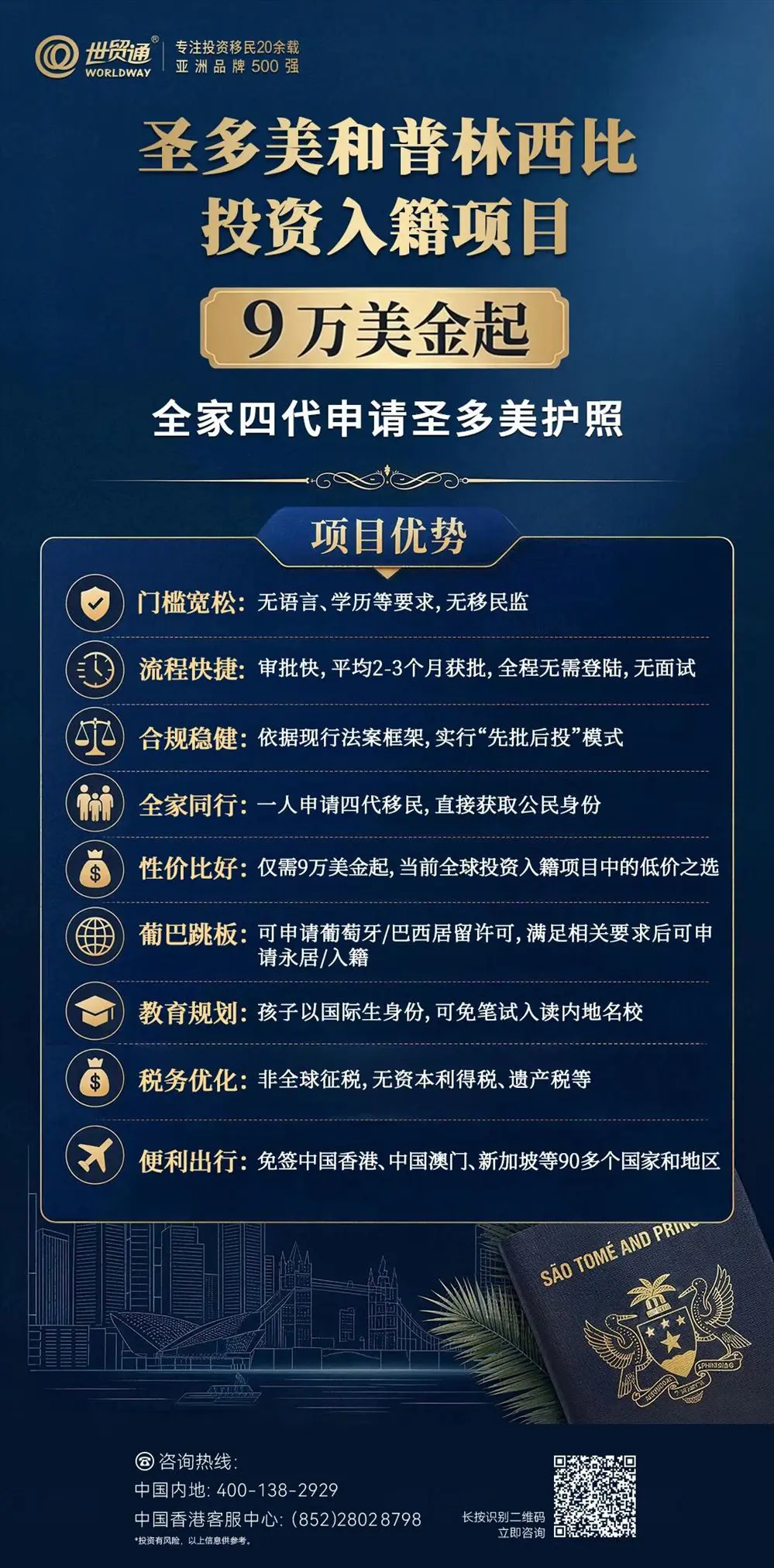
It is precisely for this reason that São Tomé and Príncipe, with its advantages of low thresholds, fast processing cycles, and family applications, is gradually entering the identity planning horizon of more families.
From an Island Nation to a New Window for Identity Planning
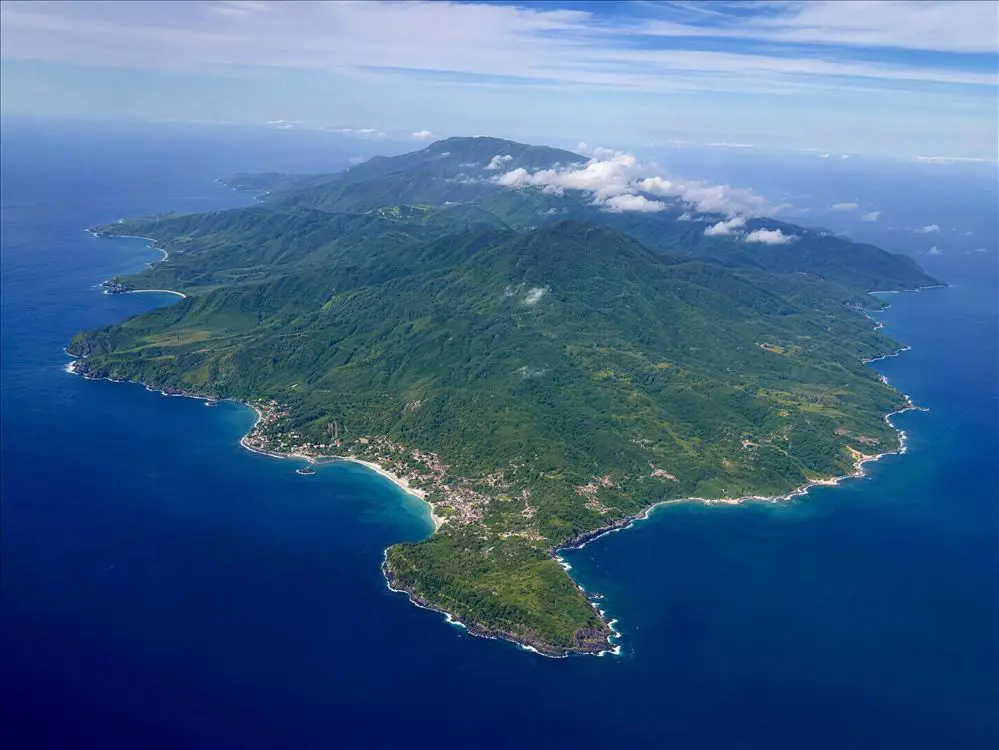
São Tomé and Príncipe is an island nation located in the Gulf of Guinea in west-central Africa. It is a tropical country consisting of 14 islands, including São Tomé Island, Príncipe Island, Rolas, and Caroço. It is currently a member of the African Union (AU), the Economic Community of Central African States, the Community of Portuguese Language Countries (CPLP), and the Organisation internationale de la Francophonie. São Tomé and Príncipe has close relations with Portugal and Angola, and also maintains good relations with major powers such as Brazil, the United States, and France.
The natural environment here is beautiful, with mountains and seas blending together, featuring volcanic peaks, waterfalls, rainforests, white sand beaches, and coral coasts. With its dense primary rainforests, rich endemic flora and fauna, and pristine island ecology, São Tomé and Príncipe is known as the "Galápagos of Africa."
At the same time, São Tomé and Príncipe possesses an exclusive economic zone of approximately 160,000 square kilometers, which is about 160 times its land area, with a coastline of about 220 kilometers. Its marine resources are substantial, providing vast space for its eco-tourism and blue economy development.
Obtain Citizenship in Compliance Starting from $90,000
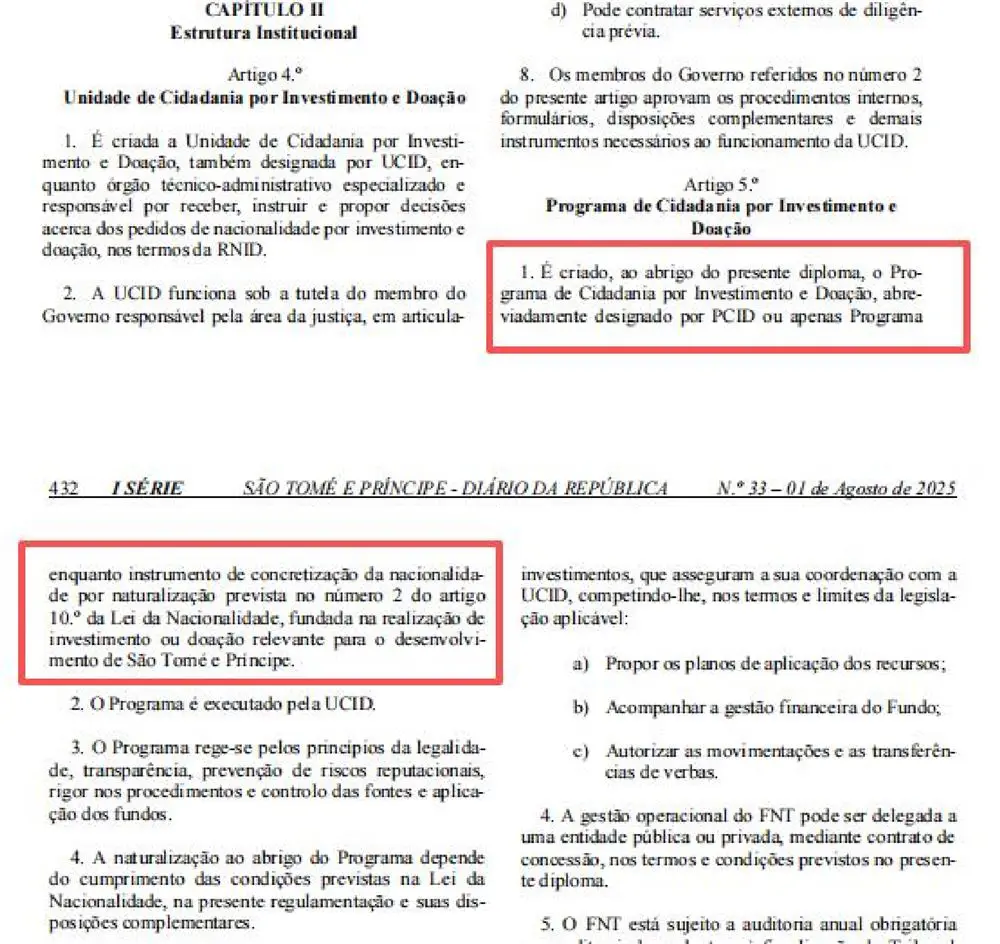
On August 1, 2025, São Tomé and Príncipe officially launched its Citizenship by Investment program. On the same day, Decree No. 07/2025, "Regulations on Acquiring Nationality through Investment or Donation," officially came into effect, providing a clear legal basis for the implementation of the program.
The program allows foreign investors to obtain citizenship and a passport by donating starting from $90,000 to the National Transformation Fund (FNT).
This means that the São Tomé Citizenship by Investment program is a compliant project operating within a legal framework. After the applicant is approved, their identity information will be entered into the government system, and they will receive citizenship documents and a passport issued by the government, providing legal protection for subsequent travel, identity configuration, and family planning.
Relaxed Thresholds, Approval Before Investment, Four Generations of a Family Together
The São Tomé Citizenship by Investment program has relatively relaxed requirements for applicants, with no language, academic, or interview requirements, and no immigration residency restrictions. The program adopts a "pre-approval, post-investment" model; applicants complete the donation after receiving approval in principle. The approval speed is fast, with approval typically granted in about 2-3 months.
More importantly, the program supports family applications, which can cover spouses, children, parents, and grandparents, achieving family identity configuration where "one person applies, covering four generations."
Portuguese-Speaking Country Identity, Connecting to Residency Paths in Portugal and Brazil
Another important value of the São Tomé passport lies in its status as a member of the Community of Portuguese Language Countries.
The Community of Portuguese Language Countries, or CPLP, is a friendly forum organization composed of countries that use Portuguese as their official language. According to the mobility memorandum agreement, nationals of member states can apply for CPLP residence visas and residence permits.
In other words, after obtaining a São Tomé passport, applicants can, as nationals of a CPLP member state, further apply for residence permits in Portugal or Brazil, provided they meet the destination country's policies and application conditions; after meeting local requirements, they can also continue to plan for permanent residency or naturalization paths.
This also makes the São Tomé passport more than just a second passport; it can serve as an identity springboard connecting to the Portuguese-speaking country system. For families with plans for living in Europe, the Brazilian market, business dealings in Portuguese-speaking countries, children's education, or long-term residency, the São Tomé identity possesses a certain degree of extensibility.
Travel, Education, Taxation, Opening Up More Choices
The value of a second identity is often reflected not only in the present but also in the future.
In terms of travel convenience, the São Tomé passport offers visa-free or visa-on-arrival access to more than 90 countries and regions worldwide, covering key hubs such as Singapore, Hong Kong (China), Macau (China), Malaysia, and South Africa, meeting the needs for frequent business travel and cross-border tourism.
In terms of educational planning, the São Tomé identity also opens up more options for children's further studies: it can connect to international schools and overseas education systems, and in the future, when returning to China for development, children can also be admitted to top mainland universities without written exams as international students, reserving more space for educational paths.
In addition, the tax system of São Tomé and Príncipe is relatively friendly. Generally speaking, only by residing locally for more than 180 days will one potentially be involved in tax residency status and global taxation; non-tax residents are only taxed on income earned within the territory, with overseas income being tax-exempt.
Turning Uncertainty into More Options
As Jim Rogers said, under the uncertainty of the future, the value of Plan B becomes increasingly prominent.
Having an extra identity represents more options for a family in terms of education, travel, residence, assets, and future development.
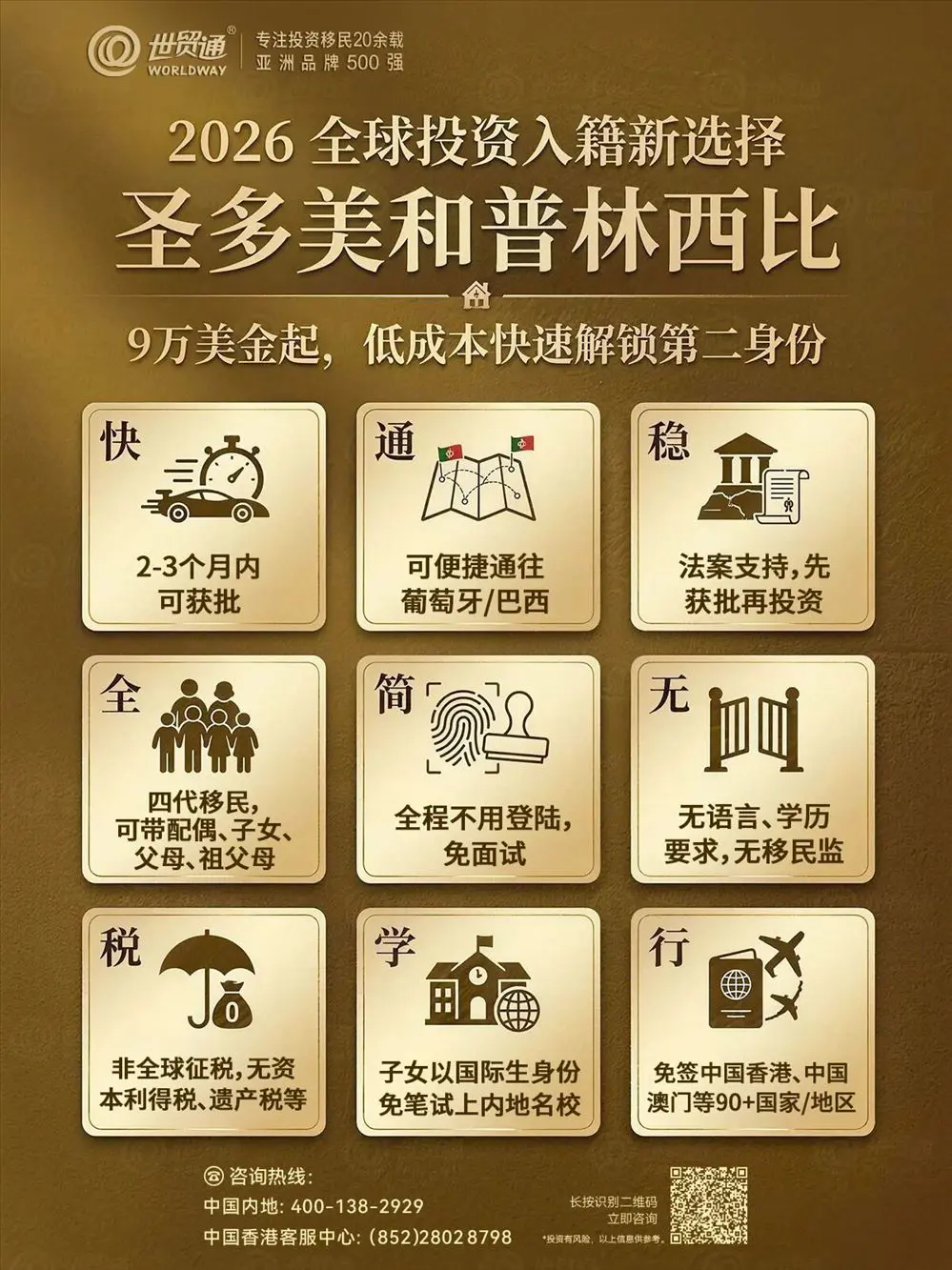
At a time when the thresholds for global citizenship by investment programs are continuously changing, São Tomé and Príncipe Citizenship by Investment is becoming a new window worth paying attention to, with its advantages of starting from $90,000, fast approval, four-generation family applications, and identity extension in Portuguese-speaking countries.
For applicants who wish to complete family identity configuration at a lower cost and with a faster cycle, now is the right time to learn about and lay out the São Tomé Citizenship by Investment program.
For inquiries in Mainland China: 400-138-2929, Hong Kong (China) Customer Service Center: (852)2802 8798