





Recently, a set of EB-5 market data from IIUSA (Invest In the USA) has released important signals regarding the application landscape and changes in visa usage under the new act.
WorldWay Group is closely monitoring these developments to interpret current opportunities and key planning priorities for Chinese investors.

1. Total EB-5 Quota Expanded
More Space for Reserved Categories
According to the data, the total quota for U.S. employment-based immigrant visas in fiscal year 2026 is 186,000. Among them, EB-5 accounts for 7.1% of the annual employment-based visa quota, with an estimated 13,206 global visa slots available.
Under the new act, EB-5 reserved category projects for fiscal year 2025 will receive a 32% visa reservation quota, which is 4,226 slots (13,206 * 32%). Among these:
• Rural area project reserved visas 20%: 2,641 slots
• High unemployment area project reserved visas 10%: 1,321 slots
• Infrastructure project reserved visas 2%: 264 slots
It should be noted that this is only the base quota newly allocated for fiscal year 2026 and does not include unused visa slots from previous fiscal years that have been carried over.
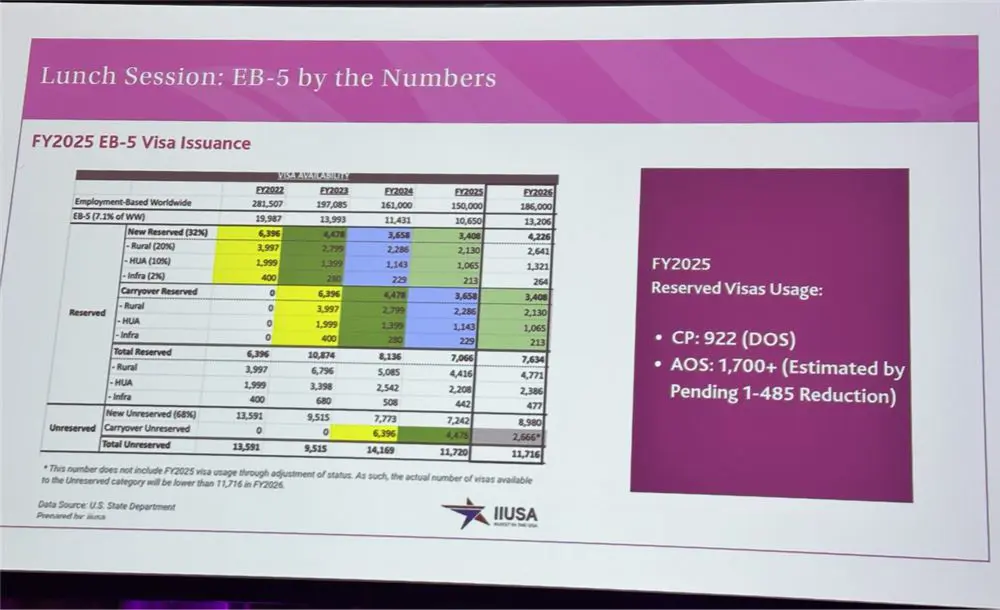
Meanwhile, data shows that reserved visas for fiscal year 2025 have already begun to be significantly consumed: 922 were issued by overseas consulates, and over 1,700 are estimated to have been consumed through adjustment of status within the U.S. This indicates that the reserved categories have entered a substantive usage phase.
2. China Remains a Major Source Country for EB-5
But the Application Landscape is Changing
In terms of submission volume, China remains an important market following the new EB-5 act. Data shows that from April 2022 to September 2025, a total of 14,555 EB-5 applications were submitted, with Chinese applicants accounting for 7,219, or approximately 50%, still ranking first.
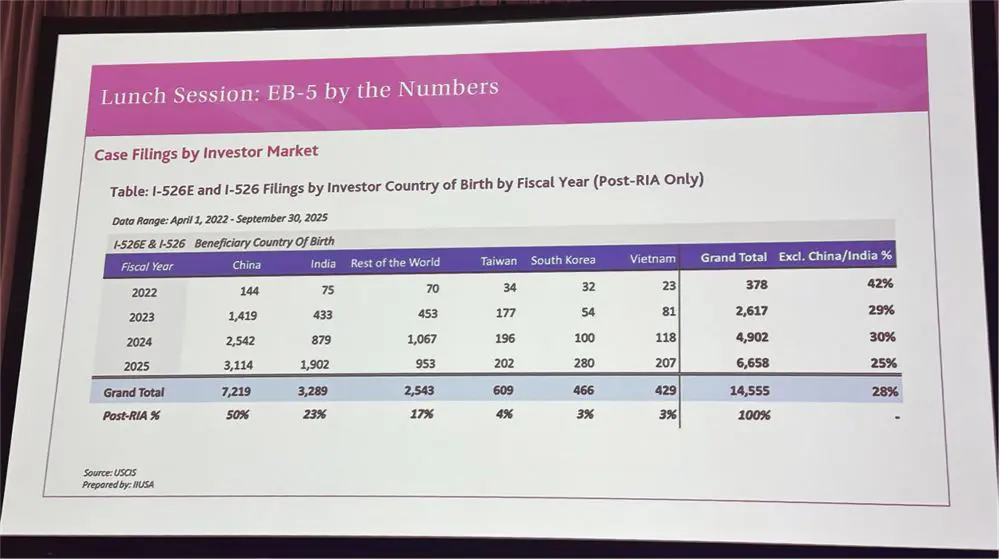
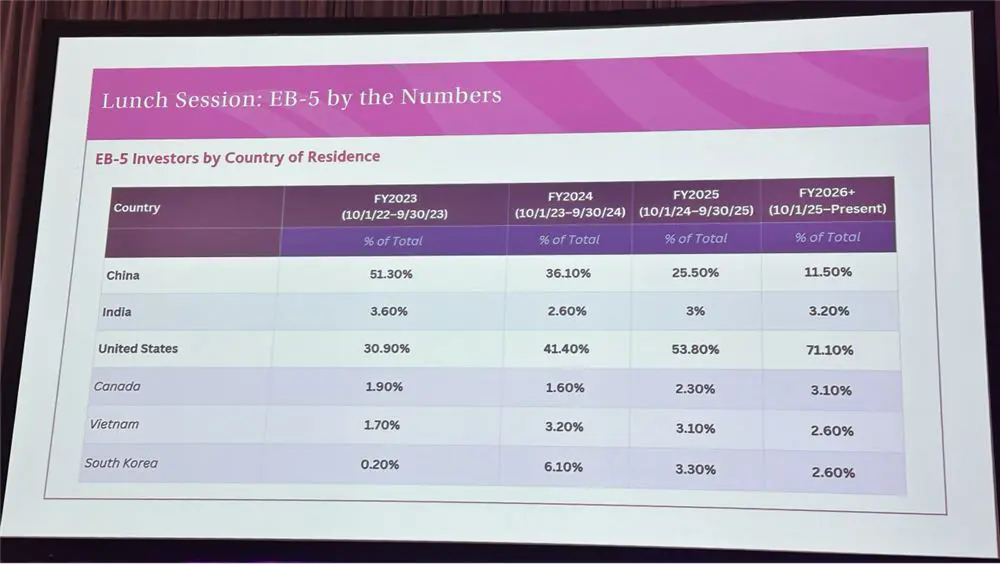
However, the application path for Chinese applicants is changing. In the past, many Chinese applicants primarily waited for immigrant visas through overseas consulate processing; since the new act, an increasing number of applicants have been conducting status planning within the United States.
Data shows that the proportion of applications initiated with China as the place of residence has dropped from 51.3% in fiscal year 2023 to 11.5% in fiscal year 2026 to date. This does not mean that Chinese application demand has decreased, but rather that more applicants are conducting status planning within the United States.
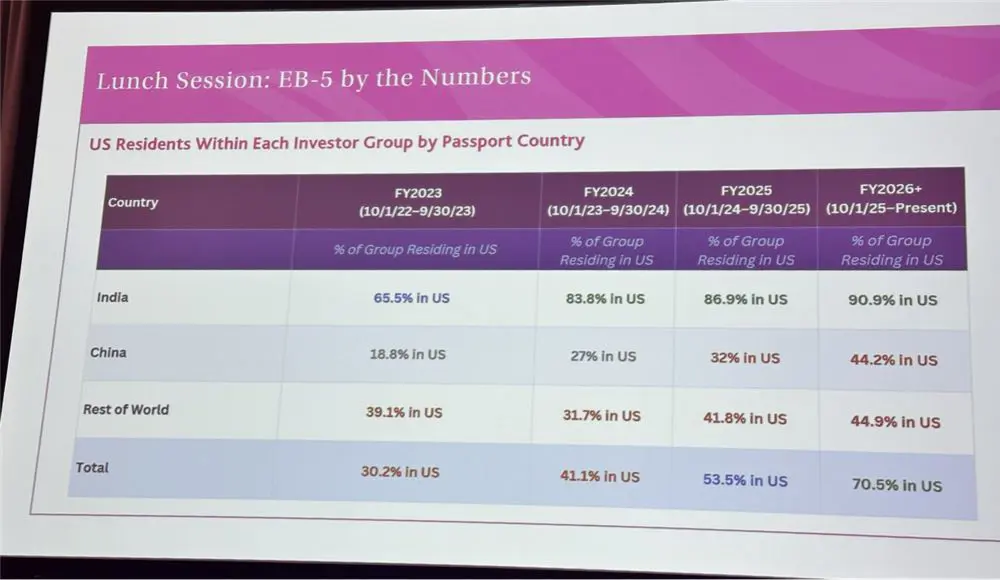
Another set of data further confirms this trend: among Chinese applicants, the proportion residing within the United States is continuously rising. In fiscal year 2023, the proportion of Chinese applicants residing in the U.S. was 18.8%; it rose to 27% in fiscal year 2024; reached 32% in fiscal year 2025; and has further risen to 44.2% in fiscal year 2026 to date.
Meanwhile, among all applicants, the overall proportion residing within the United States has also risen from 30.2% in fiscal year 2023 to 70.5% in fiscal year 2026 to date. This indicates that applicants within the United States have become an increasingly important force in the current market.
3. Rural Projects are the Mainstream Choice for Chinese Investors
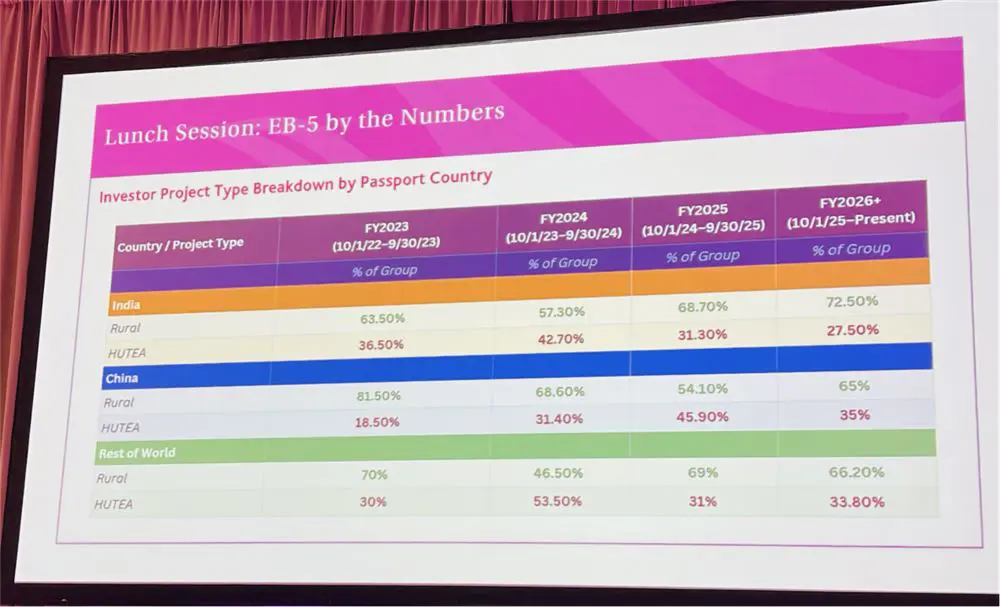
According to the data, in each fiscal year since the implementation of the new act, the proportion of Chinese investors choosing rural projects has consistently been higher than that of urban projects.
Specifically, the proportion of rural projects was 81.5% in fiscal year 2023, 68.6% in fiscal year 2024, 54.1% in fiscal year 2025, and has rebounded to 65% in fiscal year 2026 to date; by comparison, the proportions for high unemployment urban projects were 18.5%, 31.4%, 45.9%, and 35% respectively. This shows that although market preferences have experienced periodic fluctuations, overall, Chinese investors' attention to rural projects has consistently been higher than to urban projects.
This indicates that rural projects remain the more favored mainstream choice in the Chinese market. Their higher reserved visa quota and priority processing advantages are becoming important considerations for Chinese families when selecting EB-5 projects. (For details, please click to view WorldWay's previous report: USCIS reveals EB-5 approval rules!)
5. Approval Data Further Confirms
The Approval Advantage of Rural Projects
In addition to submission choices, approval results can further reflect the situation of different project categories at the current approval stage.
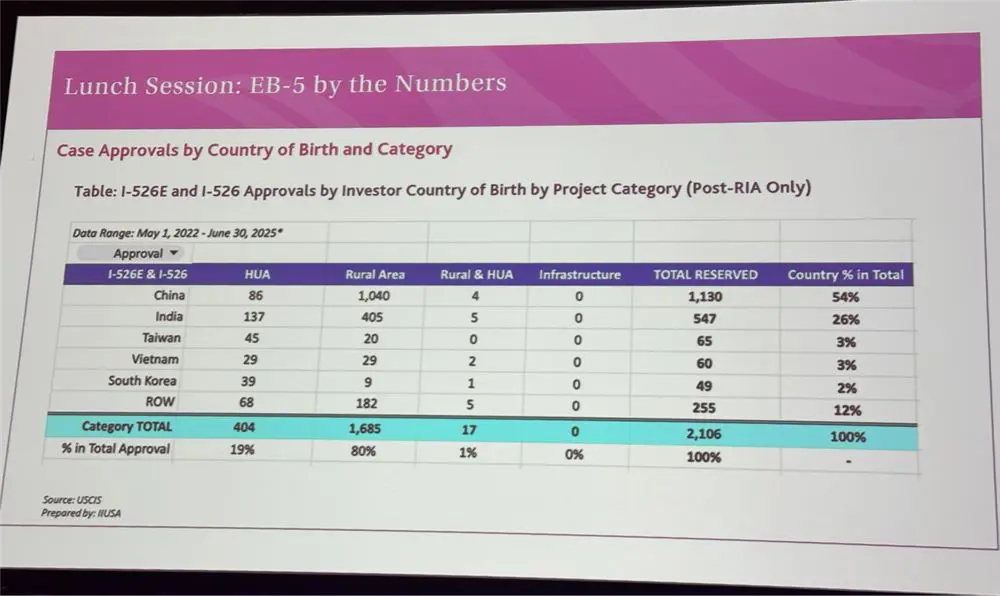
Data shows that from May 1, 2022, to June 30, 2025, a total of 2,106 applications were approved in the reserved categories. Among them, 1,685 rural projects were approved, accounting for 80%; 404 high unemployment area projects were approved, accounting for 19%.
The approval structure for Chinese applicants is more concentrated. A total of 1,130 cases were approved for China, of which 1,040 were rural projects, 86 were high unemployment area projects, and 4 were in other categories. In other words, approximately 92% of approved Chinese cases came from rural projects.
6. Visa Usage is Accelerating
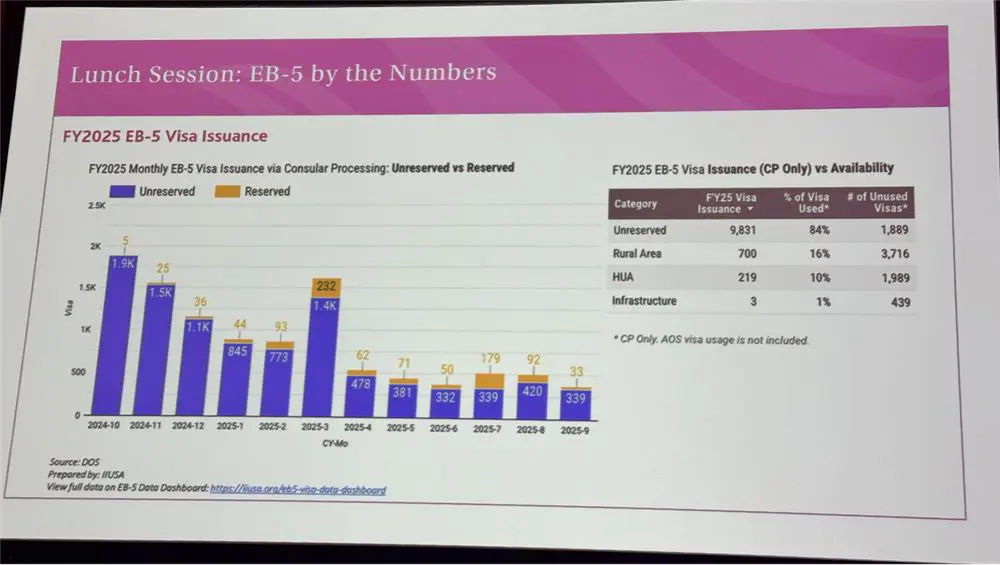
In fiscal year 2025, EB-5 overseas consulate issuances were still dominated by non-reserved categories, with 9,831 visas issued in non-reserved categories, reaching a usage rate of 84%. Although the usage rate for reserved categories is relatively low, actual consumption has already begun, with 700 visas issued for rural projects, 219 for high unemployment area projects, and 3 for infrastructure projects.
It should be noted that this set of data only counts issuances by overseas consulates and does not include visas consumed through adjustment of status within the United States. Therefore, for Chinese investors, one cannot look only at the superficial remaining quota. As overseas consulate issuances and U.S. domestic status adjustments consume visas simultaneously, the usage speed of reserved categories may further accelerate in the future.
7. Implications for Chinese Investors
The Window is Still Open, but the Pace Needs to be More Proactive
Rural projects are still in a window period: Rural projects currently have a clear priority date advantage, but submission volume, approval volume, and visa usage are all rising. It cannot be ruled out that there will be pressure on priority dates in the future, so it is recommended to plan as early as possible.
Grandfather Clause is about to expire: The protection period of the "Grandfather Clause" under the new EB-5 policy will expire on September 30, 2026. By submitting an application before this date, even if policies change in the future, the applicant can still be processed according to the current legal rules.
Investment amount increase: Starting from January 1, 2027, the minimum investment amount for Targeted Employment Areas (TEA) may increase from the current $800,000 to $900,000 - $937,500.
Want to seize the policy window for rural projects and gain a head start in U.S. green card planning?
Now is the critical action period!
WorldWay Group and the U.S. multi-billion dollar fund PeachTree Group
Join forces for the fifth time to grandly launch
Exclusively represented by WorldWay in Greater China
The "Marriott · Lakeview Resort" EB-5 rural project
The roadshow is about to begin!
Helping you see the opportunities clearly, grasp the rhythm, and win the head start for U.S. green card planning

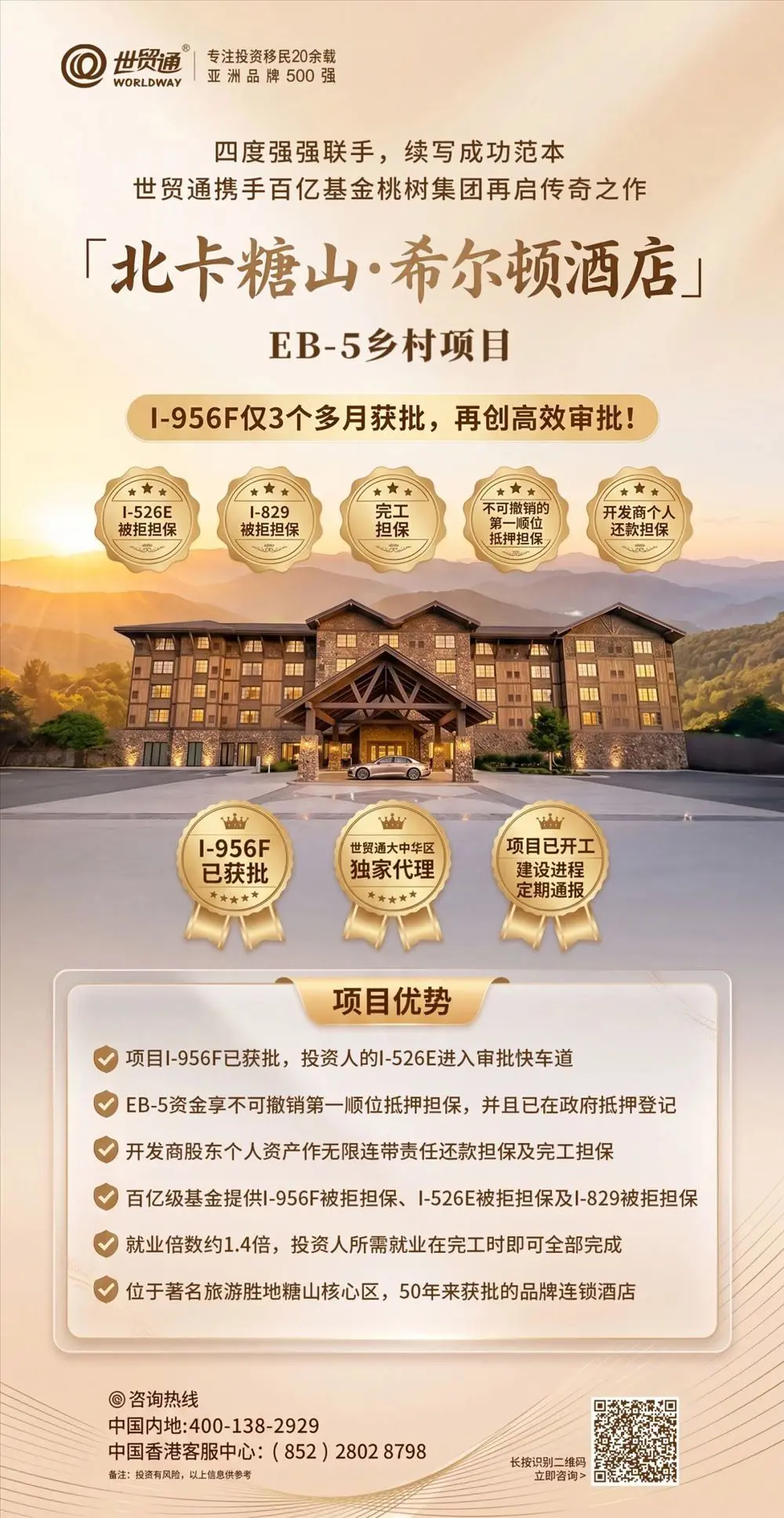
For detailed inquiries in mainland China: 400-138-2929, Hong Kong, China customer service center: (852)2802 8798