





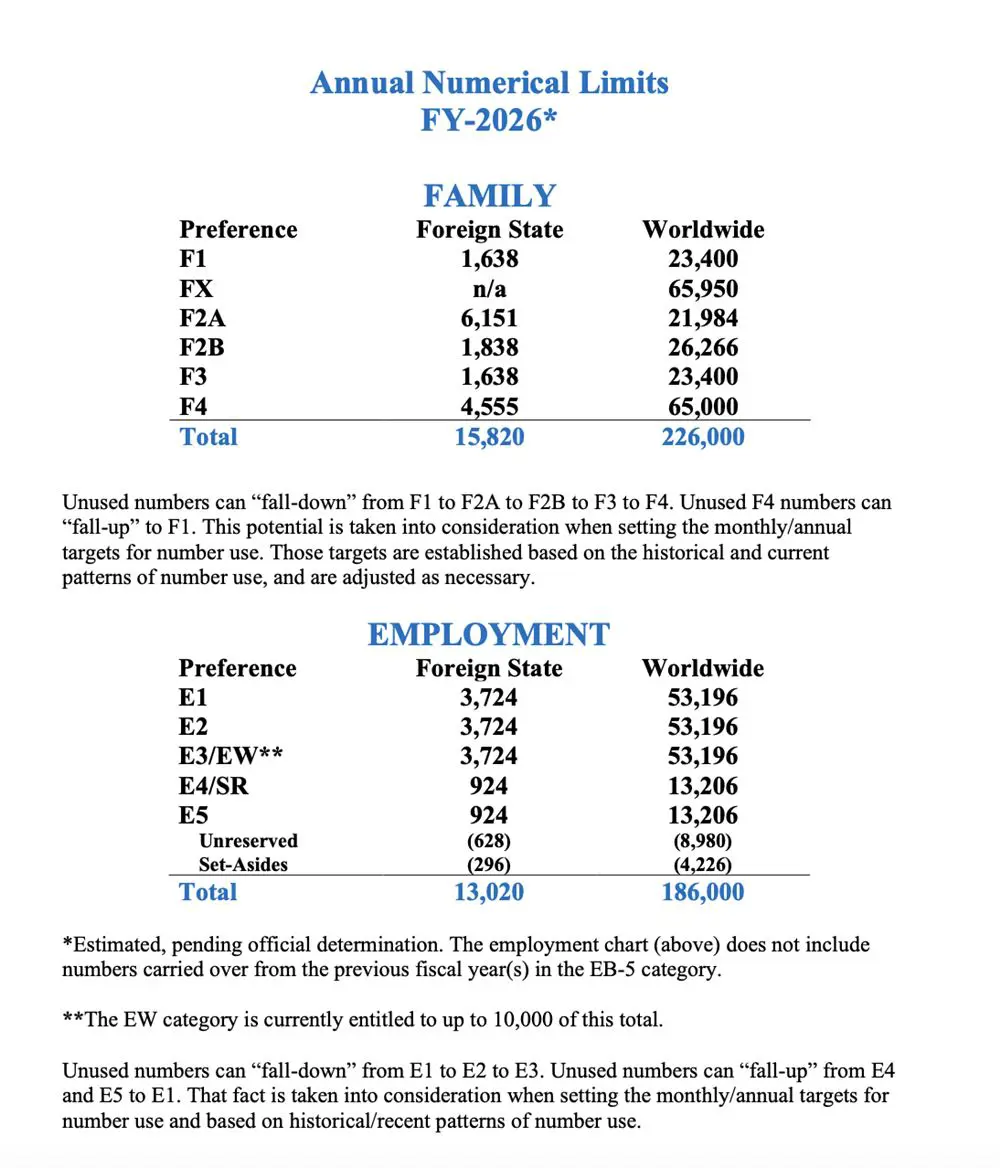
Recently, the U.S. Department of State (DOS) announced the EB-5 visa quota for the 2026 fiscal year (from October 1, 2025, to September 30, 2026): For the 2026 fiscal year, the quota for U.S. employment-based immigrant visa categories is approximately 186,000, which is 46,000 more than the 140,000 in a regular year.

1. EB-5 quota increase, more ample space for reserved categories
Among them, EB-5 immigration, which accounts for 7.1% of the annual employment-based immigrant visa quota, will have 13,206 visa quotas available in the 2026 fiscal year (globally). According to the new act, the EB-5 visa reserved category projects for the 2025 fiscal year will receive a 32% visa reservation quota, which is approximately 4,226 (13,206 * 32%). The remaining portion consists of unreserved visas.
The reserved categories are further divided into:
• Rural area project reserved visas 20%: approximately 2,641
• High unemployment area project reserved visas 10%: approximately 1,321
• Infrastructure project reserved visas 2%: approximately 264
It should be noted that this is only the base quota newly allocated for the 2026 fiscal year and does not include visa quotas that were not used in previous fiscal years and have been carried over. In other words, the final total reserved visa quota for the entire fiscal year should also include the unused reserved visa quotas from the 2025 fiscal year (if any).
The increase in the EB-5 quota for the 2026 fiscal year is undoubtedly a phased benefit for investors planning their U.S. status. Especially within the reserved categories, rural projects themselves account for the highest proportion, and the visa supply is relatively more sufficient. It is recommended that investors who intend to immigrate to the United States seize the critical window period and submit their I-526E applications as soon as possible to lock in their priority dates.
2. Advantages of rural projects highlighted:
Both reserved quotas and priority processing
At the same time, the new EB-5 act explicitly grants regional center rural projects "priority processing" status. Effective March 30, 2026, USCIS generally adopts the "First-In, First-Out" (FIFO) principle to allocate the processing order for I-526/I-526E applications.
I-526E applications for rural projects will be prioritized for review according to the "First-In, First-Out" principle. Furthermore, only after the rural project queue is cleared, or USCIS deems that a sufficient number of rural project applications have been processed, will it begin to review other I-526E applications (such as high unemployment area projects, infrastructure projects) and post-RIA I-526 applications according to the "First-In, First-Out" principle.
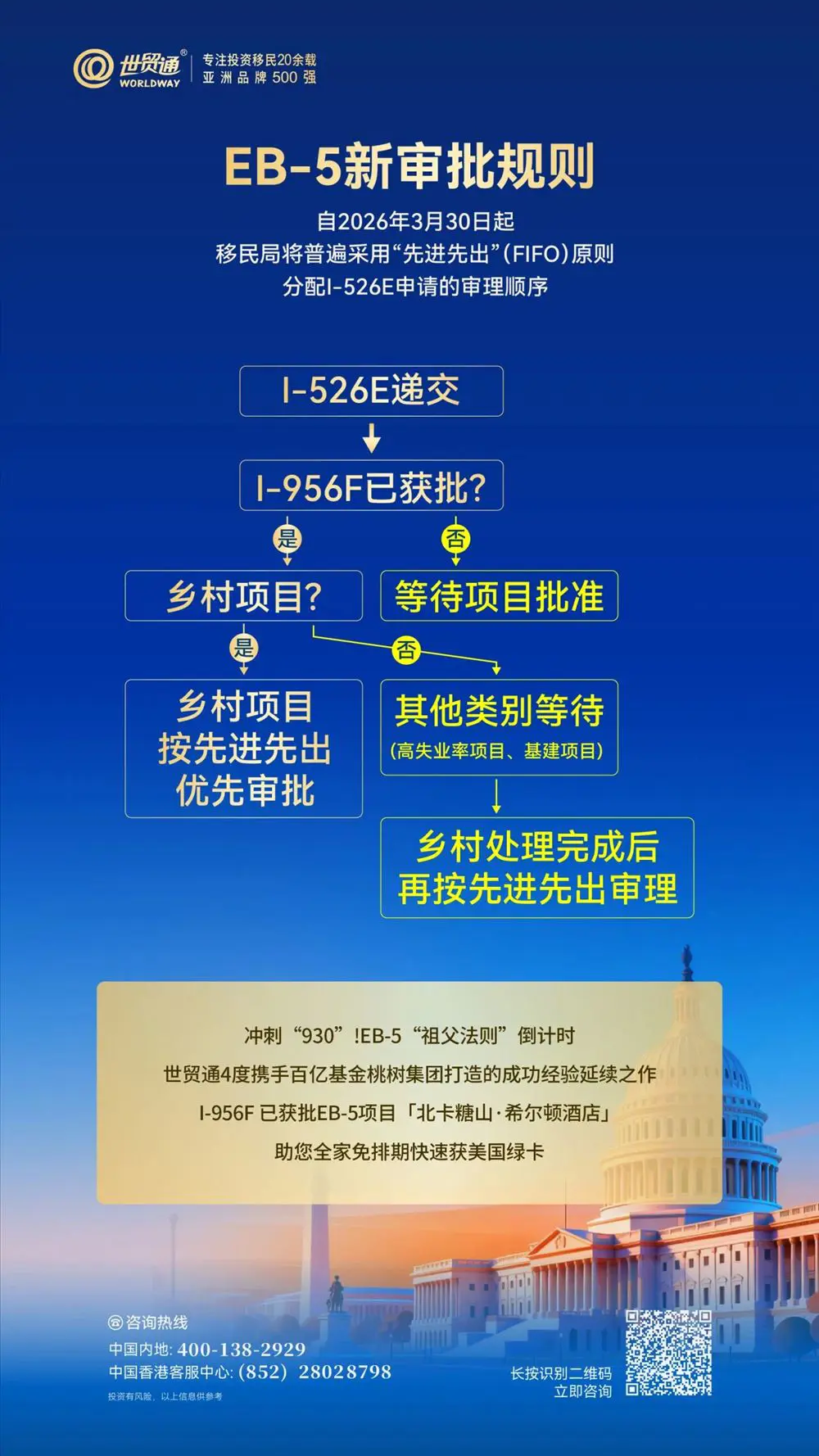
USCIS has clearly stated: Priority processing is given to applications from rural areas. This means that rural area projects not only "have independent visa quotas" but are also "prioritized in the processing order."
3. The "930" grandfather clause:
A more urgent timeline than the quota
In addition to the quota increase and the policy advantages of rural projects, there is another more critical time node in 2026: September 30, 2026.
The current EB-5 program was reauthorized in 2022, and the "EB-5 Reform and Integrity Act" explicitly includes a "grandfather clause." This clause stipulates: All EB-5 applications submitted before September 30, 2026, will not be affected by future changes in laws and policies and will continue to be processed according to current rules.
In other words, no matter how policies change in the future, applications submitted before September 30, 2026, can proceed steadily and complete the immigration process according to the original policy.
Currently, the date of September 30, 2026, is getting closer. For families with U.S. status planning needs, an ample quota is an opportunity, priority processing for rural projects is an advantage, and the 930 node is a critical deadline that must be taken seriously.

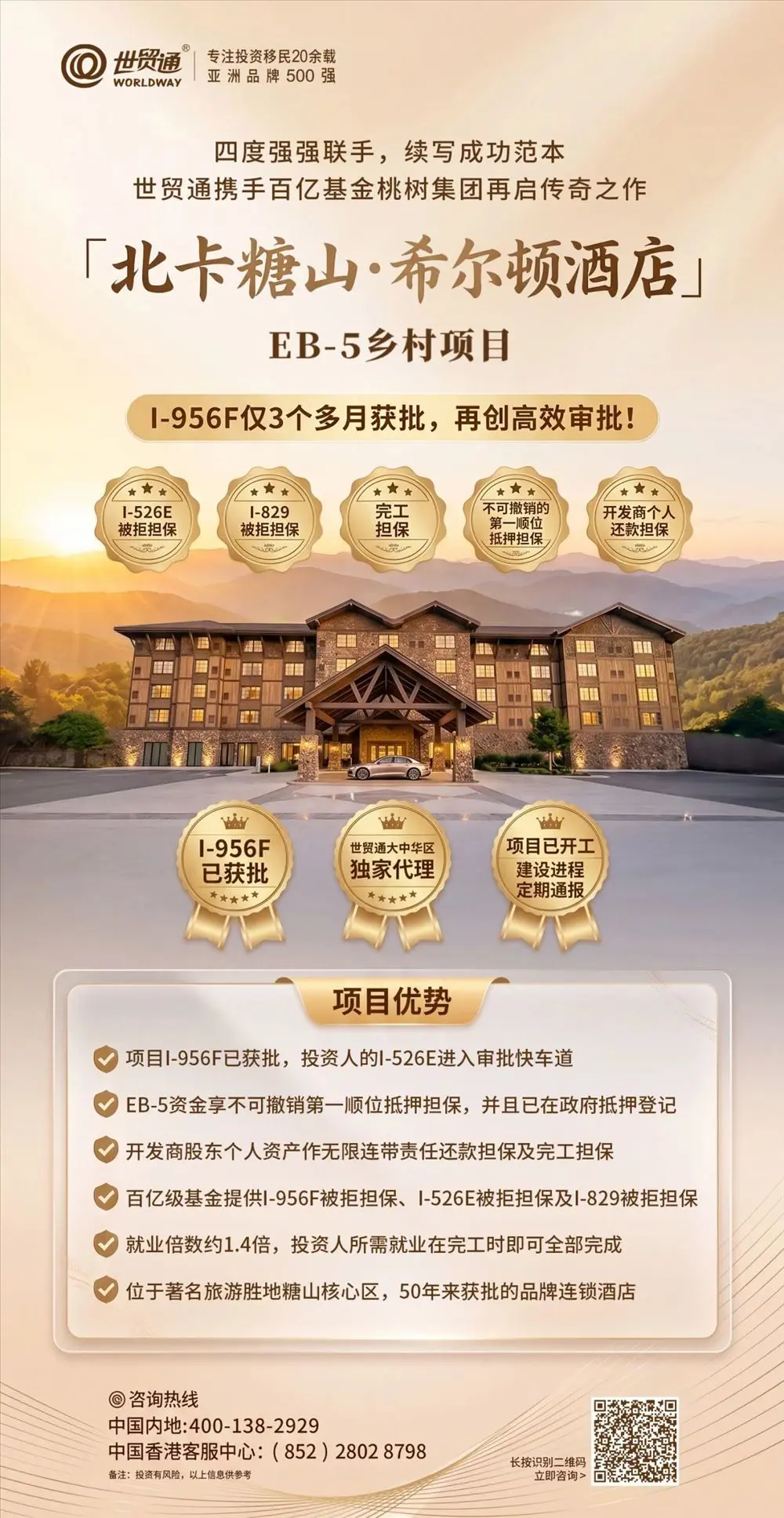
WorldWay holds high-quality rural EB-5 projects with I-956F approval—"North Carolina Sugar Mountain Hilton Hotel"—to help investors quickly realize their U.S. status planning and embark on the path to a new life in the United States.
For inquiries in mainland China: 400-138-2929, Hong Kong, China customer service center: (852)2802 8798