





Recently, U.S.News & World Report officially released the 2026 Best Graduate Schools rankings in the United States.
This ranking covers multiple popular fields, including business schools, engineering schools, schools of education, law schools, nursing schools, medical schools, and schools of public affairs, and further breaks them down into specific professional concentrations, providing an important reference for students and families planning to pursue advanced studies in the United States.
The methodology for this year's ranking continues the framework of the previous edition, with variations in the specific indicator weights across different academic disciplines. The main reference dimensions include:
• Peer Assessment (approx. 25%-40%)
• Employment and Salary Levels (approx. 20%-35%)
• Faculty Resources and Research Achievements (approx. 20%-30%)
• Student Selectivity (approx. 10%-20%)
• Other Supplementary Indicators (approx. 5%-10%)

Rankings for Institutions in Six Core Fields
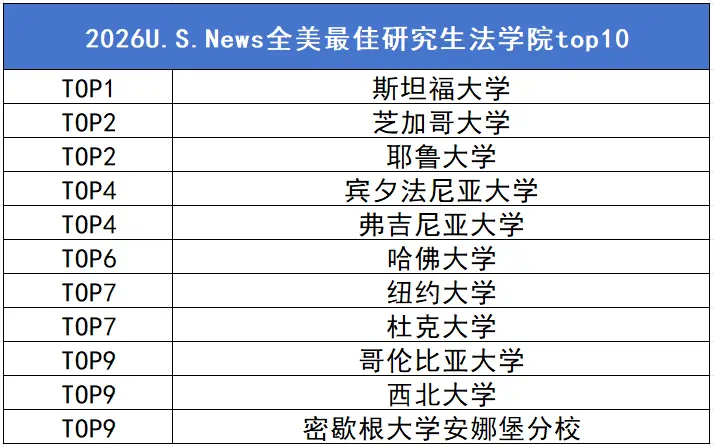
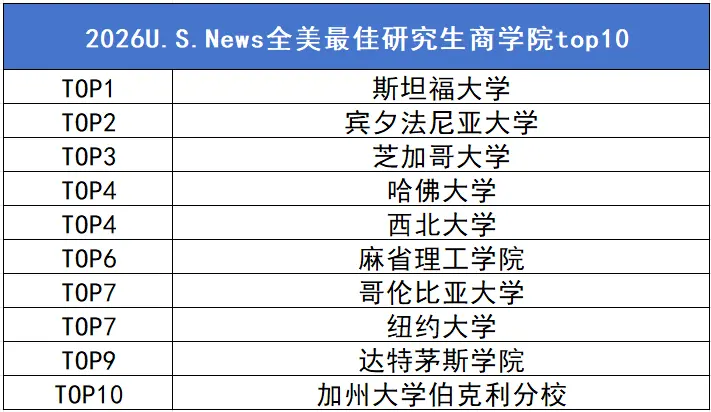
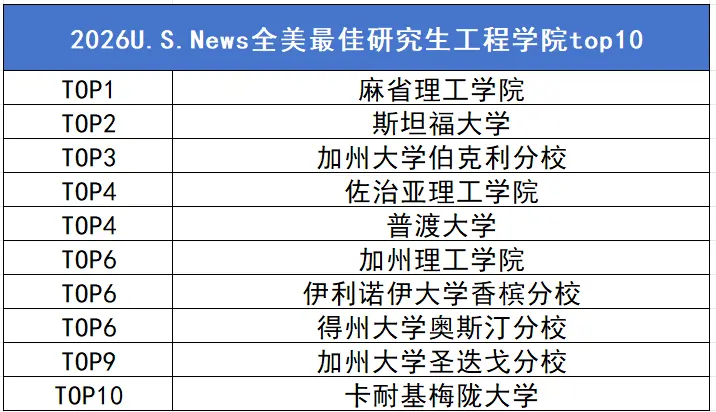
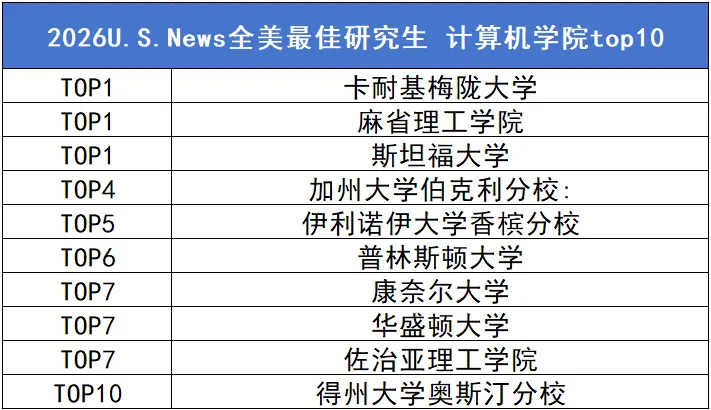
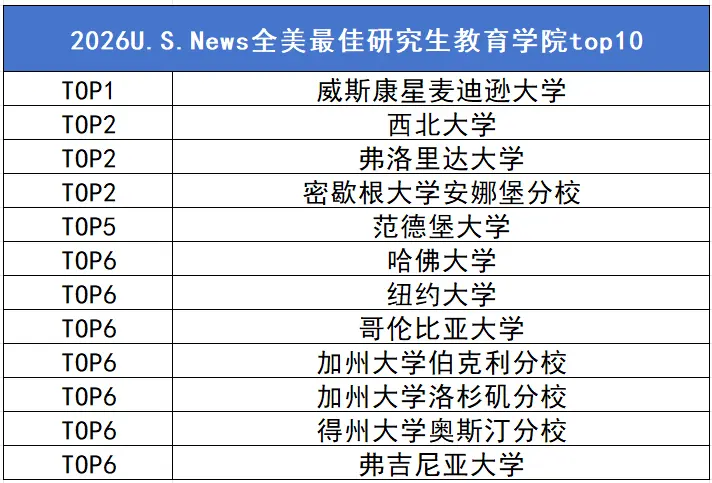
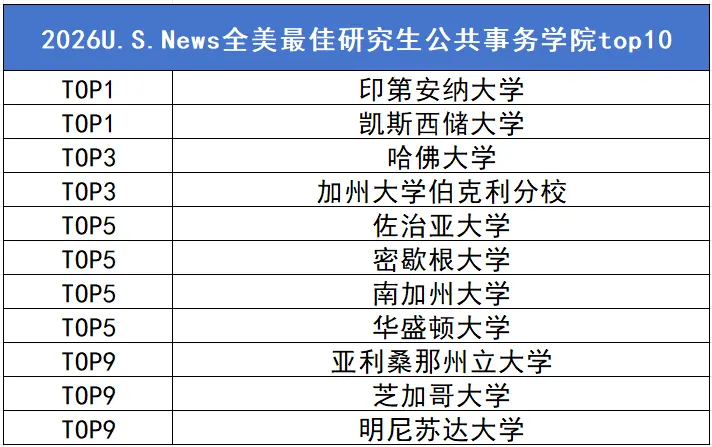
Beyond Rankings: The Long-term Value of U.S. Education
As the rankings demonstrate, the advantages of U.S. graduate education lie not only in institutional reputation but also in its mature academic system, abundant research resources, and close integration with industry and career development. Whether in business, engineering, computer science, or education, public affairs, and law, U.S. universities continue to attract attention from students and families worldwide.
For many families, pursuing studies in the United States is not just about choosing a school, but about entering an open, diverse, and resource-rich growth environment. Students have the opportunity to engage with cutting-edge research, participate in practical projects, and exchange ideas and collaborate with outstanding talent from around the world. These experiences often serve as a vital foundation for future academic pursuits, career development, and the accumulation of an international perspective.
From Study Abroad Planning to Status Planning:
Reserving More Options for the Future
However, the path to these prestigious institutions is not always smooth. For international students, high tuition fees, intense application competition, and the uncertainty of the post-graduation H-1B visa lottery are all realistic challenges that must be faced.
Therefore, an increasing number of families are beginning to consider education planning in conjunction with status planning: how can a significant educational investment further serve the long-term development of their children and the future arrangements of the family?
The EB-5 investment immigration program is one of the paths that some families are focusing on. Through a qualifying investment, you and your family can not only realize the dream of immigrating to the United States but also clear obstacles for your children's education:
• Enjoy Local Student Treatment: Students holding a Green Card will no longer be subject to international student quotas when applying to universities, significantly increasing their chances of admission.
• More Controllable Education Costs: You can enjoy the discounted tuition rates available to state residents.
• Freedom of Career Choice: After graduation, there is no need to participate in the H-1B lottery, allowing for the free choice of any desired job, with no restrictions on career paths.
• More Convenient Family Accompaniment: With the EB-5 program, one person applies and the whole family immigrates, which helps resolve issues regarding family accompaniment and long-term care while children are studying in the United States.
A Green Card is more than just a change in status; it can become an important foundation connecting education, employment, and long-term development. For families who hope for their children to study, grow, and expand future opportunities in the United States, planning ahead often allows every step to be taken more steadily and with greater composure.
Seize the Policy Window
Plan Your U.S. Status in Advance
The requirements for an EB-5 immigration application are flexible, with no rigid requirements regarding age, academic qualifications, language proficiency, business background, or work experience. In particular, under the new EB-5 law, rural EB-5 projects are exempt from visa retrogression and benefit from priority processing, attracting the attention of many families. At the same time, the "concurrent filing" policy allows applicants in the United States to file Form I-526E and Form I-485 simultaneously, enabling them to quickly obtain a Combo card and achieve legal residency and employment authorization.
However, the policy window is not static. As reserved quotas continue to be consumed, rural projects may also face retrogression pressure in the future; at the same time, the grandfathering provision will expire on September 30; and the minimum investment amount may also increase from $800,000 to $900,000 or more on January 1, 2027. For families with clear needs for U.S. education and status planning, the earlier they evaluate and plan, the more likely they are to seize the current relatively favorable policy stage and secure greater initiative for their children's future development.
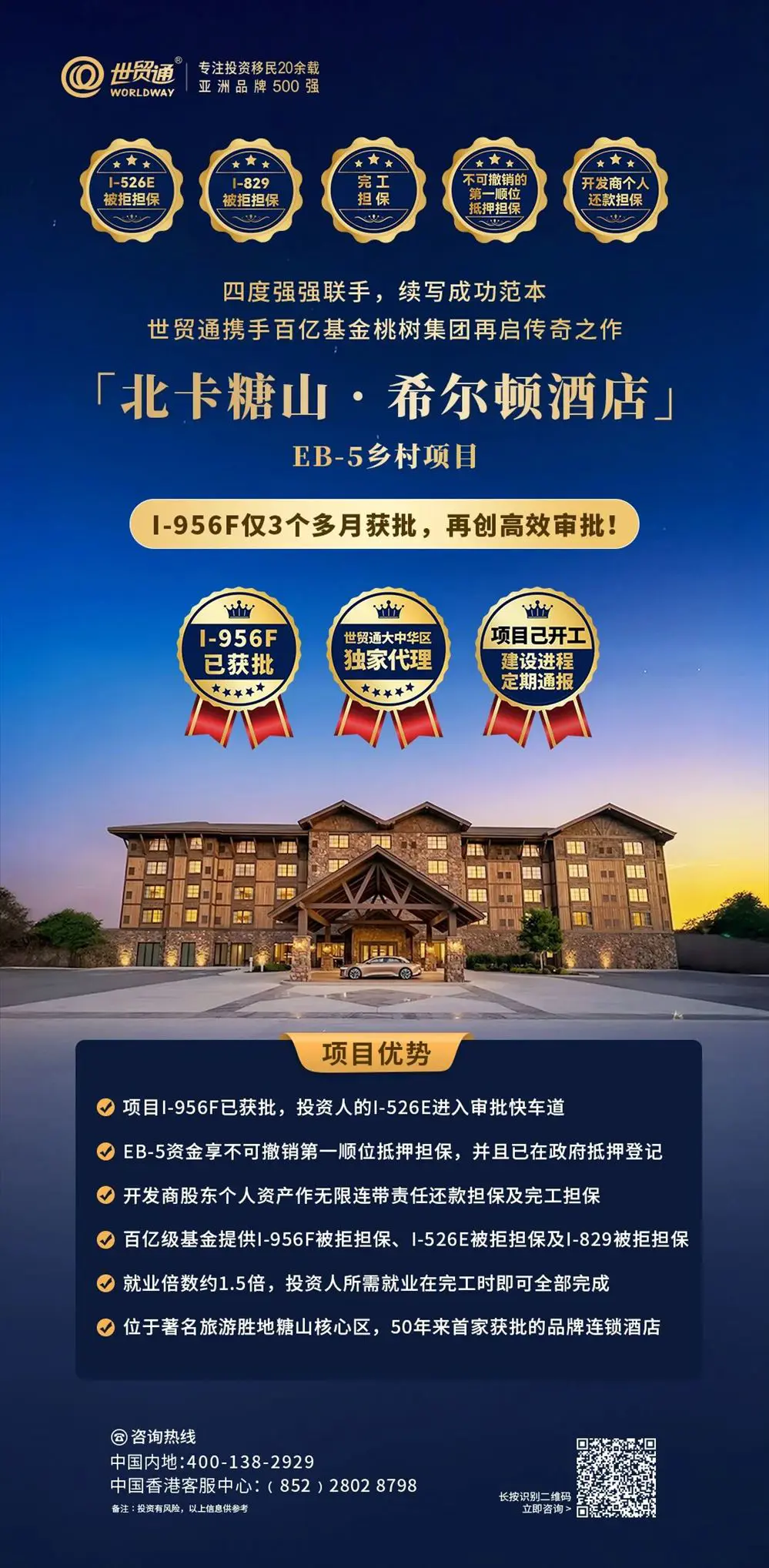
WorldWay holds high-quality rural EB-5 projects with officially approved I-956F, such as the "North Carolina Sugar Mountain Hilton Hotel", providing investing families with more certain project choices and application path support, helping applicants seize the policy window, steadily advance their U.S. status planning, and lay the groundwork for their children's education and the family's future in advance.

For inquiries in mainland China: 400-138-2929, Hong Kong, China Customer Service Center: (852)2802 8798