





U.S. Citizenship and Immigration Services (USCIS) has officially announced that the initial registration selection process for the FY 2027 H-1B cap has been completed, and USCIS has received a sufficient number of electronic registrations to meet both the regular cap (65,000) and the advanced degree exemption (20,000).
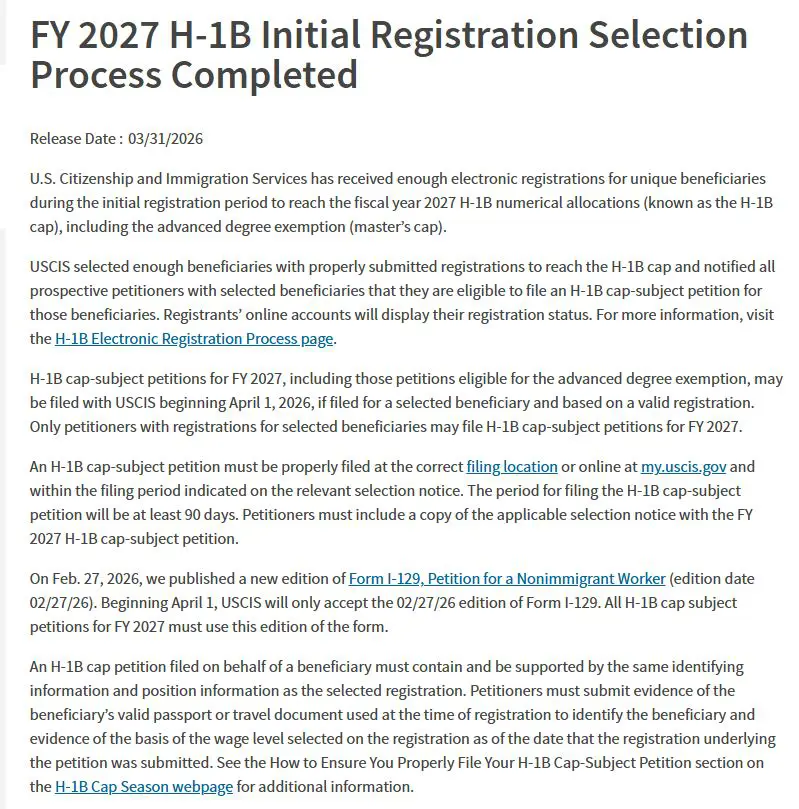
Currently, all selection results have been notified via employers' or attorneys' myUSCIS accounts ("Selected" indicates a successful selection). For international students and foreign workers who participated in this year's lottery, the results are now final.
Selected Applicants: The 90-Day Filing Window Opens
It is important to note that being selected does not equate to approval. Selection only grants the eligibility to file a cap-subject petition. Final approval depends on whether the subsequently submitted application materials are complete, authentic, and meet all requirements.
If your status is displayed as "Selected," please note the following:
• Filing Window: April 1, 2026 – June 30, 2026 (90 days total)
• Form Version Requirement: Only the February 27, 2026 version of Form I-129 is accepted
• Information Consistency: Petition information must be identical to the registration information
• Presidential Proclamation Surcharge: Some petitions require an additional $100,000 fee
Not Selected: What Are the Next Steps?
For applicants who were not selected in this round, especially U.S. graduates whose OPT is nearing expiration, anxiety and uncertainty are inevitable. While a second lottery round cannot be ruled out, the probability is low, and pinning all hopes on a "last-minute rescue" is unrealistic. Another path is to continue your studies or maintain F-1 status through other means while waiting to participate in the H-1B lottery again in the next fiscal year.
However, current policy trends indicate that the H-1B process is becoming increasingly difficult. Recently, the U.S. Department of Labor released a proposed rule to comprehensively raise the "minimum wage standard" for H-1B visas, which has entered a 60-day public comment period (ending May 26, 2026). (For details, please see previous Worldway reports: H-1B Alert! New Shifts in U.S. Immigration Trends) This means that corporate hiring costs may rise further, and H-1B applications will increasingly focus on salary, job position, and employer compliance capabilities. For international students, especially those in entry-level positions and recent graduates, the difficulty of application may continue to increase.
Meanwhile, U.S. Representative Andy Ogles (R-TN) recently introduced a new bill to Congress—the "Assimilation Act"—which plans to completely shut down the green card lottery system and terminate the H-1B visa program entirely. The fate of the H-1B is no longer just a matter of "increased difficulty," but a test of its "continued existence." (For details, please see previous Worldway reports: Major Proposed Bill: Is the H-1B to be Abolished?)
Because of this, for those not selected, staying in the U.S. does not have to rely solely on the H-1B path. Rather than repeatedly waiting for the lottery, it is better to consider more reliable long-term status solutions as early as possible, such as EB-5 Investment Immigration.
Beyond H-1B
EB-5 is Becoming a More Reliable Green Card Pathway
Unlike the H-1B, which is constrained by the lottery, job position, salary, and employer factors, the EB-5 program is essentially a direct path to a U.S. Green Card. Under the new law, the core advantage of EB-5 lies in its "concurrent filing" policy. Applicants already in the U.S. can simultaneously submit their I-526E immigrant petition and I-485 application for adjustment of status. In about 2-3 months, they can obtain a Combo card, allowing them to legally reside in the U.S., work freely, travel internationally, and enjoy benefits similar to a green card without a long wait.
More importantly, the current EB-5 rural projects offer the dual benefits of priority processing and "no backlog + concurrent filing," placing them in a rare policy window. However, this advantage will not last forever. As reserved quotas continue to be consumed, warnings of invisible backlogs have quietly emerged; meanwhile, the grandfathering provision will expire on September 30, and the minimum investment amount may increase from $800,000 to $900,000 or more on January 1, 2027. In other words, the sooner you act, the better your chances of locking in this rare policy window.

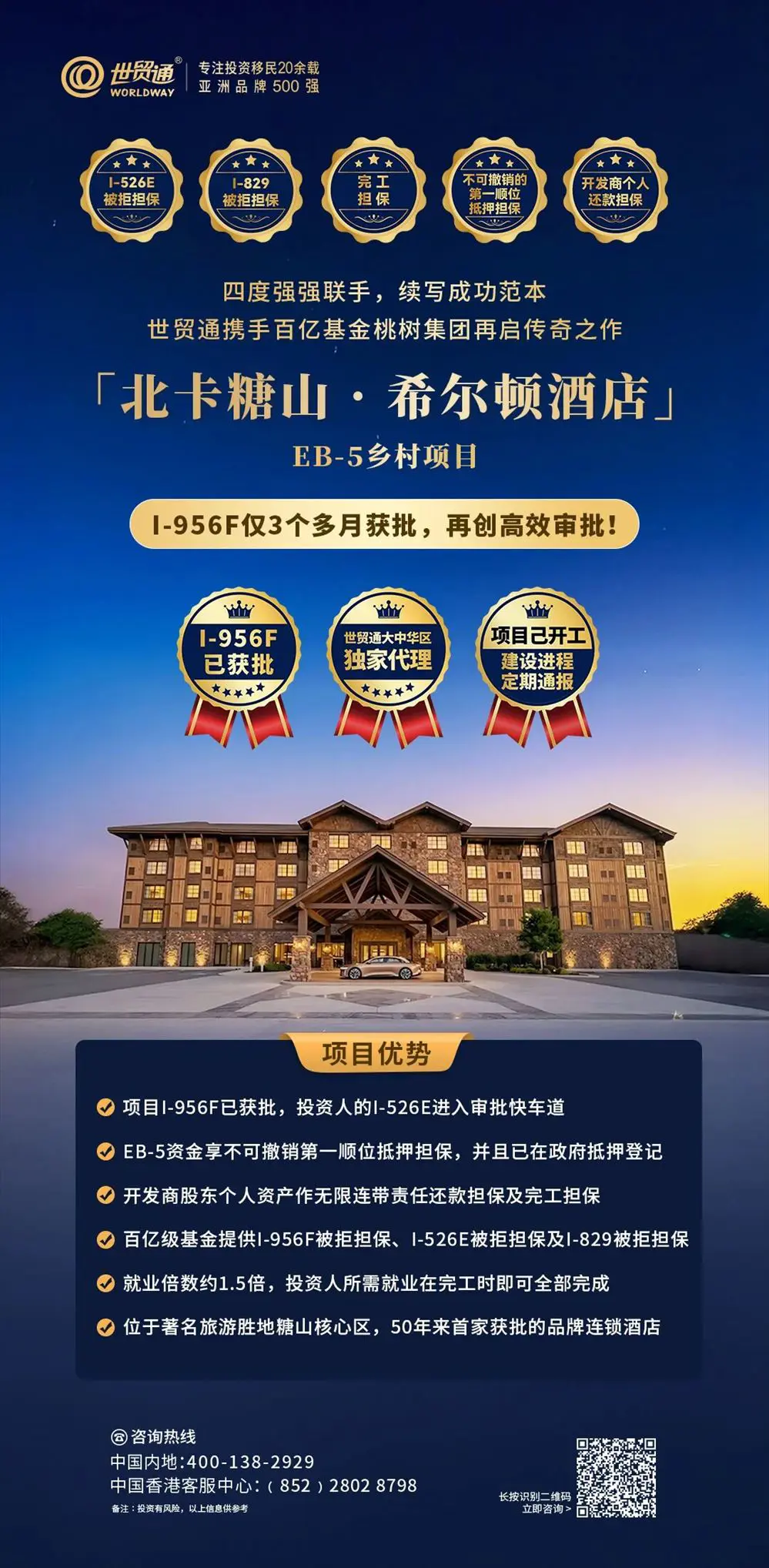
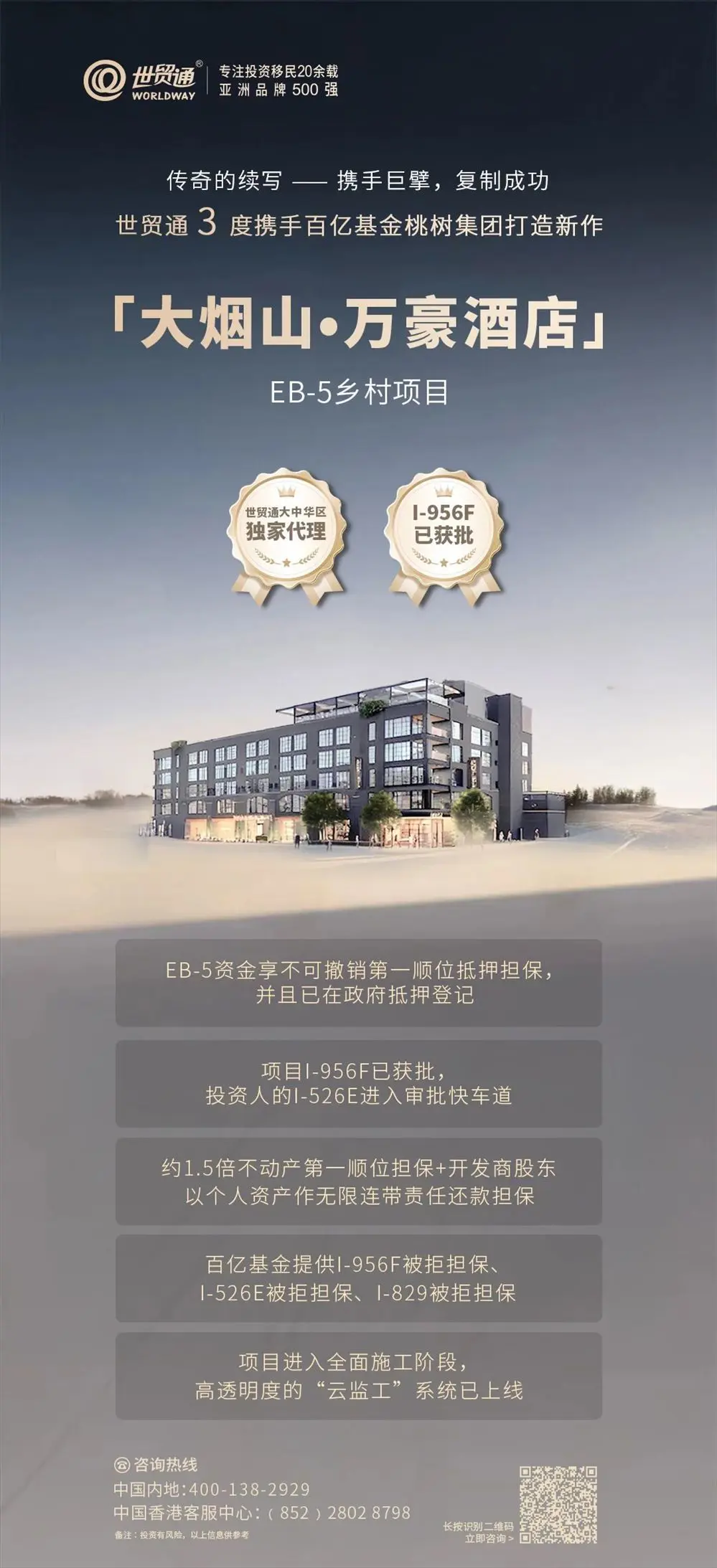
Worldway currently offers two high-quality rural EB-5 projects with official I-956F approval—the "North Carolina Sugar Mountain Hilton Hotel" and the "Great Smoky Mountains Marriott Hotel," helping investors quickly obtain U.S. Green Cards.

For inquiries in Mainland China: 400-138-2929, Hong Kong Customer Service Center: (852)2802 8798