





In the past, many families had similar thoughts when planning for the United States. First, they would apply for a tourist visa to take a look. When the children needed to study, they would apply for a student visa. After graduation, they would see if they could work or stay, taking it step by step. Matters of status would be considered seriously only when truly necessary.
However, the environment for legal entry into the United States is tightening. The uncertainty of traditional visa pathways has significantly increased, with changes in the pace of visa issuance, review standards, and processing efficiency occurring simultaneously. The previously relatively stable pathways to the U.S. are being reordered.

According to data released by the U.S. Department of State, in the first eight months of 2025, the number of various types of visas issued in the United States decreased by approximately 250,000 compared to the same period in 2024, an overall decline of about 11%. This includes various immigrant visas, as well as various non-immigrant temporary visas excluding B-type short-term business/tourist visas.
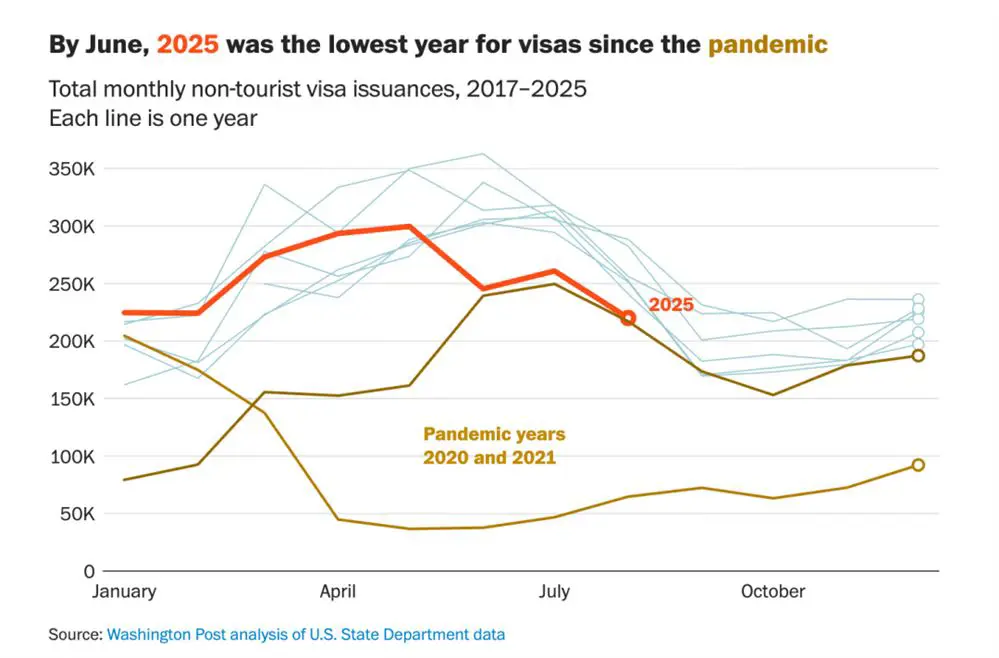
Among them:
• F-1 Student Visa: The group of international students is the most affected, with a decline in visa issuance of over 30%.
• B-type Visa (Business/Tourism/Family Visit): The issuance volume has decreased by nearly 200,000, a decline of about 3.4% compared to the same period last year.
• Work and Family Visas: Work visas such as H-1B and L-1, as well as family reunion immigration visas subject to quota restrictions, are also contracting. Among them, family category visas subject to quotas have plummeted by 27%.
The signals conveyed by this set of data are already very clear: this is not a localized fluctuation of a specific visa category, but rather a tightening of the overall visa issuance environment.
In addition, from a country perspective, applicants from China and India are particularly affected. The total number of U.S. visas issued to citizens of these two countries has decreased by approximately 84,000, with the number of visas for China dropping by 24%. This reflects not only a change in quantity but also an overall tightening of the U.S. visa processing procedures, review standards, and resource allocation.
And Greater Emphasis on Risk Control
In addition to the overall decline, some recent changes at the regulatory level are also sending the same signal.
For example, the U.S. Department of State's latest update to the visa guarantee deposit program has expanded its scope to 50 countries, and it has been clarified that some newly added countries will be included in the implementation starting April 2, 2026. (For details, please refer to previous reports by WorldWay: Breaking! U.S. Visa Deposit Policy Expanded to 50 Countries) For some applicants from the countries included in the list, when applying for a U.S. B1/B2 business or tourist visa, they may be required to pay a guarantee deposit ranging from $5,000 to $15,000.
Meanwhile, visa reviews are also becoming noticeably stricter:
• Expanded Background Checks: Mandatory review of all applicants' social media accounts and the introduction of more complex background verification procedures, which objectively lengthens the processing time.
• Tightening of Discretionary Authority: At the visa officer level, the review of "immigrant intent" has become stricter.
• Must Apply in Country of Nationality or Residence: All non-immigrant visa applicants (including common categories such as B1/B2, F1, H1B, L1, etc.) must submit their applications at the consulate of their country of nationality or legal long-term residence.
Various signs indicate that the U.S. is placing greater emphasis on pre-screening, risk stratification, and accountability in visa management.
Identity Planning Should Be Proactively Addressed Early
For families with genuine long-term plans, what is more important is to consider which pathway to take in the future that is more stable and controllable.
A tourist visa can solve short-term travel needs,
A student visa can address temporary educational needs,
A work visa can resolve a specific period of professional stay,
But these pathways are increasingly dependent on review pace, appointment windows, case reviews, and policy standards.
Because of this, EB-5 U.S. investment immigration, as a key method in long-term identity planning in the U.S., is becoming increasingly valuable. The reason is simple: EB-5 is not a short-term stay visa, but a long-term pathway directly leading to a U.S. green card.
From the current policy environment, EB-5 is still in a window period worth seizing. According to the U.S. Department of State's visa bulletin, the EB-5 reserved visa category under the new law currently remains in a no-waiting period status; at the same time, the dual submission policy also provides a more efficient pathway for applicants within the U.S. for status conversion. In addition, rural projects enjoy priority approval advantages.
However, it is worth noting that this window will not last long. The grandfather clause will expire on September 30; the minimum investment amount may increase from $800,000 to $900,000 or even higher on January 1, 2027. Furthermore, once the EB-5 new policy reserved category experiences a waiting period, the current "no waiting + dual submission" golden window will end. Therefore, the sooner high-quality rural projects with I-956F approval are secured, the more opportunities there are to place identity planning in a more proactive position.

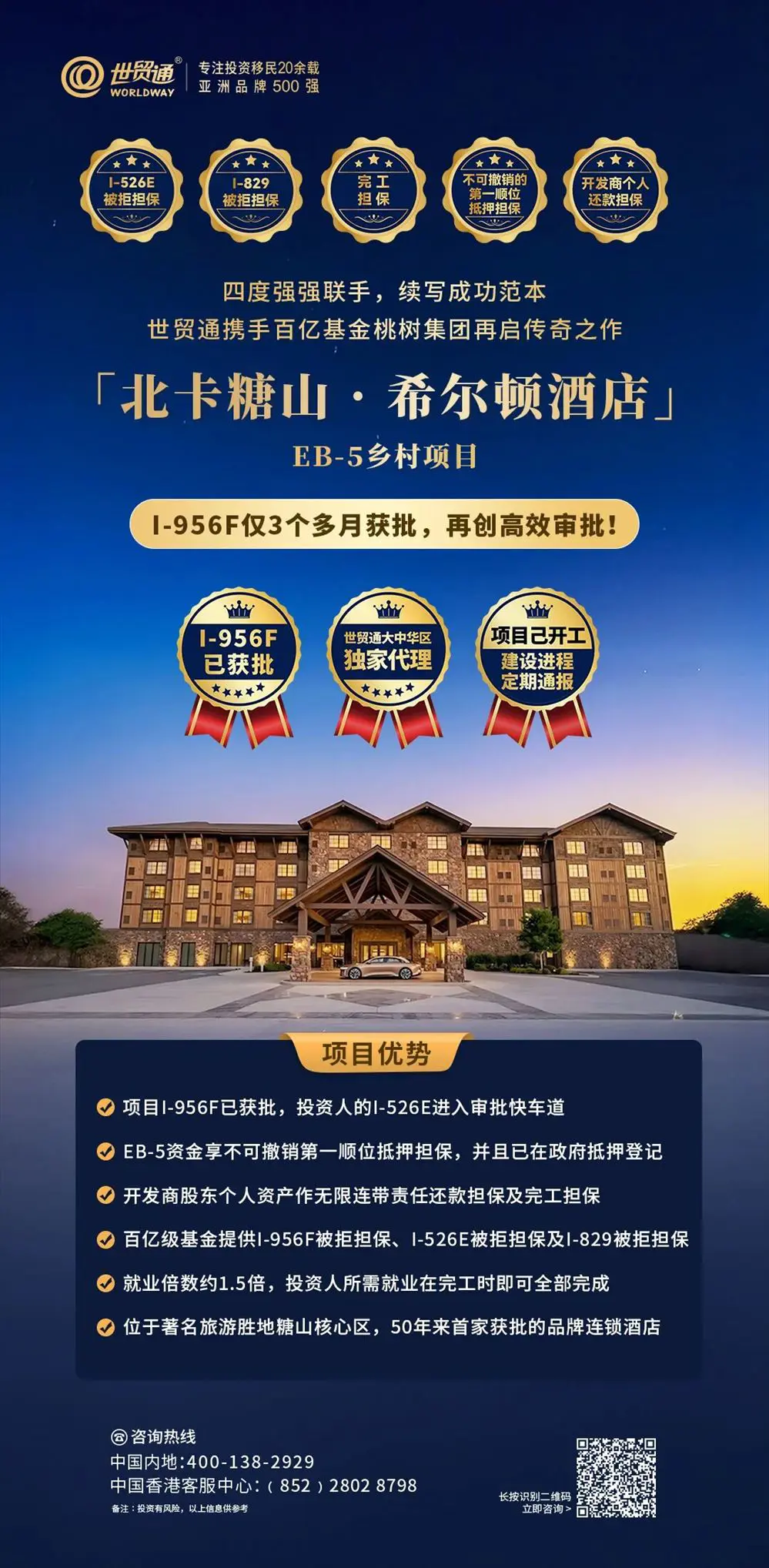
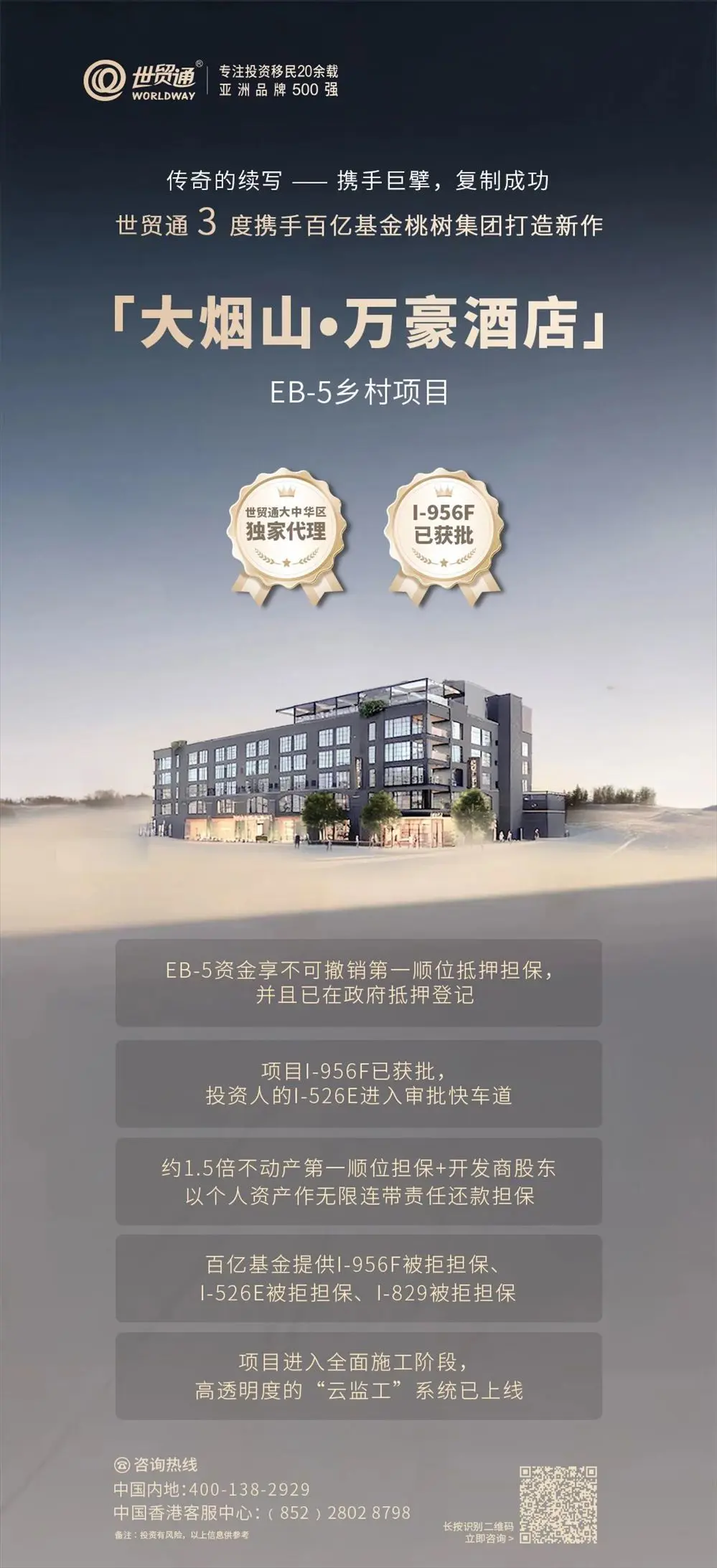
WorldWay currently has two high-quality rural EB-5 projects with formal I-956F approval—"North Carolina Sugar Mountain Hilton" and "Great Smoky Mountains Marriott"—to assist investors in quickly obtaining U.S. green cards.
For inquiries in mainland China: 400-138-2929, Hong Kong customer service center: (852)2802 8798