





Recently, USCIS officially released the EB-5 investment immigration filing and approval data for the fourth quarter of fiscal year 2025 (July 1, 2025 – September 30, 2025). For investors, this is not just a quarterly statistic, but an important window into current application trends.
Especially for Chinese applicants, what is truly worth noting in this data is not just "how many were filed and how many were approved," but rather: What is the overall popularity of the EB-5 program? And what categories of projects are Chinese investors primarily choosing?
Based on the data released, the answer is becoming increasingly clear: The overall popularity of EB-5 applications remains high, and the primary focus of I-526E applications from Chinese investors is clearly concentrated on rural projects.
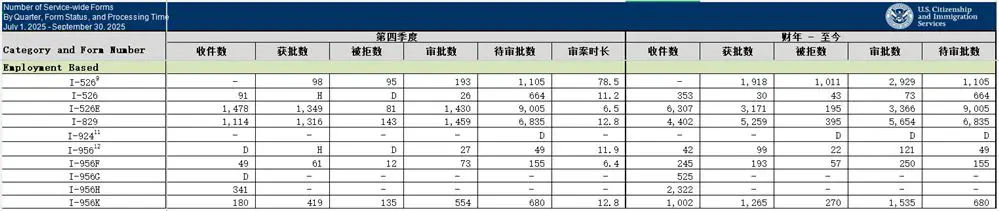
Strong Approval Performance
According to the data for the fourth quarter of fiscal year 2025, the key data for I-526E (Regional Center Investor Petition) under the new law for that quarter are:
• Filings: 1,478
• Adjudications: 1,430
• Approvals: 1,349
• Approval Rate: 1,349/1,430 = 94.34%
Looking at the cumulative data for the entire 2025 fiscal year, the overall performance of I-526E is also worth noting:
• Filings: 6,307
• Adjudications: 3,366
• Approvals: 3,171
• Annual Approval Rate: 3,171/3,366 = 94.21%
This set of data releases at least three very clear signals.
First, USCIS is continuing to process cases under the new law. The number of approvals in a single quarter has reached over 1,300 and maintains a growth trend, and the approval speed for applications submitted under the new law is significantly faster.
Second, the EB-5 market remains popular. With 6,307 cumulative filings for the year, it shows that in the current immigration planning environment, EB-5 remains a key focus for many applicants.
Third, the overall approval performance of I-526E under the new law remains strong. Whether looking at a single quarter or the entire year, the approval rate for adjudicated cases has remained high at approximately 94%, reflecting that cases under the new law still possess strong approval certainty.

Clearly Concentrated on Rural Projects
If we look further at the categorized data for I-526E (Regional Center Investor Petition) from Chinese investors, the trend becomes even more intuitive.
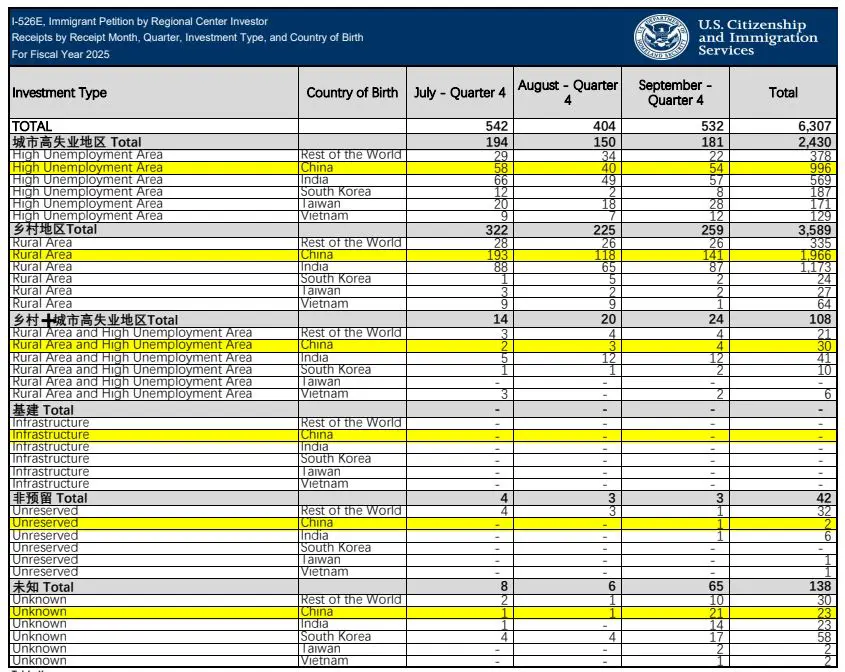
In the fourth quarter of fiscal year 2025, among the I-526E applications submitted by Chinese investors:
• Rural Projects: 452
• High Unemployment Urban Projects: 152
• Urban + Rural Dual Category: 9
• Unclassified: 23
In other words, looking at the fourth quarter alone, the number of rural project applications submitted by Chinese investors is already far higher than that of high-unemployment urban projects.
And if we look at the cumulative data for the entire 2025 fiscal year, this trend is even more obvious:
• Rural Projects: 1,966
• High Unemployment Urban Projects: 996
• Urban + Rural Dual Category: 30
• Unclassified: 23
• Total: 3,015
Based on the cumulative annual data, rural projects account for approximately 65%; if we look only at the fourth quarter, the proportion of rural projects even exceeds 70%. This means that the primary focus of I-526E applications from Chinese investors is now very clearly concentrated on rural projects.
According to the latest data, USCIS adjudicated 73 I-956F petitions in the fourth quarter of fiscal year 2025, with 61 approved and 12 denied, resulting in a single-quarter approval rate of approximately 83.56%; if placed in the context of the cumulative data for the entire 2025 fiscal year, a total of 250 I-956F petitions were adjudicated, with 193 approved, resulting in an annual approval rate of approximately 77.20%. This indicates that a significant number of projects have yet to meet the basic requirements set by USCIS for EB-5 projects.
According to the adjudication arrangements already clarified by USCIS, starting from March 30, 2026, I-526/I-526E applications will in principle be allocated for adjudication on a "first-in, first-out" basis, and the relevant project obtaining I-956F approval first is an important prerequisite for investors' applications to enter the adjudication process. Even more noteworthy is that rural projects enjoy a priority allocation advantage under the new regulations, which will further improve the efficiency and certainty of the advancement of investor status applications. (For details, please see previous reports by WorldWay: USCIS Reveals EB-5 Approval Rules)
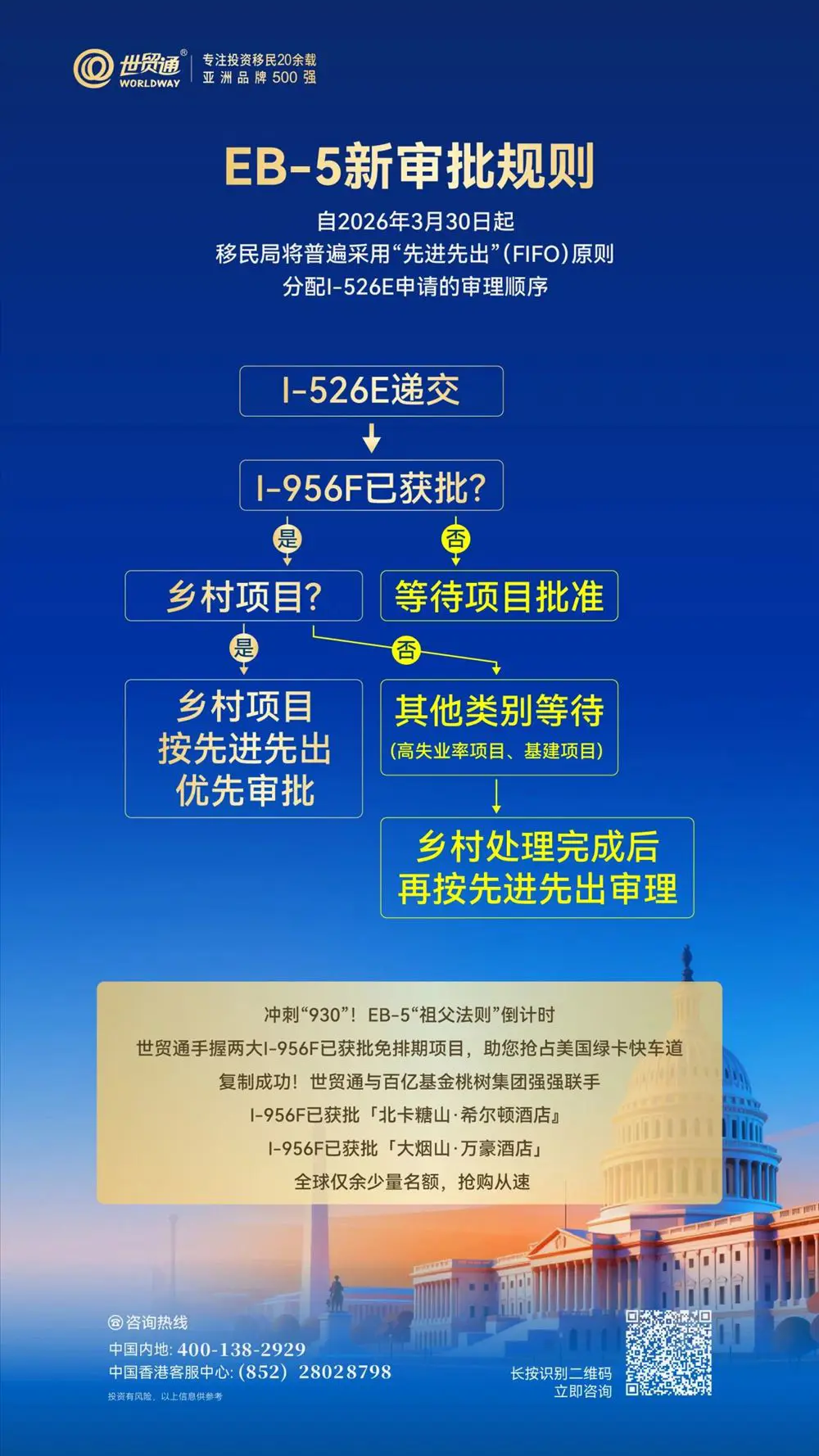
EB-5 Rural Projects with I-956F Approval
Advantages Become More Prominent During the Window Period
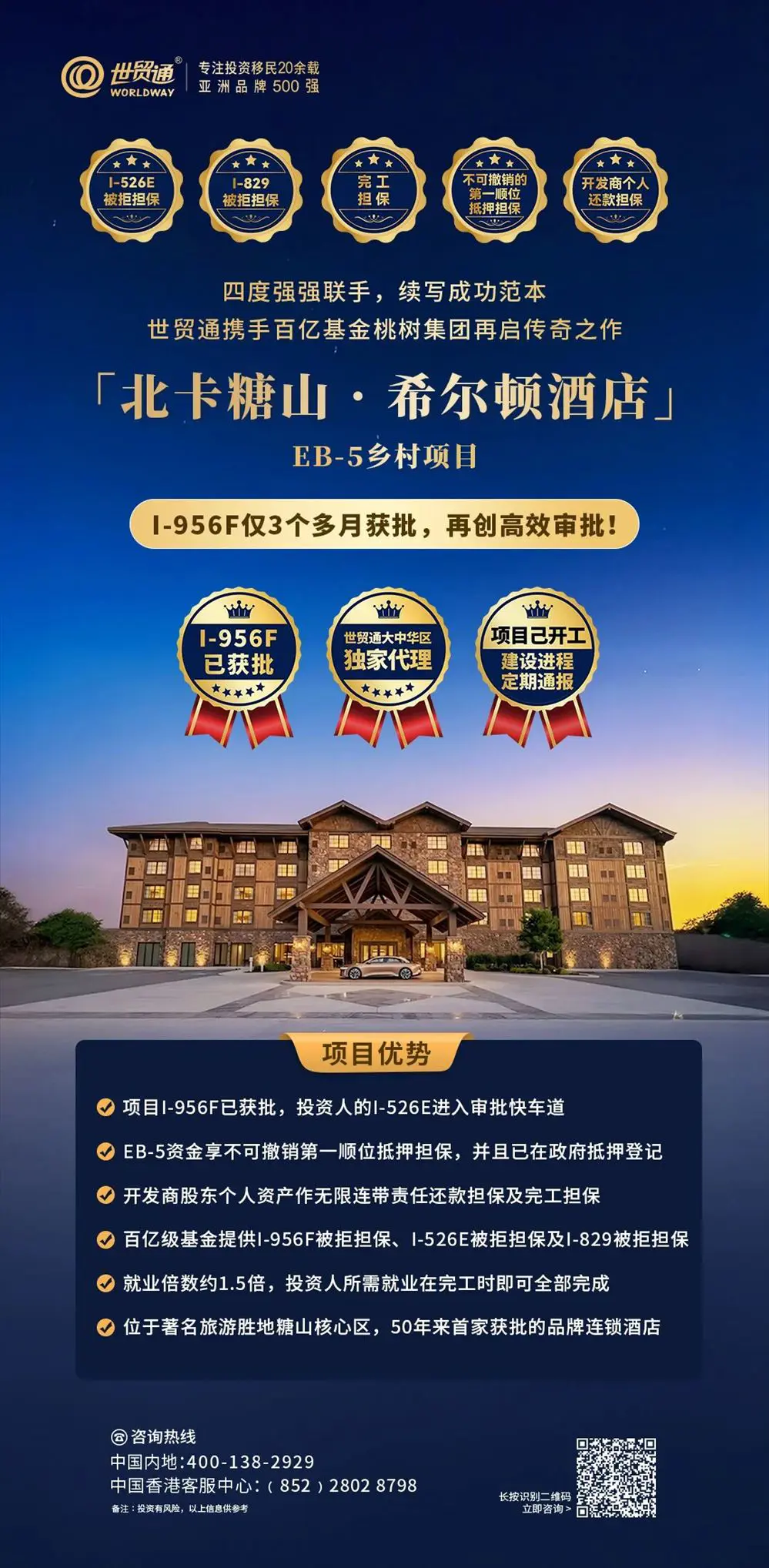
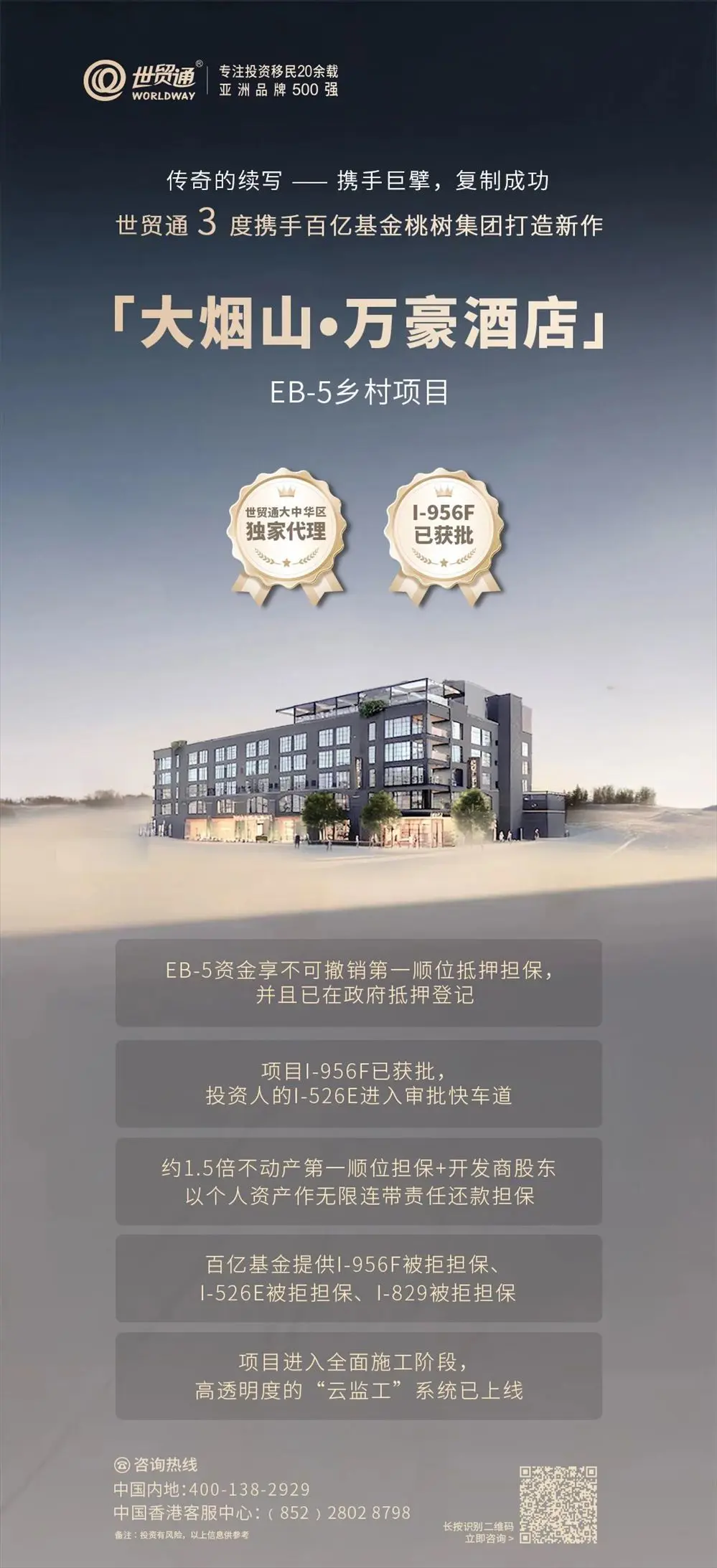
In the current application environment, the value of projects with I-956F approval is rising further. WorldWay currently possesses two high-quality rural EB-5 projects with formal I-956F approval—the "North Carolina Sugar Mountain Hilton Hotel" and the "Great Smoky Mountains Marriott Hotel," helping investors quickly obtain U.S. Green Cards.
For families currently considering EB-5, what is most worth paying attention to at this stage is not just "whether one can apply," but whether one can complete the application as early as possible within the window period. The window period for the new EB-5 policy is rapidly narrowing, and the grandfather clause will expire on September 30; the minimum investment amount may be increased from $800,000 to $900,000 or even higher on January 1, 2027. In addition, once a visa backlog appears in the reserved categories of the new EB-5 policy, the current golden window of "no backlog + concurrent filing" will end. Therefore, the earlier you lock in a high-quality, I-956F-approved rural project, the more opportunity you will have to place your status planning in a more proactive position.
For inquiries in Mainland China: 400-138-2929, Hong Kong Customer Service Center: (852) 2802 8798