





The U.S. Department of State's Visa Office has officially released the Visa Bulletin for April 2026 (the 7th month of the 2026 fiscal year). Please join WorldWay Group for a review.
Under the Old Law
(Non-reserved Visas) Table A Advances by 17 Days
Table A has advanced by 17 days. For direct investment projects in categories C5 and T5, as well as non-reserved visa categories I5 and R5 for regional center projects, the date has moved from August 15, 2016, to September 1, 2016.
Table B remains unchanged, with direct investment projects in categories C5 and T5, and non-reserved visa categories I5 and R5 for regional center projects, holding steady at October 1, 2016.
Under the New Law
(Reserved Visas) Continue Without Retrogression
Under the new law, EB-5 reserved visa categories (20% for rural projects, 10% for high-unemployment area projects, and 2% for infrastructure projects) currently remain without visa retrogression.
Table A: Final Action Dates For Employment-Based Preference Cases
(Note: For those entering the U.S. Consulate interview process)
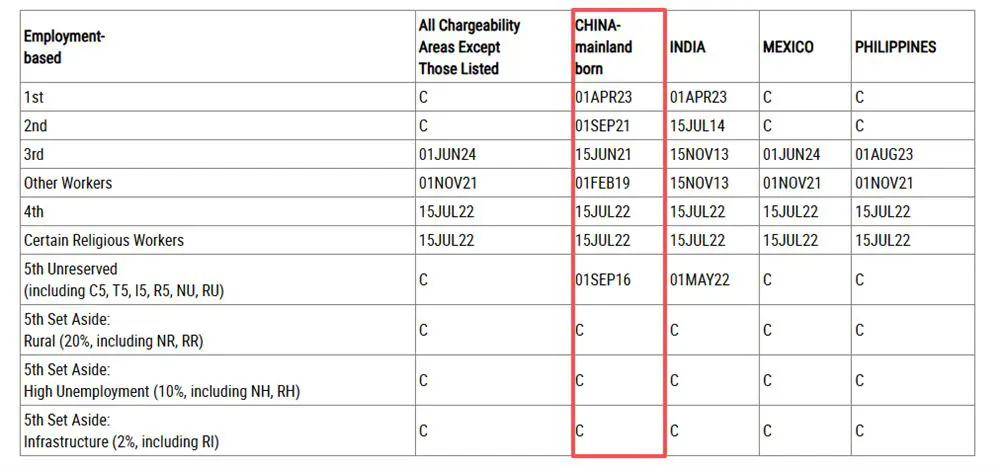
Table B: Dates For Filing Of Employment-Based Visa Applications
(Note: For those legally residing in the U.S. who meet relevant conditions, filing Form I-485 for Adjustment of Status)
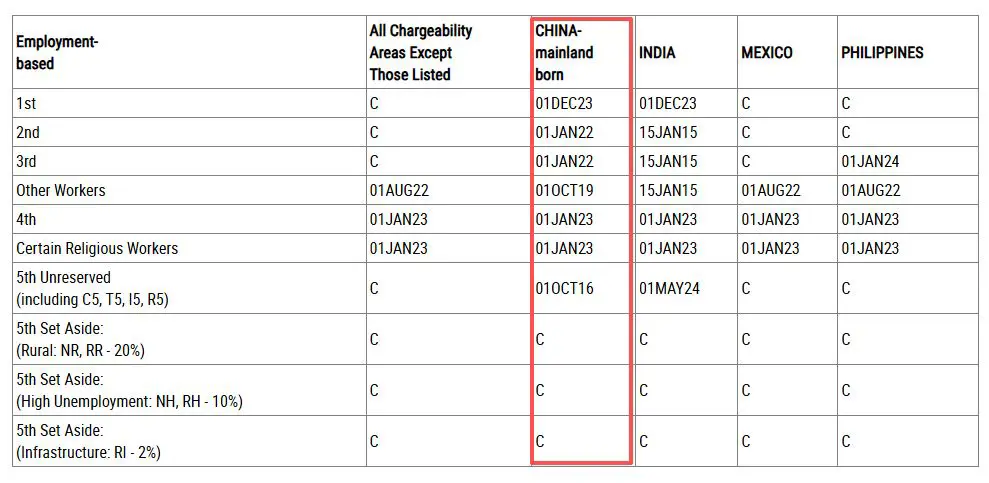
Table B Open in April
I-485 Adjustment of Status Applications Can Be Submitted
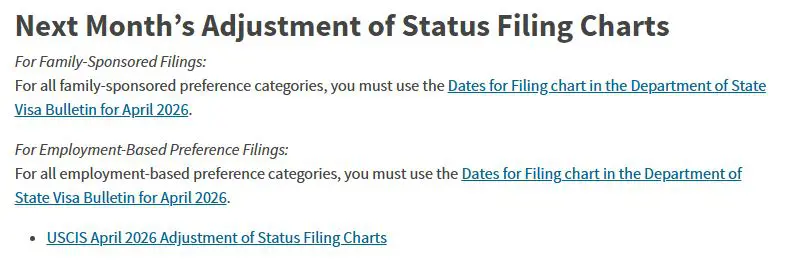
The U.S. Citizenship and Immigration Services (USCIS) has announced that Table B will be open in April, meaning eligible applicants (with a priority date earlier than the Table B date of October 1, 2016, and currently within the United States) may submit an I-485 application for adjustment of status.
Important Reminder: The New Law Bonus Window Remains Open, Act Sooner Rather Than Later
According to the latest April 2026 Visa Bulletin, investors born in mainland China in the EB-5 reserved visa categories remain in a status without retrogression. However, it is important to note that no retrogression today does not guarantee it will remain that way forever. As the number of applicants increases, reserved visas may also face pressure from retrogression in the future. The earlier you start, the better your chances of locking in the current window's benefits.
No retrogression + concurrent filing, now is the right time for status planning: Currently, EB-5 reserved visas remain without retrogression. Applicants with legal status in the United States can concurrently file Form I-526E and Form I-485 to initiate the status adjustment process more quickly. For international students, OPT holders, and others with a need to stay in the U.S., this is a valuable channel that balances academic, career, and status planning.
The grandfathering clause window is clear; the later you start, the more passive you become: At the same time, September 30, 2026, is a very critical time node. Filing an I-526E application before the grandfathering clause expires means you can lock in your application rights under the existing policy framework as early as possible, reducing the uncertainty caused by future policy changes.

Rural EB-5 Projects receive priority processing; the earlier you plan, the greater your advantage
Another policy advantage worth focusing on is the priority processing of rural EB-5 projects.
USCIS has clarified that starting March 30, 2026, it will adopt the "First-In, First-Out" (FIFO) principle to allocate the processing order for I-526/I-526E applications. Under this mechanism, I-526E applications for rural projects will enter the review queue with priority. Only after the rural project queue is cleared, or USCIS determines that a sufficient number of rural project applications have been processed, will it begin to review other I-526E applications (such as those for high-unemployment area projects and infrastructure projects) and post-RIA I-526 applications according to the "First-In, First-Out" principle. (For details, please see WorldWay's previous report: USCIS Reveals EB-5 Approval Rules)
This means that rural EB-5 projects not only enjoy the benefits of reserved visas and current lack of retrogression, but also receive more significant policy preference in the processing order, making them even more attractive.
The bonus of priority processing for rural projects is already here; the earlier you start, the sooner you can benefit. For applicants who intend to secure a U.S. status channel through EB-5 as soon as possible, it is advisable to evaluate, start, and lock in your position early.
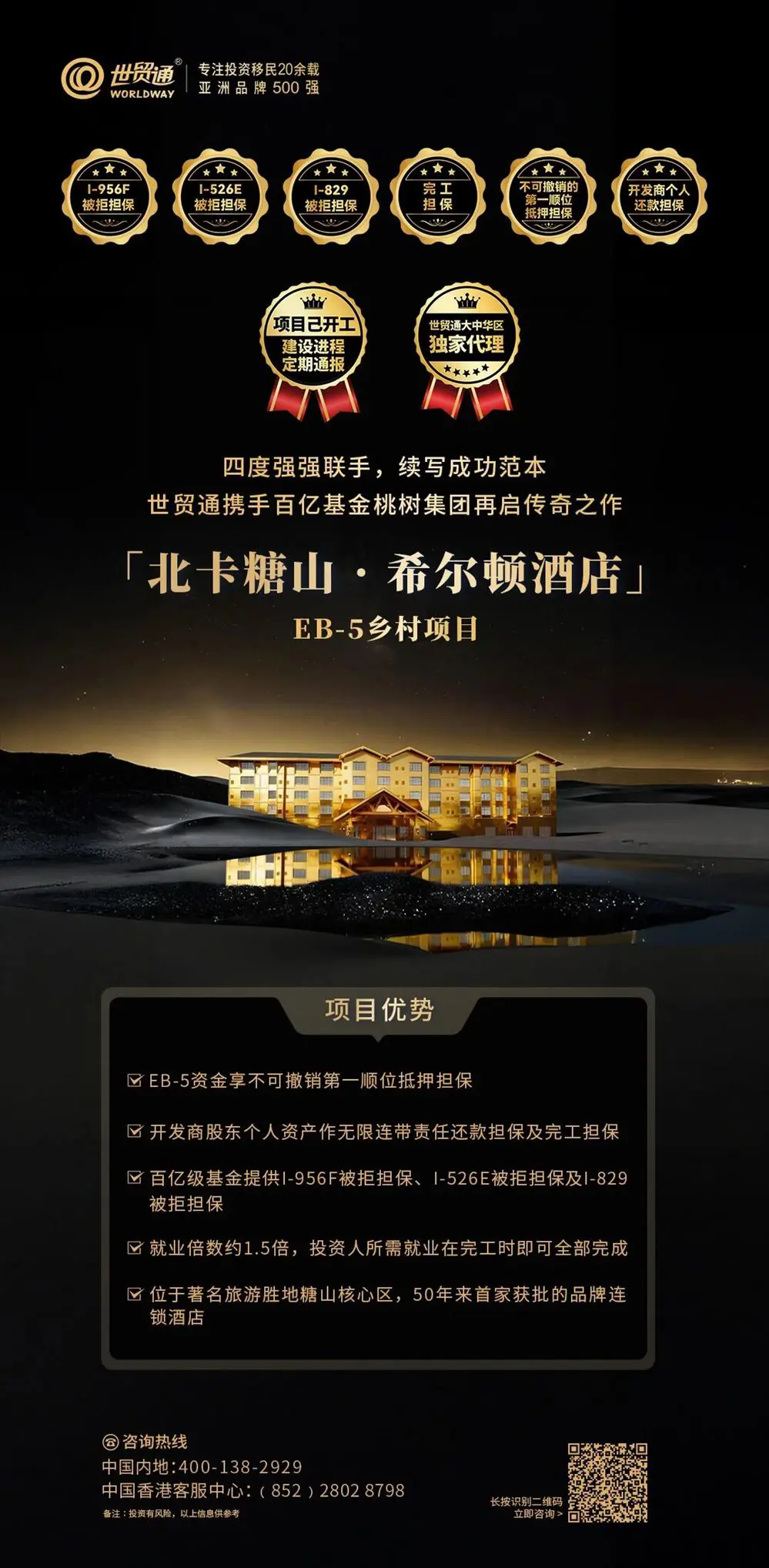
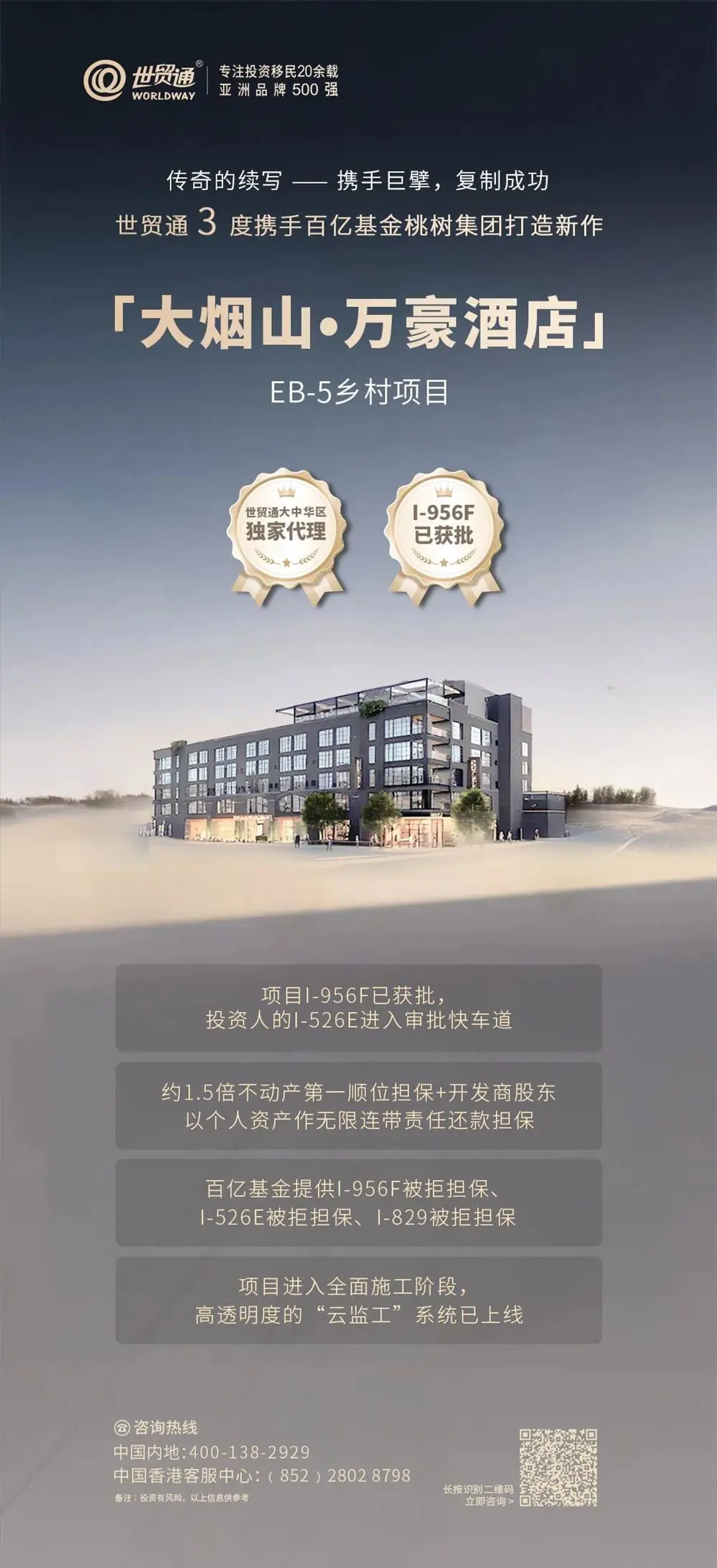
WorldWay holds two high-quality EB-5 rural projects, helping investors achieve their U.S. status planning steadily, without retrogression, and efficiently. Global quotas are limited, seats are scarce, and they are available on a first-come, first-served basis!

For inquiries in mainland China: 400-138-2929, Hong Kong Customer Service Center: (852)2802 8798