





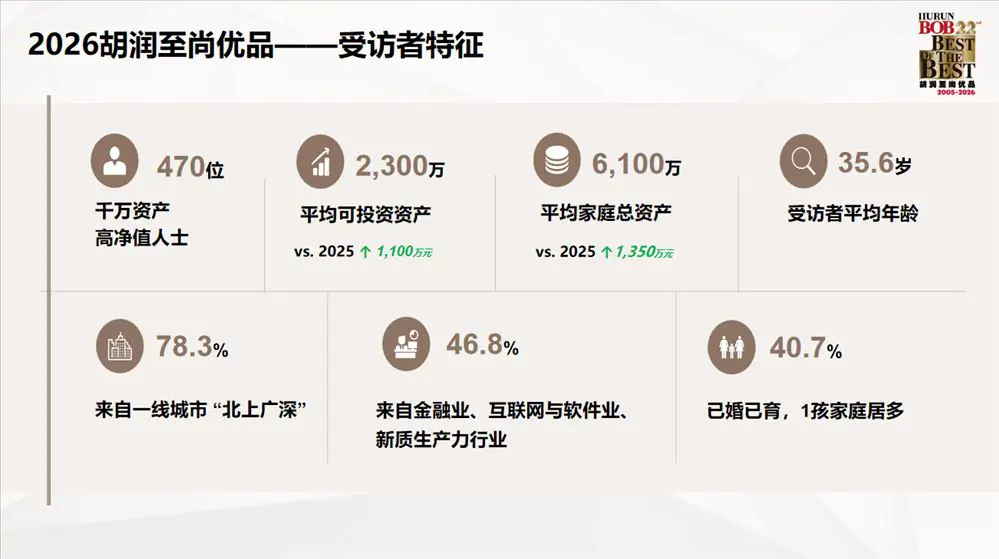
Recently, the Hurun Research Institute released the "2026 Report on the Quality of Life for High-Net-Worth Individuals in China." This survey covered 470 high-net-worth individuals, with the average total assets of the participating families reaching 61 million RMB. The report indicates that the decisions of high-net-worth families regarding study abroad, residency, and overseas investment are becoming increasingly concentrated, and the United States remains one of the most favored destinations.

Choices for children's education abroad becoming concentrated
The appeal of the United States remains stable
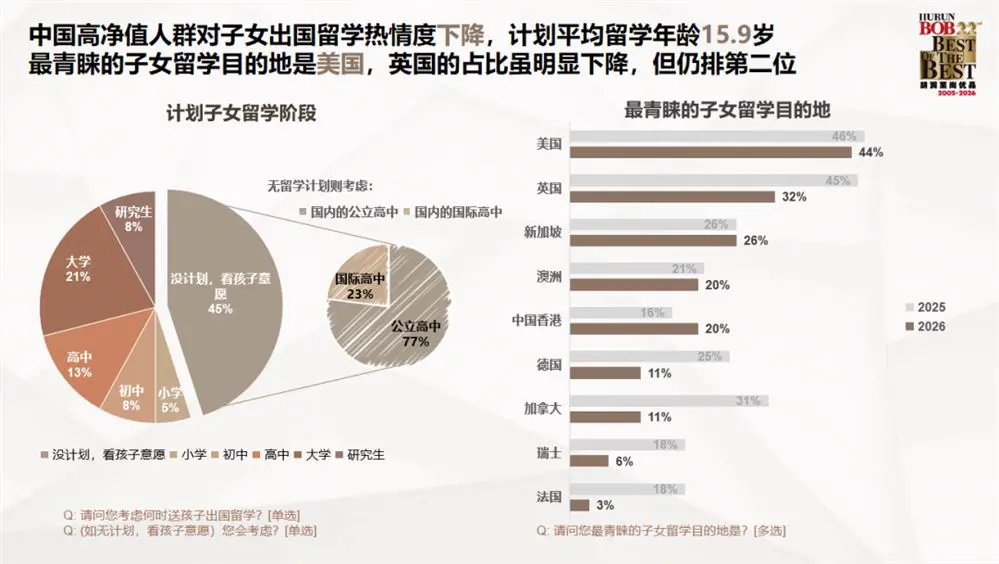
The report shows that despite a slight decline in the overall enthusiasm for studying abroad, more than half of high-net-worth families still plan to send their children abroad for education, primarily at the university level, with an average planning age of 16. Ultra-high-net-worth families start even earlier, with planning beginning at an average age of 14.
More notably, destinations for study abroad are clearly becoming concentrated: the United States has remained the most favored destination for children's education for the third consecutive year.
Destinations for international residency planning
The United States is a core choice
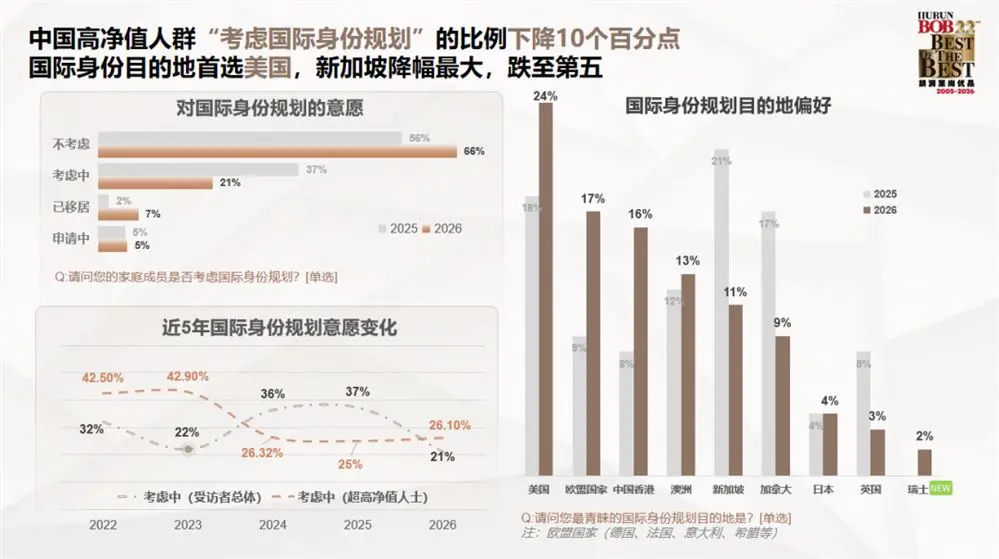
Beyond children's education, high-net-worth families are also witnessing new shifts in their approach to international residency planning. The report shows that the United States ranks among the top preferences for residency planning destinations, with increased interest in European Union countries and Hong Kong, China.
This indicates that family considerations regarding residency configuration have moved beyond travel convenience or short-term arrangements. They now place greater value on institutional stability, resource integration capabilities, and the long-term sustainability of future living and development. Residency is gradually becoming a fundamental element in long-term family planning.
Education, residency, and asset allocation
are moving toward an integrated strategy
In addition to children's education and international residency planning, high-net-worth families are becoming more cautious in their decisions regarding overseas investments.
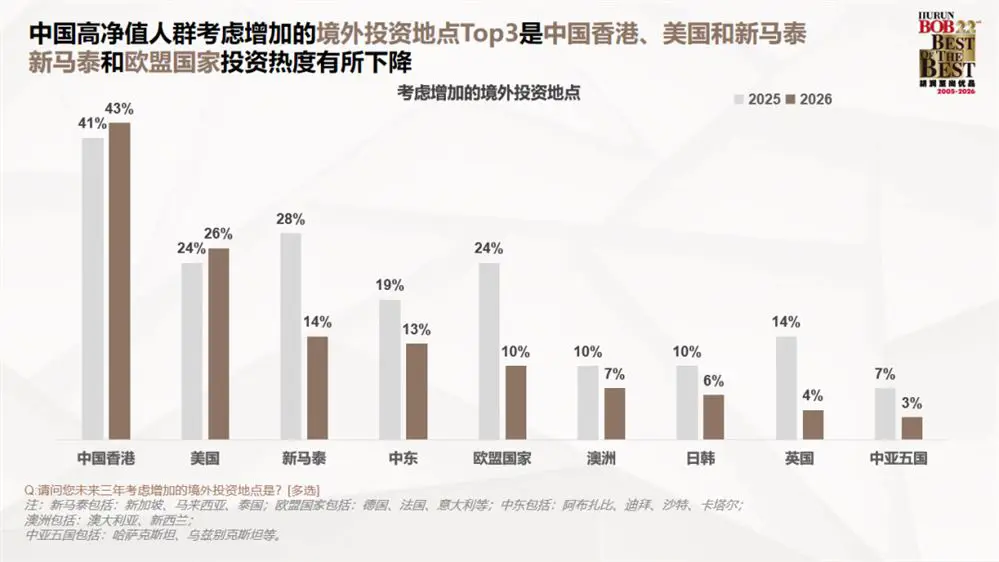
According to the report, looking at investment directions for the coming year, the overall allocation style is clearly leaning toward stability and risk aversion: gold holds the top position for net increase in holdings intention at 15%; the net increase intention for overseas investment is 7%, with U.S. stocks and Hong Kong stocks being the first choices; and the net increase intention for funds and insurance is 6% respectively. Meanwhile, while 84% of high-net-worth individuals are still considering overseas investment, preferences for investment destinations are further concentrating, with Hong Kong, China and the United States continuing to be the preferred directions.
When we look at children's education, international residency, and overseas investment together, a trend becomes increasingly clear: high-net-worth families are now considering education, residency, and asset allocation within a unified framework. For them, these three are no longer isolated decisions but long-term arrangements that require mutual support and synergy.
They are no longer focused solely on a single advantage; instead, they are looking for a path that is long-term, sustainable, actionable, and capable of supporting the future development of the family. It is precisely for this reason that the U.S. EB-5 program is receiving so much attention—it serves not only as a solution to residency needs but as a comprehensive blueprint for a family's future lifestyle and development.
Under the current policy framework, the new EB-5 investment immigration law offers a relatively clear path for applicants: Rural EB-5 projects are currently without visa backlogs and enjoy priority processing. Eligible applicants can also take advantage of "concurrent filing," which allows for the simultaneous submission of the I-526E immigrant petition and the I-485 adjustment of status application, along with applications for the I-131 travel permit and I-765 work authorization. This allows applicants to obtain early benefits such as legal employment and travel flexibility, securing greater stability for future status transitions.
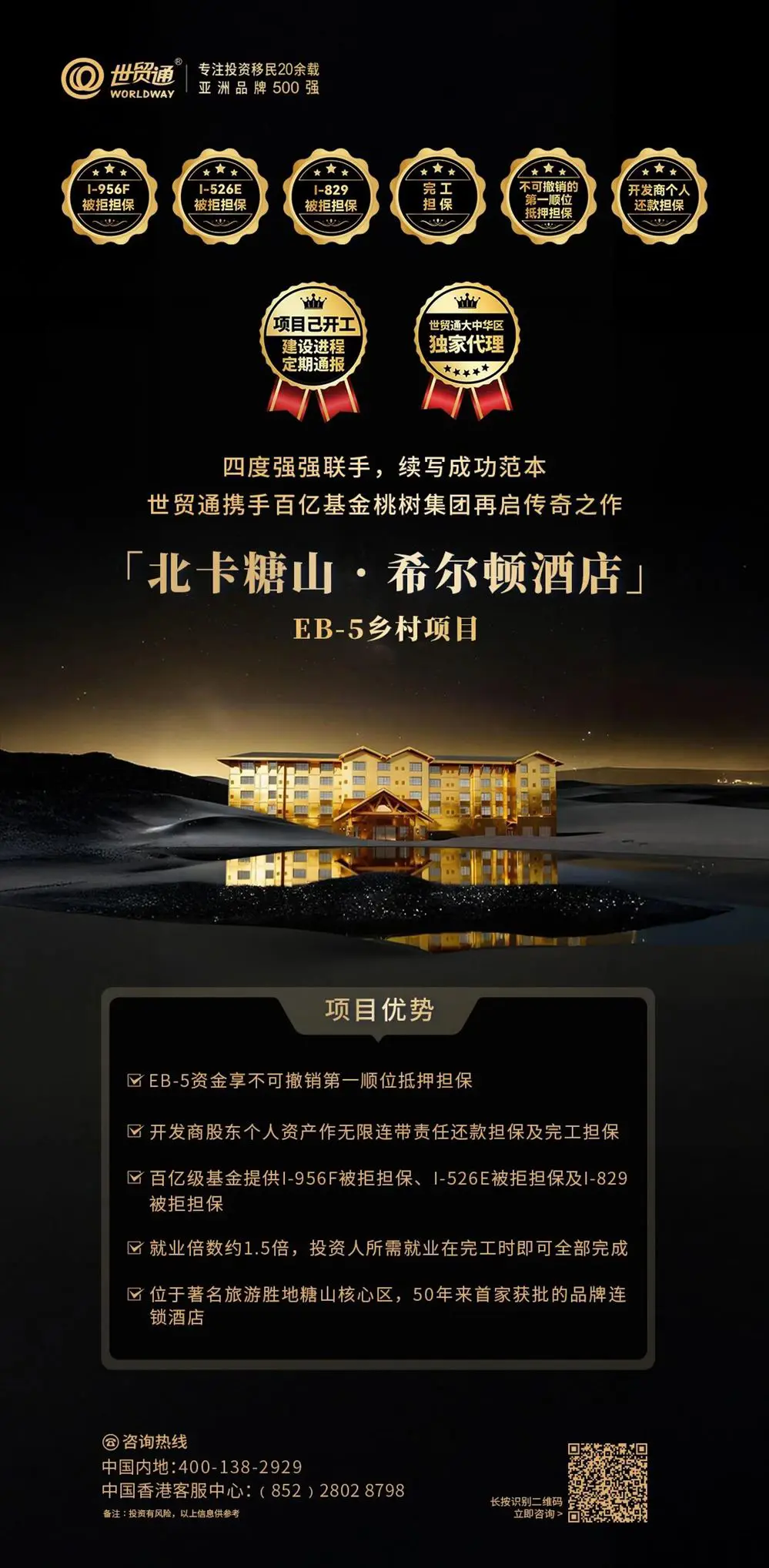
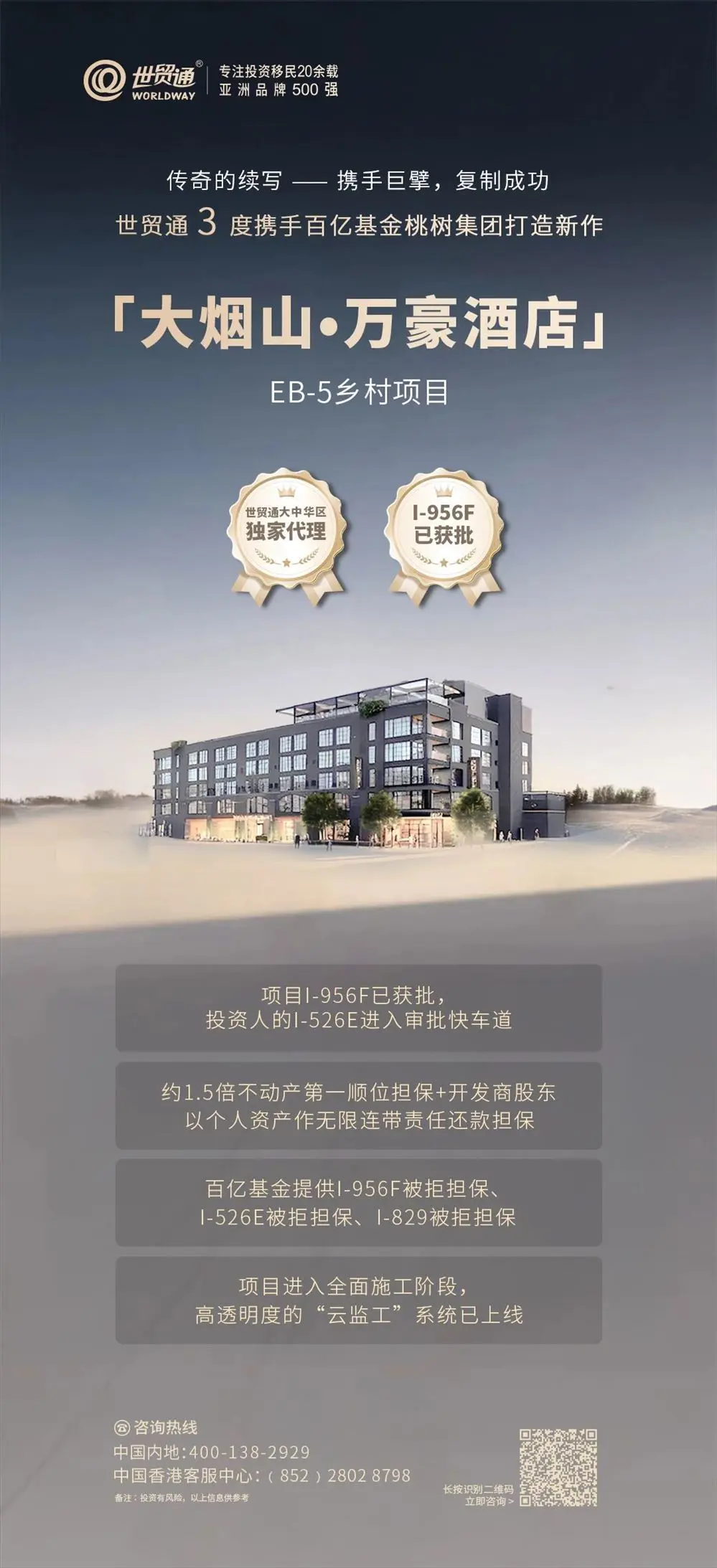
WTC Group holds two high-quality rural EB-5 projects to help investors achieve their U.S. residency goals safely, efficiently, and without backlog, fast-tracking their new lives in the United States. Global quotas are limited and seats are scarce—first come, first served!
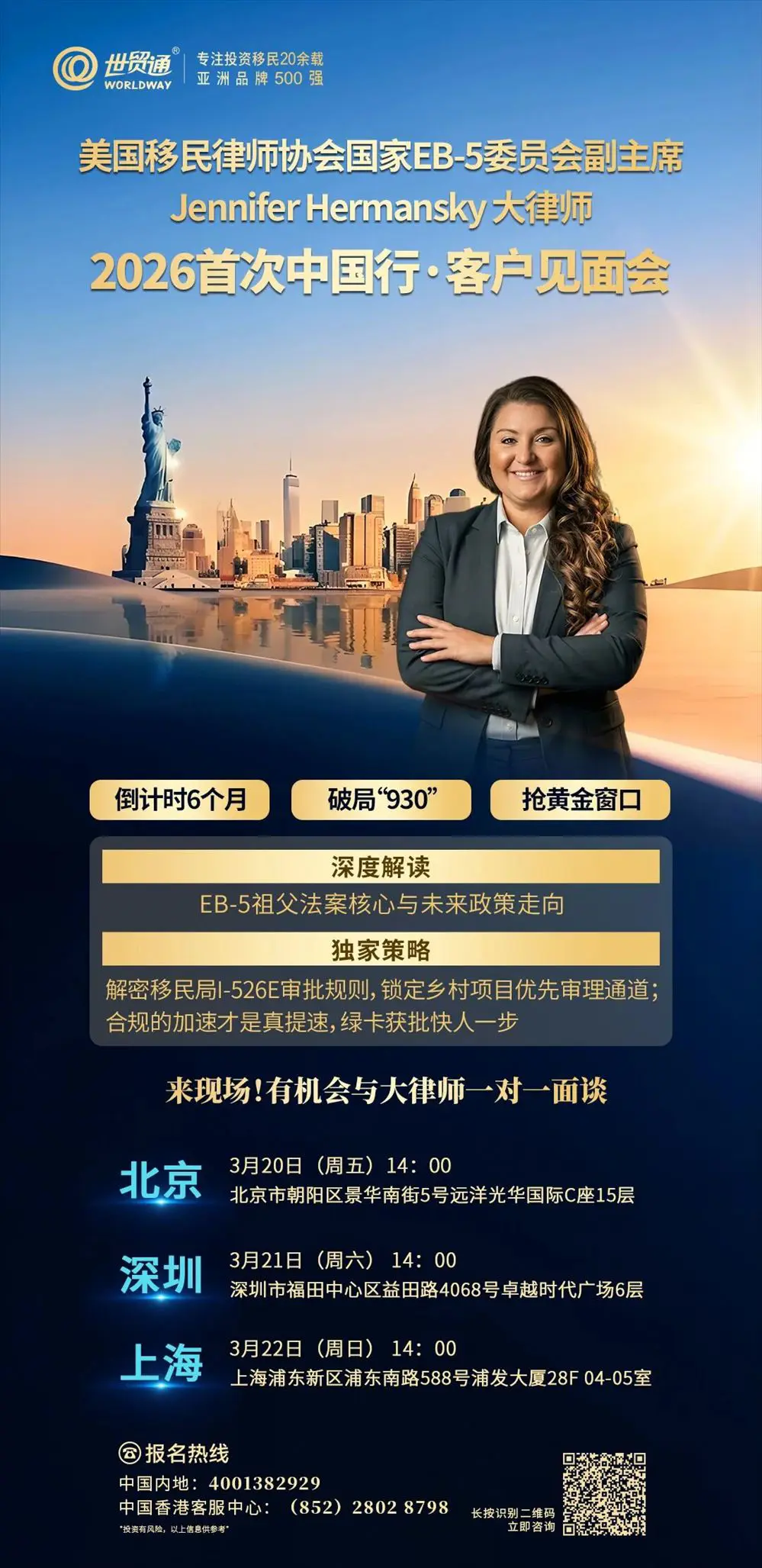
If you wish to learn more about changes in U.S. immigration policies, please contact WTC Group for a one-on-one consultation, or attend WTC Group's offline U.S. immigration seminars held in Beijing, Shenzhen, and Shanghai from March 20th to 21st.
For inquiries in Mainland China: 400-138-2929; Hong Kong, China Customer Service Center: (852)2802 8798