





"Ding Dong—" Are you prepared when immigration officials suddenly appear at your company’s front desk, demanding to see your pay stubs and office space? This is not an alarmist statement, but a real scenario quietly unfolding in Silicon Valley, New York, and other areas across the United States.
According to a report by Financial Express on January 23, the U.S. government is tightening its regulations on H-1B visas, and a nationwide enforcement action called "Project Firewall" has quietly pushed H-1B compliance into a "high-pressure era"—where random checks have become the norm, and violations could lead to visa revocation, fines, or even criminal investigations.
For high-skilled talents and international students eager to establish roots in the United States, this crackdown is akin to a high wall, blocking their most relied-upon pathway to remain in the U.S.
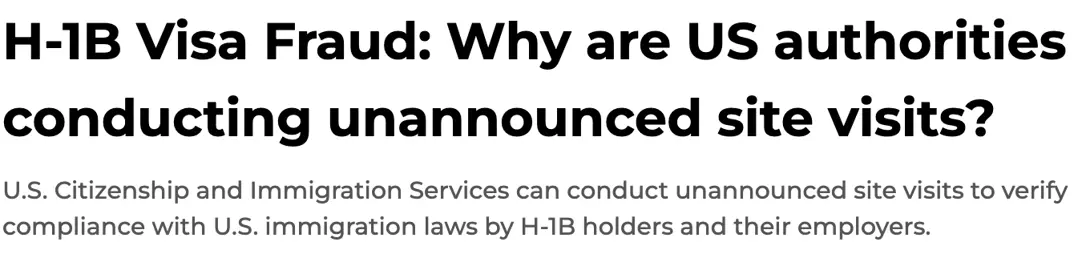
Image Source: USCIS

Under the Scrutiny Storm:
H-1B is No Longer a "Protective Charm"
Once upon a time, the H-1B was the preferred "pass" for international students in the United States. But now, it is becoming a hot potato.
It is reported that the Fraud Detection and National Security Directorate (FDNS) under USCIS has normalized surprise visits. This means that unannounced site visits have evolved from occasional "random checks" into a routine enforcement tool.
What is even more alarming is that this is not just a "one-man show" by the immigration authorities. In September 2023, the U.S. Department of Labor officially launched the "Project Firewall" initiative. This is the first large-scale H-1B compliance investigation personally approved by the Secretary of Labor, with an unprecedented level of intensity and scope.
To date, the Department of Labor has initiated at least 175 investigations related to H-1B program abuse. The Senate Judiciary Committee has even publicly written to large tech companies, questioning whether H-1B hiring is squeezing the domestic workforce.
The official signal is very clear: the original intention of the H-1B program is to fill high-skilled shortages, not a tool for companies to reduce costs and evade responsibilities.
The H-1B Raids:
What Exactly is Being Investigated?
During this nationwide compliance "high-pressure period," the magnifying glass in the hands of FDNS officials is scrutinizing nearly every detail of H-1B holders.
Each surprise visit is a rigorous "full compliance check." On-site, officials will not only review company registration documents and labor contracts but will also cross-reference with government databases. More critically, they will conduct separate interviews with company executives, HR, and the H-1B employees themselves.
You must be prepared to answer these core questions, as any slight discrepancy could lead to severe consequences:
☑ Is your current job completely consistent with what is described in the application materials?
☑ Does your actual salary strictly comply with the commitments in the Labor Condition Application (LCA)?
☑ Has your daily work location changed? (This is often overlooked but is a major area of concern!)
If any refusal to cooperate or false statements are discovered, the related H-1B application may be immediately revoked, and the company could face fines, while you as an employee could face the significant risk of status invalidation or even deportation.
Breaking the Deadlock:
Taking Control of Your U.S. Status
Faced with the increasing rejection rates for H-1B applications, endless lottery anxieties, and the current high-pressure environment of "surprise visits," are we left to passively await our fate?
True security is always in your own hands.
Don’t wait until the knock on the door to start thinking about an exit strategy.
Work visas are someone else’s "gift," while green cards are your own "confidence."
Instead of living in fear on the "narrow bridge" of H-1B, consider obtaining a genuine U.S. green card through EB-5 investment immigration. The efficient process of EB-5 investment immigration is becoming the "key to breaking the deadlock" in U.S. status planning, perfectly avoiding the shortcomings of H-1B and allowing you to easily establish roots in the United States.
☑ No employer sponsorship required, fully take control of your status: Unlike the H-1B, which must rely on an employer, the EB-5 does not require employer sponsorship or job binding, allowing applicants to fully control the application pace without worrying about employer compliance issues or job changes affecting their status, truly achieving "status freedom" and no longer enduring the torment of surprise inspections, allowing you to enjoy life and work in the U.S. with peace of mind.
☑ Efficient and quick process, rapidly secure green card status: After the implementation of the new EB-5 policy, a fast track with no waiting period has been opened, especially for rural project reserved quota categories, where current applicants from China can achieve no waiting period and enjoy priority approval rights. According to the latest data from the American Immigration Investor Alliance (AIIA), since the implementation of the new EB-5 law in March 2022 until July 2025, rural projects account for 81% of the approved I-526E applications, while high-unemployment area projects only account for 16%. Moreover, only 8% of high-unemployment area projects have been approved, with over 92% of applications still pending. This clearly shows the significant advantages and visible "priority approval rights" enjoyed by rural projects.
☑ The "dual submission" advantage allows you to enjoy quasi-green card rights: Applicants in the U.S. can adopt a "dual submission" strategy, simultaneously submitting the I-526E immigration application and the I-485 status adjustment application, allowing them to receive a Combo Card in about 2-3 months, legally residing in the U.S., working freely, and enjoying rights similar to those of a green card, without the long wait.
Locking in the Key Window Period:
Don’t let hesitation become a stumbling block on the path to staying in the U.S.
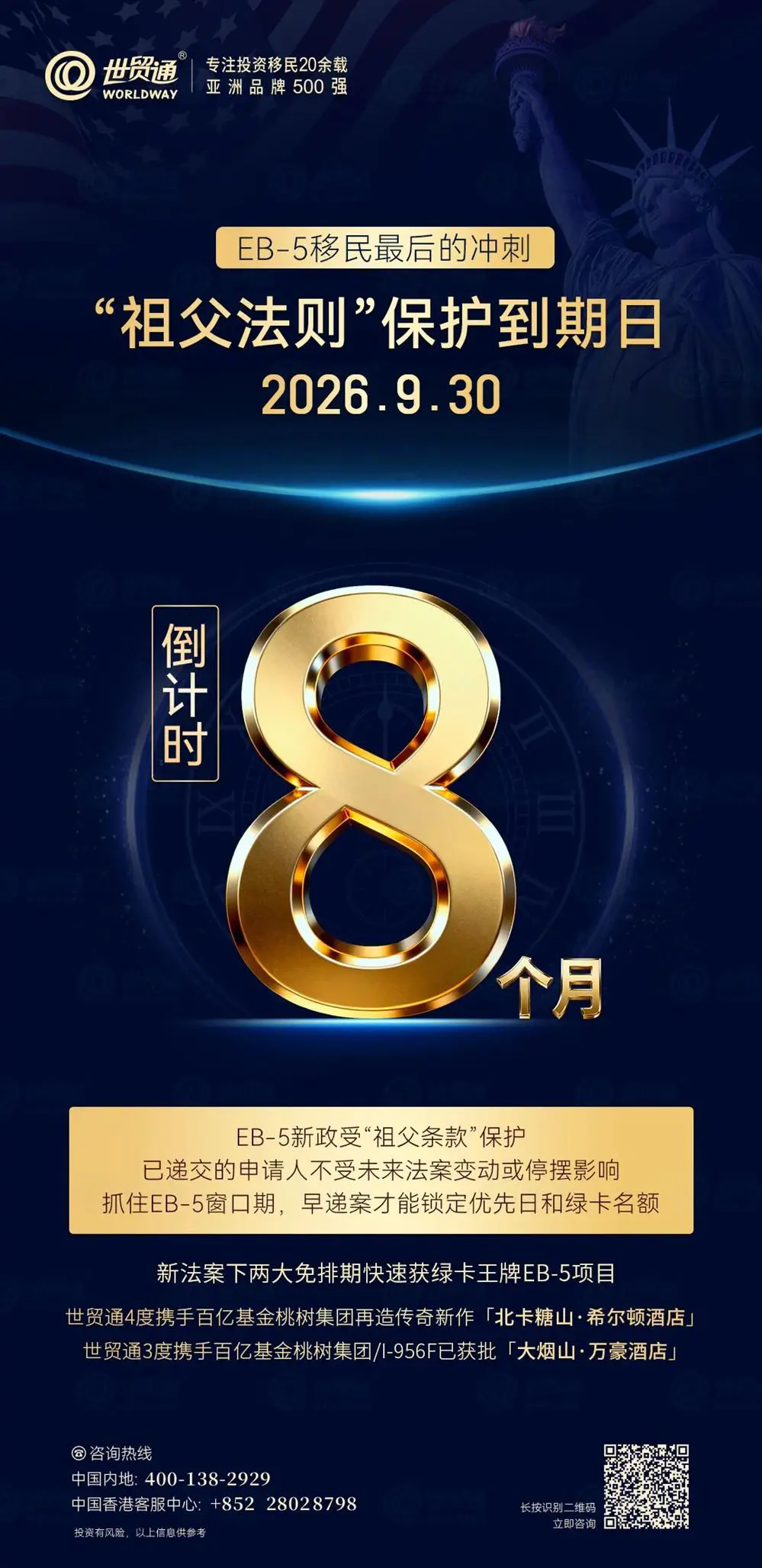
Currently, the golden window period for the new EB-5 policy is still open, but as the speed of reserved quota consumption accelerates, invisible waiting period warnings have quietly emerged. Meanwhile, the current EB-5 policy also has a clear "grandfather clause" protection mechanism: Applications submitted before September 30, 2026, can lock in the current policy and are not affected by future legal changes. Now is a precious time to plan for U.S. status.

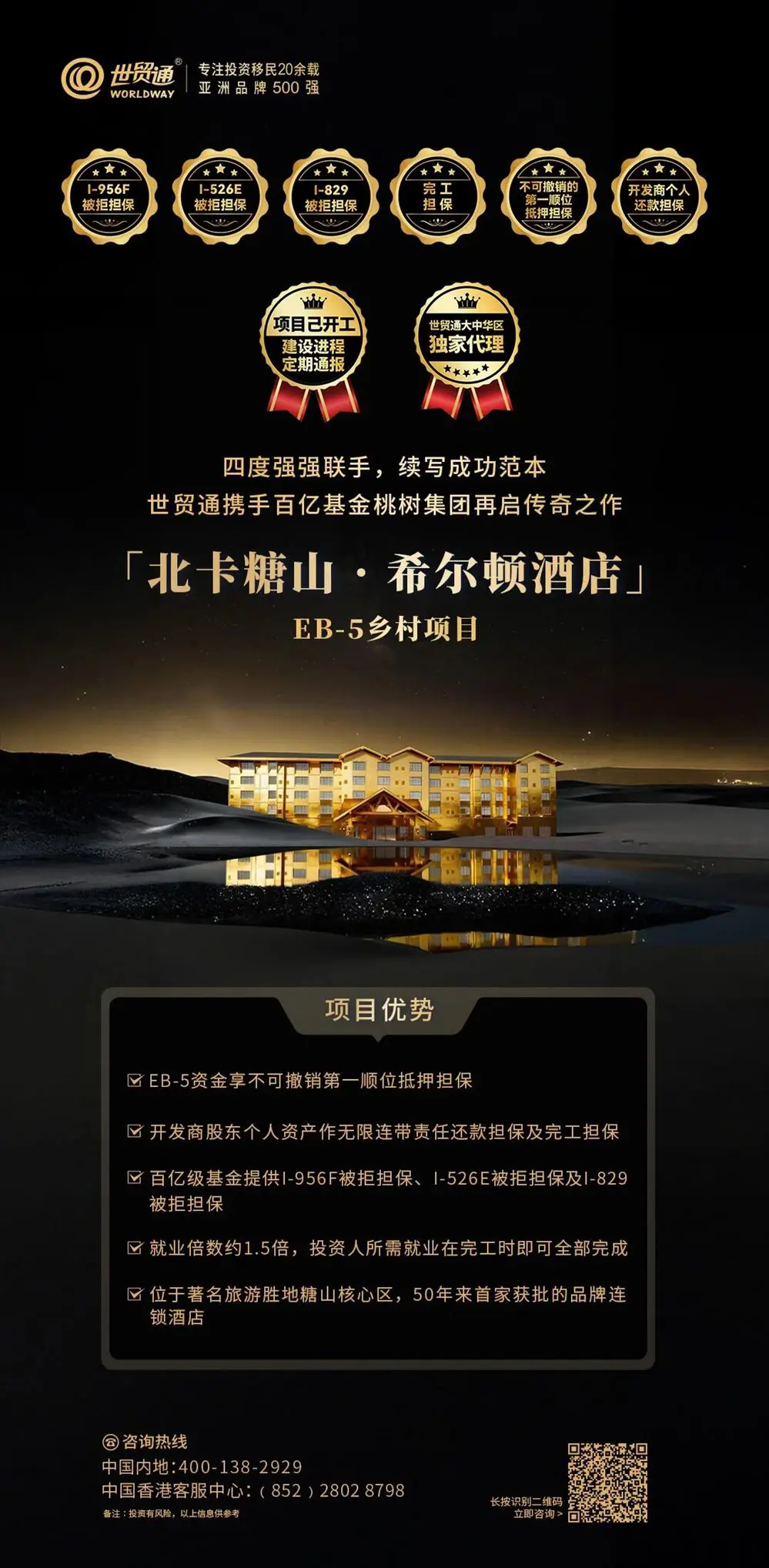
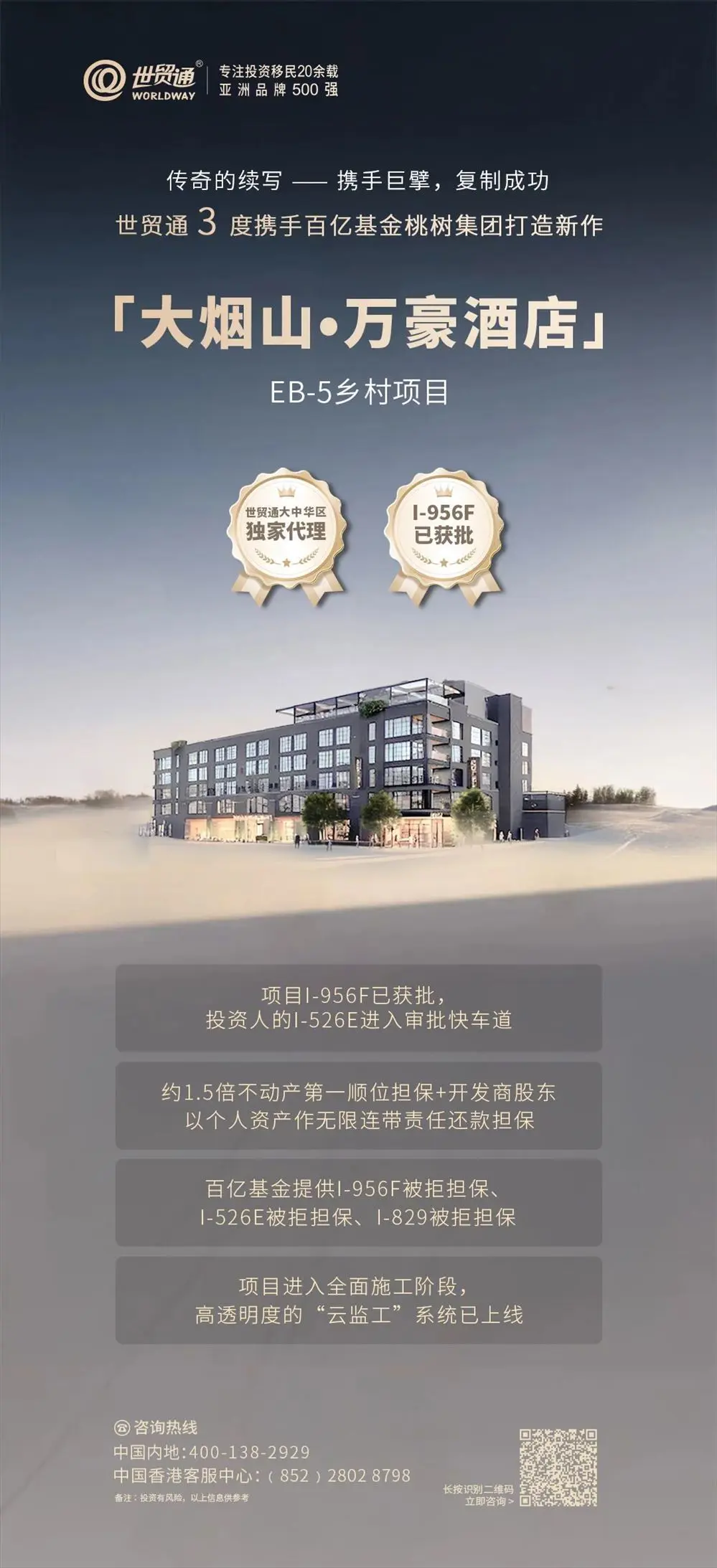
WorldWay holds two high-quality EB-5 rural projects, assisting investors in safely, efficiently, and without waiting periods to achieve U.S. status planning, quickly stepping onto the path of a new life in the United States. Global quotas are limited, and seats are scarce, so subscribe quickly!


In addition, the Trump Gold Card immigration program is officially open for applications, and WorldWay has taken the lead in launching Gold Card acceptance services, helping applicants efficiently advance their application process and seize the critical time window.
Policy tightening often does not change with human will. When "strict inspections" become the new normal, only by planning ahead can we respond calmly. If you are feeling anxious about the uncertainties of the H-1B, or wish to completely break free from the constraints of work visas, please contact WorldWay consultants/customer service for consultation. We will customize a personalized status planning scheme for you to help you quickly achieve freedom in the U.S.!
For inquiries in mainland China: 400-138-2929, Hong Kong customer service center: (852)2802 8798