





Recently, some Chinese media and self-media outlets have been widely circulating reports claiming that the “U.S. has suspended visas for 75 countries,” “the U.S. is comprehensively tightening visa policies,” and “citizens of 75 countries are facing obstacles to entering the U.S.”
Related screenshots and lists have spread rapidly online, causing anxiety and confusion among those concerned about U.S. visas, study abroad, and immigration.
In reality, however, this is a severely simplified and even misinterpreted piece of policy information.
As a professional agency that has long tracked U.S. visa policies and handled U.S. immigration, Worldway Group finds it necessary to provide a systematic interpretation of this policy by returning to the original text, the scope, and the facts.
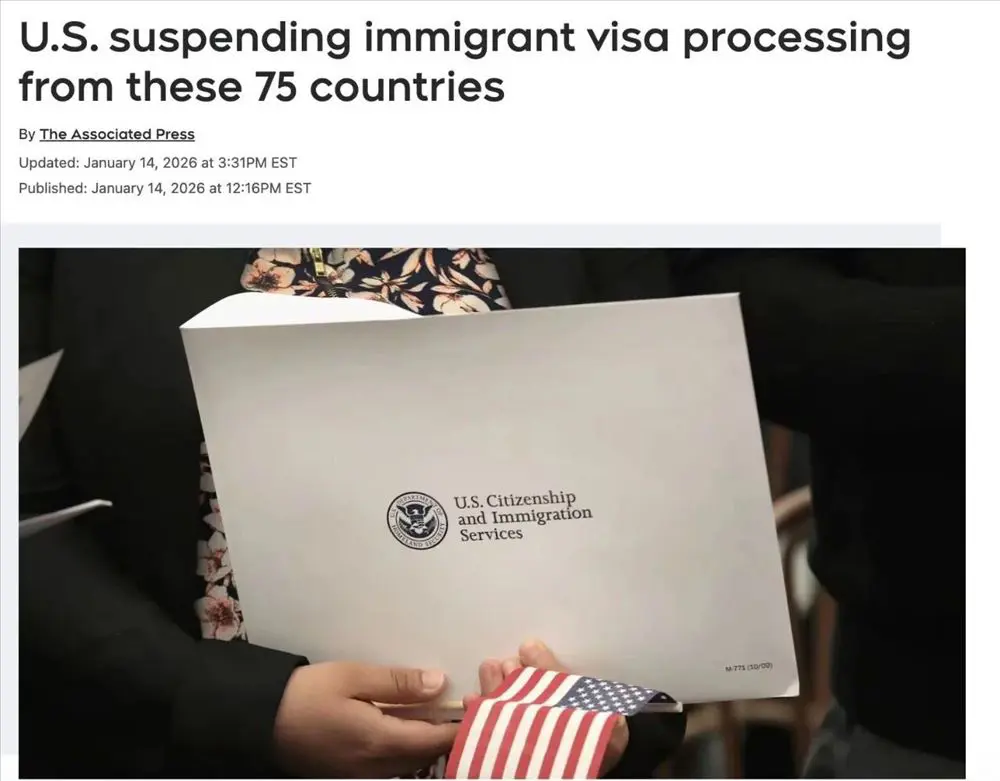
01. Policy Origin: What exactly did the U.S. Department of State announce?
According to information disclosed by multiple international news agencies and official U.S. channels:
The U.S. Department of State announced that it will implement a phased slowdown and review adjustment for “immigrant visa” applications from approximately 75 countries.
The policy rationale for this adjustment is:
To strengthen the vetting of individuals who may become a “Public Charge,” which is a procedural management measure at the administrative level.
📌 There are only three key points:
• The target of the adjustment is: Immigrant Visas
• The method of adjustment is: Slowing down and strengthening reviews
• The scope of the adjustment is: Specific countries, not global


02. Three Common Misinterpretations That Need Correction
❌ Misinterpretation 1: The U.S. is “suspending all visas”
Fact: This adjustment does not involve non-immigrant visa categories such as tourist visas, business visas, or family visit visas. The claim of “suspending all visas” is a clear exaggeration.
❌ Misinterpretation 2: It has a significant impact on Chinese applicants
Fact: China is not on the list of these 75 countries. Whether viewed from the perspective of nationality or current visa categories, Chinese citizens are not directly affected by this policy at this time.
❌ Misinterpretation 3: This is a “sudden policy emergency brake”
Fact: This is closer to a rebalancing of the pace of administrative reviews rather than a directional or institutional shift in immigration policy.
03. Which countries are affected? A complete list by region
To avoid the misleading nature of “fragmented lists,” we have systematically organized the relevant countries disclosed by the U.S. authorities by region below (English name + Chinese reference):
Asia (23 countries in total)
Afghanistan, Armenia, Azerbaijan, Bangladesh, Bhutan, Cambodia, Iran, Iraq, Jordan, Kazakhstan, Kuwait, Kyrgyzstan, Laos, Lebanon, Mongolia, Myanmar, Nepal, Pakistan, Syria, Thailand, Uzbekistan, Yemen, Georgia
Africa (26 countries in total)
Algeria, Cameroon, Cape Verde, Côte d’Ivoire, Democratic Republic of the Congo, Egypt, Eritrea, Ethiopia, Gambia, Ghana, Guinea, Liberia, Libya, Morocco, Nigeria, Republic of the Congo, Rwanda, Senegal, Sierra Leone, Somalia, South Sudan, Sudan, Tanzania, Togo, Tunisia, Uganda
Americas/Caribbean (17 countries in total)
Brazil, Uruguay, Antigua and Barbuda, Bahamas, Barbados, Belize, Colombia, Cuba, Dominica, Grenada, Guatemala, Haiti, Jamaica, Nicaragua, Saint Kitts and Nevis, Saint Lucia, Saint Vincent and the Grenadines
Europe (7 countries in total)
Albania, Belarus, Bosnia, Kosovo, North Macedonia, Moldova, Montenegro, Russia
Oceania (1 country in total)
Fiji
04. Conclusion: Do not be led astray by the anxiety created by headlines
Based on official information released by the U.S. Department of State, it can be confirmed that:
• This adjustment is not a “suspension of all visas,” and there is no such thing as a “comprehensive blockade”;
• It only involves the pace of issuance and review procedures for immigrant visas in specific countries, not a directional policy shift;
• Chinese citizens are not on the list of affected countries; there is no need for panic, and certainly no need to assume it applies to you.
In an era of highly fragmented information, headlines are not equal to policy, and paraphrasing is not equal to the original intent. It is important to see the official boundaries and understand the real impact, which is far more important than being swayed by emotions.
Worldway Group will continue to provide verifiable professional interpretations based on facts for individuals and families concerned about immigrant visas, corporate expansion, and international exchanges, maintaining clear judgment in a complex information environment. Follow Worldway Group to get clearer and more reliable interpretations of global immigration policies.
EB-5 Investment Immigration: A definitive path to U.S. status today
Compared to various visas that require repeated renewals and fluctuate with policy changes, EB-5 is a status path of “one-time planning, long-term certainty.” Worldway Group holds two high-quality EB-5 rural projects, helping investors achieve their U.S. status planning steadily, without visa backlogs, and efficiently, quickly embarking on a new life in the United States. Global quotas are limited, spots are scarce, first come, first served!

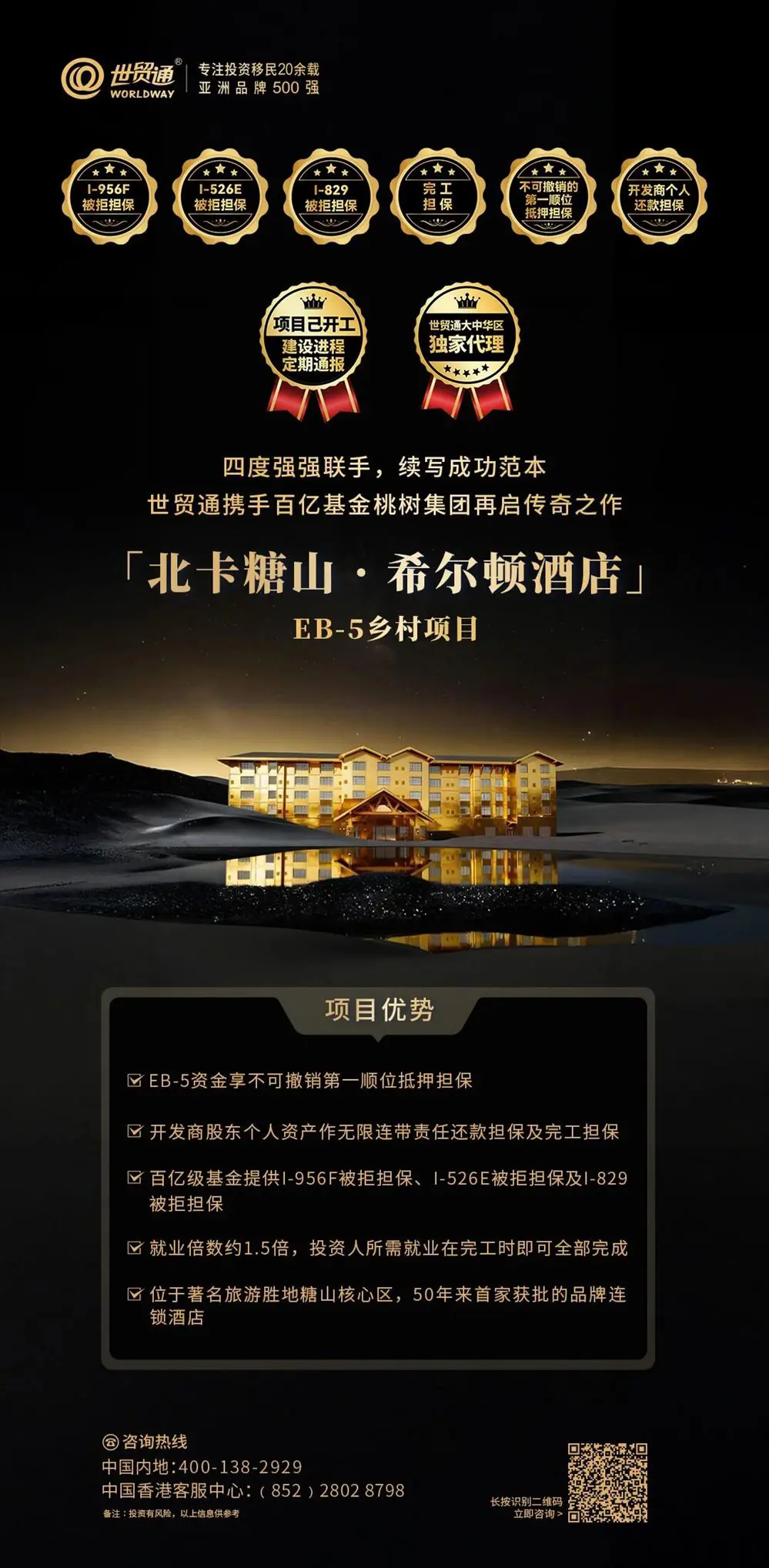

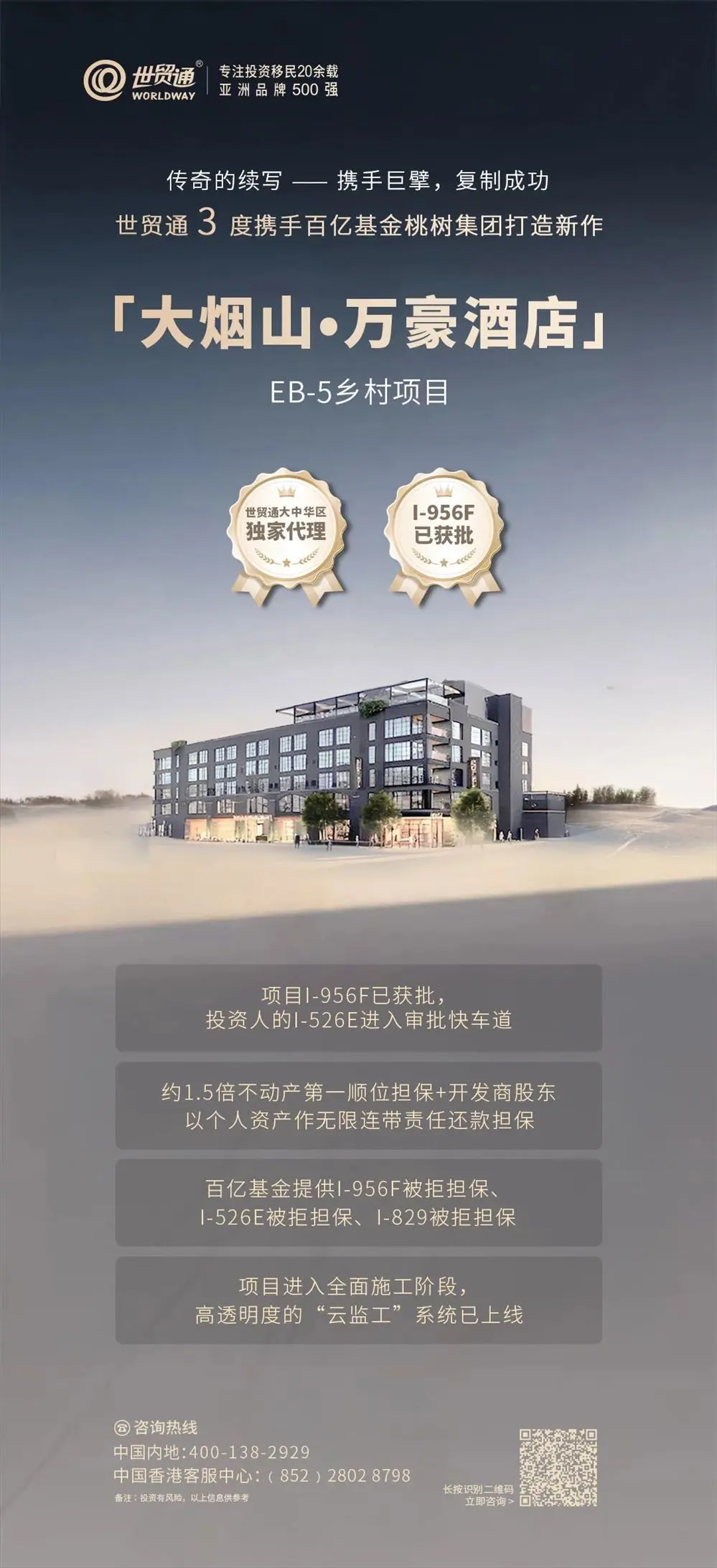
In addition, the Trump Gold Card immigration program is officially open for applications. Worldway Group has taken the lead in launching Gold Card acceptance services, helping applicants efficiently advance their application process and seize the critical time window.
For inquiries in Mainland China: 400-138-2929, Hong Kong Customer Service Center: (852)2802 8798