





The Christmas holiday is approaching, but for a large number of foreign employees working in the U.S. on visas, this year-end is particularly heavy.
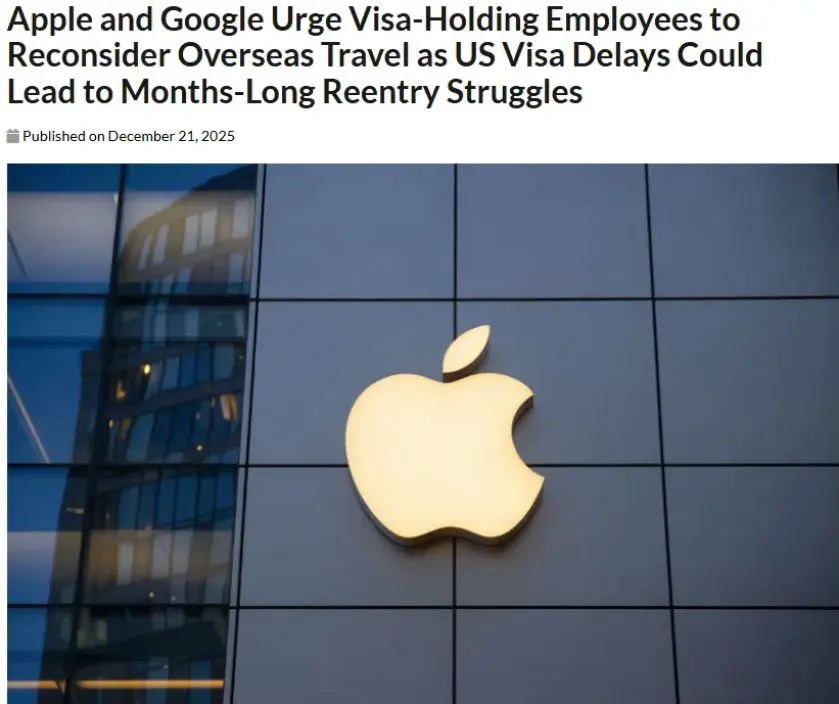
Recently, Google and Apple have issued urgent reminders to their internal staff: H-1B visa holders should be cautious about leaving the country, as returning to the U.S. could be delayed by up to a year!
The core issue:
The visa may be valid, but you cannot return without the "stamp"
It is important to distinguish that while many H-1B employees remain in legal status, if the entry visa on their visa page has expired, they must obtain a new "stamp" at a U.S. embassy or consulate abroad before they can return to the U.S.
It is precisely this step that is currently facing a total "bottleneck." The memo sent to Google employees mentions that visa appointment delays at some U.S. embassies and consulates abroad can be as long as 12 months. Affected visa types include H-1B, H-4, as well as F, J, and M visas. Unless necessary, it is strongly advised to avoid international travel, otherwise, you may be stranded outside the U.S. for a long period.
Law firms partnering with Apple have issued similar warnings: Given recent policy changes and highly unpredictable processing delays, employees without a valid H-1B visa stamp should postpone travel; if travel is essential, a risk assessment should be conducted in advance.
In fact, it is not just Google and Apple; employees at tech giants like Amazon and Microsoft are also facing this risk.
The root of the delay:
Comprehensive upgrade of social media screening
The direct cause of this "delay" in the visa process stems from a new directive from the U.S. Department of State. Effective December 15, mandatory "social media screening" is being implemented for H-1B visa holders and their dependents (H-4), as well as students and exchange visitors (F, J, and M visas), requiring applicants to set the privacy settings of all their social media accounts to "public."
The reality, however, is that the review time for each application has significantly lengthened, the number of appointments that embassies and consulates can process daily has dropped sharply, directly causing a global backlog.
Practical impact:
Appointments cancelled, return to the U.S. "indefinite"
A spokesperson for the U.S. Department of State has publicly acknowledged that the current processing priority is: "Thoroughly review every case, rather than fast-track processing."
Although it is theoretically possible to apply for expedited processing on a case-by-case basis, the success rate for such requests is not optimistic given limited resources. According to multiple sources, severe delays have occurred at embassies and consulates in India, Ireland, Vietnam, and other locations; some professionals who returned to India in December to renew their visas had their appointments directly cancelled or postponed until the end of 2026; hundreds of tech industry practitioners have been forced to remain overseas, working remotely, and even facing compliance risks.
This situation has placed unprecedented pressure on U.S. tech companies that are highly dependent on the flow of global talent.
The "structural uncertainty" of H-1B
is being continuously amplified
The internal reminders from Google and Apple are not isolated incidents, but a microcosm of the continuously tightening H-1B policy environment. The classic path for international students in the past was: Study Abroad → OPT → H-1B → Green Card. However, this path is now being systematically tightened:
• Increasing difficulty for employers to obtain H-1B quotas
• Higher H-1B application fees
• Gradual phasing out of outsourcing channels
• H-1B quotas highly concentrated among a few tech giants
• Comprehensive strengthening of government scrutiny
• Intensified competition in the job market
• High dependence on overseas visa processes for entry and exit
When the traditional path is no longer stable
Status needs to be planned in advance
When work visas face uncertainty in terms of acquisition, maintenance, and mobility simultaneously, more and more rational choices are pointing toward a more stable and controllable status solution.

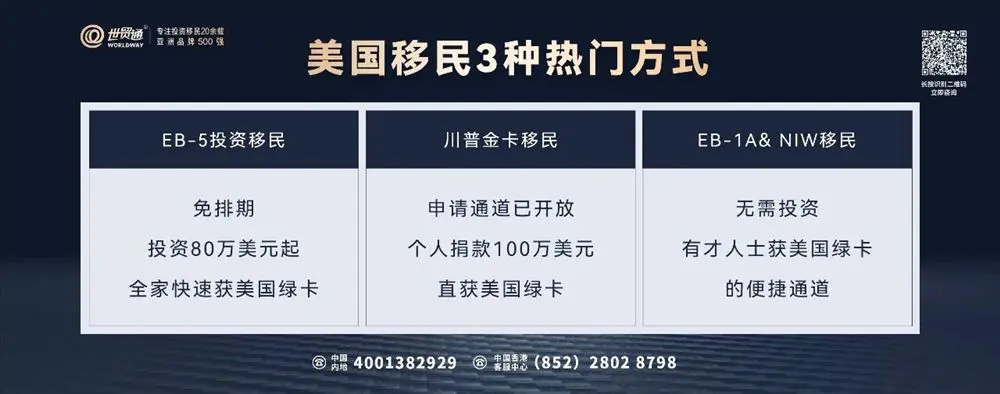
Among the many status paths, EB-5 investment immigration is becoming an important option for more and more professionals during turbulent times due to its stability and autonomy. What is currently more worthy of attention is that the new EB-5 law has brought an unprecedented window of opportunity: rural EB-5 projects are exempt from visa backlogs and have priority processing advantages; the "concurrent filing" policy allows applicants to file I-526E and I-485 simultaneously in the U.S., and they can obtain a Combo card in about 3 months, quickly achieving legal residency and employment eligibility.
Worldway Group holds two high-quality rural EB-5 projects, further helping investors achieve U.S. status planning steadily, without backlogs, and efficiently, quickly embarking on a new life in the U.S. Global quotas are limited, spots are scarce, first come, first served!

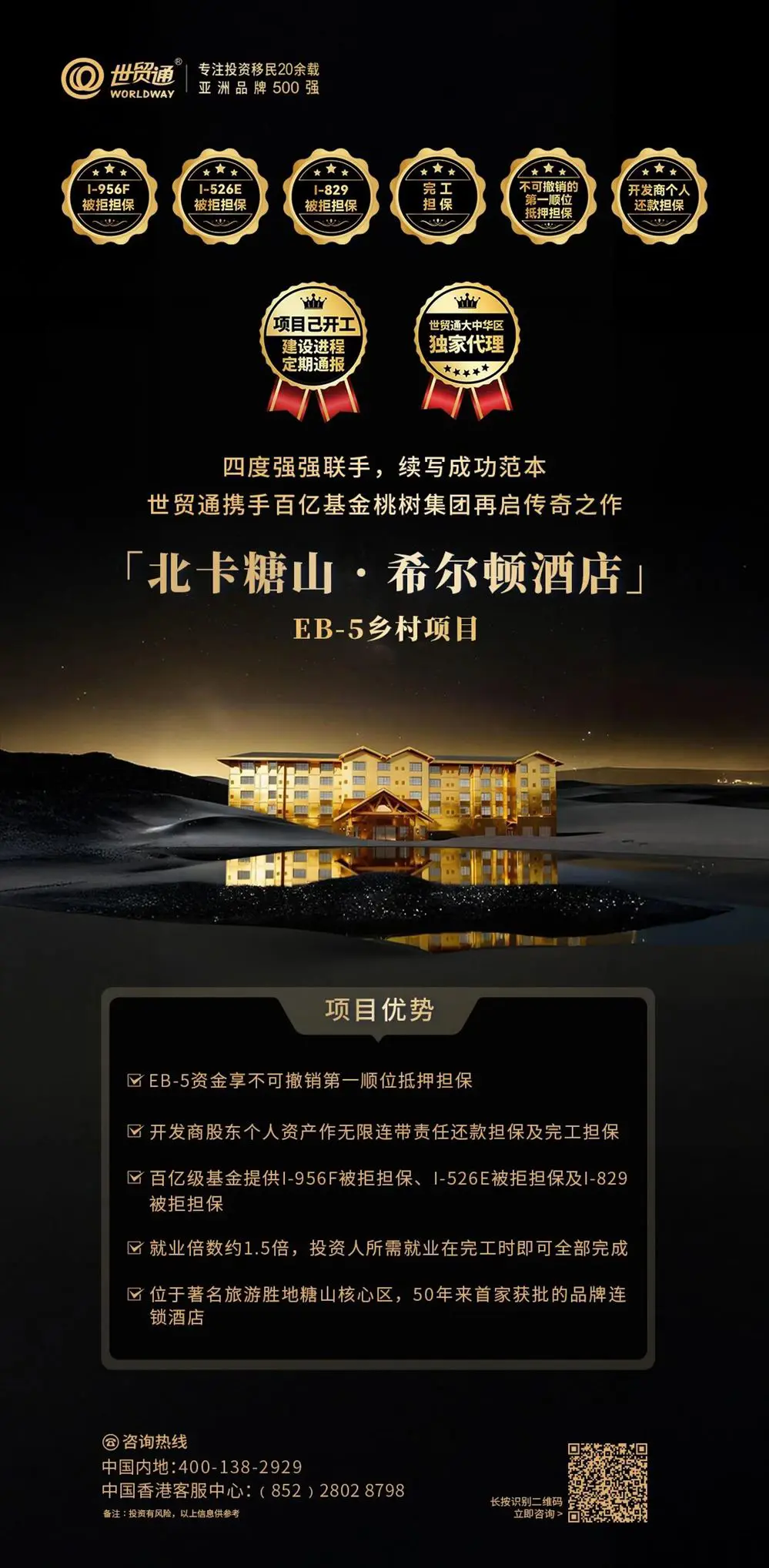


In addition, the Trump Gold Card immigration program is officially open for applications. Worldway Group has taken the lead in launching Gold Card acceptance services, helping applicants efficiently advance their application process and seize the critical time window.

For inquiries in Mainland China: 400-138-2929, Hong Kong Customer Service Center: (852)2802 8798