





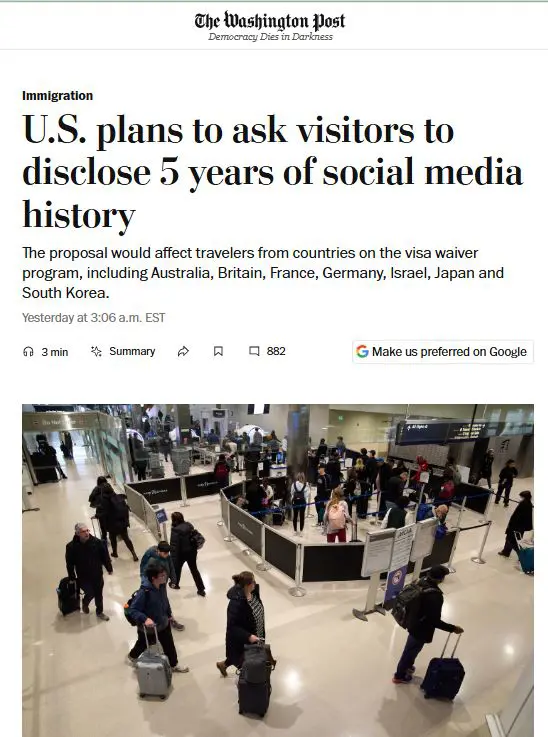
Recently, U.S. Customs and Border Protection (CBP) published a proposed change in the Federal Register: plans to require visa-exempt foreign travelers to disclose their social media history from the past five years before entering the United States.

Involving 42 Visa-Waiver Countries
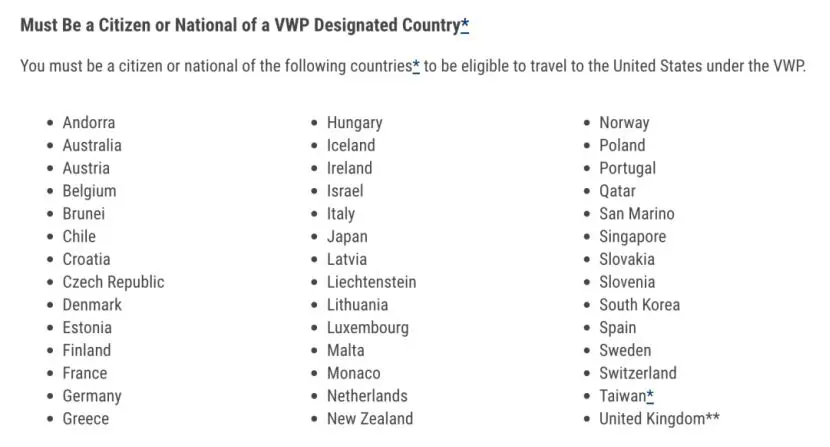
The U.S. Visa Waiver Program (VWP) currently includes 42 countries, such as the United Kingdom, France, Australia, and Japan. Citizens of these countries traveling to the U.S. for tourism, visiting family, or short-term business do not need to apply for a visa, but only need to:
• Complete certification through the Electronic System for Travel Authorization (ESTA) before departure
• Pay a $40 fee
• Submit basic information: email, home address, phone number, emergency contact, etc.
The authorization is valid for two years, and each entry allows for a stay of up to 90 days.
For a long time, this mechanism has provided a relatively convenient way for a large number of visitors to enter the U.S.

Proposed Significant Increase in Disclosure Requirements
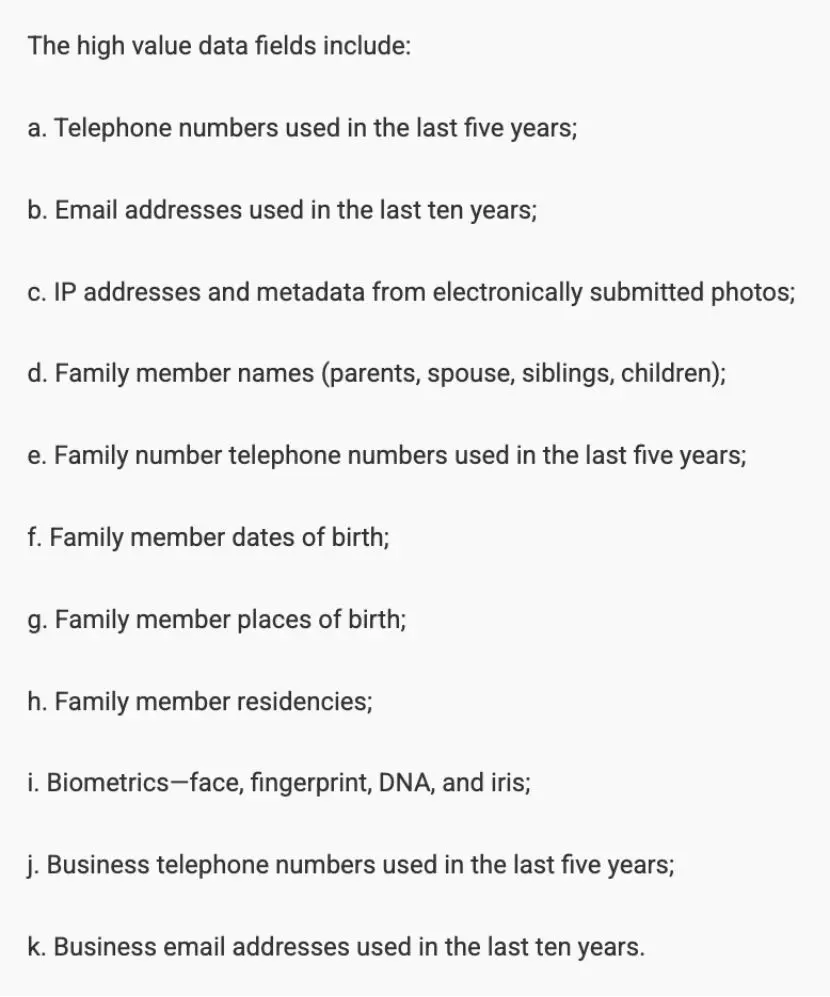
According to the proposal, social media information will change from "optional" to "mandatory" when applying for ESTA in the future. Requirements include:
• Social media records from the past 5 years
• Email addresses from the past 10 years
• Phone numbers from the past 5 years
• Names, dates of birth, places of residence, and places of birth of parents, spouses, siblings, and children

In other words, the U.S. hopes to obtain more in-depth background information before travelers arrive.
It must be emphasized that this change is currently in the announcement and public comment stage and has not yet been officially implemented.
Comprehensive Tightening of the U.S. Screening System
Since this year, the U.S. government has continued to strengthen security screening for incoming travelers. For example, F/M/J visa students, visiting scholars, and H-1B/H-4 work visa applicants have already been required to set all social media privacy settings to "publicly visible."
Including visa-waiver countries in the social media screening system further indicates that the U.S. no longer distinguishes between temporary visitors, international students, workers, or visa-exempt travelers; all groups are under a unified, strict screening framework.
Short-term travel to the U.S. in the future will face: significantly increased information disclosure, more detailed screening content, stricter entry questioning, and significantly increased uncertainty.
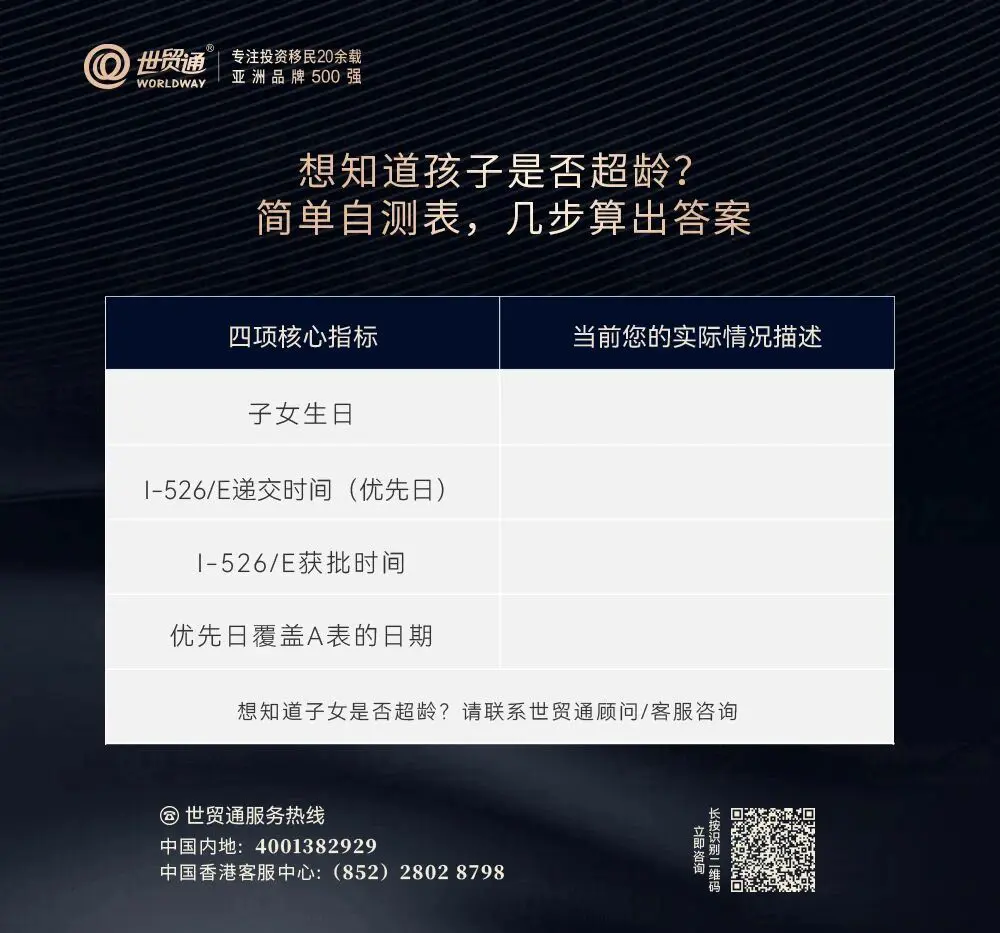

The Value of Stability and Certainty in "Long-Term Legal Status" Becomes More Prominent
Whether for study, visiting family, short-term business, or planning education and future layouts for children, families relying solely on tourist visas, student visas, or visa-waiver models will find it increasingly difficult to ensure a stable and smooth entry experience.
Policies are becoming more detailed and stricter, and they may continue to tighten in the future.
In such an environment, a U.S. status that can be used stably for a long term and is not affected by short-term screening fluctuations has become a core need for many families. For families hoping to secure long-term U.S. status in advance, EB-5 provides a more stable, clear, and executable solution.
Under the new EB-5 law, rural EB-5 projects are exempt from visa backlogs and have priority processing advantages; the "concurrent filing" policy allows applicants in the U.S. to file Form I-526E and Form I-485 simultaneously, enabling them to obtain a Combo card in about 3 months, quickly achieving legal residency and employment eligibility. Now is the critical window to plan for U.S. status and seize the opportunity.

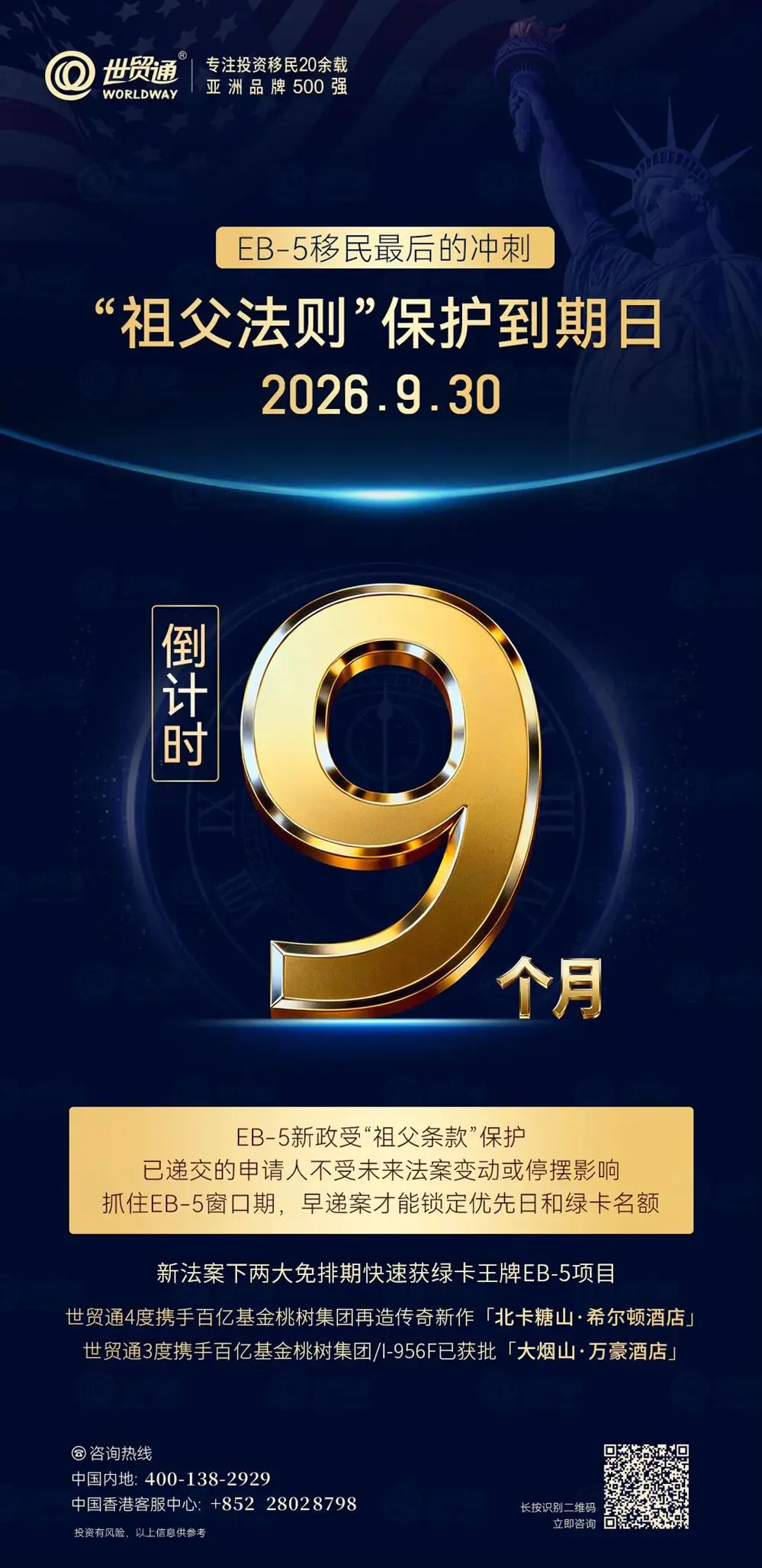
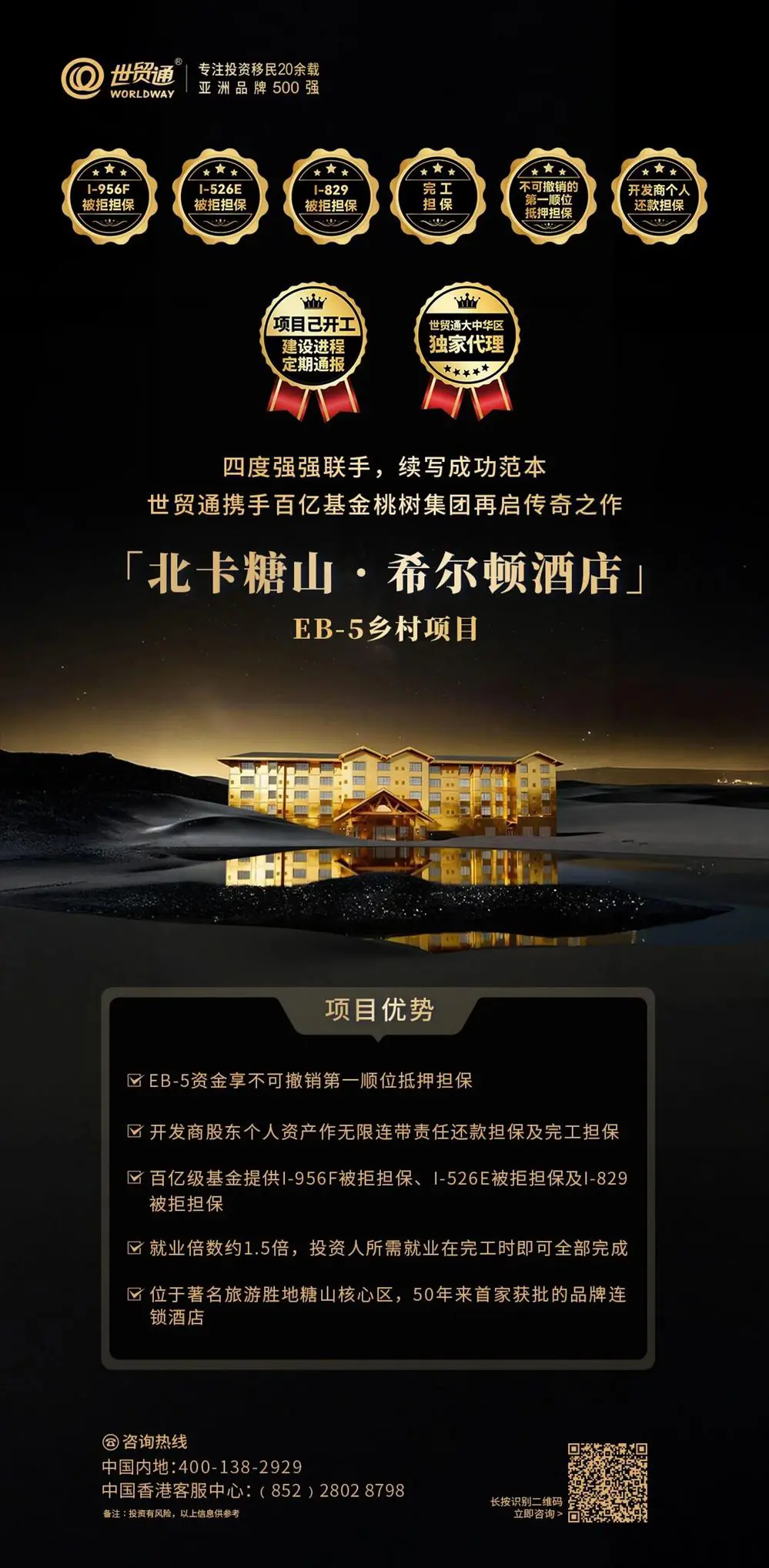
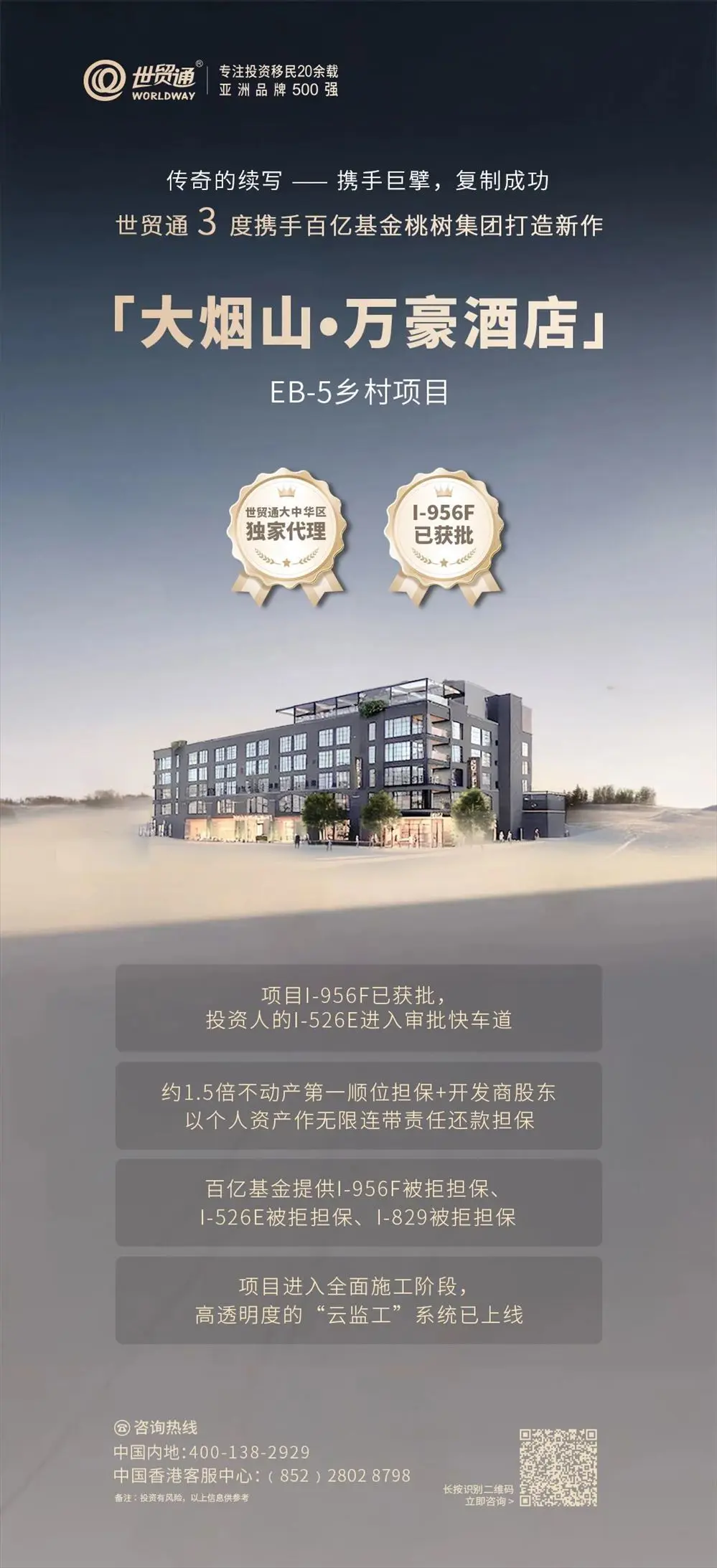
WorldWay holds two high-quality EB-5 rural projects, further helping investors achieve their U.S. status planning steadily, without backlogs, and efficiently, quickly embarking on a new life in the United States. Global quotas are limited, spots are scarce, first come, first served!


For inquiries in Mainland China: 400-138-2929, Hong Kong Customer Service Center: (852) 2802 8798