





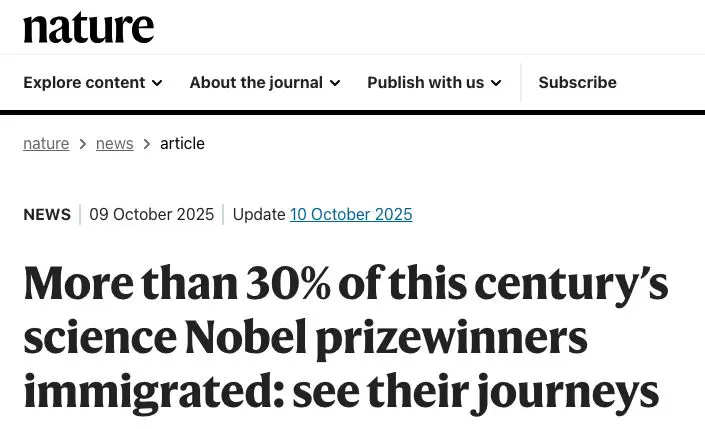
Recently, an article published in Nature titled "How Immigrants Are Reshaping the Nobel Landscape" revealed a startling fact:
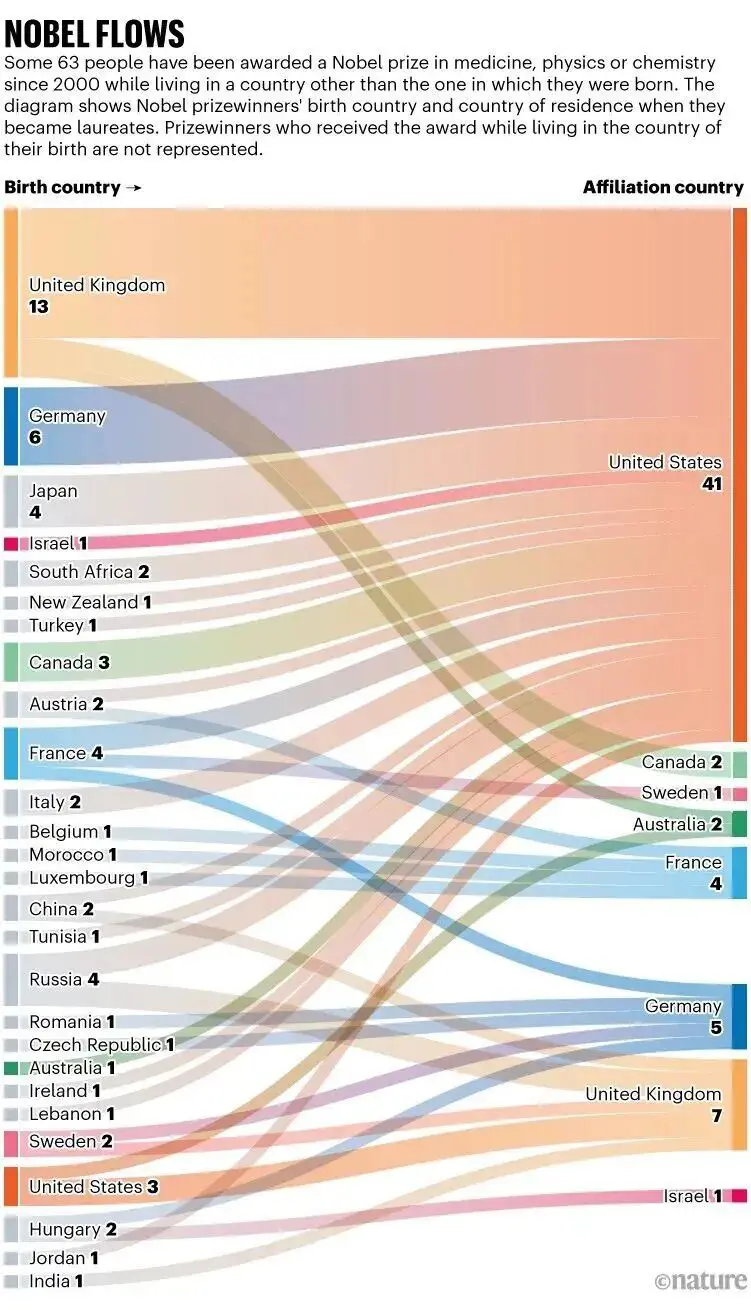
Since the 21st century, among the 202 scientists who have received the Nobel Prize in Science, over 30% are "transnational researchers" who completed their research abroad and received the highest honors. Among them, 41 immigrant scientists ultimately chose to complete their major research achievements in the United States.
Scientific Migration:
This is a true reflection of research crossing national borders
This year's Nobel Prize once again confirms a fact—science knows no borders, and talent is in motion.
Among the three winners of the Nobel Prize in Chemistry, two are "transnational researchers":
• Richard Robson, born in the United Kingdom and currently residing in Australia;
• Omar Yaghi, born in Jordan and currently a professor at the University of California, who is also the first Jordanian to win the Nobel Prize in Chemistry.
(Yaghi's experience itself is a microcosm of "immigrants changing their destinies." Born in 1965 in a Palestinian refugee family in Amman, Jordan, he moved to the U.S. as a refugee at the age of 15, starting from a community college, and through hard work, he entered the State University of New York and obtained a Ph.D. Today, he is a professor at the University of California, Berkeley, and a member of the National Academy of Sciences—his journey from refugee to Nobel laureate is the best testament to "scientific migration.")
Among the three winners of the Nobel Prize in Physics, there are also two immigrants:
• Michel H. Devoret, born in France;
• John Clarke, born in the United Kingdom.
They have both been engaged in research and teaching in the United States for a long time.
These examples indicate that the birth of scientific achievements often transcends national borders. The migration of scientists is not just a personal choice, but an inevitable result of the global restructuring of the research landscape.
In fact, immigrant scientists have long been a common occurrence in the history of the Nobel Prize.
Einstein moved from Germany to Switzerland, and then to the United States;
Marie Curie left Poland to establish a laboratory in France.
As economist Ina Ganguli from the University of Massachusetts stated:
"Genius can be born anywhere, but opportunities are not so universal."
Nobel Prize winner Andre K. Geim also lamented:
"If you stay in one place your whole life, you will miss half the opportunities. Mobility benefits everyone."

The United States: A Concentration Destination for Research Talent
This "scientific mobility" continues to unfold globally, and the United States is undoubtedly the ultimate gathering point. Data shows that since the 21st century, among the 63 "immigrant Nobel laureates," 41 have settled in the United States.

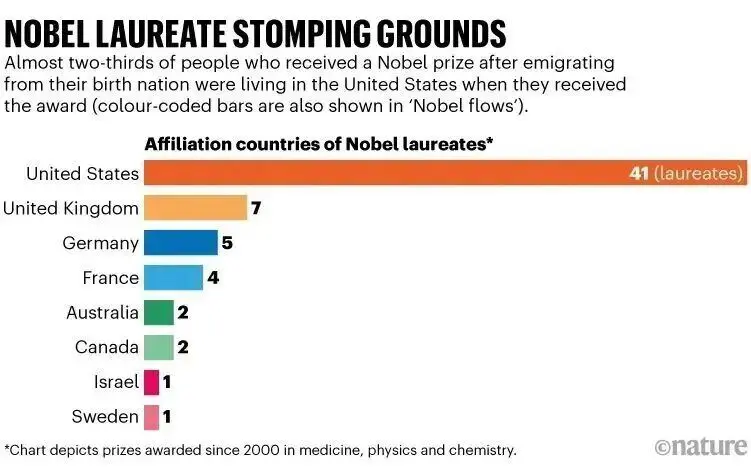
The reason the United States has become the ultimate destination for research talent lies in its robust research ecosystem and comprehensive institutional support: abundant research funding; concentration of high-quality educational resources; and well-established pathways such as H-1B, J-1, EB-1 & NIW, allowing scientists to pursue academic freedom while achieving long-term residency.


(For more details, please click to read: Worldway and Huawei, Tencent, etc. honored as "Asia's Top 500 Brands")
New Turning Point:
From Visa Retention to Investment Retention
However, with the adjustment of international situations and policies, this traditional "research pathway" is becoming increasingly crowded.
H-1B quotas are scarce, F-1 student visa restrictions are tightening, and approval cycles are continuously lengthening… The development of research talent in the United States not only has to race against time but also has to navigate identity challenges.
As a result, another more direct and stable pathway has gained attention—the EB-5 investment immigration program. Unlike work visas or academic visas that are dependent on employers, EB-5 allows applicants to obtain U.S. status by creating jobs through investment.
Since the implementation of the Reform and Integrity Act in 2022, EB-5 has welcomed three key innovations:
• Ample reserved visa quotas, enjoying expedited processing benefits
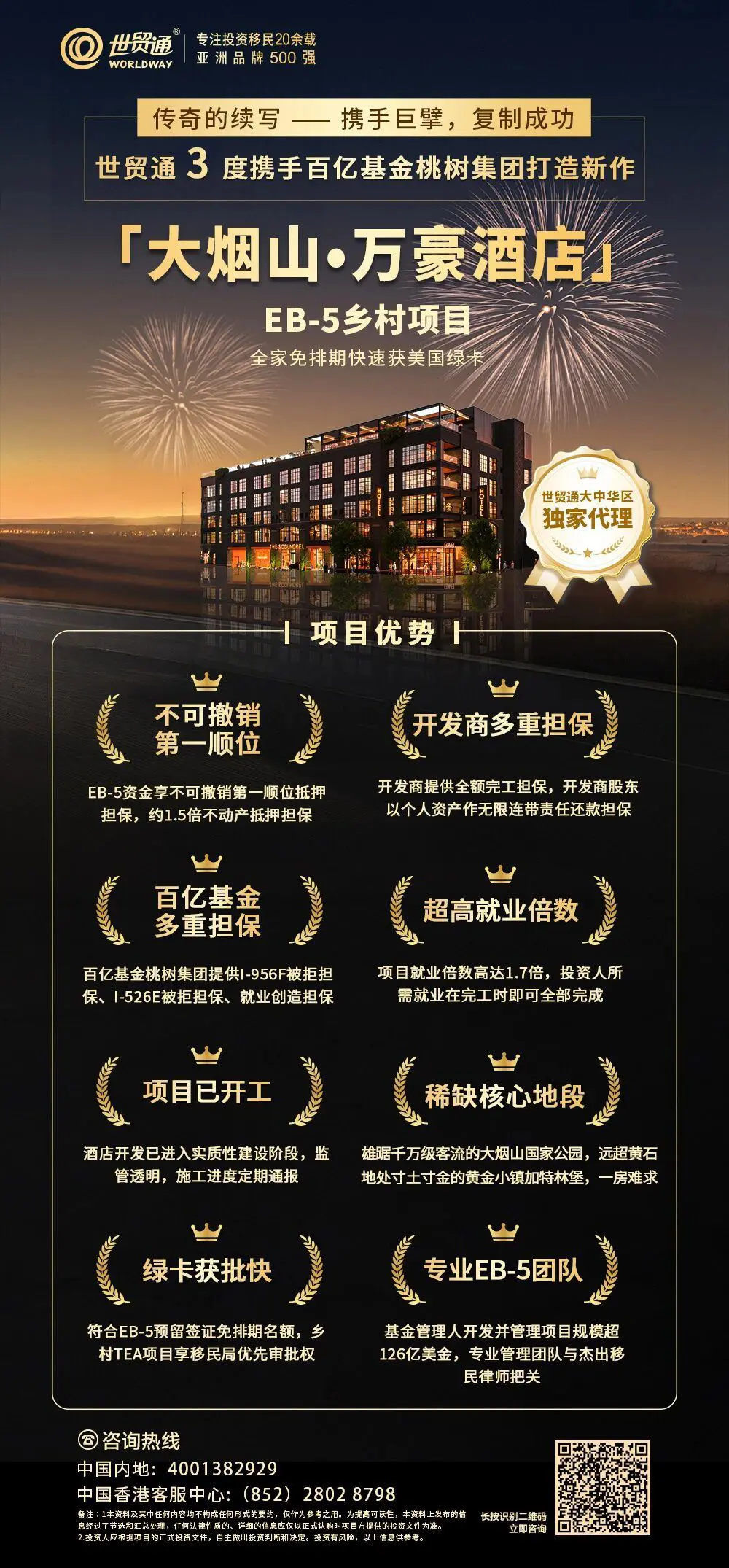
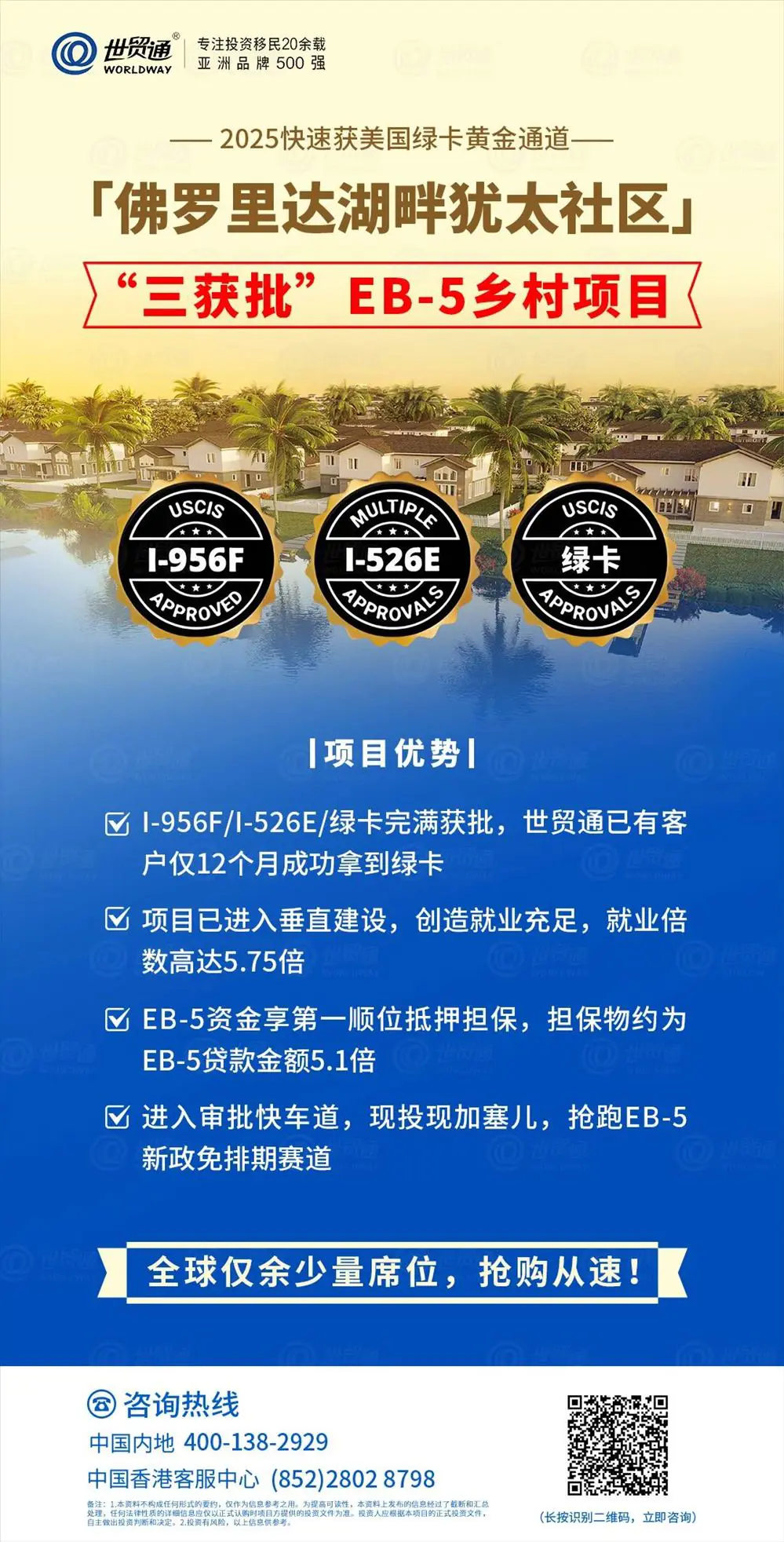
• Rural EB-5 projects enjoy priority approval rights
• Allows "dual submission" applications, enabling simultaneous submission of I-526E and I-485 applications, with the possibility of obtaining a Combo card in about 3 months for legal residency and work.
Science Knows No Borders, Opportunities Have Direction
Behind the Nobel Prize is a history of knowledge flow and a reflection of institutional competition. When research and capital, ideals and identities flow globally, the United States remains the land where talent takes root and dreams shine. Whether you are a research talent, an entrepreneur, or a family looking to plan for your children's future, choosing the right pathway means choosing a larger stage.
EB-5 U.S. investment immigration—giving wings to your identity for your ideals, allowing you and your family to take root in the center of opportunity for the future.

In addition, the global premiere of the "Trump Gold Card Immigration Project," launched by Worldway Group in collaboration with two top U.S. law firms, provides a new identity planning pathway for high-net-worth individuals. Worldway has opened the pre-sale channel for the Trump "Gold Card Immigration" project. Register now to submit early and get a head start on obtaining a U.S. green card in the future.

For inquiries in mainland China: 400-138-2929, Hong Kong customer service center: (852)2802 8798