Recently, a series of shocking measures by the U.S. government, such as the mass revocation of student visas affecting several prestigious universities, have abruptly disrupted the tranquility of the international student community in the United States. Meanwhile, the new stringent regulations by the U.S. Citizenship and Immigration Services regarding the scrutiny of social media content have plunged those planning to study in the U.S. into deep confusion and anxiety. This series of events serves as a wake-up call for prospective international students.
Mass Revocation of Student Visas in the United States
The Dream of Studying in the U.S. May Be Shattered
Recently, the U.S. government has revoked the student visas of individuals from multiple countries, affecting over 50 universities, including the University of California, Los Angeles (UCLA), the University of California, San Diego (UCSD), and Stanford University. Reports indicate that at UCLA, at least 8 international student visas were revoked; UCSD had 5 student visas revoked, and 1 student was denied entry and returned; Stanford University also had 4 current students and 2 recent graduates whose visas were canceled. The universities often learn of these actions without any prior warning, and the reasons for the visa cancellations remain unclear.
U.S. media reports that in recent days, at least 147 international students have suddenly lost their residency rights in the United States, causing panic among the international student community, including Chinese students, and leading to chaos and confusion within the schools. In fact, since last month, several universities, including Columbia University and Cornell University, have also been revoking international student visas, with some students claiming their rights to free speech have been violated. Related cases have entered the federal court system, and some students have even been detained in immigration detention centers.
The U.S. Begins Strict Scrutiny of Social Media
Meanwhile, on April 9, the U.S. Citizenship and Immigration Services announced that anti-Semitic remarks made by foreign nationals on social media, as well as physical harassment of Jewish individuals, would be grounds for denying immigration applications. Affected groups include foreign nationals applying for green cards, international students, and foreign nationals associated with schools accused of anti-Semitic behavior.

According to the guidelines, the immigration agency will consider any social media content suggesting "support, endorsement, or promotion of anti-Semitic organizations or activities" as a negative factor in reviewing various immigration and non-immigration applications. Additionally, it is important to note that U.S. Secretary of State Marco Rubio has informed all U.S. embassies and consulates abroad that visa reviewers should examine the social media content of certain student visa and other visa applicants to prevent individuals suspected of criticizing the United States and Israel from entering the country!
Ministry of Education Study Abroad Warning
Careful Risk Assessment Required for Studying in the U.S.
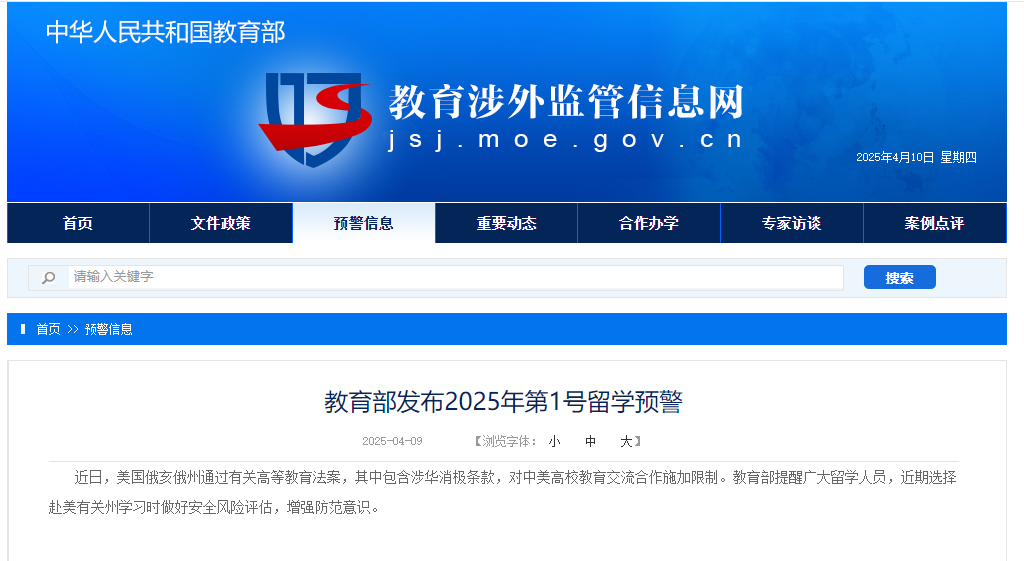
At the same time, on April 9, 2025, the Ministry of Education of China issued the first study abroad warning of 2025. The full text states: Recently, Ohio has passed legislation regarding higher education that includes negative clauses related to China, imposing restrictions on educational exchanges and cooperation between Chinese and American universities. The Ministry of Education reminds all students planning to study abroad to conduct safety risk assessments when choosing to study in relevant states in the U.S. and to enhance their awareness of prevention.
This policy affects different groups in various ways:
- High school students and self-funded undergraduate applicants are generally unaffected and can proceed with their study abroad applications as usual, as the measures mainly target intergovernmental cooperation and are not closely related to most undergraduate programs;
- Graduate applicants in science and engineering fields need to pay special attention to whether their research areas are sensitive; if the target school is located in Ohio and has a Chinese cooperative background, they should proceed with caution;
- Students participating in Sino-foreign cooperative education programs (such as 2+2 or 3+1 models) should proactively contact their school's international office to confirm whether the program can continue if the partner is located in Ohio.
It is worth noting that this legislation is only implemented in Ohio, and the remaining 49 states in the U.S. are not affected. For families planning to achieve long-term residency in the U.S. through study abroad, the stability of the policy environment is one of the core considerations. This warning not only concerns academic safety but also prompts parents to take a longer-term view and comprehensively assess the impact of the study destination on the overall family planning.
It is evident that the tightening of U.S. study abroad policies is an undeniable fact, and this series of changes has brought numerous uncertainties to those intending to study in the U.S. Everyone should plan carefully, as identity planning has become an important issue for many. In the increasingly complex context of U.S. study abroad and immigration policies, the EB-5 investment immigration program, with its unique advantages, provides a reliable pathway for those eager to obtain U.S. status and enjoy high-quality education, living resources, and business opportunities in the United States.
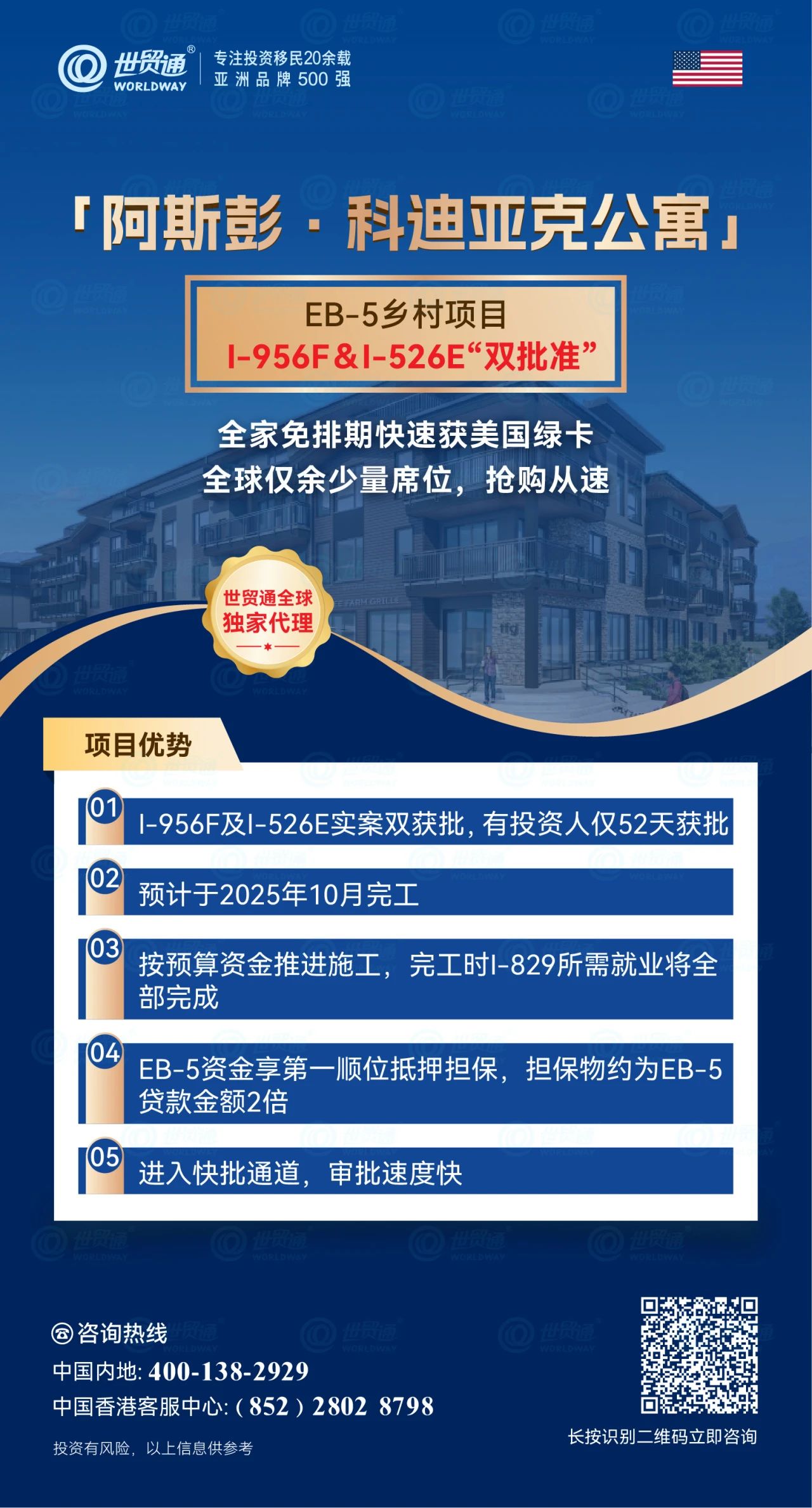
Currently, the rural projects within the EB-5 reserved visa pathway are among the preferred options for quickly obtaining a U.S. green card. The EB-5 rural projects combine advantages such as no waiting period, ample quotas, priority approval, and dual submission. Investors can invest $800,000 and simultaneously submit I-526E and I-485 applications, receiving a Combo card in about three months. During the waiting period for the green card, entry and exit are not affected, allowing for legal residence, study, and work in the United States. Interested investors should submit their applications as soon as possible to secure their priority date and realize their dream of immigrating to the United States at the earliest opportunity.
Currently, the popular EB-5 project on the market - "Aspen Kodiak Apartments," has received dual approvals for I-956F and I-526E. This project is a high-quality EB-5 rural project that has undergone rigorous screening and strict oversight by the WorldWay Immigration Group, making it undoubtedly an excellent choice for your quick immigration to the United States.
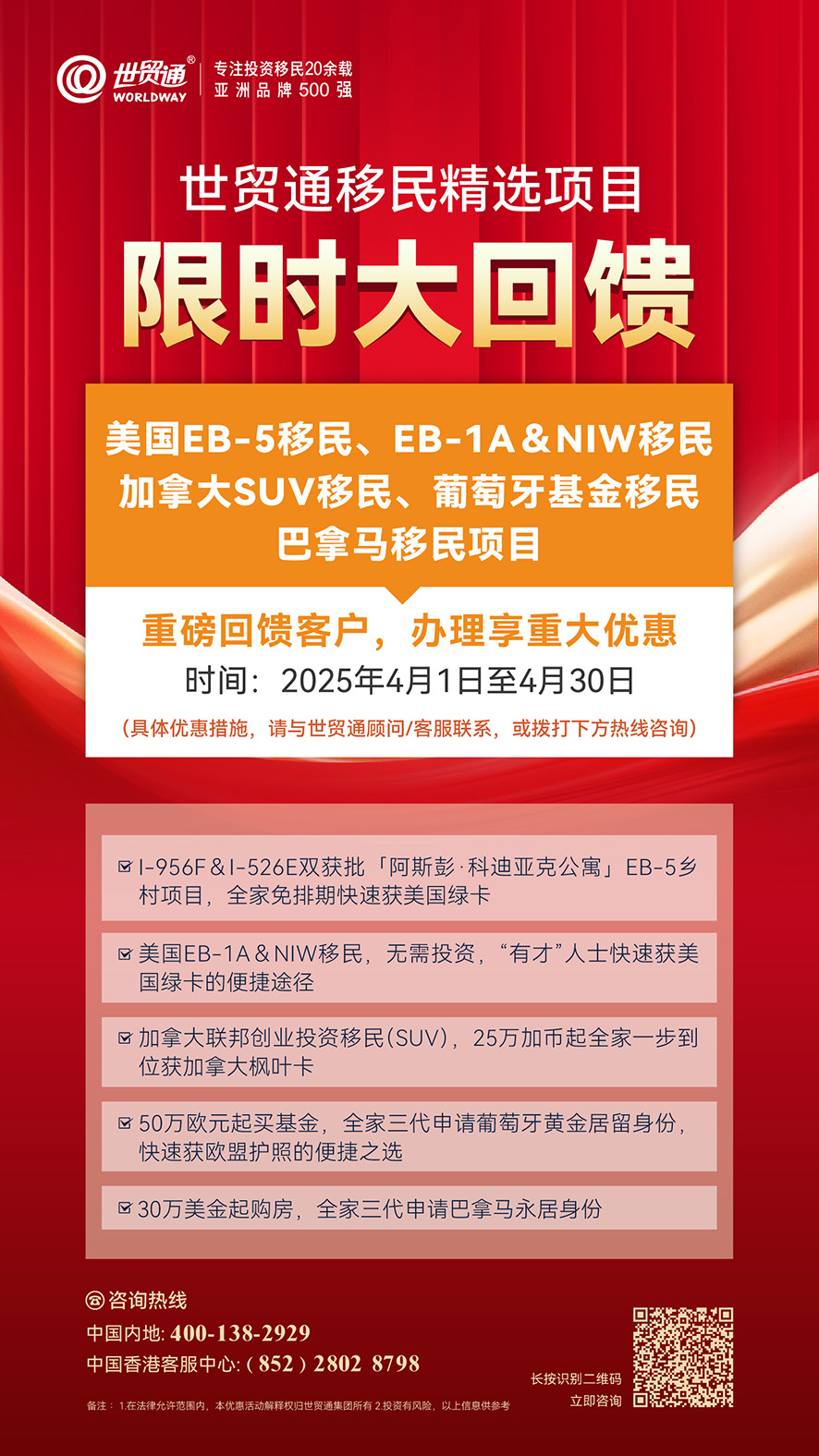
Warm Reminder: Now is a great time to immigrate to the United States. From April 1 to April 30, 2025, WorldWay Immigration is launching a limited-time promotional event, offering significant discounts on U.S. EB-5 immigration, EB-1A & NIW immigration, and other selected projects. The number of discounted spots is limited, and it is first come, first served. Interested parties should act quickly to seize this opportunity.
For inquiries in mainland China: 400-138-2929, Hong Kong customer service center: (852) 2802 8798 *Investment involves risks; the above information is for reference only.*





